English हिन्दी
Connect with us

Education

Amid Omicron Scare, JNU imposes night curfew, know the timings

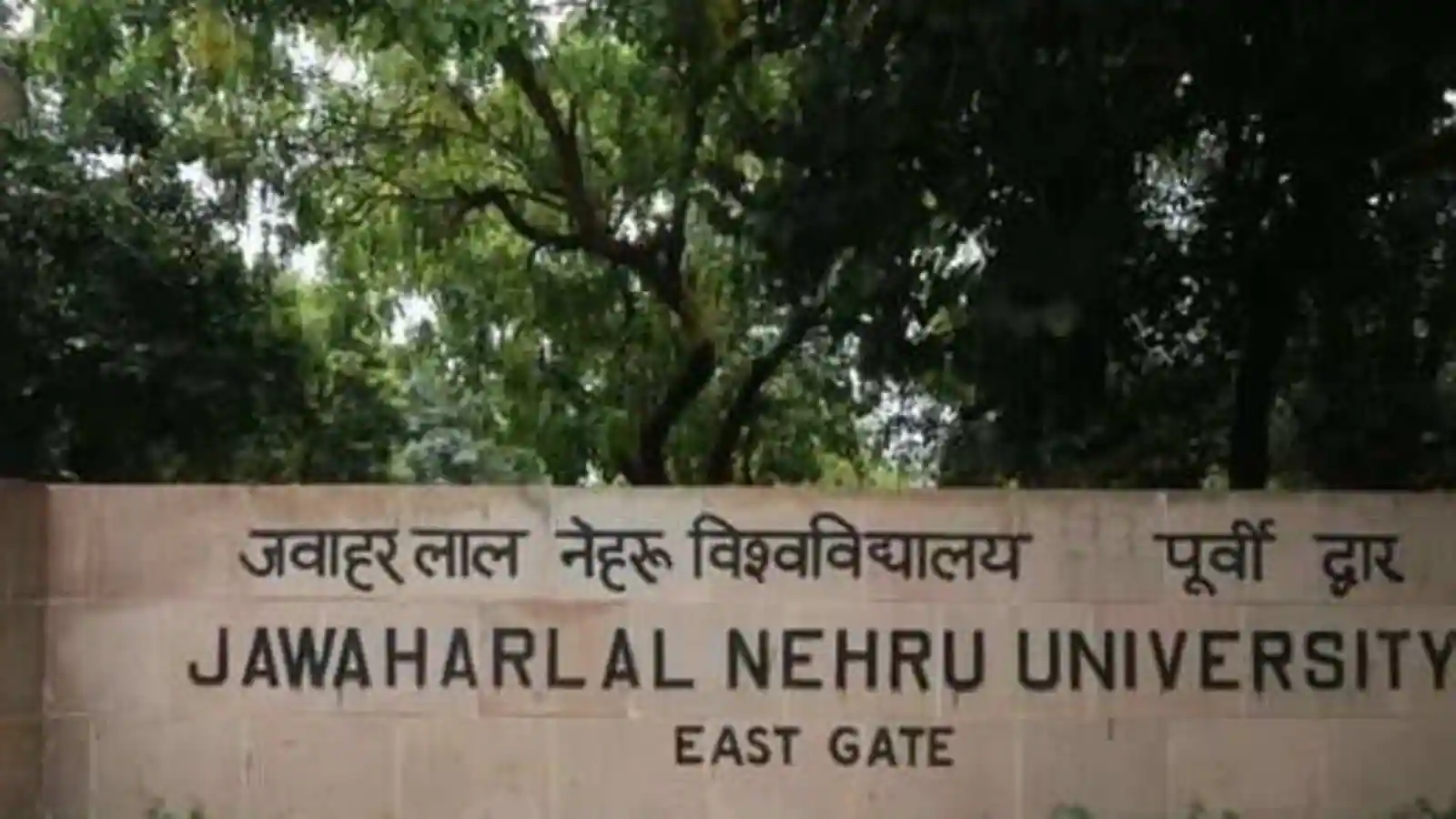
The Jawaharlal Nehru University imposed a night curfew on campus from 10:00 pm to 5:00 am, a day after the Delhi government issued a yellow alert in the city on Wednesday, December 30, 2021, because of the growing number of Covid and Omicron cases.

Published

on

Jawaharlal Nehru University

The Jawaharlal Nehru University imposed a night curfew on campus from 10:00 pm to 5:00 am, a day after the Delhi government issued a yellow alert in the city on Wednesday, December 30, 2021, because of the growing number of Covid and Omicron cases. The injunction will take effect immediately, according to the institution.

All offline academic activities will be discontinued, according to JNU’s decision, and the Dr. B R Ambedkar Central Library will stay closed until further orders are issued.

On production of a valid I-Card, those working in emergency services, medical emergencies, and the provision of commodities are permitted. Travel from, or to airports, railway stations, and ISBTs is permitted with the presentation of a valid ticket as indicated in the order.

On an odd-even basis, licensed stores of retail complexes, Tapti, Paschimabad, or Poorvanchal complexes, etc, are permitted to open between 10:00 am and 8:00 pm.

According to the notifications, all licensed stand-alone (single) stores and single shops in residential areas are permitted to operate between the hours of 10:00 am and 8:00 pm on all days, regardless of odd-even. From 8:00 am. to 10:00 pm, all authorized canteens are permitted to open with a 50 percent seating capacity.

Only outdoor yoga is permitted, according to the regulation. The university’s security division has also been asked to guarantee that Covid-appropriate behaviour, such as wearing face masks and keeping social distance should be ensured and observed on campus.

Read Also: NEET UG Counselling 2021: Check here MCC NRI Claim Notice

The directive said, the University Security Branch should provide efficient checking on the movement of individuals and vehicles on the University Campus by establishing a suitable number of checking points with the goal of preventing needless movement of people on highways.

Residents were urged not to leave the campus during the curfew hours. During the curfew, all campus gates will be locked except for emergency mobility, according to the statement.

India News

Kerala LSS USS result 2026: Official website slow? Check how to download scorecard online

The Kerala CM Kids LSS USS result 2026 has been declared online. Here is a comprehensive troubleshooting guide and step-by-step process to download your scorecard if the official portal bpekerala.in is down or unresponsive.

Published

on

Results

The Kerala Public Examination Section has officially announced the Kerala CM Kids LSS and USS result 2026. The scorecard link is live for candidates who sat for the scholarship eligibility examinations conducted in February 2026.

However, shortly after the declaration, several students and parents encountered difficulties trying to log onto the main portal, bpekerala.in. Due to a massive surge in simultaneous traffic from eager candidates, the official website has experienced temporary server slowdowns, loading delays, and intermittent error screens. Media reports indicate that the portal might stay slow during peak hours, but authorities ensure that the result data is perfectly safe and live online.

👉 Click Here to Check Kerala LSS USS Result 2026

Why the Kerala LSS USS result website is slow

Technical glitches right after a major result declaration are quite common due to infrastructural limitations during peak traffic. Some of the primary factors contributing to the current loading errors include:

  • High visitor traffic: Thousands of students trying to load the homepage simultaneously.
  • Server overload: Simultaneous database requests leading to temporary unresponsive servers.
  • Mobile compatibility limitations: Heavy traffic coupled with certain mobile browsers causing slow rendering times.

Step-by-step guide to download Kerala LSS USS result 2026

If you are experiencing slow loading speeds on the primary web server, you can carefully try the following steps to download your marksheet:

  • Step 1: Navigate to the official website at bpekerala.in and let the landing page load completely without interrupting.
  • Step 2: Find and click on the link labeled “CM Kids LSS USS Result 2026” or head directly to the dedicated “Results” tab on the interface.
  • Step 3: Enter your accurate credentials, which include your Registration Number and Date of Birth (formatted as DD/MM/YYYY), precisely as mentioned in your original hall ticket.
  • Step 4: Click on the “Submit” or “View Result” button. If the screen takes time to process, avoid refreshing multiple times as it can block your session.
  • Step 5: Once your breakdown of scores appears on the dashboard, download the digital copy or capture a screenshot, then print a physical copy for any future administrative or school needs.

Alternative links and troubleshooting tips

If bpekerala.in fails to open entirely, candidates are advised not to panic. A backup official digital platform has been set up to ease the main server load. Students can log into pareekshabhavan.kerala.gov.in to access mirrored links for checking their LSS and USS scholarship scores.

Additionally, you can follow these easy technical fixes to bypass server bottlenecks:

  • Clear browser data: Empty your browser cache or open the link using an Incognito/Private window.
  • Change connectivity: Switch your internet connection from mobile data to a stable Wi-Fi connection, or vice versa, to reset data routing.
  • Switch your browser: Try alternative web browsers like Mozilla Firefox or Google Chrome instead of default system web viewers.
  • Check during off-peak windows: Wait for about 15 to 30 minutes and re-attempt during non-peak windows when server traffic naturally drops down.

Continue Reading

Education

CBSE makes three languages mandatory for Classes 9 and 10 from July 1

CBSE has announced that students in Classes 9 and 10 must study three languages from July 1, 2026, though no board examination will be conducted for the third language during the initial rollout.

Published

on

CBSE

The Central Board of Secondary Education has announced that students in Classes 9 and 10 will be required to study three languages from July 1, 2026, as part of the implementation of the National Education Policy (NEP) 2020 and the National Curriculum Framework for School Education (NCFSE) 2023.

Under the revised structure, students will study languages under the R1, R2 and R3 format. The board has clarified that two of the three languages must be Indian languages.

However, CBSE has stated that there will be no Class 10 board examination for the third language, also referred to as R3, during the initial phase of implementation.

What the new language structure means

According to the updated curriculum framework, students will choose three different languages. The same language cannot be selected at more than one level simultaneously.

The board has explained the structure as:

  • R1: Any language offered by CBSE
  • R2: A language different from R1
  • R3: A third language different from both R1 and R2

The move is aimed at promoting multilingual education in line with NEP 2020 recommendations.

No board exam for third language initially

CBSE has clarified that although the third language will become mandatory for Classes 9 and 10, students will not immediately face a board examination for R3 in Class 10.

Reports said the full implementation of the three-language board examination structure is expected to happen gradually over the coming years.

Schools asked to prepare for rollout

The board has already directed schools to finalise language options and upload details on the OASIS portal to ensure smooth implementation of the revised policy.

CBSE has also indicated that temporary textbook arrangements and interim measures for language teacher shortages may be introduced during the transition phase.

Continue Reading

Education

NEET UG 2026 re-exam to be held on June 21 after paper leak row

NTA has scheduled the NEET UG 2026 re-exam for June 21 after cancelling the earlier test over alleged paper leak concerns.

Published

on

NEET Exam

The National Testing Agency (NTA) has announced that the NEET UG 2026 re-examination will be conducted on June 21 following the cancellation of the earlier exam amid allegations of a paper leak.

The original NEET UG 2026 examination, held on May 3, was scrapped after investigative agencies flagged concerns regarding the integrity of the exam process. The matter is currently under investigation by the Central Bureau of Investigation (CBI).

NTA issues fresh schedule

According to the official announcement, candidates who had registered for the cancelled examination will not be required to submit fresh applications for the re-test. Existing registrations will remain valid for the June 21 examination.

The agency has also advised students and parents to rely only on official NTA communication channels for updates related to admit cards, examination centres and other examination-related notifications.

Paper leak investigation underway

The NEET UG paper leak case has triggered a nationwide probe, with the CBI making multiple arrests in connection with the alleged leak network. Investigators are examining how question papers were allegedly circulated before the examination.

Reports have suggested that handwritten copies of the question paper were allegedly scanned and circulated through messaging networks and intermediaries ahead of the examination.

Students await admit cards and city slips

The NTA is expected to release fresh city intimation slips and admit cards ahead of the June 21 examination date. Candidates have been advised to regularly check the official NEET website for updates regarding examination centres and instructions.

Continue Reading

Trending

© Copyright 2022 APNLIVE.com