English हिन्दी
Connect with us

India News

Omicron appears to be less severe than Delta strain but should not be considered as mild, it is killing and hospitalising people, says WHO chief

Considering the situation of the pandemic, the WHO chief said that the pace at which the Omicron variant is spreading is overwhelming the health care system around the world.


Published

on

World Health Organisation

The world is grappling with yet another major Covid-19 variant. Emerged in South Africa, the Omicron variant has quickly spread to over 100 countries in recent weeks. Though the experts have earlier said that even though the variant is highly transmissible but is less severe than the Delta strain and this is why people have taken the Omicron lightly.

The World Health Organisation (WHO) has recently cautioned that Omicron shouldn’t be considered as mild as it’s also killing people worldwide just like previous strains. WHO chief Tedros Adhanom Ghebreyesus said, while Omicron does appear to be less severe compared to Delta, especially in those vaccinated, it does not mean it should be categorised as mild.

Dr Tedros has also underlined the emergence of new Covid-19 infections across the world as last week had witnessed the highest number of coronavirus cases in the world so far in the pandemic. Considering the situation of the pandemic, the WHO chief said that the pace at which the Omicron variant is spreading is overwhelming the health care system around the world.

Hospitals are becoming overcrowded and understaffed, which further results in preventable deaths from not only Covid-19 but other diseases and injuries where patients cannot receive timely care,

WHO Chief’s concern about vaccine!

While Omicron does appear to be less severe compared to Delta, especially in those vaccinated, it does not mean it should be categorised as mild, said Dr Tedros. Raising concern over the vaccine inequity and health inequity, he further said that these were the biggest failures of last year. Vaccine inequity is a killer of people and jobs and it undermines a global economic recovery, he added.

While some countries have had enough personal protective equipment, tests, and vaccines to stockpile throughout this pandemic, many countries do not have enough to meet basic baseline needs or modest targets, which no rich country would have been satisfied with.

According to WHO, 109 countries would not be able to fully vaccinate at least 70% of their population by the beginning of July 2022.

In order to curb the spread of Covid-19 much like before, several rich countries are opting for booster doses. Expressing disappointment on this, Dr Tedros said that booster after booster in a small number of countries will not end a pandemic while billions remain completely unprotected. But we can and must turn it around. In the short term, we can end the acute stage of this pandemic while preparing now for future ones.

Read Also: Covid 19 updates: India reports 1,17,100 fresh cases of coronavirus in last 24 hours, Omicron tally stands at 3,007 | Check state-wise list

According to the World Health Organization, the number of new COVID cases worldwide surged by 71% last week compared to the previous week. The number of new deaths, on the other hand, dropped by ten percent.

Continue Reading

India News

Deve Gowda hits back at Kharge’s married PM jibe, calls congress tie-up abusive relationship

HD Deve Gowda rebuts Mallikarjun Kharge’s remarks, saying JD(S) did not desert Congress and was forced to exit an “abusive” alliance.

Published

on

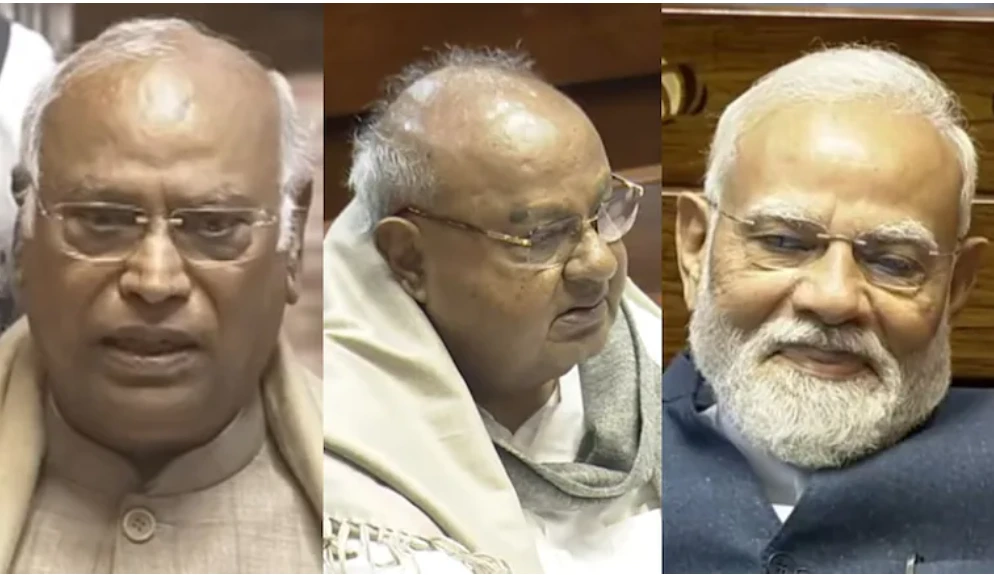
Former Prime Minister H. D. Deve Gowda has responded sharply to remarks made by Congress president Mallikarjun Kharge in the Rajya Sabha, rejecting the suggestion that he chose to align with Prime Minister Narendra Modi over the Congress.

War of words in rajya sabha

During his farewell speech in the Upper House, Kharge made a light-hearted remark about Deve Gowda’s political journey, saying he had “dated” the Congress but ultimately “married” Modi. The comment drew laughter across the House, including from the Prime Minister, who was present at the time.

Kharge also noted his long association with Deve Gowda, saying he had known him for over five decades but was unsure why the Janata Dal (Secular) leader shifted alliances.

Deve gowda’s ‘forced marriage’ reply

In a statement issued later, Deve Gowda said he was not present in the House when the comment was made as he had left for Bengaluru for Ugadi celebrations. Responding in similar metaphorical language, he said his association with the Congress was a “forced marriage” that eventually turned into an “abusive relationship.”

He asserted that his party did not leave the Congress alliance, but was instead compelled to move on after being sidelined.

Reference to 2018 karnataka alliance

Deve Gowda also revisited the 2018 Karnataka political developments, stating that the Congress leadership, including Ghulam Nabi Azad, had proposed his son H. D. Kumaraswamy as Chief Minister. He claimed he had instead suggested Kharge’s name, in the presence of leaders like Siddaramaiah.

Despite this, Kumaraswamy eventually took charge as Chief Minister after the Congress-JD(S) alliance formed the government.

Alliance collapse and aftermath

The coalition government collapsed in 2019 after multiple MLAs from both parties defected, leading to the fall of the government. Deve Gowda alleged that the Congress failed to act against those responsible for triggering the defections.

He maintained that the breakdown of the alliance left JD(S) with no option but to seek a “more stable” political partnership later.

Political context

Deve Gowda briefly served as Prime Minister following the 1996 Lok Sabha elections, heading a United Front government supported by the Congress. His party later allied with the Congress in Karnataka in 2018 before parting ways after the coalition government’s collapse.

Continue Reading

India News

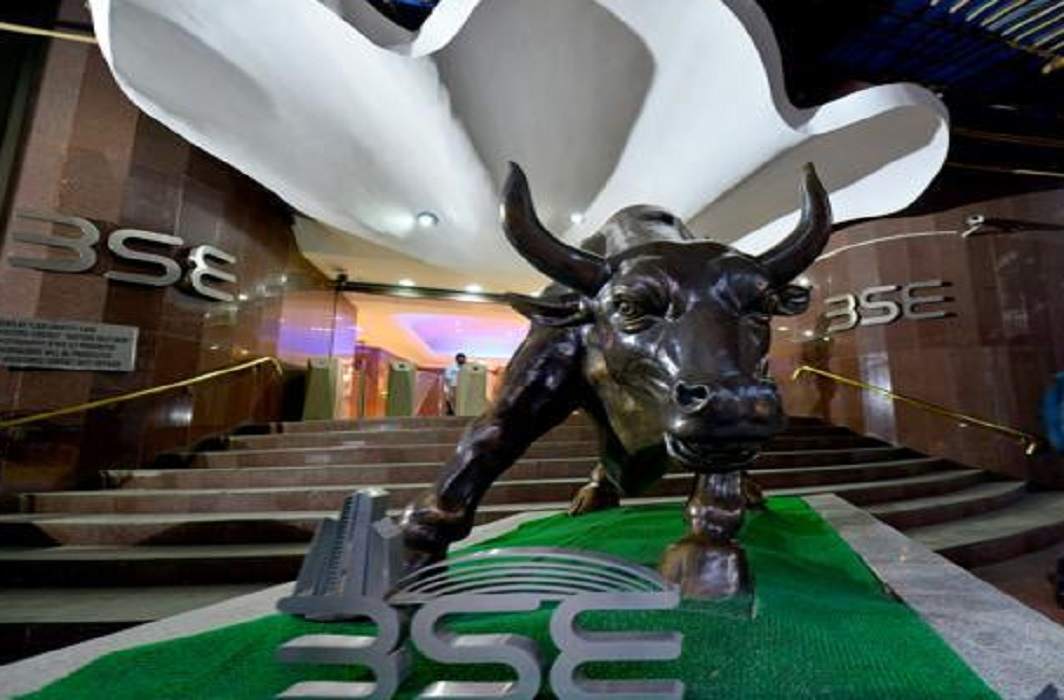
Markets tumble as oil crosses $110, sensex falls over 1,900 points

Markets opened sharply lower with Sensex plunging over 1,900 points as crude oil crossed $110 and global factors weighed on sentiment.

Published

on

Sensex

Indian stock markets opened sharply lower on Thursday, snapping a three-session gaining streak, as rising global crude oil prices and geopolitical tensions weighed heavily on investor sentiment.

Benchmark indices witnessed a gap-down opening, with the Sensex plunging over 1,900 points at the open, while the Nifty dropped more than 450 points. The decline follows reports of Iran targeting key energy infrastructure in the Gulf region, pushing Brent crude oil prices above the $110 per barrel mark.

At around 9:17 AM, the Sensex was trading at 75,235.05, down by 1,469.08 points. Meanwhile, the Nifty stood at 23,291.85, slipping 485.95 points.

Oil spike, global cues pressure equities

The surge in crude oil prices is a major concern for Indian markets, as higher oil costs can widen the current account deficit and fuel inflation. This often leads to cautious investor behaviour and triggers selling in equities.

Adding to the negative sentiment, the US Federal Reserve maintained its interest rates at current levels. Stable rates in the US tend to keep bond yields attractive, which can result in foreign institutional investors (FIIs) pulling money out of emerging markets like India.

Early indicators had already pointed to a weak start. GIFT Nifty futures were trading at 23,324, down 453 points, signalling a negative opening for domestic indices.

Expert view signals sectoral shift

According to InvestorAi’s strategic outlook, there has been a noticeable shift in market positioning towards IT large-cap stocks. The move reflects a preference for companies with stable earnings visibility, especially those earning in dollars amid a weakening rupee.

The analysis highlights that IT exporters benefit from currency depreciation, as revenues are largely dollar-denominated while costs remain in rupees. However, the outlook remains sensitive to crude prices. A sustained rise above $110 could force policy tightening and impact valuations.

Key stocks in focus

Among the top conviction picks highlighted:

  • Mphasis seen as a strong mid-cap IT play with AI and cloud exposure
  • Wipro emerging as a turnaround candidate with improving margins
  • TCS acting as a sector bellwether reflecting broader IT trends
  • PB Fintech offering a high-margin digital growth story
  • KEI Industries representing domestic infrastructure and electrification demand

What investors should watch

Market participants are closely tracking the rupee’s movement against the US dollar. A sustained breach beyond 90.5–91 levels could further support IT stocks but may also signal broader macroeconomic stress.

Additionally, crude oil prices and geopolitical developments will remain key triggers for market direction in the near term.

Continue Reading

India News

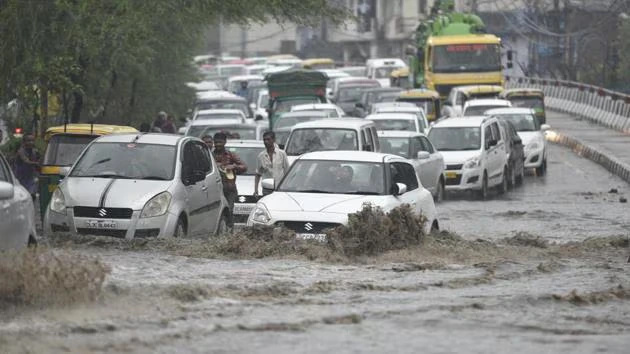
Delhi-NCR sees second spell of rain and thunderstorms in four days

Delhi-NCR experienced another spell of rain and thunderstorms on March 18, with IMD forecasting more showers over the next few days.
Published

on

Delhi and parts of the National Capital Region witnessed another spell of rain, thunderstorms, and strong winds on Wednesday evening, marking the second such weather event in the past four days.

The sudden change brought relief from unusually high temperatures recorded earlier this month. According to officials, the temperature at Safdarjung — the city’s base weather station — was recorded at 24 degrees Celsius at 7 pm.

The India Meteorological Department had earlier issued an alert predicting light to moderate rainfall accompanied by thunderstorms and lightning on March 18. Several areas across the capital experienced gusty winds along with brief but intense showers.

More rain likely over next two days

The weather department has forecast partly cloudy skies for March 19 and 20, with chances of light rain or thundershowers occurring once or twice during the day. On March 21, skies are expected to remain cloudy with the possibility of light showers continuing.

Conditions are likely to stabilise from March 23 onwards, with forecasts indicating a return to partly cloudy to clear skies across the region.

Weather activity across India to intensify

The IMD has also indicated widespread weather activity across multiple regions of the country in the coming days. Rainfall is expected to intensify in several states, accompanied by thunderstorms, lightning, and gusty winds.

In the northeastern region, heavy rainfall is likely over Arunachal Pradesh, Assam, and Meghalaya during the early part of the week.

Meanwhile, the western Himalayan region is also set to witness a shift in weather patterns. Himachal Pradesh is likely to receive heavy rainfall on March 19 and 20, while Uttarakhand and Jammu and Kashmir may experience heavy showers around March 20.

Continue Reading

Trending

© Copyright 2022 APNLIVE.com