English हिन्दी
Connect with us

India News

One year after Surgical Strike: A look at what India achieved

Published

on

surgical strike

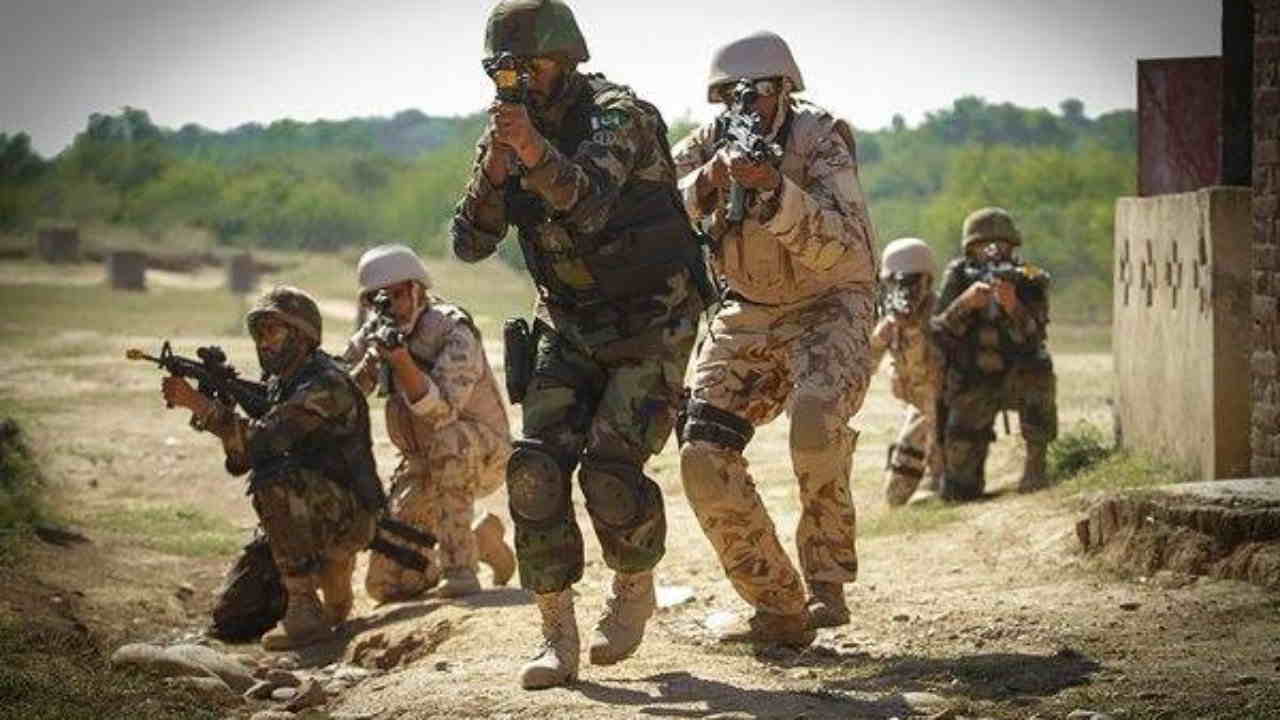
[vc_row][vc_column][vc_column_text]The Indian Army on the intervening night of September 28-29, last year, sent a special team of commandos to cross the LoC and attack terror bases in Pakistan-occupied Kashmir.

It’s been a year since the Indian Army carried out surgical strike along the Line of Control (LoC), to bring down terror launch pads in neighboring Pakistan. However, what the country achieved through one of the Army’s major military operation still remains a debatable issue. While many argue that the surgical strike was intended to serve the government’s political aim to demonstrate its capabilities to fight terror, several others believe that the strike was actually the biggest blow to Pakistan’s terror-funding strategies. Here is a look at the operation and how the events unfolded in its aftermath.

Execution:

The Indian Army on the intervening night of September 28 and 29, last year, sent a special team of commandos to cross the LoC and attack terror bases in the south Pir Panjal range of Pakistan-occupied Kashmir. The Army’s operation came as a response to the Uri attacks, where four armed Lashkar-e-Taiba (LeT) militants attacked army bases at Uri on September 19, claiming the lives of 19 jawans. Following the deadly Uri attack, the government led by Prime Minister Narendra Modi came under pressure, with infuriated citizens expecting a strong retaliation. And  amid heated outrage across the country, the then Army Chief General Dalbir Singh and Northern Army Commander Lieutenant General DS Hooda held several meetings with PM Modi and the then Defense Minister Manohar Parrikar. Following days of discussion, the Indian Army sent two teams of special commandos to carry out the surgical strike at officially unknown terror bases in Pakistan, reportedly killing at least 38 militants.

However, the Modi government’s decision to declare the execution of the surgical strike, unlike the previous practice to keep such operations completely covert, escalated domestic pressure on the Pakistani rangers and the government led by the then Prime Minister Nawaz Shariff. To manage the pressure, Pakistan resorted to complete denial. And, with a valid excuse of self-defense, India managed to keep international bodies distant from the entire episode. On the other hand, being unofficially convinced about Pakistan’s roles in backing terror outfits, major powers including United States and China stayed back from supporting Pakistan.

A year after Surgical Strike:

In a recent press conference, Army Chief Bipin Rawat lauded the success of the surgical strike and claimed, “The strike was a message we wanted to communicate to them and they have understood what we mean…that things could follow up, if required.” But, over frequent cross-border firings and infiltrations, he said, “terrorists will keep coming because the (terror) camps are operational there (across the LoC).”

While the total number of ceasefire violations by the Pakistani Rangers were 228 in 2016, this year the numbers have steeply risen to 285 till August 1. As many as eleven people, including nine armed force jawans have lost lives at the border in July, this year. Furthermore, the Pakistani forces resorted to 83 ceasefire violations, one Border Action Team (BAT) attack and two infiltration bids in June, claiming the lives of four, leaving behind 12 more injured.

Evidently invalidating the 2003 ceasefire agreement between India and Pakistan, the neighbouring country reportedly carried out more than 450 ceasefire violations along the LoC since the Surgical Strike in PoK. The Indian Army has lost at least 70 soldiers at the border in Kashmir since the surgical strike, while only 38 jawans were martyred in 2016.

In retaliation, the Indian Army had killed more than 180 terrorists after the 28th September military operation, while only 100 militants were neutralized in the previous year.[/vc_column_text][/vc_column][/vc_row]

India News

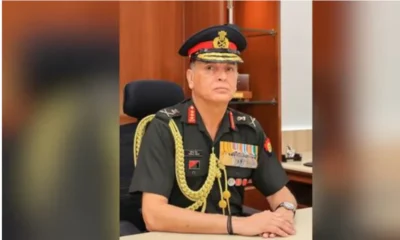
Lt Gen NS Raja Subramani appointed as India’s next Chief of Defence Staff

Lieutenant General NS Raja Subramani has been appointed as India’s next Chief of Defence Staff and will succeed General Anil Chauhan later this month.

Published

on

Lt Gen NS Raja Subramani appointed as India’s next Chief of Defence Staff

The Centre has appointed Lieutenant General NS Raja Subramani as India’s next Chief of Defence Staff (CDS), succeeding General Anil Chauhan, whose tenure will conclude on May 30.

According to the government announcement, Lieutenant General NS Raja Subramani will also serve as Secretary to the Government of India in the Department of Military Affairs from the date he assumes charge and until further orders.

Lt Gen Subramani is currently serving as the Military Adviser at the National Security Council Secretariat, a role he has held since September 2025. Before that, he served as Vice Chief of the Army Staff between July 2024 and July 2025.

A senior officer from the Garhwal Rifles, he was commissioned into the Indian Army in December 1985 and has held several important operational and command positions during his military career. He has commanded formations in Jammu and Kashmir, the Northeast and along the western front.

Lt Gen NS Raja Subramani is an alumnus of the National Defence Academy and the Indian Military Academy. He also studied at the Joint Services Command and Staff College in the United Kingdom and the National Defence College in New Delhi. He holds a Master’s degree from King’s College London and an MPhil in Defence Studies from the University of Madras.

The post of Chief of Defence Staff was created in 2020 to improve coordination among the Army, Navy and Air Force. General Bipin Rawat became India’s first CDS, followed by General Anil Chauhan in 2022. Lt Gen NS Raja Subramani will become the country’s third CDS after assuming office.

Continue Reading

India News

Bengal to get BJP’s first CM as Suvendu Adhikari set to take oath today

Suvendu Adhikari will be sworn in as West Bengal Chief Minister, marking the BJP’s first government formation in the state.

Published

on

Suvendu Adhikari is set to take oath as the Chief Minister of West Bengal, becoming the first leader from the Bharatiya Janata Party to head the state government.

The swearing-in ceremony is scheduled to take place at Brigade Parade Ground in Kolkata and is expected to witness the presence of several senior BJP leaders and supporters from across the state.

Adhikari was unanimously elected as the BJP legislature party leader after the party secured a decisive victory in the 2026 West Bengal Assembly elections. His appointment marks a significant political change in the state, where the BJP is forming the government for the first time.

Prime Minister Narendra Modi, Union Home Minister Amit Shah and several Union ministers are expected to attend the ceremony. Reports also indicate that the oath event has been planned on a large public scale to underline the BJP’s breakthrough in Bengal politics.

Adhikari emerged as one of the BJP’s key faces in Bengal after defeating Mamata Banerjee in the high-profile Nandigram contest in 2021 and later consolidating his position within the party’s state leadership.

Security arrangements have been tightened around the oath venue, while party workers have gathered in large numbers ahead of the ceremony. The event is being viewed as a landmark moment in West Bengal’s political history.

Continue Reading

India News

PM Modi to lead Somnath Amrit Parv celebrations with grand roadshow in Gujarat

PM Modi is set to visit Somnath Temple in Gujarat for the Somnath Amrit Parv celebrations marking 75 years of the temple’s reconstruction, with a roadshow and religious ceremonies planned.

Published

on

PM Modi

Prime Minister Narendra Modi is set to visit the Somnath Temple in Gujarat on May 11 to lead the ‘Somnath Amrit Parv’ celebrations marking the 75th anniversary of the temple’s reconstruction.

According to state ministers and senior officials, the Prime Minister will take part in religious rituals, lead a public roadshow, and address a gathering during the celebrations.

The visit comes months after PM Modi attended the Somnath Swabhiman Parv held earlier this year, which commemorated 1,000 years since the first recorded attack on the temple in 1026.

Grand roadshow and cultural programmes planned

Officials said PM Modi will arrive in Somnath from Jamnagar and lead a one-kilometre roadshow from the Triveni Helipad to the statue of Veer Hamirji Gohil. The procession is expected to feature cultural dance performances from different Indian states along with displays representing the 12 Jyotirlingas.

A Suryakiran Air Show and a flower petal shower over the temple spire are also planned during the event. The Prime Minister is expected to be welcomed by Rishikumars and members of local communities dressed in traditional attire.

During his visit, PM Modi will perform rituals including Kumbhabhishek, Dhvaja Puja and Mahapuja at the temple before addressing a public gathering at Sadbhavna Ground.

Somnath reconstruction anniversary

The celebrations mark 75 years since the reconstructed Somnath Temple was inaugurated in 1951 in the presence of India’s first President Rajendra Prasad. The reconstruction effort after Independence was led under the vision of Sardar Vallabhbhai Patel and supported by leaders including K.M. Munshi.

State minister Jitu Vaghani said the temple’s restoration remains a symbol of national self-respect and resilience.

After the Somnath events, PM Modi is scheduled to travel to Vadodara to inaugurate the Sardardham Educational Complex. Preparations are also underway for a possible roadshow in the city later in the day.

Continue Reading

Trending

© Copyright 2022 APNLIVE.com