English हिन्दी
Connect with us

India News

PM Modi concludes China visit, leaves for home

Published

on

PM Modi concludes China visit, leaves for home

Next Informal Summit expected in India

Prime Minister Narendra Modi, having spent 24 hours in Chinese city of Wuhan for holding historic informal summit, first of its kind, with President Xi Jinping, has today left for New Delhi.

During the summit Modi and Xi underlined the importance of maintaining peace and tranquillity in the border region. They will issue strategic guidance to their respective militaries to strengthen communication in order to build trust and mutual understanding. The two sides will also work together in implementing confidence building measures.

Modi and Xi decided to strengthen the Closer Development Partnership in a mutually beneficial and sustainable manner. This will be conducive for the development and prosperity of the people as well as the region.

PM Modi  held one-on-one talks with Xi which is being seen as an effort by India and China to rebuild trust and improve ties that were hit by the 73-day-long Dokalam standoff last year.

Two leaders have also agreed to undertake a joint economic project in Afghanistan, a first of its kind by the two countries in the war ravaged country. Officials of both sides will identify the project in following up discussions and work out modalities. Observers believe that India-China cooperation in Afghanistan may irk Pakistan.

The two leaders will seek a fair settlement to their border disputes, and to this end Special Representatives appointed by the two governments will play a key role.

The two leaders have recognised the common threat posed by terrorism and committed to cooperate further on counter-terrorism efforts. However, the issue of getting Jaish-e-Mohammad chief Masood Azhar enlisted as designated terrorists at UN, was not discussed in particular.

The two countries have also agreed to push forward bilateral trade and investment in a balanced and sustainable manner by taking advantage of complementarities between the two countries. Both the leaders reiterated the importance of building an open and pluralist global economic order in which all countries can freely participate to pursue their development.

The two leaders have agreed to hold more informal Summit for direct, free and candid exchange of views. Both agreed that meetings on the lines of Wuhan summit will determine the future direction of ties between the countries. Before leaving, PM Modi extended invitation to Xi to India for a similar informal summit next year.

The two leaders began their informal meetings way back in 2014 when Xi was hosted by PM Modi at the Sabarmati Ashram of Mahatma Gandhi in Gujarat. They have met and interacted in about a dozen international meetings.

This was the fourth China visit for PM Narendra Modi after he came to power in 2014. He is expected to visit China to take part in the Shanghai Cooperation Organisation (SCO) summit to be held at Qingdao city on June 9-10.

PM Modi was seen off by Chinese Vice Foreign Minister, Kong Xuanyou and Chinese Ambassador to India, Luo Zhaohui and other officials at Wuhan airport.

India News

MK Stalin announces major DMK organisational Changes in Tamil Nadu

MK Stalin has announced a major DMK organisational overhaul, introducing age and term limits and expanding party districts from 77 to 110.

Published

on

DMK chief MK Stalin has announced a major overhaul of the party’s organisational structure, months after the party lost the Tamil Nadu assembly election.

Acknowledging the defeat, Stalin said the party must openly recognise its mistakes. He also pointed to the functioning of party office-bearers as one of the factors behind the electoral loss.

“Although there are several reasons for our defeat, the functioning of our party office-bearers is also one of them,” Stalin said, stressing that the party must acknowledge its shortcomings and ensure better performance at every level.

Stalin also described the DMK as a “specialist” in making comebacks and said the party would return stronger.

Age and term limits for party posts

Among the major changes announced by Stalin are age and tenure limits for party positions.

Stalin said the changes would involve a significant restructuring of the DMK’s administrative system, with priority being given to new faces. He said the measures were intended to make the party sustainable for the next 100 years and help restore the trust of young people and women.

Under the new rules, branch secretaries must be aged 45 or below and can hold the position for a maximum of two terms.

District secretaries, meanwhile, must be below 70 years of age and can serve for a maximum of three terms.

DMK to increase party districts from 77 to 110

The DMK executive committee has approved increasing the number of party districts from 77 to 110.

The expansion will be implemented as part of the party’s 16th organisational elections. Revenue districts will generally be reorganised so that each party district covers two assembly constituencies.

Where only one constituency remains after the reorganisation, it will be attached to another suitable party district within the same revenue district as a third constituency.

Stalin has been authorised to determine and announce the constituencies that will form the 110 party districts.

New branch structure planned in urban areas

The DMK will also introduce a new branch-level structure in urban areas, along with the post of branch secretary.

The new system will initially be implemented in Chennai, Coimbatore, Madurai, Tiruchirappalli and Salem. It may subsequently be extended to other corporations.

Once the new party districts are announced, district executive committees will have to meet and establish the union, city, area, town, ward and branch-level units within 15 days.

The organisational changes come as the DMK seeks to restructure its party machinery and prepare for its political comeback following its assembly election defeat.

Continue Reading

India News

PM Modi says India’s political stability makes India a bright spot for growth

PM Modi said India’s political stability and policy continuity are helping make the country a bright spot of growth amid global concerns.

Published

on

Narendra Modi 12345

Prime Minister Narendra Modi on Friday said India has political stability and continuity in its policies, describing the country as a bright spot of growth and hope amid global concerns over economic growth.

Addressing the Economic Times World Leaders Forum, PM Modi said India is continuing to push reforms across sectors to maintain its growth momentum. He said reforms remain a key commitment of his government.

The Prime Minister said the NDA government has a clear roadmap for reforms, with a strong focus on governance. He also said the government is using incentives to encourage higher production.

PM Modi highlights shift in regulatory approach

PM Modi said his government is changing the country’s regulatory framework and moving away from what he described as a “prohibited-unless-permitted” approach.

He said the government believes there should be no regulation for an activity that has not been explicitly prohibited under law. According to him, the aim is to bring next-generation reforms at the policy and governance levels while improving ease of living.

He also contrasted the current Production Linked Incentive (PLI) model with what he described as a “Production Linked Punishment” approach followed by previous governments.

Focus on infrastructure and manufacturing

PM Modi cited changes in areas including the Indian Railways, Delhi Metro and Namo Rapid Rail as examples of reforms reflecting India’s changing needs.

He also said the government has changed the approach towards border infrastructure, which he described as a strength rather than a weakness.

The Prime Minister further highlighted India’s affordable data services and domestic mobile-phone manufacturing while discussing the country’s economic transformation.

India seen as a growth bright spot

PM Modi said the world is facing several concerns related to growth, including the weaponisation of resources, but India is being viewed as a bright spot of growth.

He said India’s political stability, policy continuity and reform efforts are helping sustain the country’s growth momentum.

Continue Reading

India News

Jharkhand students, JMM workers clash over Hemant Soren effigy burning

Clashes broke out in Ranchi, Hazaribag and Giridih as protesting students attempted to burn effigies of Hemant Soren and Rahul Gandhi.

Published

on

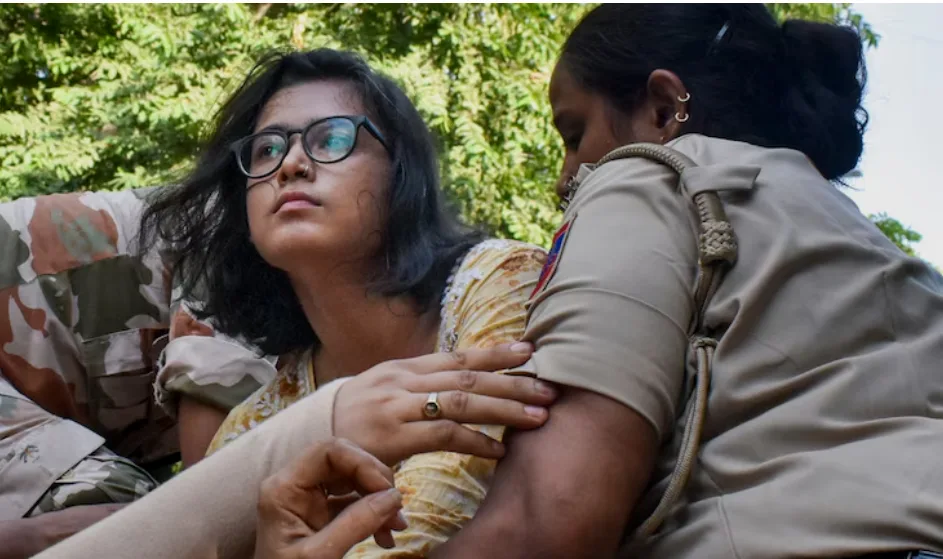
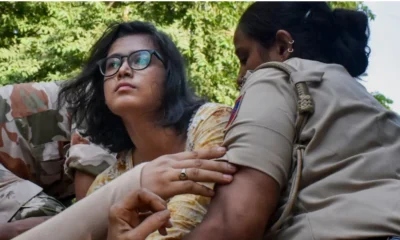
Clashes broke out between protesting students and police in Ranchi and several other parts of Jharkhand on Friday evening as students attempted to burn effigies of Chief Minister Hemant Soren and Congress leader Rahul Gandhi, officials said.

Similar incidents were reported in Hazaribag and Giridih, where workers of the ruling Jharkhand Mukti Morcha (JMM) clashed with students who were trying to burn effigies of Soren.

The protesting students are affiliated with the JPSC-JSSC Reforms Manch. They have accused the Jharkhand government of deceiving and betraying job aspirants following the High Court’s intervention in cases concerning recruitment examinations and appointments.

In Ranchi, a large number of students gathered at Albert Chowk to burn the effigies. Police said a scuffle broke out when they tried to control the situation.

Ranchi DSP KV Raman said the protesters changed the designated route of their march and went towards the JPSC office, where traffic was brought to a halt.

According to Raman, police repeatedly asked the protesters to follow the designated route for the march and effigy burning, but the students did not comply.

Student leaders, however, alleged that police and JMM workers attempted to prevent them from holding a peaceful march.

“They cannot stop us from holding peaceful and democratic protests,” JPSC-JSSC Reforms Manch leader Ravindra Paswan said.

Another student leader, Piyush Kumar Singh, alleged that a core committee member of the Manch, Kunal, was detained by police. He claimed that Kunal fainted and was subsequently taken to Sadar Hospital.

The protesters also alleged that female participants were assaulted by JMM workers during the scuffle.

Why are Jharkhand students protesting?

The students had earlier called off their agitation after the Hemant Soren government decided to cancel JPSC examinations where irregularities had been alleged.

However, the Jharkhand High Court subsequently intervened in several matters related to the recruitment process.

On Friday, the court stayed notifications cancelling the appointments of Child Development Project Officers (CDPOs) and those recruited through the JSSC-CGL examination.

A day earlier, the court had stayed notifications cancelling the 11th and 13th JPSC examinations. It had also stayed the order cancelling the appointments of food safety officers.

The developments have renewed the students’ concerns over the government’s handling of recruitment-related cases.

JLKM announces recruitment reforms yatra

Meanwhile, JLKM leader Devendra Nath Mahto announced that his party would launch a ‘Recruitment System Reforms Yatra’ from August 24.

Mahto alleged that the Jharkhand government was not strongly defending cases concerning the cancellation of several recruitment examinations before the High Court.

He warned that if the government failed to effectively present its case before the Jharkhand High Court on September 15, when the matters are scheduled for hearing, they would plan to gherao the Chief Minister’s residence.

Continue Reading

Trending

© Copyright 2022 APNLIVE.com