English हिन्दी
Connect with us

India News

PM Modi to visit Uttarakhand today to review flood-hit regions

Published

on

PM modi japan visit

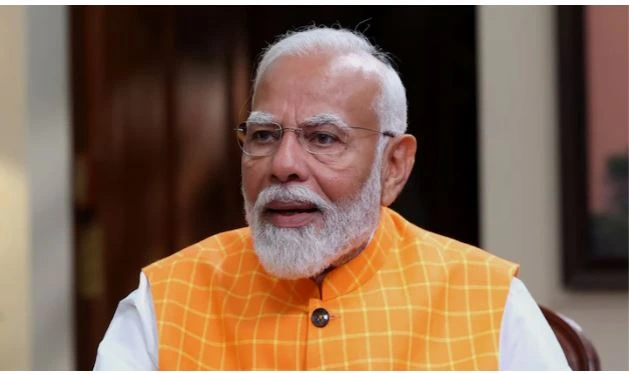
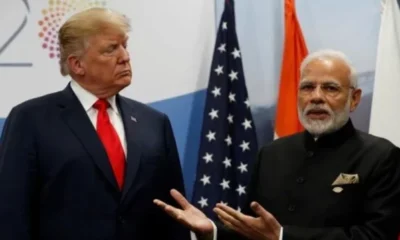
Prime Minister Narendra Modi will travel to Uttarakhand on Thursday to assess the devastation caused by continuous monsoon-triggered disasters that have left a trail of destruction across the state.

Aerial survey and high-level meeting

The Prime Minister is expected to arrive in Dehradun by Thursday evening. At around 4:15 p.m., he will undertake an aerial survey of the affected regions to gauge the extent of damage. Later, at 5 p.m., he will chair a review meeting with state and central officials to evaluate the ongoing relief and rehabilitation measures.

Officials confirmed that elaborate security arrangements have been put in place for the visit.

Heavy losses due to monsoon fury

Uttarakhand has witnessed severe cloudbursts, landslides, and flash floods in recent months. According to government officials, the calamities have claimed over 80 lives, left nearly 100 people missing, and caused injuries to thousands. Damage to infrastructure, including roads, schools, and power lines, has been estimated at over ₹5,000 crore.

A central team had earlier visited the state to assess the situation and coordinate assistance measures.

Modi’s recent visits to disaster-hit states

Before his Uttarakhand visit, PM Modi inspected flood-hit areas in Punjab and Himachal Pradesh earlier this week.

Meeting with Mauritian PM in Varanasi

Earlier in the day, PM Modi will host Mauritian Prime Minister Navinchandra Ramgoolam in Varanasi at around 11:30 a.m. The high-level talks will focus on strengthening the ‘Enhanced Strategic Partnership’ between India and Mauritius, with emphasis on renewable energy, digital public infrastructure, healthcare, and the blue economy.

India News

Sonam Wangchuk shifted to Medanta after Delhi High Court order

Activist Sonam Wangchuk was transferred from Safdarjung Hospital to Medanta Hospital in Gurugram after the Delhi High Court directed his immediate shift and ordered continuous medical supervision.

Published

on

Activist Sonam Wangchuk was shifted from Safdarjung Hospital in Delhi to Medanta Hospital in Gurugram on Tuesday evening after the Delhi High Court directed his immediate transfer for further treatment.

Hospital authorities said Wangchuk was discharged from VMMC and Safdarjung Hospital at 6:40 pm and handed over to a medical team from Medanta in compliance with the court’s order issued on July 21.

Court orders transfer and continuous monitoring

A bench comprising Chief Justice D K Upadhyaya and Justice Tejas Karia directed that Wangchuk be shifted to Medanta Hospital without delay.

The court also instructed the hospital’s director to constitute a team of doctors with the required expertise to continuously monitor his health. It said the medical team should administer treatment in accordance with accepted medical protocols, which Wangchuk must follow.

The order came on an appeal filed by Wangchuk’s wife, Gitanjali Angmo, challenging an earlier High Court decision that had declined to interfere with his treatment at Safdarjung Hospital or permit his transfer to Medanta.

Medical condition stable at discharge

According to Safdarjung Hospital, Wangchuk’s vital parameters were stable at the time of discharge.

However, doctors said pancytopenia continued to persist and his serum potassium level was recorded at 3.4 mEq/L.

The hospital added that all medical records, investigation reports and treatment documents were handed over to the Medanta medical team to ensure continuity of care.

Court cites constitutional rights

In its order, the Delhi High Court observed that Wangchuk should be allowed to receive treatment at a hospital of his choice, saying such a decision was protected under Articles 19 and 21 of the Constitution.

Wangchuk has been on an indefinite fast since June 28 over alleged examination irregularities.

Continue Reading

India News

Union Minister Jitendra Singh says Rahul Gandhi changed demands after Centre agreed to Parliament discussion

Union Minister Jitendra Singh claimed Rahul Gandhi changed his demands during talks at the Congress protest after the Centre agreed to a Parliament discussion on the NEET and paper leak issues.

Published

on

Union Minister of State in the Prime Minister’s Office Jitendra Singh has alleged that Congress leader Rahul Gandhi changed his demands during talks held at the party’s protest outside Prime Minister Narendra Modi’s residence on Tuesday.

According to Singh, the government had agreed to Congress’ request for a discussion in Parliament on the NEET examination and other alleged paper leak issues. However, he claimed Rahul Gandhi later insisted that Union Education Minister Dharmendra Pradhan should also resign.

Jitendra Singh recounts conversation with Rahul Gandhi

In a post on X, Jitendra Singh said he, along with Union Home Secretary Govind Mohan, met Congress leaders after being sent by the government as the protest was led by senior leaders including Congress president Mallikarjun Kharge, Rahul Gandhi and Priyanka Gandhi.

The minister claimed Rahul Gandhi initially told him the protest would be withdrawn if the government agreed to hold a discussion in Parliament on the NEET issue, other examination paper leaks and the protests related to them.

Singh said he obtained approval from the government’s top leadership and informed Rahul Gandhi that the Centre was ready to discuss all issues related to NEET and the associated movement in Parliament.

Minister alleges demands were later changed

Jitendra Singh alleged that after being informed of the government’s decision, Rahul Gandhi introduced an additional demand.

According to the minister, Rahul Gandhi then sought an assurance that Union Education Minister Dharmendra Pradhan would resign. Singh claimed the Congress leader stated that his demands now included both a parliamentary discussion and the education minister’s resignation.

The minister further alleged that when reminded that his original demand had only been for a discussion in Parliament, Rahul Gandhi responded that his demands had changed.

‘It is my prerogative,’ says minister

Jitendra Singh also claimed that when he urged Rahul Gandhi not to alter his position so quickly, the Congress leader replied that it was “his prerogative.”

The minister further said Union Home Secretary Govind Mohan informed Rahul Gandhi that the location was not appropriate for a sit-in protest. According to Singh, Rahul Gandhi responded that it was “his prerogative to sit wherever he wants.”

Congress MPs had earlier said the discussions between the two sides remained inconclusive and that the party’s demands had not been met.

Continue Reading

India News

Rahul Gandhi, Priyanka Gandhi, Akhilesh Yadav removed during protest outside PM Modi’s residence

Congress leaders Rahul Gandhi, Mallikarjun Kharge and Priyanka Gandhi led a protest outside PM Modi’s residence over the NEET paper leak issue before police removed several Opposition leaders.

Published

on

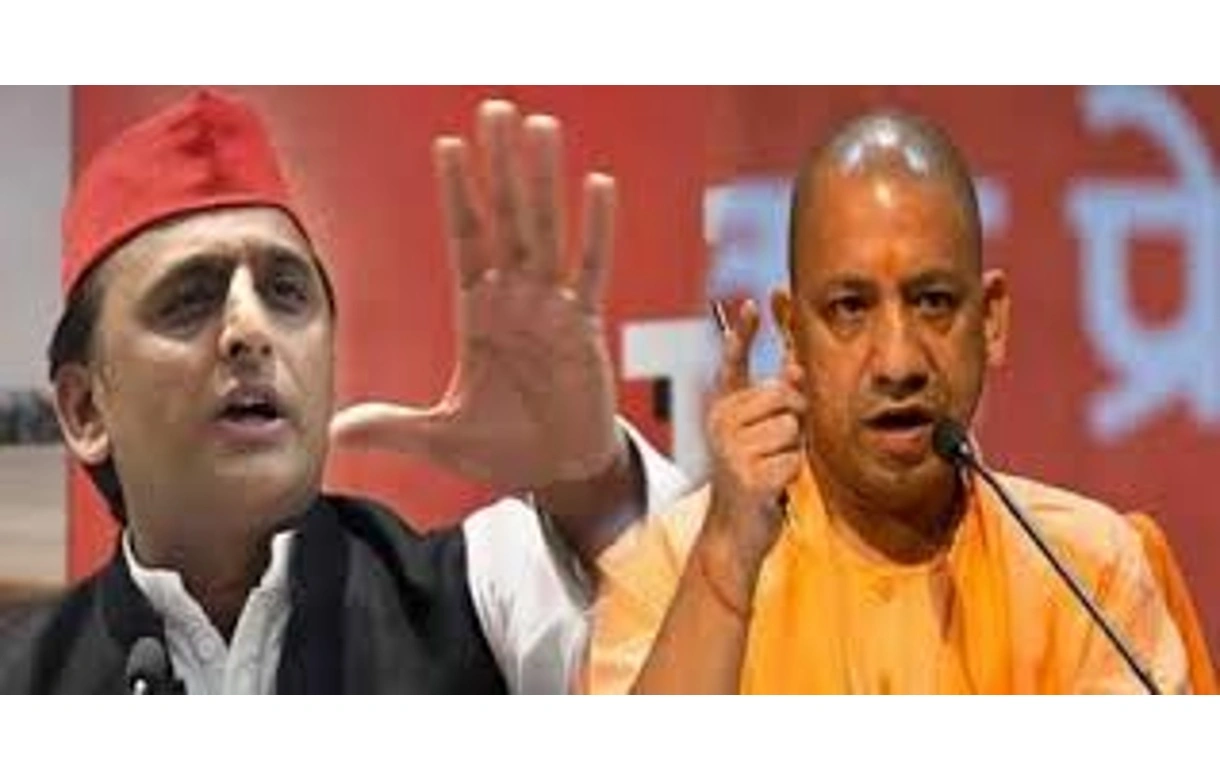
Congress leader Rahul Gandhi, Congress president Mallikarjun Kharge and Priyanka Gandhi led a protest march to Prime Minister Narendra Modi’s residence in New Delhi on Tuesday over the NEET paper leak issue and alleged police action against protesters. Later in the evening, Delhi Police removed Rahul Gandhi, Priyanka Gandhi, Samajwadi Party chief Akhilesh Yadav and other leaders from the protest site.

Rahul Gandhi, the Leader of the Opposition in the Lok Sabha, remained seated on the road while refusing to leave before police personnel escorted him to a bus and removed him from the area.

Before the protest ended, Rahul Gandhi appealed to people to join the demonstration, saying that an attack on students was an attack on every Indian family and demanding justice for students.

Congress sticks to demands

The protest began after Congress leaders gathered outside the residence of Mallikarjun Kharge and marched towards the Prime Minister’s residence. During the protest, Union Minister Jitendra Singh met Rahul Gandhi and held discussions with him.

According to Congress leaders, the talks remained inconclusive as the party insisted on two key demands—a discussion in Parliament on the paper leak issue and the resignation of Union Education Minister Dharmendra Pradhan.

However, Jitendra Singh later claimed Rahul Gandhi had initially agreed to end the protest if Parliament discussed the issue but later added the minister’s resignation as another condition.

Police removed the protesters shortly after the minister’s statement.

Protest follows CJP march

The Congress demonstration came a day after the Cockroach Janta Party (CJP)-led march to Parliament over alleged irregularities in NEET and other examinations. The CJP claimed several protesters were injured during police action.

Delhi Police, however, alleged that protesters turned violent, attacked personnel, damaged police vehicles and threw stones. The force said 118 police personnel were injured during Monday’s violence.

During Tuesday’s protest, Congress leaders accused the government of avoiding accountability and alleged that the Opposition was not allowed to raise the issue in Parliament. Kharge questioned why the Opposition was prevented from discussing the alleged assault on students.

Samajwadi Party president Akhilesh Yadav and NCP (Sharadchandra Pawar) leader Supriya Sule also joined the protest.

Meanwhile, the government maintained that it was ready to discuss the concerns of protesters but would not tolerate violence. Prime Minister Narendra Modi also said preventing examination paper leaks was a national responsibility and stressed that strict action had been taken after reports of the NEET paper leak emerged.

Continue Reading

Trending

© Copyright 2022 APNLIVE.com