
India News
Rahul Gandhi Launches Nation-Wide Shut Down Against Rising Prices


Congress President Rahul Gandhi has led the kick start of the opposition sponsored “Bharat Bandh” at Mahatma Gandhi’s memorial Rajghat in the capital on Monday to protest against the rise in fuel prices and depreciation of the rupee against US dollar.
At least 21 opposition parties are participating in the nationwide shutdown. Delhi’s ruling Aam Aadmi Party (AAP), which had refused to join the bandh, also sent its leader Sanjay Singh.
Top opposition leaders present at Raghat were: Sonia Gandhi, former PM Dr. Manmohan Singh, Sharad Pawar and MK Stalin. Left leaders have supported the day long shut down, while Mamata Banerjee’s Trinamool Congress has decided to stay away. The effect of the bandh is expected to be strong in states like Kerala, Karnataka and West Bengal.
Read More: Rahul Gandhi attacks Modi Government for trying to impose RSS ideology on the country
This is Rahul Gandhi’s first public appearance after he returned from Kailash Mansarovar Yatra. Dr. Manmohan Singh, while participating in the protest said, “The (Narendra) Modi government has done a number of things that were not in the interest of the nation. The time to change this government will come soon.”

Randeep Surjewala, the spokesperson of Congress party said, “We demand that petrol and diesel be brought under the ambit of the GST. High prices of petrol and diesel found no mention in the BJP’s national executive meeting because they are not bothered about the pain of public.”
Schools and colleges were closed in Bengaluru on Monday after Karnataka’s ruling Janata Dal Secular, which is in alliance with the Congress, said it would support the day-long protest. Schools in Odisha too are closed, though Chief Minister Naveen Patnaik’s party has refused to back the shutdown.
In Karnataka, the drivers associated with Uber and Ola taxi services, Auto Drivers’ Association and other organizations such as Karnataka Rakshana Vedike, Karnatak State Road Transport Corporation, Bangaluru Motor Transport Corporation have also joined the day long shut down.
Read More: Rahul Gandhi Emerges Centre of Opposition Unity
Reports indicate that train and road traffic were affected in many parts of Bihar. Over a dozen long route trains had to stop at Patna, Gaya, Bhojpur, Jehanabad, Bhagalpur and Muzaffarpur railway stations.

The Congress said it had urged party workers not to indulge in any violent protest. Ajay Maken, party’s Delhi unit president said, “I appeal to all Congress workers to make the bandh violence-free. We are Mahatma Gandhi’s party and we should not associate ourselves with any violence.”
The ruling Trinamool Congress in West Bengal has expressed support on the issues on which the shut down has been called, but said it was against any kind of strike in the state according to their stated policy.
In Tamil Nadu, DMK leader MK Stalin said the centre is not doing anything to halt the rupee’s slide against the dollar or to control the fuel prices.
On Sunday, the prices of Petrol and diesel set new records. Petrol price was raised by 12 paise a litre and diesel by Rs. 10 paise per litre. Hours before the opposition-backed shutdown, the BJP government in Rajasthan announced tax cuts on petrol and diesel leading to prices falling by Rs. 2 per litre.
Heavy security arrangements were in place in Maharashtra, a BJP-ruled state, where the opposition Congress and the Nationalist Congress Party (NCP) of Sharad Pawar are participating in the protest.
According to Indian Oil Corporation website, on Sunday, a litre of petrol costs was Rs. 80.38 in New Delhi, Rs. 83.27 in Kolkata, Rs. 87.77 in Mumbai, and Rs.83.56 in Chennai.
A litre of diesel was at Rs. 72.51 in New Delhi – the highest ever. In Kolkata, diesel was priced at Rs.75.36 a litre, in Mumbai Rs. 76.98 per litre, and in Chennai Rs. 76.66/ litre.










India News
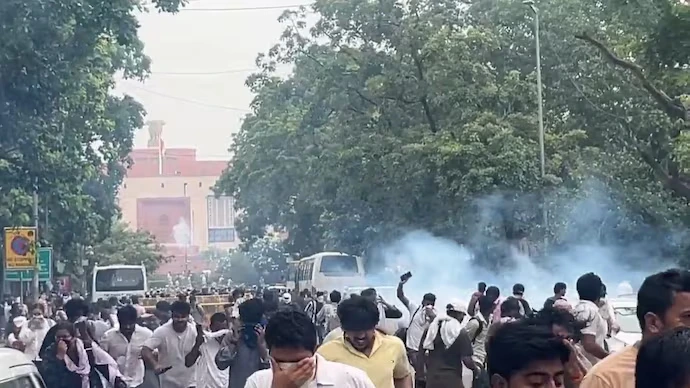
Delhi deploys 25,000 personnel, installs CCTV cameras ahead of CJP march
More than 25,000 police and paramilitary personnel have been deployed in Delhi ahead of the CJP’s planned protest march at Connaught Place. Authorities have also imposed restrictions and stepped up CCTV surveillance.

India News
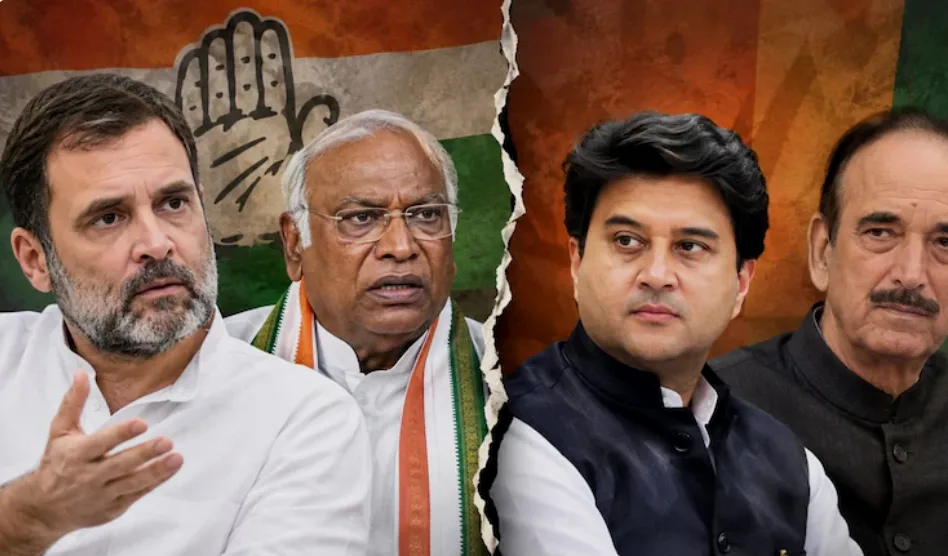
Mallikarjun Kharge’s ‘Your Friends’ jab at Rahul Gandhi over congress exits
Congress president Mallikarjun Kharge took a dig at Rahul Gandhi after the Leader of the Opposition reportedly described former party leaders Jyotiraditya Scindia and Ghulam Nabi Azad as among those who had left the Congress.
India News
Delhi Police offers 11-person limit for CJP’s Connaught Place protest
Delhi Police has offered to facilitate a group of 11 people at Central Park in Connaught Place for the Cockroach Janata Party’s October 16 protest, while warning that violations of prohibitory orders could invite legal action.


India-US trade deal first phase finalised, drafting underway

Election Commission orders voter roll revision in 17 states, UTs

Actor Imran Khan asked to leave India after CJP protest

Delhi Police offers 11-person limit for CJP’s Connaught Place protest

Mallikarjun Kharge’s ‘Your Friends’ jab at Rahul Gandhi over congress exits

Magnitude 7 earthquake strikes Russia’s Kamchatka Peninsula

Delhi deploys 25,000 personnel, installs CCTV cameras ahead of CJP march
Mallikarjun Kharge’s ‘Your Friends’ jab at Rahul Gandhi over congress exits
Delhi Police offers 11-person limit for CJP’s Connaught Place protest
Actor Imran Khan asked to leave India after CJP protest

Afghan Men Try To Hang With The Jet Engine Of The Aircraft in Kabul- Afghanistan News – Kabul News
Trending Top 10 News: 10000 Crore Fine on Flipkart, Apple to Launch Unique Feature, Hdfc Bank Job Ad

Trending Top 10 News: Nokia 6310, Apple sales, Bachpan ka Pyar Video Kid, Dainik Bhaskar IT Raid

Trending Top 10 News: Canada bans Indian flights, Rain in Delhi NCR, AIMIM Twitter hacked, Raj Kundra case

Trending Top 10 News: Shein India, Apple New Service, Pocket Oxygen, Oppo Launched New Phone
-
 India News20 hours ago
India-US trade deal first phase finalised, drafting underway
-
 India News17 hours ago
Election Commission orders voter roll revision in 17 states, UTs
-
 India News17 hours ago
Actor Imran Khan asked to leave India after CJP protest
-
 India News16 hours ago
Delhi Police offers 11-person limit for CJP’s Connaught Place protest
-
 India News4 hours ago
Mallikarjun Kharge’s ‘Your Friends’ jab at Rahul Gandhi over congress exits
-
 India News4 hours ago
Delhi deploys 25,000 personnel, installs CCTV cameras ahead of CJP march
-
 Latest world news4 hours ago
Magnitude 7 earthquake strikes Russia’s Kamchatka Peninsula
