
India News
Ramdas Athawle denies Jignesh role in Bhima-Koregaon crisis


He wants Jignesh to work for uniting society
In a damage control effort in Bhima-Koreagon crisis, the BJP led NDA government has assigned a Dalit leader from the Maharashtra- Ramdas Athawle, the minister of state for social justice and empowerment to contain Jignesh Mevani, who has recently won election in Gujarat Assembly and has been claiming to be a challenge for PM Narendra Modi in 2019 general elections.
On Sunday, Athawle met Maharashtra CM Devendra Fadnavis in Mumbai and discussed the developments after the violence triggered on January 1, when Dalits came under attack allegedly by Hindutva elements.
Speaking to media persons after meeting with the Chief Minister, Athawle tried to reconcile the Dalit community and its youth leader Jignesh Mevani and surprisingly said that Mevani was not responsible for the violence in Bhima-Koregaon.
Athawale said that there was tension in the area even before 200th anniversary of the Bhima-Koregaon. Considered to be an important Dalit leader in Maharashtra., Athgawle is the founder leader of Republican Party of India (A) and represents Maharashtra in Rajya Sabha.
Jignesh has denied of even visiting Bhima Koregaon and delivering speech and said that government was trying to tarnish his image. He has asserted that such FIR cannot deter him from his commitment of serving Dalit cause.
On January 5, while addressing media persons at Press Club of India Jignesh said “PM should speak on the rising number of incidents against Dalits, from Vemula suicide to Una in Gujarat to Saharanpur in UP and now Bhima Koregaon. Why are these attacks happening only in BJP-ruled states?” he asked.
“The PM should clarify whether Dalits of this country have a right to peaceful demonstration or not, why is he not reacting to these atrocities,” he further added.
Members of Dalit community visiting Bhima-Koregaon war memorial came under attack by right wing pro-Hindutva activists, who were opposing the anniversary celebrations. However, Hindutva leaders have alleged that Mevani and JNU student leader Umar Khalid delivered “provocative speeches” resulting into the violence.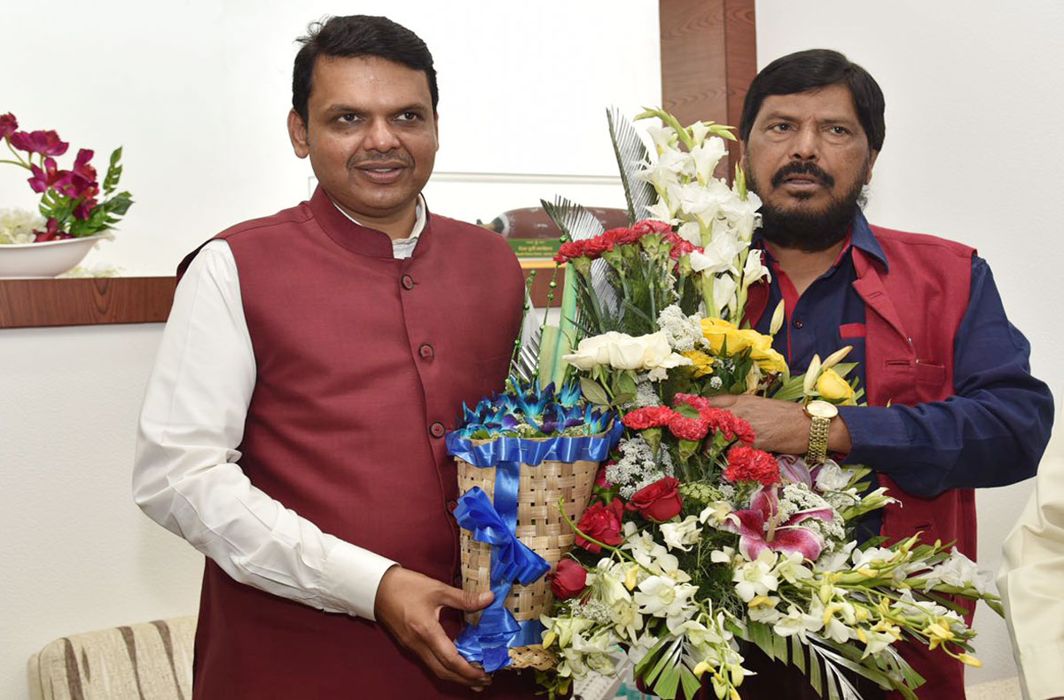
Athawle said, “Jignesh is not responsible for the violence at Bhima- Koregaon. There was tension in the area prior to January 1. I had visited the place and the tension had eased. So, I had returned to Delhi on December 31. On the same day, Jignesh had delivered his speech at the Shaniwar Wada in Pune. He had not gone to Bhima-Koregaon. Some groups had held a meeting at night and the violence took place on January 1.”
He has reportedly said, “I have congratulated Jignesh on his Assembly election victory. It is good that a young, fresh Dalit face is emerging. My advice to him is that he should focus on uniting the society and not dividing it.”
He defended PM for not speaking on the incident by saying, “It is not necessary that the prime minister should comment on every development. After the Una incident (where Dalits were assaulted by cow vigilantes), Modi had criticised it.” Jignesh has recently demanded PM statement on the incident.
Maharashtra CM Devendra Fadnavis assured Athawle that people who were responsible for the Bhima-Koregaon violence would be punished and compensation would be given for the damaged properties. He is also organising “social harmony conference” in Pune on January 13.
Ramdas Athawle has also admitted that the January 3 Maharashtra shutdown against the Bhima- Koregaon violence has put Dalit community’s strength in focus. He offered his party’s services to Dalits by saying, “If Dalits can come together to voice their anger, the RPI factions can also do so to lend political strength to the community.”
Observers believe that Athawle was trying to maintain his Dalit leadership and did not choose to speak about Jignesh Mevani more than once. He has also advised the young Dalit leader to focus on “uniting the society and not dividing it”.






India News
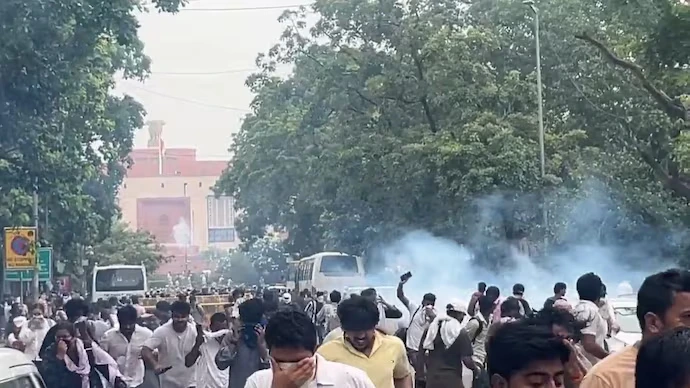
Delhi deploys 25,000 personnel, installs CCTV cameras ahead of CJP march
More than 25,000 police and paramilitary personnel have been deployed in Delhi ahead of the CJP’s planned protest march at Connaught Place. Authorities have also imposed restrictions and stepped up CCTV surveillance.

India News
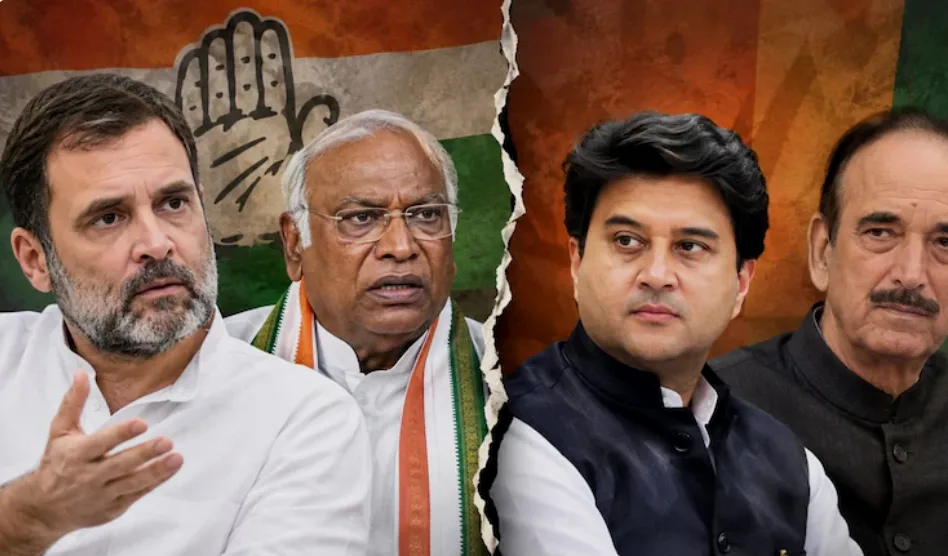
Mallikarjun Kharge’s ‘Your Friends’ jab at Rahul Gandhi over congress exits
Congress president Mallikarjun Kharge took a dig at Rahul Gandhi after the Leader of the Opposition reportedly described former party leaders Jyotiraditya Scindia and Ghulam Nabi Azad as among those who had left the Congress.
India News
Delhi Police offers 11-person limit for CJP’s Connaught Place protest
Delhi Police has offered to facilitate a group of 11 people at Central Park in Connaught Place for the Cockroach Janata Party’s October 16 protest, while warning that violations of prohibitory orders could invite legal action.


India-US trade deal first phase finalised, drafting underway

Election Commission orders voter roll revision in 17 states, UTs

Actor Imran Khan asked to leave India after CJP protest

Delhi Police offers 11-person limit for CJP’s Connaught Place protest

Mallikarjun Kharge’s ‘Your Friends’ jab at Rahul Gandhi over congress exits

Magnitude 7 earthquake strikes Russia’s Kamchatka Peninsula

Delhi deploys 25,000 personnel, installs CCTV cameras ahead of CJP march
Mallikarjun Kharge’s ‘Your Friends’ jab at Rahul Gandhi over congress exits
Delhi Police offers 11-person limit for CJP’s Connaught Place protest
Actor Imran Khan asked to leave India after CJP protest

Afghan Men Try To Hang With The Jet Engine Of The Aircraft in Kabul- Afghanistan News – Kabul News
Trending Top 10 News: 10000 Crore Fine on Flipkart, Apple to Launch Unique Feature, Hdfc Bank Job Ad

Trending Top 10 News: Nokia 6310, Apple sales, Bachpan ka Pyar Video Kid, Dainik Bhaskar IT Raid

Trending Top 10 News: Canada bans Indian flights, Rain in Delhi NCR, AIMIM Twitter hacked, Raj Kundra case

Trending Top 10 News: Shein India, Apple New Service, Pocket Oxygen, Oppo Launched New Phone
-
 India News20 hours ago
India-US trade deal first phase finalised, drafting underway
-
 India News18 hours ago
Election Commission orders voter roll revision in 17 states, UTs
-
 India News18 hours ago
Actor Imran Khan asked to leave India after CJP protest
-
 India News17 hours ago
Delhi Police offers 11-person limit for CJP’s Connaught Place protest
-
 India News5 hours ago
Mallikarjun Kharge’s ‘Your Friends’ jab at Rahul Gandhi over congress exits
-
 India News5 hours ago
Delhi deploys 25,000 personnel, installs CCTV cameras ahead of CJP march
-
 Latest world news5 hours ago
Magnitude 7 earthquake strikes Russia’s Kamchatka Peninsula
