English हिन्दी
Connect with us

India News

Maharashtra removes loan cap under farm waiver scheme, extends benefits to 56 lakh farmers

Maharashtra has expanded its farm loan waiver scheme by removing the earlier eligibility ceiling and extending coverage to overdue loans until the 2026-27 financial year, benefiting around 56 lakh farmers.

Published

on

Maharashtra CM Fadnavis vows to recover damage cost from rioters, warns of bulldozer action

The Maharashtra government has announced major changes to its latest farm loan waiver programme, removing the earlier eligibility ceiling linked to outstanding dues and extending the cut-off period for overdue loans.

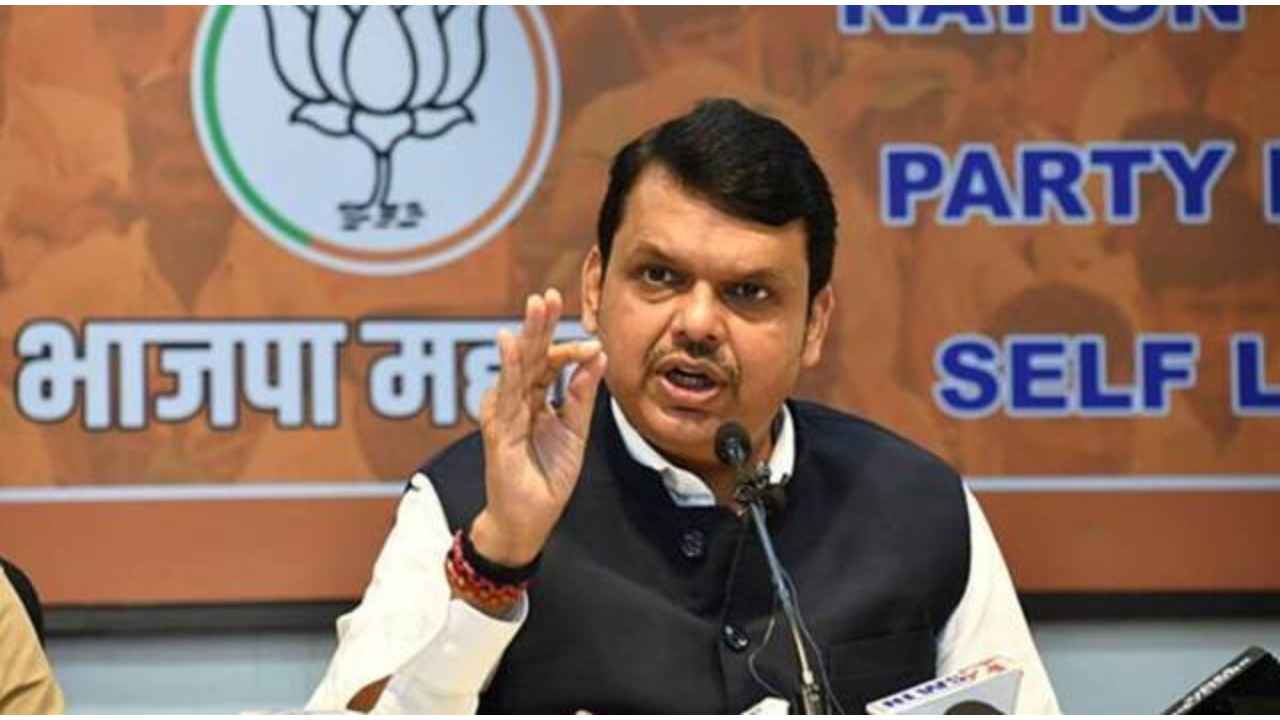
Chief Minister Devendra Fadnavis made the announcement in the state legislative assembly while replying to a debate on the opposition-sponsored ‘last week motion’. He said the revised provisions under the Punyashlok Ahilyadevi Holkar Farm Loan Waiver Scheme are expected to benefit around 56 lakh farmers across the state.

Loan waiver eligibility expanded

Fadnavis said the previous condition under which farmers with dues exceeding Rs 2 lakh were excluded has been removed. According to him, this change will allow thousands of farmers who had earlier missed out on the benefits because of the eligibility ceiling to receive assistance.

The chief minister also announced that the scheme’s cut-off for overdue loans has been extended. Earlier applicable to pending dues until the 2025-26 financial year, the scheme will now include loans outstanding up to the 2026-27 financial year.

Government defends need for loan waiver

Defending the decision, Fadnavis said farm loan waivers are intended to help financially distressed farmers regain access to institutional credit and prevent them from falling into the hands of private moneylenders.

He said the government chose to introduce the scheme despite there being no state elections until 2029, as farmers were facing financial challenges.

The chief minister also highlighted that Maharashtra provides an annual electricity subsidy of around Rs 25,000 crore to farmers, while agricultural subsidy schemes together account for nearly Rs 95,000 crore.

Scheme to provide Rs 36,000 crore in assistance

Rejecting criticism that only a limited number of farmers would benefit, Fadnavis said the revised scheme would provide assistance worth approximately Rs 36,000 crore to around 56 lakh farmers.

He recalled that the Mahatma Jyotirao Phule farm loan waiver scheme launched in 2019 limited eligibility to overdue loans of up to Rs 2 lakh, with farmers losing eligibility even if their dues exceeded the cap by a single rupee. Around 32 lakh farmers had benefited under that programme, he added.

According to the chief minister, Maharashtra has implemented major farm loan waiver schemes in 2017, 2020 and 2026.

Government seeks balance between farmer relief and banking stability

Fadnavis acknowledged that repeated loan waivers could encourage delayed repayments and affect the financial health of cooperative banks.

He said the government considered suggestions to prevent previous beneficiaries from availing future loan waiver schemes but ultimately decided to maintain a balance between supporting farmers and safeguarding the banking system.

The chief minister noted that beneficiaries of the 2017 state loan waiver were excluded from the 2019 Mahatma Phule scheme, while farmers covered under the 2008 national loan waiver were also excluded from Maharashtra’s 2009 programme.

Farmers under earlier scheme also to receive expanded benefit

Responding to demands from ruling alliance legislators, Fadnavis said removing the existing Rs 50,000 repayment-related condition would increase the financial burden on the state by an estimated Rs 4,000-5,000 crore.

However, he announced that farmers who had received benefits under the Mahatma Phule loan waiver scheme would now also be eligible for waiver benefits of up to Rs 2 lakh under the revised framework.

He added that representatives from the banking sector were consulted before finalising the scheme. The state plans to spend Rs 20,000 crore during the first year, Rs 22,000 crore in the second year and Rs 25,000 crore thereafter as part of its broader support for the agriculture sector.

India News

Assam proposes Rs 77,353 crore investment to strengthen power infrastructure

Assam has announced a Rs 77,353 crore investment plan in its 2026-27 Budget to expand power generation, renewable energy, storage and transmission infrastructure across the state.

Published

on

The Assam government has announced an extensive investment plan worth Rs 77,353 crore to expand the state’s power infrastructure under the 2026-27 Budget. The proposals cover electricity generation, renewable energy, storage facilities and transmission networks as the government looks to improve energy availability and support future demand.

Presenting the Budget on Friday, Finance Minister Jayanta Mallabaruah said the state aims to significantly increase its power generation capacity through a combination of thermal, hydroelectric and solar projects while strengthening the electricity transmission system.

Among the largest proposals is an investment of Rs 40,000 crore for a 3,200 MW ultra-supercritical thermal power plant, expected to become one of Assam’s biggest power generation facilities. Another Rs 27,100 crore has been earmarked for pumped storage projects with a combined capacity of 4,900 MW.

Renewable energy projects receive boost

The Budget also places emphasis on renewable energy development. It includes plans for 137 MW of small hydropower generation, 75 MW of solar power capacity and a 25 MW Battery Energy Storage System (BESS) in Kamrup district.

In addition, the 120 MW Lower Kopili Hydroelectric Project has reached the trial commissioning stage.

The government has also proposed setting up 11 small hydropower projects across Karbi Anglong, West Karbi Anglong, Dima Hasao, Udalguri, Biswanath and Sivasagar districts. New solar power installations are also planned in Sonitpur and Namrup to further expand the state’s clean energy capacity.

Transmission network to be modernised

Apart from increasing power generation, the government has proposed major investments to strengthen electricity transmission infrastructure.

Around Rs 4,600 crore has been allocated for new 400 kV transmission corridors and grid substations aimed at improving power supply across Assam.

Over the next five years, the state plans to add nearly 15,000 circuit kilometres of transmission and distribution lines, establish 120 substations and install around 20,000 High Voltage Distribution Systems (HVDS). The government also aims to reduce transmission and distribution losses from 13.4 per cent to 8 per cent.

Private sector projects to support capacity expansion

The Budget announcement comes alongside major private sector investments in Assam’s power sector. Projects awarded to the Adani Group, including a 3,200 MW thermal power plant and 2,700 MW of pumped storage capacity, are expected to contribute significantly to the state’s future electricity generation capacity.

Continue Reading

India News

27-year-old dies after falling into open drain in Noida amid heavy rainfall

A 27-year-old worker died after falling into an uncovered drain in Noida during heavy rainfall. The incident has sparked allegations of civic negligence as widespread rain disrupted life across Noida and Ghaziabad.

Published

on

A 27-year-old man died after falling into an open drain in Noida on Thursday as heavy rainfall lashed the city, leading to severe waterlogging, traffic congestion and damage to infrastructure in several areas.

The deceased, identified as Aryan, son of Sanjay Kumar, was a resident of Village Chaura in Sector 22. According to police, he was on his way to work in Sector 58 when he fell into an open drain in Sector 57.

A colleague, Shubham, rushed him to the District Hospital in Sector 39, where doctors declared him dead on arrival. Police at Sector 58 Police Station registered the case, completed the inquest proceedings and sent the body for post-mortem examination. Further legal action is under way.

Family alleges negligence over uncovered drain

Aryan’s family has accused the Noida Authority of negligence, alleging that the drain had been left uncovered without adequate safety measures. The incident has sparked concern among local residents, many of whom say several open drains across the city continue to pose safety risks.

The death has also triggered public outrage, with residents demanding improved civic infrastructure and preventive measures to avoid similar incidents.

Heavy rain causes widespread disruption in Noida and Ghaziabad

The fatal accident occurred as heavy rainfall affected normal life across Noida and neighbouring Ghaziabad.

Several areas, including Sectors 16, 33 and 12, witnessed severe waterlogging, with water accumulating up to knee level in some locations. Commuters, especially pedestrians and two-wheeler riders, struggled to navigate flooded roads.

Many motorcycles and scooters broke down after water entered their exhaust systems, forcing riders to push their vehicles through submerged stretches. Some people were seen walking along roadside dividers to cross waterlogged roads safely.

Traffic movement was also severely affected during the morning rush hour near the Botanical Garden area, where long queues of vehicles moved at a slow pace. Police personnel were deployed to regulate traffic and reduce congestion.

In another rain-related incident, a company’s boundary wall collapsed in Sector 63 due to the downpour. No injuries were reported.

Meanwhile, authorities in Ghaziabad declared a holiday for government schools following the heavy rainfall.

A separate incident was reported from Vasundhara Sector 13, where a portion of the road caved in beside an under-construction basement after continuous rain. A parked car and a scooter fell into the crater, while a nearby electricity pole tilted towards the damaged section. Although no injuries were reported, both vehicles sustained extensive damage.

Continue Reading

India News

Internal report warned of imminent Wayanad tunnel slope failure before deadly landslide

An internal geological assessment reportedly warned of imminent slope failure at the Wayanad tunnel project days before the landslide that claimed six lives.

Published

on

Wayanad Tunnel

Six days before the Kerala government halted work at the Wayanad tunnel project, an internal geological report prepared by the project’s sub-contractor had reportedly warned that the slope above the tunnel’s north portal could fail at any moment under prevailing monsoon conditions.

The landslide struck the north portal of the under-construction tunnel in Wayanad on Tuesday, killing six people and raising serious questions over slope stability and safety measures at the site.

Report highlighted severe slope instability

According to the internal assessment prepared by Dilip Buildcon Limited (DBL), the sub-contractor handling the tunnel work, the hillside above the north portal had already begun showing signs of structural distress.

The report was jointly prepared by DBL senior geologist Raju Sagar, Geological Survey of India (GSI) official A. Ramesh Kumar and Authority Engineer Dr H.K. Singh from Turkish Engineering Consulting & Contracting.

The assessment covered inspections carried out between June 3 and June 11 at the north portal near Kalladi-Meppadi in Wayanad.

Engineers found that the slope consisted of nearly 35 metres of loose silty soil over hard rock. The report noted that this type of soil retains water during heavy rainfall, increasing its weight while reducing stability and making it vulnerable to landslides.

Despite slope protection measures including stepped cutting, shotcrete and soil nailing, engineers observed widening cracks, soil movement, muddy seepage and cavities developing within the slope.

Underground water flow raised major concerns

One of the report’s key findings was the presence of underground water flowing between two support levels inside the slope.

According to the assessment, such internal water movement could erode the soil from within, significantly weakening the hillside and increasing the likelihood of a sudden collapse.

The report specifically identified the left side of the north portal as carrying a much higher risk than the right slope and warned that, under existing rainfall conditions, it “may culminate in sudden slope failure at any time.”

Safety systems found to be inadequate

The report also pointed to shortcomings in the site’s safety infrastructure.

It found that several drainage holes designed to reduce water pressure inside the slope were either ineffective or not functioning properly on the high-risk section. It also noted that piezometers, which monitor underground water pressure and provide early warning of slope instability, had not yet been installed.

The assessment added that the existing monitoring equipment was not accurately reflecting the visible signs of distress observed at the site.

Blasting not identified as primary cause

Trial blasting for tunnel excavation was conducted on June 5, June 6 and June 11 while the slope was already showing signs of instability.

However, the report concluded that recorded blast vibrations remained within permissible limits and indicated that prolonged heavy rainfall, rather than blasting, was the primary factor behind the slope deterioration.

Engineers recommended multiple corrective measures

The internal assessment recommended several immediate measures to improve slope stability.

These included constructing gabion retaining walls along the vulnerable left slope, covering exposed soil with protective matting and tarpaulin, creating lined drainage channels to divert rainwater, and carrying out field tests to verify the effectiveness of existing soil nails and drainage systems under saturated conditions.

The report also expressed concern over the location of a nearby concrete batching plant, stating that its weight and heavy vehicle movement could further affect slope stability. It recommended relocating the facility away from the vulnerable area.

Contractor and project authorities respond

Project authorities said the report had primarily been commissioned to assess the impact of blasting activities.

An engineer associated with Konkan Railway Corporation reportedly said work at the north portal was stopped after the findings emerged.

The engineer maintained that shotcrete was used alongside 12-metre-long concrete anchor rods installed at two-metre intervals to strengthen the slope. He also claimed that the landslide occurring above the site would have been difficult to prevent through conventional safety measures.

When asked about monsoon preparedness and slope protection, project representatives said standard engineering practices had been followed. However, they did not provide a clear explanation regarding the status of gabion wall construction or whether there had been shortcomings in preparing the site for tunnel work.

The contractor also stated that delays in government land allocation for storing excavated soil affected project logistics.

Following the landslide, the engineer said nearly 200 workers at the project’s south portal left the site out of fear and that construction would not resume until an expert committee appointed by the Kerala government approved future safety measures.

The internal report was prepared days before the District Collector issued a stop-work order on June 20, indicating that work at the north portal had already been halted amid growing concerns over slope stability.

Continue Reading

Trending

© Copyright 2022 APNLIVE.com