English हिन्दी
Connect with us

India News

Rs 1,160 crore rice diversion case widens, 56 mills and 22 ethanol plants under investigation

Authorities have expanded the alleged Rs 1,160 crore government rice diversion investigation, bringing 56 rice mills and 22 ethanol plants under scrutiny over suspected misuse of subsidised rice meant for ethanol production.

Published

on

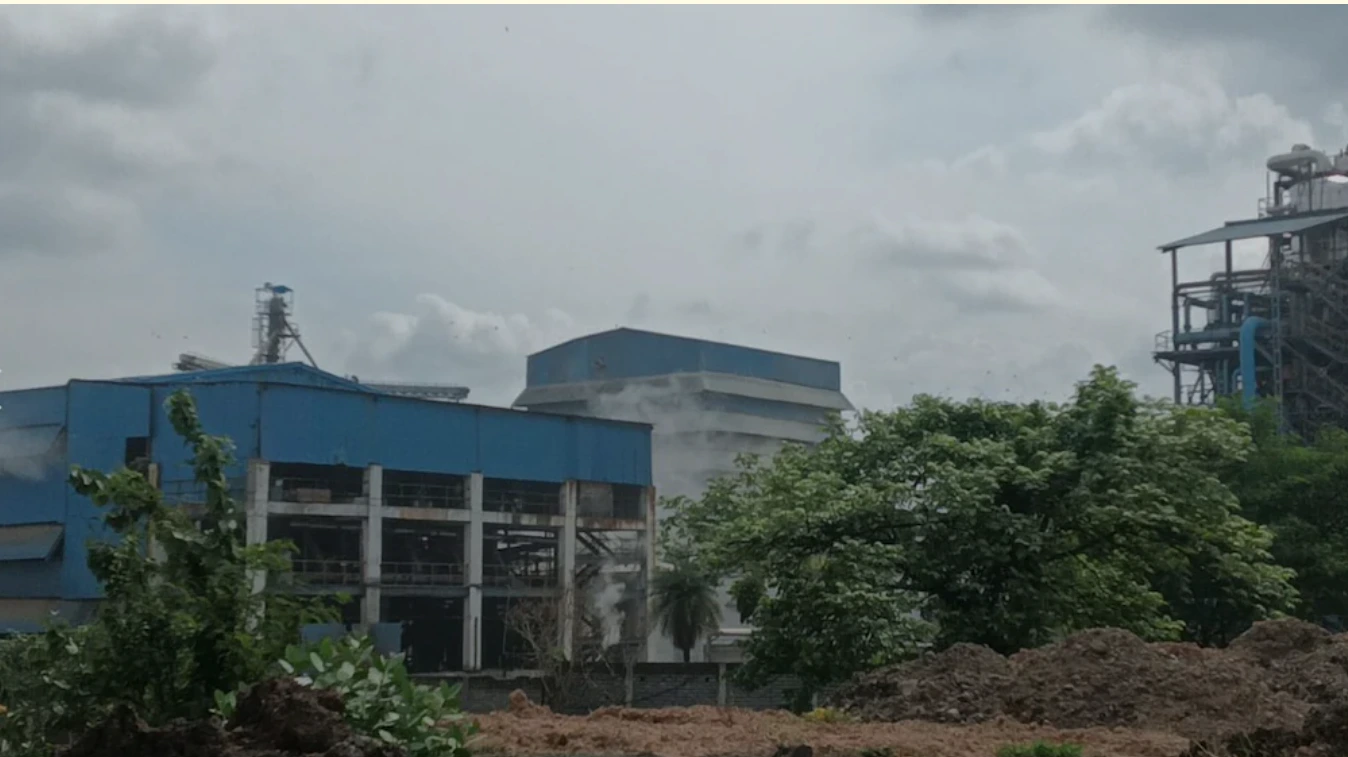
Government agencies have widened their investigation into an alleged Rs 1,160 crore rice diversion case, bringing 56 private rice mills and 22 ethanol plants across 17 districts under scrutiny. The probe is focused on determining whether subsidised government rice allocated for ethanol production was diverted through private mills instead of being used for its intended purpose.

Investigation expands after truck found at private rice mill

The investigation began after a truck transporting government rice from a Food Corporation of India (FCI) warehouse to an ethanol plant was allegedly found inside a private rice mill. What initially appeared to be an isolated incident has now expanded into a multi-district probe involving 17 seized trucks, over 50 witness statements and multiple accused.

Authorities are trying to establish how much of the nearly 5 lakh metric tonnes of government rice supplied to ethanol plants was actually converted into ethanol and whether a portion of it was diverted before returning to government warehouses.

Alleged circular trade under investigation

Investigators suspect that subsidised rice supplied to ethanol plants at around Rs 2,320 per quintal may have been sold to private rice mill operators at higher prices instead of being processed into ethanol.

According to the investigation, the rice was allegedly repacked by private mills and deposited back into government warehouses as custom-milled rice. Officials are also examining whether the original paddy supplied for milling was sold separately in the open market or transported to other states, potentially allowing multiple profits from the same stock.

Authorities believe the alleged arrangement, if established, could have enabled financial gains at several stages while avoiding actual ethanol production.

Officials examining monitoring failures

The investigation is also looking into whether lapses in monitoring or possible collusion allowed government rice to re-enter official warehouses without proper verification.

Officials are checking whether rice previously released under the ethanol scheme was accepted again as newly milled stock through the custom milling system.

Police register FIR, arrest four accused

Balaghat Superintendent of Police Aditya Mishra said the case began after authorities received information about three trucks carrying government rice from FCI warehouses to the AVJ Agrico ethanol plant. During a joint inspection by Revenue, Food and Police officials, one truck was allegedly found inside Sancheti Rice Mill, leading to the registration of an FIR for cheating.

A Special Investigation Team (SIT) comprising 20 to 25 members was subsequently formed.

According to the police, investigators have so far:

  • Arrested four people
  • Identified more than 13 accused
  • Recorded statements of over 50 witnesses
  • Issued notices to 56 rice mills
  • Seized 17 trucks
  • Obtained non-bailable warrants against two individuals

Police said the investigation remains ongoing and further action will be taken based on new evidence.

Production records and transport data under verification

Investigators are comparing FCI dispatch records with ethanol production data, transport logs, warehouse receipts and custom milling records.

Authorities are also examining production capacity, electricity consumption, machinery usage and raw material records at ethanol plants to verify whether the quantity of rice supplied matches actual ethanol output.

Similar verification is underway at rice mills to determine whether their claimed milling operations correspond with electricity consumption, labour deployment and machinery records.

Use of fortified rice raises additional questions

The case has drawn additional attention because the grain under scrutiny was fortified rice, which is enriched with iron, folic acid and Vitamin B12 to help address anaemia and malnutrition among children, pregnant women and adolescent girls.

Investigators are examining why fortified rice was supplied for ethanol production when distilleries generally use broken rice as feedstock. They are also looking into whether FCI followed stock rotation norms while allocating rice under the scheme.

Collector sought wider scrutiny

Confidential communications from the Balaghat Collector reportedly recommended verification of whether rice released for ethanol production actually reached the designated plants. The Collector also sought scrutiny of the allocation process, transportation chain, utilisation certificates and the roles of FCI officials, ethanol companies, transporters and rice mill owners.

The investigation currently covers nearly 5 lakh metric tonnes (50 lakh quintals) of government rice, valued at approximately Rs 1,160 crore at the subsidised allocation price.

Continue Reading

India News

Himanta Sarma accuses Sonia, Rahul of provoking unrest over Vande Mataram row

Assam CM Himanta Biswa Sarma criticised Sonia and Rahul Gandhi over the Vande Mataram controversy and accused Congress of provoking unrest.

Published

on

Himanta sharma

Assam Chief Minister Himanta Biswa Sarma on Monday criticised Congress leaders Sonia Gandhi and Rahul Gandhi over the controversy surrounding the rendition of Vande Mataram at the party headquarters in New Delhi on Independence Day.

Sarma questioned how the Congress would govern if it returned to power, alleging that the conduct of its senior leaders during the national song had raised concerns.

“During Vande Mataram, the way Sonia Gandhi behaved and the song was stopped midway clearly indicates that if Congress mistakenly comes to power, the country will face a worse situation,” Mr Sarma said.

The Assam Chief Minister also accused Sonia Gandhi and Rahul Gandhi of encouraging protests in the name of Gen Z.

“Sonia Gandhi and Rahul Gandhi have almost taken a decision to oppose the country in the name of Gen Z. They are provoking people to protest and trying hard to create a bad environment in the country,” he said.

Sarma further alleged that such actions could contribute to instability in the country.

“I am not bothered about these things, but these people are working against the country and provoking the people of the country to protest and bring anarchy,” he said.

What triggered the Vande Mataram controversy

The political row erupted after footage from the Congress Independence Day programme on August 15 surfaced on social media. The video showed senior Congress leaders, including Sonia Gandhi, Rahul Gandhi and Mallikarjun Kharge, during the rendition of Vande Mataram.

BJP leaders have interpreted gestures seen in the footage as an attempt to interrupt the national song. The Congress, however, has rejected that interpretation.

The issue has since become a political flashpoint, with BJP leaders accusing the Congress of disrespecting Vande Mataram.

A complaint seeking action against Sonia Gandhi and Rahul Gandhi over the alleged disruption is also being examined by the Delhi Police.

Continue Reading

India News

BJP unveils 64-member national team with 3 former CMs, 18 MPs and 10 women

The BJP’s new 64-member national team includes three former chief ministers, 18 sitting MPs and 10 women, with representation from 23 states and Union Territories.

Published

on

The BJP’s new 64-member team of national office bearers brings together former chief ministers, sitting MPs, women leaders and representatives from different social and regional groups as the party prepares for the 2029 Lok Sabha election.

The team, headed by BJP national president Nitin Nabin, includes three former chief ministers, 18 sitting MPs and 10 women leaders. More than 40 per cent of the members belong to deprived communities, according to the details of the appointments.

Northeast gets special focus

The new organisational team includes leaders from 23 states and Union Territories, giving the party’s national leadership a broad geographical representation.

The Northeast has received particular attention, with three leaders from Tripura, Assam and Nagaland included in the team. The BJP’s North-East Coordination Cell will also continue to function under the leadership of Sambit Patra.

The team includes four tribal representatives, with one each from West Bengal, Madhya Pradesh, Maharashtra and the Northeast. Two of these representatives are women.

Three members from Uttar Pradesh, Tamil Nadu and Madhya Pradesh represent the Scheduled Castes in the new team.

Representation across communities

The BJP’s national office bearers also include 10 experienced women leaders from different parts of the country.

The team has representation from different religious communities, including one Sikh, two Christians, one Muslim, one Jain and one Parsi member, alongside Hindu leaders.

Former chief ministers and MPs add experience

The organisational team brings considerable administrative and political experience, with former Rajasthan Chief Minister Vasundhara Raje, former Uttarakhand Chief Minister Tirath Singh Rawat and former Tripura Chief Minister Biplab Kumar Deb among the members.

Four leaders with previous experience in the Union government and one sitting Union minister are also part of the team.

The new national office bearers include 18 sitting Lok Sabha and Rajya Sabha members, bringing legislative experience and their connection with constituencies to the organisation.

Professionals and younger leaders add to the team

The team also brings together people from varied professional and academic backgrounds. It includes two professors, four practising doctors, as well as PhD holders, engineers, chartered accountants and lawyers.

The appointments to various Morchas are expected to bring organisational experience, fresh energy and domain expertise to the BJP’s national team.

Continue Reading

India News

Air India drug test row: 2 more pilots fail preliminary screening

Two more Air India pilots have not cleared preliminary drug tests and have been de-rostered while their final test results are awaited, sources said.

Published

on

Two more Air India pilots have not cleared the preliminary stage of drug testing ordered by the airline following the Phuket-Delhi flight incident. Their final test results are awaited, and both pilots have been de-rostered in the meantime, sources said.

The airline had directed its pilots to undergo drug testing as part of a new standard operating procedure after the pilot-in-command of the Phuket-Delhi flight failed two urine tests conducted after the aircraft landed. Marijuana was detected in his system.

More than 300 Air India pilots have undergone the testing process so far. Sources said final drug-test results generally take around 24 to 48 hours.

A cabin crew member on the Phuket-Delhi flight was also believed to have filed a complaint alleging that the pilot had previously smoked “pot”.

What happened on the Phuket-Delhi flight

The incident involved an Airbus A320neo that experienced a sudden drop of around 300 feet. The aircraft’s system data indicated a simultaneous loss of control of key flight surfaces, including the elevators and ailerons, for about four seconds.

The spoilers also lost control following the same hydraulic failure.

During the four-second period, the aircraft’s elevators and ailerons moved without pilot commands after multiple failures involving the jet’s three hydraulic systems.

The elevators control the aircraft’s pitch, while ailerons help control its roll. Spoilers reduce lift and increase drag, including during descent and landing.

Air India’s earlier statement on drug testing

The incident was initially reported as being linked to turbulence, before aircraft system data provided further information about what had occurred.

Air India had said it conducts regular drug testing of crew members in accordance with civil aviation regulations. The airline said the testing was part of its existing compliance process and was not initiated specifically because of the Phuket-Delhi flight incident.

Continue Reading

Trending

© Copyright 2022 APNLIVE.com