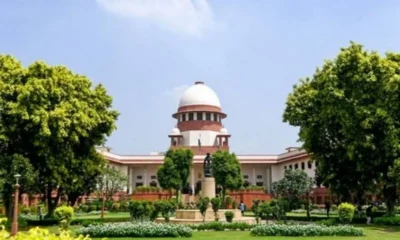
The Supreme Court on Tuesday, July 17, condemned the spate of mob lynching as “horrendous acts of mobocracy” and asked the Parliament to pass a law establishing lynching as a separate offence with punishment.
In recent years, there have been several incidents of mob tacks on Dalits and Muslims in name of cow protection or on sundry citizens over rumours of child lifting.
A three-judge Bench headed by Chief Justice of India Dipak Misra and also comprising Justices AM Khanwilkar and DY Chandrachud held that it was the obligation of the State to protect citizens and ensure that the “pluralistic social fabric” of the country holds against mob violence.
The top court asked the Parliament to pass a law establishing lynching as a separate offence with punishment. This special law, the court said, should be effective enough to instill a sense of fear in the perpetrators.
The SC order said: “a special law in this field (cow vigilantism and mob lynchings) would instill a sense of fear for law amongst the people who involve themselves in such kinds of activities.”
Stating that “horrendous acts of mobocracy cannot be permitted to inundate the law of the land”, the Supreme Court called for the Centre and States to take “earnest action and concrete steps… to protect the citizens from the recurrent pattern of violence which cannot be allowed to become the new normal”.
The court also commented on the lack of outrage or revulsion that such incidents should have created in society. The court said the growing numbness of the ordinary Indian to the frequent incidents of lynchings happening right before his eyes in a society based on rule of law is shocking.
The court said the government should see the judgment as a “clarion call” in a time of exigency and work towards strengthening the social order. It is the obligation of the Centre and the States to ensure that “nobody takes the law into his hands nor become a law into himself”, the Supreme Court ordered.
It asserted that “it is the responsibility of the State to ensure peace” and that “mobocracy cannot be allowed”.
Chief Justice Misra said States cannot give even the “remotest chance” to let lynchings happen.
“Compliance has to be filed within four weeks and states must maintain peace. States can’t become deaf against growing rumblings,” the bench said.
Laying out a slew of preventive, remedial and punitive measures to be taken by the Centre and State governments in cases related to cow vigilante groups and mob lynching, the Supreme Court directed state governments to prepare a lynching/mob violence victim compensation scheme and file compliance reports within the next four weeks.
It also ordered that cases of lynching and mob violence shall be specifically tried by designated court/Fast Track Courts earmarked for that purpose in each district and that “upon conviction of the accused person(s), the trial court must ordinarily award maximum sentence as provided for various offences under the provisions of the IPC.”
Stating that “lynching is an affront to the rule of law and values of the Constitution”, the Chief Justice noted in the verdict: “lynching by unruly mobs and barbaric violence arising out of incitement and instigation cannot be allowed to become the order of the day. Such vigilantism, be it for whatever purpose or borne out of whatever cause, has the effect of undermining the legal and formal institutions of the State and altering the constitutional order.”
The verdict adds: “These extrajudicial attempts under the guise of protection of the law have to be nipped in the bud; lest it would lead to rise of anarchy and lawlessness which would plague and corrode the nation like an epidemic. The tumultuous dark clouds of vigilantism have the effect of shrouding the glorious ways of democracy and justice leading to tragic breakdown of the law and transgressing all forms of civility and humanity. Unless these incidents are controlled, the day is not far when such monstrosity in the name of self-professed morality is likely to assume the shape of a huge cataclysm.”
Noting that “the State has a sacrosanct duty to protect its citizens from unruly elements and perpetrators of orchestrated lynching and vigilantism”, the court said: “Hate crimes as a product of intolerance, ideological dominance and prejudice ought not to be tolerated; lest it results in a reign of terror… Such an atmosphere is one in which rational debate, logical discussion and sound administration of law eludes thereby manifesting clear danger to various freedoms including freedom of speech and expression.”
Chief Justice Misra said in the verdict: “The majesty of law cannot be sullied simply because an individual or a group generate the attitude that they have been empowered by the principles set out in law to take its enforcement into their own hands and gradually become law unto themselves and punish the violator on their own assumption and in the manner in which they deem fit. No act of a citizen is to be adjudged by any kind of community under the guise of protectors of law… No individual in his own capacity or as a part of a group, which within no time assumes the character of a mob, can take law into his/their hands and deal with a person treating him as guilty… such ideas and conceptions not only create a dent in the majesty of law but are also absolutely obnoxious.”
Noting that the issues raised by the petitioners deserved “to be addressed with enormous sensitivity”, Chief Justice Misra said: “the situations that have emerged and the problems that have arisen need to be totally curbed. The States have the onerous duty to see that no individual or any core group take law into their own hands… There cannot be an investigation, trial and punishment of any nature on the streets.”
The Chief Justice asserted: “There can be no shadow of doubt that the authorities which are conferred with the responsibility to maintain law and order in the States have the principal obligation to see that vigilantism, be it cow vigilantism or any other vigilantism of any perception, does not take place. When any core group with some kind of idea take the law into their own hands, it ushers in anarchy, chaos, disorder and, eventually, there is an emergence of a violent society. Vigilantism cannot, by any stretch of imagination, be given room to take shape, for it is absolutely a perverse notion.”
The court has now listed the matter for hearing on August 20 for further directions to be issued.
The verdict laid out the following directives to check incidents of vigilantism:
Preventive Measures:
- State Governments shall designate, a senior police officer, not below the rank of Superintendent of Police, as Nodal Officer in each district. Such Nodal Officer shall be assisted by one of the DSP rank officers in the district for taking measures to prevent incidents of mob violence and lynching. They shall constitute a special task force so as to procure intelligence reports about the people who are likely to commit such crimes or who are involved in spreading hate speeches, provocative statements and fake news.
- State Governments shall forthwith identify Districts, Sub-Divisions and/or Villages where instances of lynching and mob violence have been reported in the recent past, say, in the last five years. The process of identification should be done within a period of three weeks from the date of this judgment, as such time period is sufficient to get the task done in today’s fast world of data collection.
- The Secretary, Home Department of the concerned States shall issue directives/advisories to the Nodal Officers of the concerned districts for ensuring that the Officer In-charge of the Police Stations of the identified areas are extra cautious if any instance of mob violence within their jurisdiction comes to their notice.
- Nodal Officer, so designated, shall hold regular meetings (at least once a month) with the local intelligence units in the district along with all Station House Officers of the district so as to identify the existence of the tendencies of vigilantism, mob violence or lynching in the district and take steps to prohibit instances of dissemination of offensive material through different social media platforms or any other means for inciting such tendencies. The Nodal Officer shall also make efforts to eradicate hostile environment against any community or caste which is targeted in such incidents.
- Director General of Police/the Secretary, Home Department of the concerned States shall take regular review meetings (at least once a quarter) with all the Nodal Officers and State Police Intelligence heads. The Nodal Officers shall bring to the notice of the DGP any inter-district co-ordination issues for devising a strategy to tackle lynching and mob violence related issues at the State level.
- It shall be the duty of every police officer to cause a mob to disperse, by exercising his power under Section 129 of CrPC, which, in his opinion, has a tendency to cause violence or wreak the havoc of lynching in the disguise of vigilantism or otherwise.
- Home Department of the Government of India must take initiative and work in co-ordination with the State Governments for sensitising the law enforcement agencies and by involving all the stake holders to identify the measures for prevention of mob violence and lynching against any caste or community and to implement the constitutional goal of social justice and the Rule of Law.
- Director General of Police shall issue a circular to the Superintendents of Police with regard to police patrolling in the sensitive areas keeping in view the incidents of the past and the intelligence obtained by the office of the Director General.
- Central and the State Governments should broadcast on radio and television and other media platforms including the official websites of the Home Department and Police of the States that lynching and mob violence of any kind shall invite serious consequence under the law.
- It shall be the duty of the Central Government as well as the State Governments to take steps to curb and stop dissemination of irresponsible and explosive messages, videos and other material on various social media platforms which have a tendency to incite mob violence and lynching of any kind.
- The police shall cause to register FIR under Section 153A of IPC and/or other relevant provisions of law against persons who disseminate irresponsible and explosive messages and videos having content which is likely to incite mob violence and lynching of any kind.
- Central Government shall also issue appropriate directions/advisories to the State Governments which would reflect the gravity and seriousness of the situation and the measures to be taken.
Remedial measures
- Despite the preventive measures taken by the State Police, if it comes to the notice of the local police that an incident of lynching or mob violence has taken place, the jurisdictional police station shall immediately cause to lodge an FIR, without any undue delay, under the relevant provisions of IPC and/or other provisions of law.
- It shall be the duty of the Station House Officer, in whose police station such FIR is registered, to forthwith intimate the Nodal Officer in the district who shall, in turn, ensure that there is no further harassment of the family members of the victim(s).
- Investigation in such offences shall be personally monitored by the Nodal Officer who shall be duty bound to ensure that the investigation is carried out effectively and the charge-sheet in such cases is filed within the statutory period from the date of registration of the FIR or arrest of the accused, as the case may be.
- State Governments shall prepare a lynching/mob violence victim compensation scheme in the light of the provisions of Section 357A of CrPC within one month from the date of this judgment. In the said scheme for computation of compensation, the State Governments shall give due regard to the nature of bodily injury, psychological injury and loss of earnings including loss of opportunities of employment and education and expenses incurred on account of legal and medical expenses. The said compensation scheme must also have a provision for interim relief to be paid to the victim(s) or to the next of kin of the deceased within a period of thirty days of the incident of mob violence/lynching.
- Cases of lynching and mob violence shall be specifically tried by designated court/Fast Track Courts earmarked for that purpose in each district. Such courts shall hold trial of the case on a day to day basis. The trial shall preferably be concluded within six months from the date of taking cognizance. We may hasten to add that this direction shall apply to even pending cases. The District Judge shall assign those cases as far as possible to one jurisdictional court so as to ensure expeditious disposal thereof. It shall be the duty of the State Governments and the Nodal Officers in particular to see that the prosecuting agency strictly carries out its role in appropriate furtherance of the trial.
- To set a stern example in cases of mob violence and lynching, upon conviction of the accused person(s), the trial court must ordinarily award maximum sentence as provided for various offences under the provisions of the IPC.
- The courts trying the cases of mob violence and lynching may, on application by a witness or by the public prosecutor in relation to such witness or on its own motion, take such measures, as it deems fit, for protection and for concealing the identity and address of the witness.
- The victim(s) or the next of kin of the deceased in cases of mob violence and lynching shall be given timely notice of any court proceedings and he/she shall be entitled to be heard at the trial in respect of applications such as bail, discharge, release and parole filed by the accused persons. They shall also have the right to file written submissions on conviction, acquittal or sentencing.
- The victim(s) or the next of kin of the deceased in cases of mob violence and lynching shall receive free legal aid if he or she so chooses and engage any advocate of his/her choice from amongst those enrolled in the legal aid panel under the Legal Services Authorities Act, 1987.
Punitive measures
- Wherever it is found that a police officer or an officer of the district administration has failed to comply with the aforesaid directions in order to prevent and/or investigate and/or facilitate expeditious trial of any crime of mob violence and lynching, the same shall be considered as an act of deliberate negligence and/or misconduct for which appropriate action must be taken against him/her and not limited to departmental action under the service rules. The departmental action shall be taken to its logical conclusion preferably within six months by the authority of the first instance.
- In terms of the ruling of this Court in Arumugam Servai v.State of Tamil Nadu, the States are directed to take disciplinary action against the concerned officials if it is found that (i) such official(s) did not prevent the incident, despite having prior knowledge of it, or (ii) where the incident has already occurred, such official(s) did not promptly apprehend and institute criminal proceedings against the culprits.
- The measures that are directed to be taken have to be carried out within four weeks by the Central and the State Governments. Reports of compliance be filed within the said period before the Registry of this Court.
- We may emphatically note that it is axiomatic that it is the duty of the State to ensure that the machinery of law and order functions efficiently and effectively in maintaining peace so as to preserve our quintessentially secular ethos and pluralistic social fabric in a democratic set-up governed by rule of law. In times of chaos and anarchy, the State has to act positively and responsibly to safeguard and secure the constitutional promises to its citizens. The horrendous acts of mobocracy cannot be permitted to inundate the law of the land. Earnest action and concrete steps have to be taken to protect the citizens from the recurrent pattern of violence which cannot be allowed to become “the new normal”. The State cannot turn a deaf ear to the growing rumblings of its People, since its concern, to quote Woodrow Wilson, “must ring with the voices of the people.” The exigencies of the situation require us to sound a clarion call for earnest action to strengthen our inclusive and all-embracing social order which would, in turn, reaffirm the constitutional faith. We expect nothing more and nothing less.
- Apart from the directions we have given hereinbefore and what we have expressed, we think it appropriate to recommend to the legislature, that is, the Parliament, to create a separate offence for lynching and provide adequate punishment for the same. We have said so as a special law in this field would instill a sense of fear for law amongst the people who involve themselves in such kinds of activities. There can be no trace of doubt that fear of law and veneration for the command of law constitute the foundation of a civilized society.
BACKGROUND:
Targeted violence
The judgment came in a contempt petition filed by activist Tehseen Poonawalla saying that despite Supreme Court order to States to prevent lynchings and violence by cow vigilantes, the crimes continue with impunity.
Tushar Gandhi, the great grandson of Mahatma Gandhi, in his plea told the court that contempt must be instituted against Rajasthan, Haryana and Uttar Pradesh, as they had failed to comply with the top court’s order.
“Despite your order to States to appoint nodal officers to prevent such incidents, there was a lynching and death just 60 km away from Delhi just recently,” senior advocate Indira Jaising had submitted.
Jaising had argued that the incidents of lynchings go “beyond the description of law and order… these crimes have a pattern and a motive. For instance, all these instances happen on highways. This court had asked the States to patrol the highways.”
Jaising said the lynchings were “targeted violence” against particular religion, caste, an thus, in violation of the constitutional guarantees under Article 15 of the Constitution. Article 15 protects from discrimination on the basis of religion, caste, sex, gender, etc.
Chief Justice had even asked the Centre to frame a scheme under Article 256 to give directions to States to prevent/control the instances and maintain law and order, but Additional Solicitor General PS Narasimha had disagreed, saying such a scheme was unnecessary.
During the last hearing in the case, Chief Justice Misra had said: “It is the duty of the court to prevent such incidents and the obligation of the states to prevent it.”.
The court’s stance on the issue of mob lynchings, killings cow vigilantism by gau rakshaks, which over the past four years had reached epidemic proportions, had been clear from the time the petitions were filed before it – that such incidents have no place in a civilized, secular nation.
In September last year, the Supreme Court had asked all states to appoint Deputy Superintendent of Police (DSP) rank officers as nodal officers to prevent gau rakshaks from “taking the law into their hands or becoming the law unto themselves.”
States paying lip service
In the subsequent hearing in the case, as many as 22 States – including Rajasthan, UP and Haryana – had filed affidavits with the Supreme Court submitting that they had complied with these orders and appointed the nodal officers.
Yet, in the months that followed, incidents of gau rakshaks going on rampage, lynching and assaulting people – mostly Muslims or Dalits – were reported from Rajasthan, Haryana and UP, forcing Gandhi and Jaising to move the court again in December, urging for contempt notices to be issued to these three states on grounds of filing an “insincere affidavit”.
Jaising had prayed before the judges that though maintain law and order was a State subject, the Centre should be told by the Court that it exercise its executive powers under Article 256 of the Constitution to give provincial governments directions on issues emanating out of the chaos triggered by gau rakshaks.
97% incidents under PM Modi’s watch
An analysis of all reported cases of violence and killings by cow vigilante groups that have rocked the country in the period between 2010 to June 2017 was done by portal indiaspend.com and the findings show that “as many as 97 per cent of these attacks were reported after Prime Minister Narendra Modi’s government came to power in May 2014 and half the cow-related violence – 30 of 60 cases – were from states governed by the BJP”. While this data is only of incidents that took place till June 2017, it cannot be emphasized enough that such killings by cow vigilantes have continued since with little action by respective governments and their police against the perpetrators of these crimes.
Economic price
The killings and assault aside, there is also a severe economic price that the country has paid for this unbridled rise in cow vigilantism, made even more worse by the centre’s faulty law – though now diluted – that banned sale of cattle in animal markets for the purpose of slaughter. The fear of cow vigilantes going on a killing spree has forced many Muslim and Dalit families across the country were engaged in dairy farming, the leather industry or agriculture to abandon their cows, in some cases even buffaloes. The dip in the country’s total milk production over the past three years, economic experts have repeatedly said, is directly linked with this atmosphere of fear and intimidation caused by gau rakshaks.
According to a Reuters report, the supply of local hides has declined precipitously, leading to a decrease in Indian sales of leather and leather products. From April 2016 to March 2017, India’s total leather exports dropped 3.23 per cent from the previous year, to USD 5.67 billion from USD 5.9 billion. In Uttar Pradesh alone, attacks on cow related-businesses had triggered losses of up to USD 601 million, largely due to shutting of slaughterhouses, units manufacturing leather products and tanneries, especially in Kanpur.
Leading legal news portal IndiaLegalLive had provided a perspective on the issue. Some excerpts:
Many of us watch with helpless horror the headlines that regularly tear into our senses and sensibilities: “Jamshedpur limps back to normalcy after lynching of 7 men over WhatsApp rumour.” “African lynched in Delhi after spat over auto ride….” Have our roads and streets and farmlands become sanctuaries of immunity for practitioners of hate and blood?
Writes Ashok Swain, Professor of Peace and Conflict Research at Uppsala University, Sweden: “Since the lynching of Mohammed Akhlaq in Dadri on the night of September 28, 2015, many incidents of savagery of such vigilante groups on Muslims and Dalits have taken place—in Daltonganj in Jharkhand, Una in Gujarat, Mandsaur in Madhya Pradesh, Sonepat in Haryana, Reasi in Jammu and Kashmir, Chittorgarh and Alwar in Rajasthan and recently even in the nation’s capital itself, Delhi.” He observes that the regularity of such crime in India is not due to lawlessness but because the authorities refuse to provide protection when needed.
This view is echoed by Namita Bhandare in a passionate piece in the Hindustan Times: “Nothing exemplifies the moral slide from Dadri to Alwar as much as the indifference by us citizens to the medieval-style lynching of dairy farmer Pehlu Khan. In parliament, minister Mukhtar Abbas Naqvi flat-out denied that such an incident had taken place. In BJP-ruled Rajasthan, the state home minister, blithely stated: ‘He must have transported the cows illegally, hence he was penalised.’ I guess we’re lucky that chief minister Vasundhara Raje has not deigned to speak. There’s silence too from the courts…. This lynching, this erosion of right to life, this whittling down of civil liberties where marauding mobs in Meerut can barge into the house of a citizen without fear or consequence….” She wonders why this does not shake our judicial system into action.
Is India losing its inherently tolerant eclectic worldview, the cornerstone of Indian values? And why is this happening? Professor Aftab Alam of Aligarh Muslim University believes that “from meat politics to love jihads, such incidents have strained India’s constitutional values and secular fabric, leaving many to wonder whether Prime Minister Modi’s development agenda—for which he has declared ‘Sabka Saath, Sabka Vikas’ (development for all together)—is just a farce. Has this atmosphere of fear and insecurity among India’s minorities been calibrated to consolidate majoritarianism in the upcoming 2019 legislative elections?”
He observes that after a humiliating electoral defeat in Uttar Pradesh in March, secular parties and liberal intellectuals are demoralised and rudderless. They fear raising their voices against these murderous violations of the constitutional right to life. These infringements are accelerating because of a culture of impunity stemming from the authorities’ refusal not only to catch and punish the vigilantes but rather to pounce on the victims and charge them with crimes.
The state’s apparent complicity has now come under fire from the international organisation, Human Rights Watch: “The Indian authorities should promptly investigate and prosecute self-appointed ‘cow protectors’ who have committed brutal attacks against (minorities) and Dalits over rumors that they sold, bought, or killed cows for beef. Instead of taking prompt legal action against the vigilantes, many linked to extremist groups affiliated with the ruling party, the police, too often, have filed complaints against the assault victims, their relatives, and associates under laws banning cow slaughter.”
Is there a hope that impartiality and justice can prevail in such cases? Only if the state is respected as not being complicit.