English हिन्दी
Connect with us

India News

Shocking death! Man sucked into MRI machine at Mumbai hospital

Published

on

Shocking death! Man sucked into MRI machine Mumbai hospital

[vc_row][vc_column][vc_column_text]Maharashtra CM announces compensation of Rs 5 lakh

In a rather unfortunate incident in Mumbai, a 32-year-old man died after being sucked into a Magnetic Resonance Imaging (MRI) machine in the city’s Nair hospital on Saturday.

Police has registered an FIR against Doctor Siddhant Shah, ward boy Vitthal Chavan and ward attendant Sunita Surve under Section 304 A (causing death by negligence) of the Indian Penal Code.

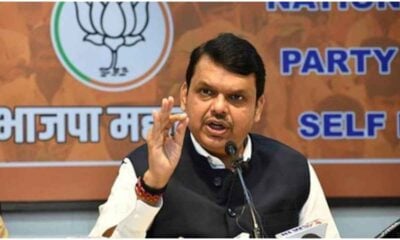
On Sunday, Maharashtra Chief Minister Devendra Fadnavis  has announced a compensation of Rs 5 lakh to the family of the victim – even as the deceased’s family member, locals and BJP MLA MP Lodha staged a protest inside the hospital dean’s cabin, demanding immediate action against the accused.

According to Harish Solanki – the brother-in-law of the victim, Rajesh Maru – the deceased went to visit Solanki’s mother, who was admitted in the hospital.

“He went there to visit my ailing mother but we did not know he would meet such a fate. We all are in shock. A ward boy told him to carry an oxygen cylinder with him to the MRI room which is prohibited. It all happened because of the carelessness of the hospital’s doctors and administration. No security guard was either present to tell him that he should not carry an oxygen cylinder with him to the MRI room,” said Solanki.

Further stating that the MRI machine was functioning when Maru was taken in, Solanki said, “As he entered the room, the MRI machine sucked him in due to the magnetic force as he had an oxygen cylinder with him. He died within 2 minutes. No hospital authority has approached us accepting their mistake.”

The body of the victim has been sent for post-mortem to JJ Hospital, while the police are probing the case on the basis of the CCTV footage of the incident handed over to them.[/vc_column_text][/vc_column][/vc_row]

India News

Illegal immigration from India to US drops 69% from 2023 peak, says US data

Published

on

By

Fears of harsh treatment, including internment, and tough border legislations under the Donald Trump administration seem to have brought down illegal immigration from India to the United States by almost 69 per cent from the peak recorded in 2023, according to the latest data released by US Customs and Border Protection (CBP). The figures indicate a significant decline in irregular migration through the US land borders.

Trump and his Make America Great Again (MAGA) support base have advocated tougher measures against illegal immigrants such as roving Immigration and Customs Enforcement (ICE) personnel who have picked up immigrants and detain them in camps. ICE personnel have killed several Americans too in the mindless drive against immigrants.

CBP data, which follows the US fiscal year (October to September), shows authorities recorded 20,614 encounters with Indian migrants between October 2025 and May 2026. During the corresponding period in FY2023, when illegal migration from India reached its highest level, the number of encounters stood at 67,212. The latest figures are also lower than the nearly 29,000 encounters recorded during the same period in FY2025.

The sharpest decline has been recorded along the US-Mexico border, where encounters involving Indian migrants fell by nearly 99 per cent, from 30,109 during the October-May period of FY2023 to 417 in FY2026. At the US-Canada border, encounters dropped to 2,250, marking a 91 per cent decline from the comparable period in FY2024.

Migration experts said the decline comes amid tighter US immigration measures, stricter border enforcement and reduced expectations of securing asylum through illegal entry routes. Experts also noted that the high financial cost and risks associated with irregular migration have discouraged many prospective migrants from attempting the journey.

Despite the decline, Indian nationals continue to account for a significant share of migrants intercepted at US land borders, says CBP. Officials from both India and the United States have repeatedly urged people to avoid illegal migration routes and instead use authorised visa and immigration channels.

Continue Reading

India News

Supreme Court urges Centre to reconsider introducing third language for CBSE Class 9

Published

on

By

Supreme Court

The Supreme Court on Thursday orally urged the Centre and the Central Board of Secondary Education (CBSE) to reconsider the introduction of the compulsory third language policy for Class 9, observing that the move could place an unnecessary academic burden on children.

During a hearing of petitions challenging the policy, the bench of Justice B.V. Nagarathna and Justice R. Mahadevan remarked that introducing a new language at the Class 9 level may create additional stress for students and suggested that, if such a policy is necessary, it would be more appropriate to begin it from Class 6, when children have more time to adapt. The court, however, did not pass any interim order staying the policy.

The petitions challenge the CBSE’s three-language policy introduced under the New Education Policy 2020. Under the revised framework, students entering Class 9 are required to study three languages, with at least two being Indian languages. The petitioners argued that the sudden implementation has created difficulties for students, schools and teachers, particularly due to the availability of textbooks, qualified language teachers and the increased academic workload.

During the hearing, the Supreme Court sought responses from the Union Government and the CBSE on the concerns raised in the petitions. The Bench emphasised that while learning languages is valuable, educational reforms should be implemented in a manner that does not place avoidable pressure on students.

The matter will be heard again after the Centre and the CBSE file their replies. The outcome of the case is expected to influence the implementation of the three-language policy in CBSE-affiliated schools across the country, particularly for students entering Class 9 in the current academic session.

Continue Reading

India News

Bank holiday today: Banks closed in Odisha, Uttarakhand and Manipur on July 16 for regional festivals; check details

Banks will remain closed in Odisha, Uttarakhand and Manipur on July 16 for regional festivals, while banking operations continue normally in the rest of India. Here’s the complete holiday schedule.

Published

on

Rath Yatra

India’s banking services will remain partially affected on Thursday, July 16, as banks in select states are closed to observe regional festivals, according to the Reserve Bank of India’s (RBI) holiday calendar for the financial year 2026-27.

Customers in most parts of the country can continue to access banking services as usual, while branches in Odisha, Uttarakhand and Manipur will remain shut for local celebrations.

Banks closed today in these states

Banks will remain closed on July 16 in the following states:

  • Odisha – Rath Yatra
  • Uttarakhand – Harela
  • Manipur – Kang festival

Apart from these states, bank branches across the rest of India are expected to function normally.

How does RBI decide bank holidays?

The Reserve Bank of India prepares a state-wise holiday calendar covering national, religious and regional occasions. Since several festivals are celebrated only in specific states, bank holidays may differ from one region to another.

In addition to these notified holidays, banks across the country remain closed on the second and fourth Saturdays of every month, as well as on all Sundays.

When is the next bank holiday?

According to the RBI’s holiday schedule, the next notified bank holiday falls on July 17, 2026, in Sikkim to mark the Death Anniversary of U Tirot Singh.

Customers are advised to check the holiday schedule applicable to their respective state before planning a visit to a bank branch.

Will online banking services remain available?

Although physical bank branches may remain closed in the affected states, customers can continue using digital banking services. Mobile banking, internet banking, UPI transactions, ATM withdrawals and other online banking facilities are expected to remain available, enabling uninterrupted access to essential financial services.

Continue Reading

Trending

© Copyright 2022 APNLIVE.com