English हिन्दी
Connect with us

India News

Sonam Wangchuk sets three conditions to end hunger strike after hospitalisation

Sonam Wangchuk has said he will end his hunger strike only if three conditions related to the alleged NEET paper leak issue and Parliament assurances are fulfilled while he remains admitted to Safdarjung Hospital.

Published

on

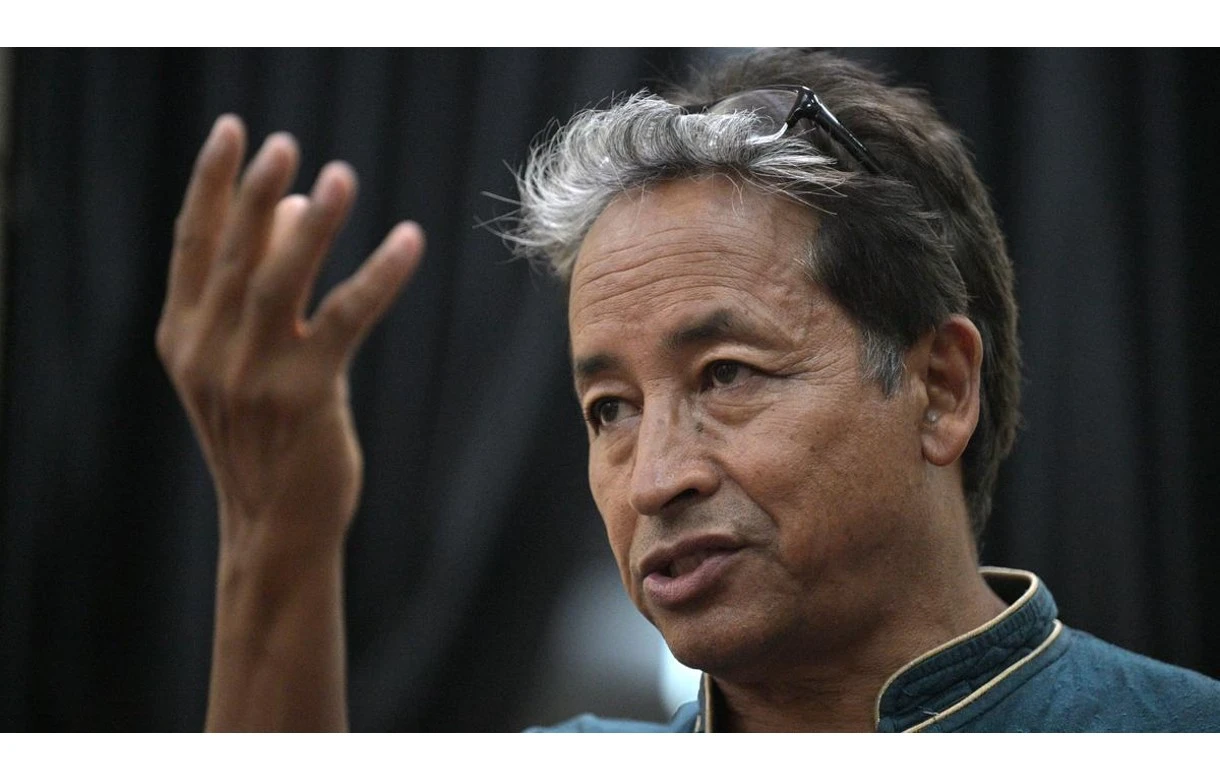
Sonam Wangchuk

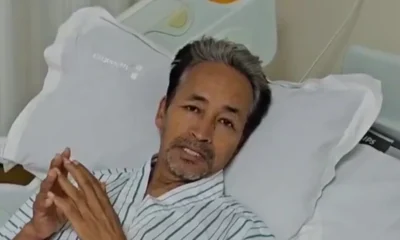
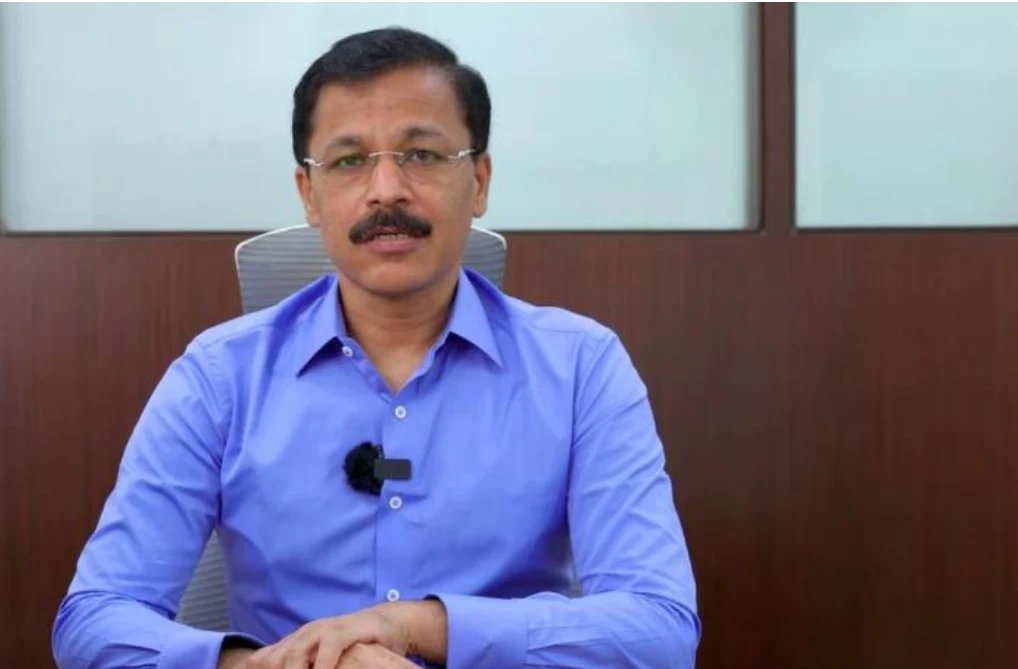
Activist and educator Sonam Wangchuk has said he will end his hunger strike only if three conditions are fulfilled, days after being shifted to Delhi’s Safdarjung Hospital following concerns over his deteriorating health.

In a handwritten letter shared from the hospital, where he alleged he was being kept under “illegal detention”, Wangchuk outlined three demands that he said must be met before he agrees to end his fast.

Wangchuk lists three conditions

According to the letter, Wangchuk’s first condition is that the government should accept responsibility for what he described as failures in the education system, particularly the alleged NEET question paper leaks.

His second demand is for political leaders to assure him that the paper leak issue will be raised in Parliament.

As his third condition, Wangchuk said senior political leaders should visit him at Safdarjung Hospital and personally assure him regarding the first two demands if his health does not permit him to participate in the planned Parliament march.

The activist also wrote that his “freedom of movement, speech, and all communication are restricted” during what he described as his “illegal detention”.

Hunger strike began over education issues

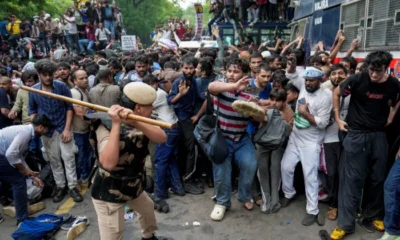
Wangchuk, who has frequently campaigned on issues concerning Ladakh and education reforms, joined a protest at Delhi’s Jantar Mantar on June 28 seeking the resignation of Union Education Minister Dharmendra Pradhan over the alleged NEET paper leak issue.

He has remained on a hunger strike for more than 20 days as part of the protest.

On the morning of July 18, the 21st day of his fast, Delhi Police shifted him from the protest site to Safdarjung Hospital after doctors reportedly warned that his condition had become critical, with concerns about possible organ failure. The move also came after the Delhi High Court directed authorities to take all necessary steps to protect his life.

Delhi High Court declines interim relief

Meanwhile, Wangchuk’s wife, Gitanjali Angmo, approached the Delhi High Court seeking permission to shift him to a private hospital.

However, Justice Mini Pushkarna declined to grant interim relief, observing that the authorities were within their rights to move Wangchuk to Safdarjung Hospital since he had not admitted himself despite his worsening health.

The court also noted that doctors were closely monitoring his condition and administering oral medication with his consent, adding that there was no evidence of force or violation of his autonomy at this stage.

Senior advocate Vivek Tankha said Angmo is expected to challenge the order before a division bench of the Delhi High Court and seek an urgent hearing.

India News

Akhilesh Yadav says corruption forcing honest officers to quit UP

Samajwadi Party chief Akhilesh Yadav alleged that corruption in Uttar Pradesh is forcing honest government officers to leave service before retirement.

Published

on

Akhilesh Yadav

Samajwadi Party chief Akhilesh Yadav has alleged that corruption in Uttar Pradesh is making it difficult for honest government officers to continue in service, claiming that some are choosing to leave before completing their tenure.

Yadav made the remarks while commenting on the resignation of IAS officer Divya Mittal. He alleged that the situation in the state was such that honest officers were finding it increasingly difficult to work.

According to Yadav, officers who want to discharge their duties honestly are facing an environment that is not conducive to their functioning. He claimed that some such officers are opting to leave government service rather than continue under these circumstances.

Akhilesh Yadav’s remarks on honest officers

Yadav linked the resignation of officers to what he described as the prevailing corruption in the Uttar Pradesh administration.

The Samajwadi Party leader alleged that officers who do not want to compromise with corruption are being pushed towards leaving service. His remarks came in the context of Divya Mittal’s resignation from the IAS.

Yadav’s comments are allegations directed at the state administration and do not, by themselves, establish that corruption was the reason for any particular officer’s resignation.

Divya Mittal’s resignation

IAS officer Divya Mittal’s resignation was the immediate context for Yadav’s remarks. Yadav used the development to raise questions about the working environment for government officers in Uttar Pradesh.

The Samajwadi Party chief argued that the departure of officers before retirement raises concerns about the conditions under which government officials are expected to work.

His comments add to the political debate over governance and corruption in Uttar Pradesh.

Continue Reading

India News

PM Modi meets Putin, says India supports peace in Ukraine

PM Modi met Russian President Vladimir Putin in Kyrgyzstan and reiterated India’s support for peaceful efforts to resolve the Russia-Ukraine conflict.

Published

on

Prime Minister Narendra Modi on Monday met Russian President Vladimir Putin in Kyrgyzstan and reiterated India’s support for efforts aimed at bringing peace to the Russia-Ukraine conflict.

During a joint statement with Putin, PM Modi said India supports all peaceful efforts to resolve the conflict and will continue to back such initiatives.

“India advocates for resolving all problems peacefully, which is necessary for all of humanity,” PM Modi said.

The meeting between the two leaders took place on the sidelines of the Shanghai Cooperation Organisation (SCO) summit in Bishkek, Kyrgyzstan.

Modi’s remarks underlined India’s stated position that conflicts should be addressed through peaceful means. The Prime Minister emphasised the broader importance of resolving disputes peacefully for humanity.

The meeting comes as India and Russia continue to maintain close bilateral ties, with the two countries also discussing matters of mutual interest during high-level engagements.

Continue Reading

India News

India became Vishwaguru through service, not power, says Mohan Bhagwat

RSS chief Mohan Bhagwat said India became a Vishwaguru through selfless service and its tradition of respecting diversity, rather than through power.

Published

on

Mohan Bhagwat

RSS chief Mohan Bhagwat said India’s standing in the world was built through its tradition of selfless service and humanitarian assistance, rather than through military or imperial power.

Addressing the “Hindu Vishwa Bandhu – Embrace the World in Friendship” gathering in Toronto, Bhagwat said India became a “Vishwaguru” (world teacher) through its character and service to humanity, rather than as a “Mahashakti” (superpower).

Bhagwat recalls India’s humanitarian tradition

Bhagwat cited historical examples of India providing refuge to people fleeing persecution and war. He recalled how the Maharaja of Jamnagar provided shelter and protection to Polish refugees during the Second World War until they could return safely.

He also referred to more recent humanitarian operations, saying Indian military transport aircraft had rescued citizens of seven other countries along with Indians during evacuations from a conflict zone in the Middle East.

The RSS chief said India has historically provided peaceful refuge to people belonging to different faiths, including Muslims, Christians, Jews and Parsis.

‘India never conquered any country’

Bhagwat contrasted India’s civilisational outreach with imperial expansion, saying Indian traditions focused on sharing knowledge rather than conquering territories.

He said Indian travellers historically reached different parts of the world but did not conquer countries. Instead, he said, they shared knowledge in areas including astronomy, Ayurveda and civilisational values.

Calling this tradition the “DNA of Bharat”, Bhagwat said India has continued to help people in distress, including in situations where assistance was not specifically requested.

Bhagwat stresses diversity and unity

Bhagwat also spoke about his understanding of the word “Hindu”, saying it cannot be defined by a particular language, form of worship or lifestyle. He said Hindus “respect all” and “accept all”.

He emphasised the need to respect and embrace diversity, describing it as an expression of an underlying unity.

According to Bhagwat, India’s ancient ethos recognises diversity as natural while treating unity as the fundamental reality.

He further invoked the philosophy of “Vasudhaiva Kutumbakam”, or the belief that the entire world is one family.

Bhagwat said that despite differences in appearance and other forms of diversity, people are essentially one and therefore serving others is a duty.

Continue Reading

Trending

© Copyright 2022 APNLIVE.com