English हिन्दी
Connect with us

India News

Supreme Court rejects plea of woman seeking to terminate 26-week pregnancy

The woman will have additional treatment at AIIMS, and the woman’s parents are able to decide whether to place their child for adoption, the SC stated.

Published

on

Supreme Court plea 26-week pregnancy

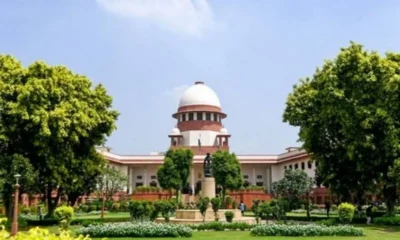
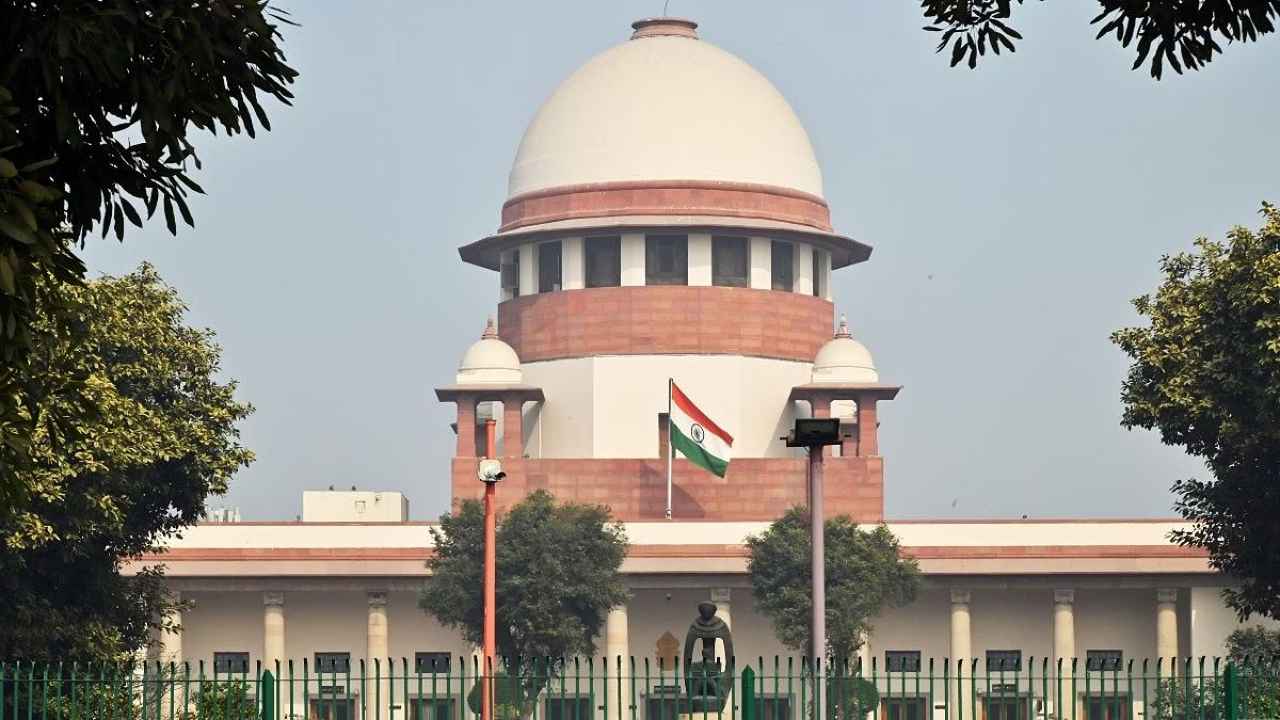
Supreme Court on Monday, October 16, refused to grant a woman’s request to end her over 26-week pregnancy on the grounds that she was experiencing post-partum psychosis. The highest court went on to say that the state could raise the child after birth.

The ruling followed the supreme court’s previous reservation of judgement regarding the woman’s request for authorization to give instructions AIIMS to end her more than 26-week pregnancy.

The pregnancy is longer than 24 weeks, so the court rejected granting permission for terminating it. In addition, the Chief Justice of India, DY Chandrachud, and the other members of the SC bench said neither the pregnancy nor the case are associated with any abnormalities in the foetus.

The woman will have additional treatment at AIIMS, and the woman’s parents are able to decide whether to place their child for adoption, the SC stated.

The woman came before the court earlier this month, claiming that she had postpartum depression and dire financial circumstances, and that she was unaware that she was pregnant for the third time because of a condition known as lactational amenorrhea, which stops a patient from menstruating.

The maximum period for terminating a pregnancy under the Medical Termination of Pregnancy (MTP) Act is 24 weeks for married women, special categories (such as rape survivors), and other vulnerable women such as minors and women with disabilities are also included.

On the petitioner’s behalf, however, senior lawyer Colin Gonsalves contended that the 24-week standard has already been deemed obsolete by the World Health Organisation (WHO).

The petitioner’s medical condition was previously certified by the AIIMS medical board, which also stated that carrying out the pregnancy would not have any negative effects on the woman’s health.

India News

Gandhi Parivar vs Sangh Parivar, Revanth Reddy’s remark sparks BJP attack

Telangana Chief Minister Revanth Reddy’s remarks contrasting the Gandhi Parivar with the Sangh Parivar triggered a BJP response accusing Congress of prioritising the Gandhi family.

Published

on

Telangana Chief Minister Revanth Reddy’s remarks comparing the Gandhi Parivar and Sangh Parivar have triggered a political exchange, with the BJP hitting back at the Congress leader.

Speaking in Kerala on Friday, Mr Reddy described the contest over India’s future as a fight between the two “parivars”. He said the Gandhi family had made sacrifices for the country while accusing the Sangh Parivar of attempting to divide India on the basis of religion, caste, region and language.

What Revanth Reddy said

Mr Reddy cited Mahatma Gandhi, Indira Gandhi and Rajiv Gandhi while speaking about what he described as sacrifices made by the Gandhi family.

He also referred to Sonia Gandhi, Rahul Gandhi and Priyanka Gandhi, saying they had given up positions, power and high office.

The Telangana Chief Minister said he had no remaining personal political ambitions and described his objective as working towards a Congress-led government at the Centre with Rahul Gandhi as Prime Minister.

Mr Reddy also appealed to people to stand with the Gandhi Parivar and oppose the Sangh Parivar. He described the latter as a threat to India’s democracy.

BJP hits back

The BJP responded to Mr Reddy’s remarks on Saturday.

BJP spokesperson Pradeep Bhandari said the Telangana Chief Minister’s comments amounted to an admission that Congress’s objective was to bring the Gandhi family back to power.

He also linked Mr Reddy’s remarks to the ongoing political debate around “vote chori”, the Election Commission, the Constitution and democracy, arguing that the Congress’s focus was instead on the Gandhi family.

The exchange adds to the political confrontation between the BJP and Congress, with Mr Reddy presenting the Gandhi Parivar and Sangh Parivar as opposing forces in India’s political future, while the BJP has interpreted his remarks as evidence of Congress’s focus on the Gandhi family.

Continue Reading

India News

India hits back at Shehbaz Sharif at UN, says terror will have consequences

India hit back at Pakistan Prime Minister Shehbaz Sharif’s UN speech, with New Delhi warning that terrorism will have consequences.

Published

on

India has responded to Pakistan Prime Minister Shehbaz Sharif’s remarks at the United Nations, delivering a strong message on terrorism and warning that such actions will have consequences.

The response came after Mr Sharif addressed the UN and raised issues concerning India and Pakistan. New Delhi rejected the narrative presented by the Pakistani prime minister and highlighted the issue of terrorism.

India’s message was delivered by Petal Gehlot, who represented New Delhi in the response to Pakistan.

India warns Pakistan over terrorism

India’s response focused on Pakistan’s record and its approach towards terrorism. New Delhi made clear that terrorism cannot be separated from its consequences and that those responsible cannot expect such actions to go unanswered.

The Indian side also pushed back against the claims and allegations made by Mr Sharif during his UN speech.

The exchange comes amid continuing tensions between India and Pakistan, with terrorism remaining a major point of disagreement between the two countries.

Shehbaz Sharif’s UN remarks

In his address, Pakistan Prime Minister Shehbaz Sharif spoke about India-Pakistan relations and raised several issues concerning New Delhi.

India subsequently exercised its right of reply to respond to Pakistan’s statements at the United Nations.

New Delhi’s response underlined its position that terrorism remains a serious issue in the relationship and that there would be consequences for terrorist actions.

The latest exchange at the UN adds to the continuing diplomatic confrontation between the two neighbouring countries.

Continue Reading

India News

Veeramani POCSO case: Vijay questions Stalin over earlier probe

Tamil Nadu Chief Minister Vijay has questioned MK Stalin over the handling of the Veeramani POCSO case, while Stalin has rejected allegations that the previous DMK government protected anyone.

Published

on

Actor Vijay

Tamil Nadu Chief Minister and Tamilaga Vettri Kazhagam (TVK) president C Joseph Vijay has questioned DMK president MK Stalin over the handling of the POCSO case involving Gem Granites founder R Veeramani. The political exchange follows renewed investigation into allegations involving minor girls.

Vijay’s remarks came as the ruling TVK stepped up its questions about how the case was handled during the previous DMK government. The party’s IT wing has alleged that the earlier investigation was weakened and questioned why a final report was filed.

The allegations have been rejected by the DMK. Stalin has said that no order was issued by the DMK government to protect anyone in the case and has called the allegations false and defamatory.

What did Vijay say about the Veeramani case?

Vijay questioned Stalin over the handling of the case and demanded an explanation from the former chief minister.

The TVK has specifically questioned why action was not taken against Veeramani during the previous administration and why the earlier investigation resulted in a closure report.

The party has also raised questions about the role of officials involved in the earlier investigation. These are political allegations made by the TVK and have not been established as facts.

What is the Veeramani POCSO case?

The case concerns allegations of sexual abuse of minors involving R Veeramani, the founder of Gem Granites.

The case came under renewed scrutiny after a special POCSO court rejected an earlier closure report and ordered further investigation. The expanded probe has subsequently identified additional alleged survivors who were minors at the time of the alleged offences, according to current reporting.

The investigation is also examining the circumstances surrounding the earlier probe and whether there were any lapses in how the case was handled.

What has MK Stalin said?

Stalin has rejected allegations that the previous DMK government protected Veeramani.

He has said that no order was issued by the DMK government to shield anyone in the case. Stalin has also said that everyone responsible for the alleged offences, including anyone who aided or attempted to protect the accused, should face the law.

The DMK president has further said that the focus should remain on securing justice for the affected girls rather than making political allegations.

Why has the case become a political issue?

The Veeramani case has become the subject of a political dispute between the ruling TVK and the DMK over the handling of the earlier investigation.

The TVK is questioning the previous government’s handling of the case, while the DMK has denied that it intervened to protect the accused.

At this stage, claims about political interference or deliberate weakening of the earlier investigation should be treated as allegations unless established by the ongoing investigation or judicial proceedings.

Continue Reading

Trending

© Copyright 2022 APNLIVE.com