English हिन्दी
Connect with us

India News

Train movement disrupted on Patna-Howrah section as Maoists hijack train, abduct 3 level-crossing gatemen, release them after few hours

Published

on

Train movement disrupted on Patna-Howrah as Maoists hijack train

[vc_row][vc_column][vc_column_text]The railway employees were abducted at midnight, on Wednesday, and released at around 2 am after security forces launched an operation in Lakhisarai, one among 15 Bihar districts affected by Left-wing Maoist insurgency.

In a rather ironic co-incidence, on a day when junior minister for home Hansraj Ahir informed Rajya Sabha that incidents of Maoists violence had been declining consistently for the past few years, a mob of around 100 red rebels reportedly blew up a mobile tower, abducted 3 gatemen from railway level crossings in Bihar’s Lakhisarai district and also laid siege to the Danapur Durg Express train for a few hours post midnight on Wednesday.

“Train no-13288 Danapur Durg Express train was hijacked near the Bhalui station around 2:30 AM (on Thursday). The cabin man who was on duty was also abducted,” a statement by the CRPF said while confirming that an ‘exchange of fire took place between the 207 CoBRA battalion of CRPF and the hijackers’. However, no casualty has been reported from either side. The statement added that normalcy was restored in the area by Thursday morning and train operations were getting back on schedule.

The midnight swoop by over 100 heavily armed Maoists in the Lakhisarai district that happened prior to the hijacking of the Danapur Durg Express saw the red rebels abduct three gatemen from railway level-crossings in the district, ostensibly with the aim of disrupting train movement on the busy Patna-Howrah section.

The three gatemen were released after 2.30 AM, possibly in the wake of the altercation between the Maoists and the CRPF personnel.

Movement of nearly 25 trains was disrupted as the route remained closed and all stations on the section were asked to halt train movement. The route was re-opened at around 7 AM on Thursday, a railway official said, adding that train movement was gradually getting back on schedule.

It is learnt that the Maoists undertook the operation as the railway employees did not heed to their call for a total shutdown of operations in the area as part of a Martyr’s week (observed by the banned CPI-Maoist and the People’s Liberation Guerilla Army from July 28 to mark the death anniversary of Charu Mazumdar) call given by them.

“Around 100 rebels were involved in the abductions from the level crossings, located in a 10-km radius,” Bhagalpur zone inspector general SM Khopde told local media channels in Bihar, while confirming that the Maoists threatened the drivers and guard of a passenger train but that the whole episode fortunately didn’t end up with any casualties.

The railway employees were later released by the Maoists and had not been harmed. “All the railway employees have been released and are safe,” Eastern Railways spokesperson Rajesh Kumar said.

Additional director general of police (headquarters) Sanjiv Kumar Singhal, said all possible routes used by Maoists to move around in the region have been sealed following the midnight siege.[/vc_column_text][/vc_column][/vc_row]

India News

Rahul Gandhi accuses Modi of foreign backing, BJP hits back with UK clip

Rahul Gandhi alleged that foreign forces helped Narendra Modi become Prime Minister and continue in power. The Congress leader also challenged Modi to an open debate, while the BJP responded by sharing an old video of his remarks during a UK visit.

Published

on

Rahul Gandhi

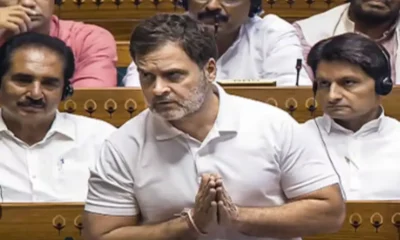
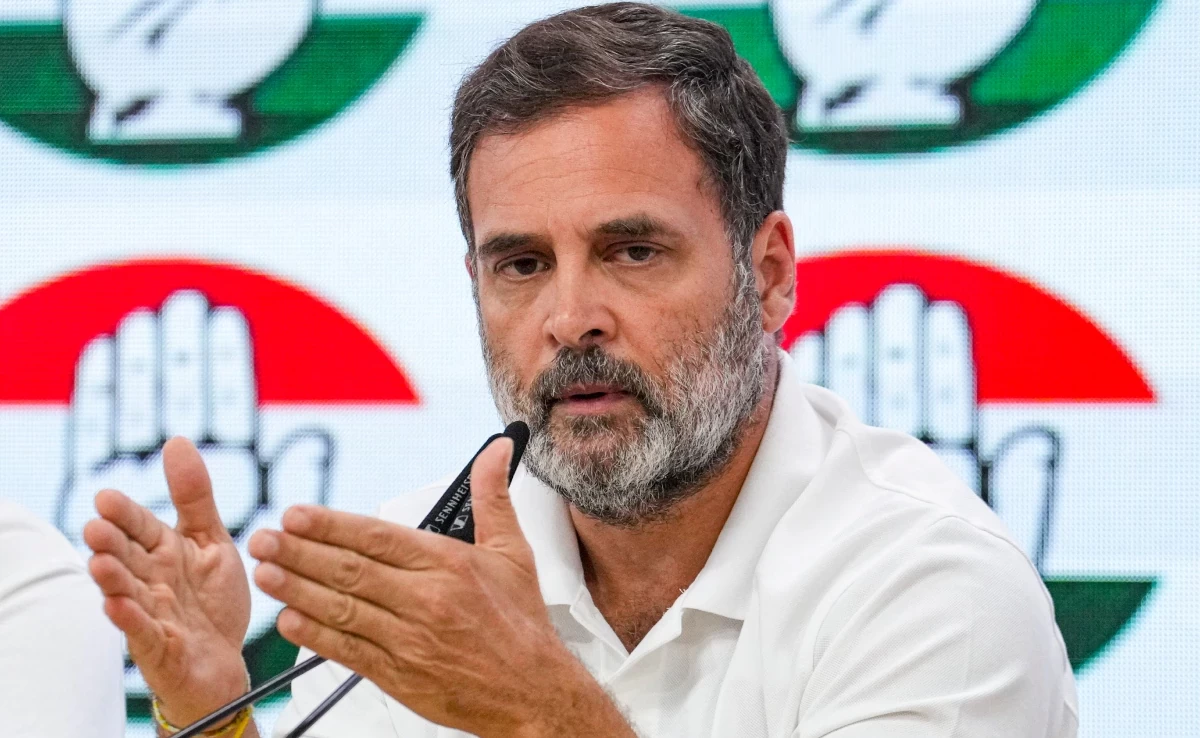
A fresh political confrontation has erupted between the Congress and the Bharatiya Janata Party (BJP) after Leader of Opposition Rahul Gandhi accused Prime Minister Narendra Modi of becoming and remaining in power with foreign assistance.

Gandhi also challenged the Prime Minister to an open debate on the issue, saying he was ready to face him on any platform and at any time.

The BJP responded by bringing up an old video of Gandhi from his visit to the United Kingdom, reviving the controversy surrounding his remarks about India’s democratic institutions and the role of foreign countries.

What Rahul Gandhi said about PM Modi

Gandhi’s remarks came in response to Modi’s recent comments targeting the Opposition during his address at the Rashtriya Ekta Diwas celebrations in Gujarat on October 31.

In a post on X on Monday, Gandhi accused the Prime Minister of relying on foreign support to attain and retain power.

“Mr Modi, stop lying to this nation. You became PM because of foreign help. You remain PM because of foreign help,” Gandhi wrote.

He further alleged that India’s financial system was fully controlled and supported by foreign entities and claimed that foreign social media platforms backed the Prime Minister.

The Congress leader also challenged Modi to discuss the allegations publicly.

“I challenge you to an open debate about this. Any stage, any time. Come if you have the guts,” he said, adding that the Prime Minister would not accept the challenge because of what Gandhi claimed to know about him.

Why PM Modi criticised the Opposition

Gandhi’s response followed Modi’s address at the Rashtriya Ekta Diwas event in Ekta Nagar, Gujarat, marking the 151st birth anniversary of Sardar Vallabhbhai Patel.

During his speech, the Prime Minister accused the Opposition of moving away from its democratic responsibility of questioning the government and instead becoming an obstructionist force.

Modi described the Opposition as an “Avrodh Paksh” rather than a “Virodh Paksh”, alleging that it was creating obstacles to the country’s development.

Without directly naming Gandhi, the Prime Minister also raised questions about the foreign visits of certain political leaders and their alleged connections with forces opposed to India.

“Who is secretly meeting whom abroad? Whom are the anti-India forces supporting? Who is speaking the language of India’s enemies?” Modi asked.

He also expressed concern over the use of social media to spread rumours and attempts to damage India’s image.

BJP brings back Rahul Gandhi’s old UK remarks

The BJP responded to Gandhi’s allegations by sharing an old video from his UK visit, bringing attention back to his earlier comments about India’s democratic institutions and the involvement of foreign countries.

During an interaction at Chatham House in London in March 2023, Gandhi had alleged that several Indian institutions, including the Press, judiciary, Parliament and Election Commission, were under threat.

He had also questioned why Europe and the United States were not doing enough to raise concerns about what he described as threats to democracy in India.

The remarks had triggered a political controversy at the time, with the BJP accusing Gandhi of seeking foreign intervention in India’s internal affairs.

BJP leaders had demanded an apology from the Congress leader over his comments during the UK visit.

The resurfacing of the old video has brought those earlier remarks back into the political debate as the Congress and BJP trade accusations over alleged foreign backing.

Political confrontation intensifies

The latest exchange comes amid an ongoing confrontation between the ruling BJP and the Opposition over several issues, including allegations of electoral irregularities and the role of constitutional institutions.

Gandhi’s challenge to Modi for an open debate has added another dimension to the political dispute, with both parties questioning each other’s alleged connections with foreign forces.

While Gandhi has accused the Prime Minister of benefiting from foreign support, the BJP has repeatedly questioned the Congress leader’s overseas remarks and alleged attempts to involve foreign countries in India’s internal political matters.

Neither side’s allegations about foreign backing should be treated as established facts without supporting evidence.

Continue Reading

India News

Delhi Pollution: GRAP-II curbs imposed across NCR as AQI hits 324

Delhi’s air quality deteriorated to the very poor category on November 2, prompting the CAQM to implement GRAP Stage II across Delhi-NCR. The measures aim to control dust and vehicular pollution.
Published

on

Delhi-Pollution

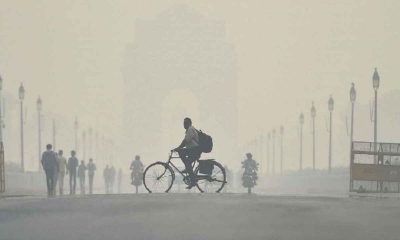
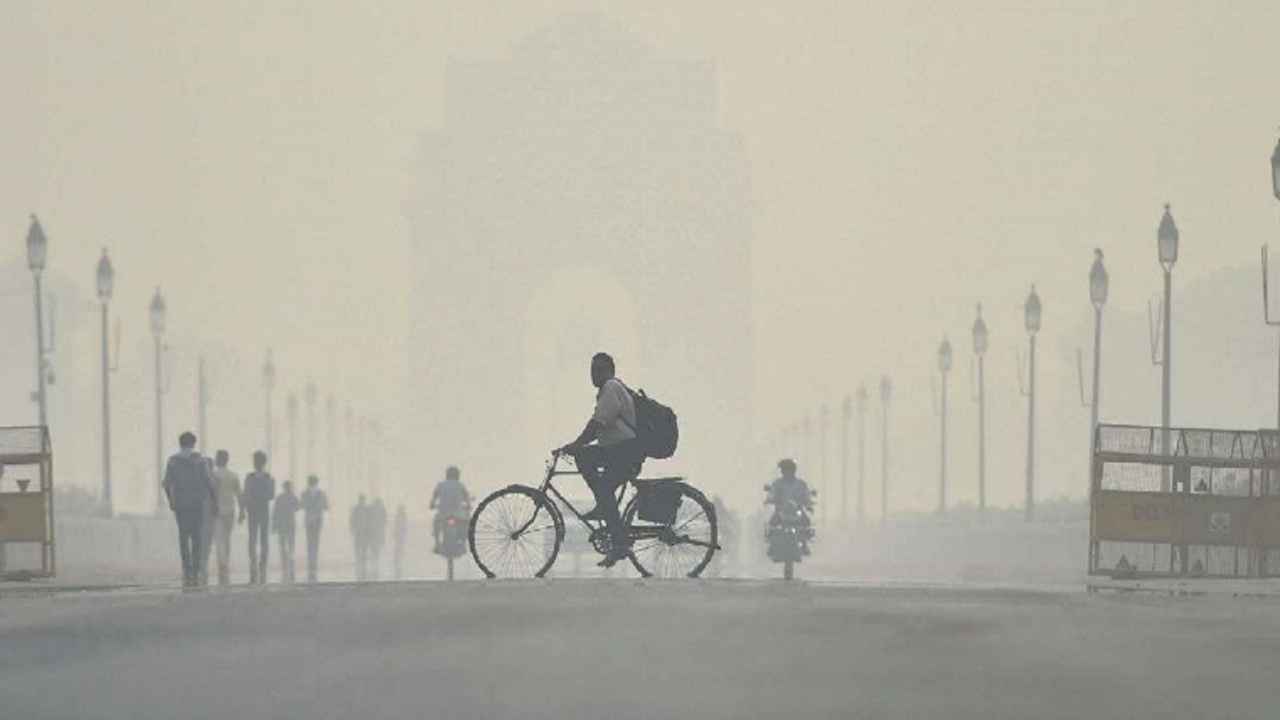
Delhi’s air quality deteriorated to the ‘very poor’ category on Monday, November 2, prompting the Commission for Air Quality Management (CAQM) to invoke Stage II of the Graded Response Action Plan (GRAP) across the National Capital Region (NCR) with immediate effect.

The national capital’s Air Quality Index (AQI) reached 324 at 4 pm, placing it in the very poor category. The deterioration followed a sharp increase in pollution levels over three days, with the AQI rising from 117 on October 31 to 261 on November 1 before crossing the 300 mark on Monday.

The CAQM attributed the worsening air quality to unfavourable meteorological conditions. Forecasts by the India Meteorological Department (IMD) and the Indian Institute of Tropical Meteorology (IITM) also indicated that Delhi’s air quality could remain in the very poor category over the coming days.

What is GRAP Stage II and why has it been imposed?

The Graded Response Action Plan is a set of emergency measures designed to tackle worsening air pollution in Delhi-NCR. It has different stages based on the severity of air quality.

Under the AQI classification, readings between 301 and 400 fall in the very poor category. GRAP Stage II is applicable when air quality reaches this range.

With Delhi’s AQI climbing to 324, the CAQM directed authorities to implement Stage II measures across the NCR. The directions also require agencies to continue implementing measures under the earlier stages of GRAP.

What restrictions come under GRAP Stage II?

The second stage of GRAP focuses on strengthening pollution-control measures, particularly those related to road dust, vehicular emissions and other sources of pollution.

Some of the important measures include:

  • Road cleaning: Authorities are required to intensify mechanical sweeping of roads and water sprinkling to control dust.
  • Traffic management: Traffic police are directed to manage congestion at busy roads and intersections.
  • Vehicle checks: Enforcement teams are required to intensify checks for valid Pollution Under Control (PUC) certificates and take action against visibly polluting vehicles.
  • Parking charges: Higher parking fees are among the measures intended to discourage the use of private vehicles.
  • Diesel generators: The use of diesel generator sets is subject to stricter regulation.
  • Public transport: Authorities are required to encourage the use of public transport to reduce vehicular emissions.

These measures are intended to reduce pollution levels across Delhi-NCR.

Delhi’s AQI worsens over three days

Delhi witnessed a significant deterioration in air quality over a short period.

The AQI stood at 117 on October 31, placing it in the moderate category. It subsequently increased to 261 on November 1, entering the poor category.

On November 2, the reading climbed further to 324 by 4 pm, pushing the national capital into the very poor category.

The situation was also reflected in readings from individual monitoring stations. Several locations recorded AQI levels above 300.

Among the areas reporting high pollution levels were RK Puram, ITO, Akshardham, India Gate, Alipur, Dwarka Sector 8 and Delhi University’s North Campus.

With pollution levels worsening and unfavourable weather conditions expected to persist, authorities have been directed to strengthen enforcement of the prescribed pollution-control measures across the region.

Continue Reading

India News

PM Modi to inaugurate Pune metro pink line, launch Rs 21,800 crore projects

Prime Minister Narendra Modi will inaugurate Pune Metro’s Pink Line and lay the foundation stone for Phase II projects worth around Rs. 13,500 crore on November 3. The combined value of the projects is approximately Rs. 21,800 crore.
Published

on

PM Modi

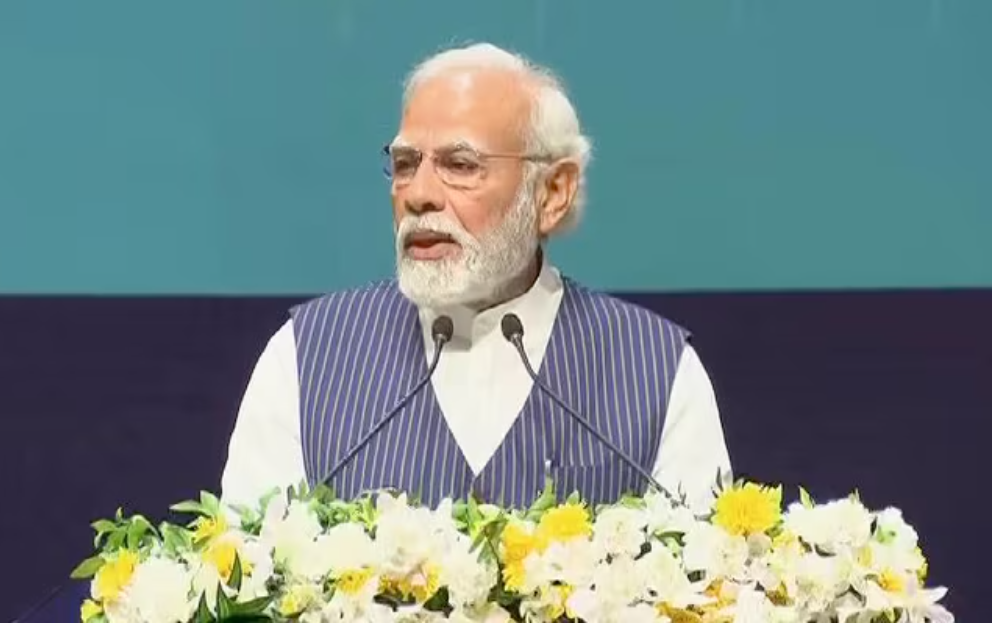
Prime Minister Narendra Modi will inaugurate Pune Metro Line 3, also known as the Pink Line, and lay the foundation stone for four new metro corridors under Phase II on November 3. The projects, taken together, are estimated to be worth around Rs. 21,800 crore.

The inauguration and foundation stone-laying ceremony will take place through video conferencing at 12:30 pm. The Prime Minister will also address the gathering.

The programme includes the inauguration of the approximately 23-km-long Pink Line, developed at a cost of over Rs. 8,300 crore, and the launch of Pune Metro Phase II, which has an estimated cost of around Rs. 13,500 crore.

Pune Metro Pink Line to connect Hinjewadi and Shivajinagar

The Pink Line, officially known as Pune Metro Line 3, will connect Maan with District Court Metro station. The approximately 23-km corridor will provide metro connectivity between Hinjewadi, one of Pune’s major IT hubs, and Shivajinagar.

The new line is expected to improve access to important employment, commercial and residential areas, particularly benefiting IT professionals and other daily commuters.

It will also integrate with Pune’s existing metro network, allowing passengers to travel between different parts of the city more conveniently.

The project is expected to reduce dependence on private vehicles, ease traffic congestion and help lower vehicular emissions.

Pink Line to be operated entirely by women

An important feature of Pune Metro’s Pink Line is that it will be operated entirely by women train operators. The initiative has been highlighted as a step towards women’s empowerment and gender-inclusive public transportation.

The corridor also incorporates renewable energy measures. Around 30 per cent of its total electricity requirements are envisaged to be met through solar power.

Four new corridors planned under Pune Metro Phase II

Along with inaugurating Line 3, PM Modi will lay the foundation stone for Pune Metro Phase II, estimated to cost around Rs. 13,500 crore.

The expansion will comprise four corridors — Lines 2A, 2B, 4 and 4A — aimed at improving connectivity across major residential, commercial and IT hubs.

The proposed routes include:

  • Line 2A: Vanaz to Chandani Chowk.
  • Line 2B: Ramwadi to Vitthalwadi.
  • Line 4: Kharadi to Khadakwasla.
  • Line 4A: Nal Stop to Manik Baug.

Lines 2A and 2B will together cover approximately 12.75 km. Line 4 will span around 25.52 km, while Line 4A will cover approximately 6.12 km.

The eastern extension between Ramwadi and Vitthalwadi is expected to improve connectivity to developing residential, commercial and IT areas in Kharadi and Wagholi.

Key Pune areas to benefit from metro expansion

The proposed Phase II corridors will connect several important locations across Pune, including Kharadi, Magarpatta, Hadapsar, Swargate, Manik Baug, Nanded City, Pune Cantonment and Warje.

The new corridors will also integrate with the existing Pune Metro network and intercity bus services through interchange facilities at Swargate, Nal Stop and Kharadi Bypass.

The expansion is aimed at strengthening public transportation infrastructure and providing commuters with a more integrated urban mobility network across the city.

Continue Reading

Trending

© Copyright 2022 APNLIVE.com