
India News
Trump not in hurry to meet Kim again


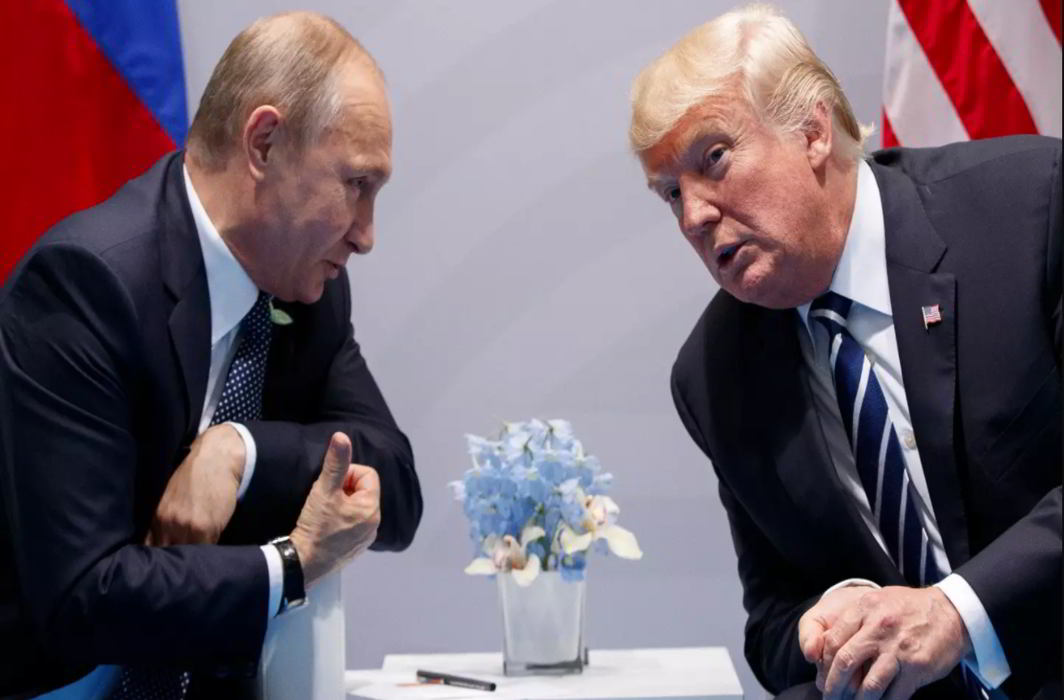
United States President Donald Trump has said he will not be hasty in making any deals with North Korea, stressing “very good” relations with the communist country’s leader.
According to South Korean official news agency Yonhap, the US President during his address in Missouri at a campaign rally on Friday, said, “Chairman Kim Jong-un sent me a beautiful letter two days ago,” though he did not elaborate on details.
He pointed to the release of Americans who had been detained in the North and the return of remains of American soldiers who went missing during the 1950-53 Korean War and said the relationship between the U.S. and North Korea is “going very well,” and “Let’s see what happens … I am in no rush.”
His remarks came at a time when South Korean President Moon Jae-in, after holding third summit with North Korean leader Kim Jong-un in Pyongyang this week, plans to fly to Washington on Sunday for a meeting with Donald Trump.
During his two day sojourn to Pyongyang, Moon Jae-in addressed an audience of some 150,000, telling the crowd, “We have lived together for five thousand years but apart for just 70 years.”

Read More: Moon-Kim Summit begins on Tuesday in Pyongyang
According to North Korea Times, during the address to the “citizens of Pyongyang, fellow Koreans, Moon said, “Here, at this place today, I propose we move forward toward the big picture of peace in which the past 70-year-long hostility can be eradicated and we can become one again.”
South Korean President further said that he and the North Korean leader “had agreed to measures that would completely eliminate the fear of war and the risk of armed conflicts on the Korean Peninsula.”
Both US and North Korea have floated the possibility of a second meeting between their leaders to move forward negotiations to dismantle North Korea’s nuclear weapons program. The historic first meeting was held in Singapore in June.
Read More: North Korea’s Kim Asks Trump for another Summit
North Korea Times said that according to the South Korean president, the message that his North Korean counterpart wants to deliver to the U.S. is aimed at speeding up the process of denuclearization.
Pyongyang Press Corps, in its summary said that according to the South Korean president Moon Jae-in, the message that his North Korean counterpart wants to deliver to the U.S. is aimed at speeding up the process of denuclearization.
It noted that North Korean leader wants the U.S. Secretary of State Mike Pompeo to visit Pyongyang to hurry the denuclearization process, as part of which North Korea aims to set up another summit with Trump “as soon as possible.”








India News
Delhi’s winter pollution persists despite emergency curbs under GRAP
Delhi has brought back pollution curbs under the Graded Response Action Plan (GRAP), but an analysis of past winters highlights the limits of relying on emergency restrictions without sustained action against pollution sources.


India News
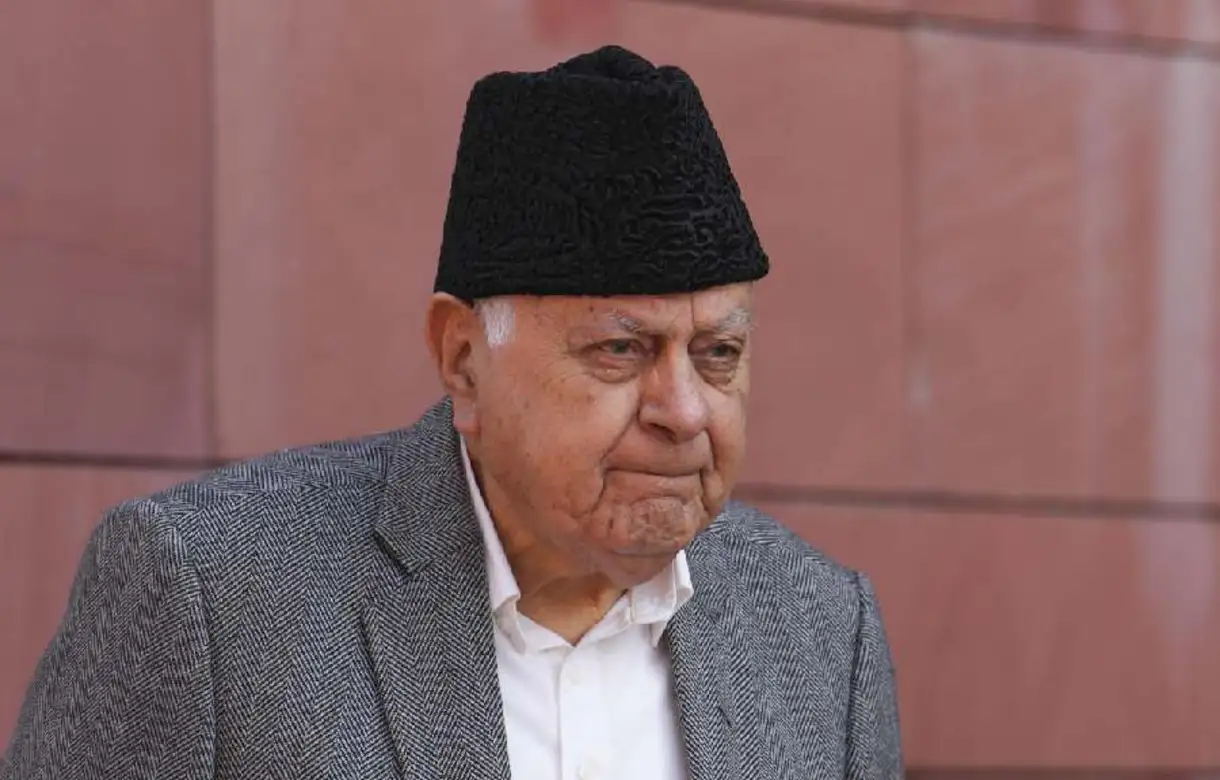
Farooq Abdullah’s Pakistan remarks spark row, BJP demands action
Farooq Abdullah’s remarks about Pakistan’s role in raising the Kashmir issue internationally triggered a political controversy, with BJP leaders accusing him of echoing Pakistan’s narrative and demanding action.
India News
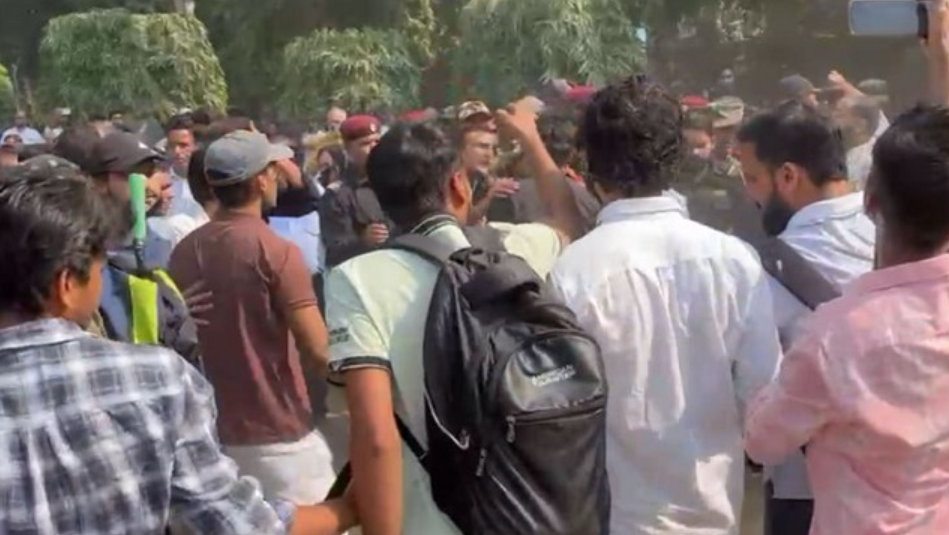
Jamia Millia Islamia shifts classes online after student-guard clash
Jamia Millia Islamia shifted classes online after protesting students clashed with security guards on October 24. The students have been demanding the restoration of the university’s students’ union, which was disbanded in 2006.

Congress seeks 175-200 seats in UP, Samajwadi Party stresses on winnability

Thousands bang utensils, beat drums in Manipur protest over continued killings

Delhi’s winter pollution persists despite emergency curbs under GRAP

Jamia Millia Islamia shifts classes online after student-guard clash

Farooq Abdullah’s Pakistan remarks spark row, BJP demands action
Delhi’s winter pollution persists despite emergency curbs under GRAP
Farooq Abdullah’s Pakistan remarks spark row, BJP demands action
Jamia Millia Islamia shifts classes online after student-guard clash
Congress seeks 175-200 seats in UP, Samajwadi Party stresses on winnability
Thousands bang utensils, beat drums in Manipur protest over continued killings

Afghan Men Try To Hang With The Jet Engine Of The Aircraft in Kabul- Afghanistan News – Kabul News
Trending Top 10 News: 10000 Crore Fine on Flipkart, Apple to Launch Unique Feature, Hdfc Bank Job Ad

Trending Top 10 News: Nokia 6310, Apple sales, Bachpan ka Pyar Video Kid, Dainik Bhaskar IT Raid

Trending Top 10 News: Canada bans Indian flights, Rain in Delhi NCR, AIMIM Twitter hacked, Raj Kundra case

Trending Top 10 News: Shein India, Apple New Service, Pocket Oxygen, Oppo Launched New Phone
-
 India News23 hours ago
Congress seeks 175-200 seats in UP, Samajwadi Party stresses on winnability
-
 India News24 hours ago
Thousands bang utensils, beat drums in Manipur protest over continued killings
-
 India News14 hours ago
Delhi’s winter pollution persists despite emergency curbs under GRAP
-
 India News15 hours ago
Jamia Millia Islamia shifts classes online after student-guard clash
-
 India News14 hours ago
Farooq Abdullah’s Pakistan remarks spark row, BJP demands action
