English हिन्दी
Connect with us

India News

Uttar Pradesh school students forced to climb roof to fill water tank, video viral | Watch

After the video went viral, one user came forward and highlighted that whatever that’s happening in the video is wrong and further added that legal actions should be taken against the one who is guilty of this.

Published

on

A video has come to light from Uttar Pradesh’s Amethi where two students can be seen on the roof of a district school filling the water tank. The video also shows that there was no support of a ladder to help the kids climb up the roof.

In the video, 2 students can be seen atop the roof of a district school as they go on to fill the water tank. The video also shows a man who is giving the students a bucket of water as the student collects it by lowering himself down while also stopping himself falling.

Watch video here:

After getting the bucket of water, the kid passes the water to another as he goes on to fill the water tank installed on top of the roof of the school building. The school is reported to be Islampur Primary School of Bhadar district in Amethi.

Twitter reaction

After the video went viral, one user came forward and highlighted that whatever that’s happening in the video is wrong and further added that legal actions should be taken against the one who is guilty of this. Another user added to the conversation and said sought the district Education Officer of Amethi to take cognizance of the incident.
Another incident

Another incident came out from Uttar Pradesh’s Azamgarh where a teacher was beaten up by slippers for allegedly molesting his students. After being accused of molestation by the students, the guardians reached the school premise to serve justice.

In the video, the teacher was brutally beaten with slippers as they surround him and carry out the assault. The incident was reported to be from Saraya Khurd Primary School. After the incident, the police also swung into action filled a case against the teacher while also taking the accused teacher into custody.

Watch video here:

India News

Indore voter deletions: 1.36 lakh names, but digital records not maintained

Replies to an RTI concerning 1,36,552 voter deletions in Indore in 2022 said several constituency offices had not maintained the requested digital records.

Published

on

MP High Court

RTI replies concerning 1,36,552 voter deletions in Indore in 2022 said several constituency offices had not maintained the requested digital records from Garud and ERO Net. 

The deletions took place between January 5 and October 15, 2022, and therefore predate the current Special Intensive Revision (SIR) exercise. However, the subsequent RTI correspondence has brought attention to how records related to those deletions were maintained.

RTI replies say digital records were not maintained 

The RTI application, filed by former Indore councillor Dilip Kaushal, sought information related to entries made through the Garud app and ERO Net, along with material concerning decisions taken by Electoral Registration Officers.

Several constituency election offices responded that the requested digital records had not been maintained.

The Depalpur election office said it had not maintained digital records relating to ERO Net or the Garud app used by Booth Level Officers. Similar responses came from officials in Indore-2, Indore-5, Rau and Sanwer.

The Indore-1 and Indore-3 offices said requested digital material, including video and other copies, had not been maintained because there were no Election Commission instructions to preserve such records at the time.

The Indore-4 office said the deletion process through Garud and ERO Net was routine work carried out under Election Commission instructions, but the constituency office had not maintained the digital material sought in the RTI application.

1.36 lakh deletions across Indore constituencies

The 1,36,552 deletions cited in the application were spread across several Assembly constituencies.

Indore-4 accounted for 28,391 deletions, while Indore-5 recorded 28,091. Rau had 21,346 deletions.

The application also listed 19,983 deletions in Indore-2, 12,102 in Indore-1 and 8,107 in Indore-3. Sanwer accounted for 8,531 deletions and Depalpur for 2,214.

Together, Indore-4 and Indore-5 accounted for 56,482 deletions, while adding Rau’s figure took the combined total to 77,828.

Madhya Pradesh High Court directs action on RTI appeal

Kaushal pursued the matter after receiving the replies and filed a second appeal before the State Information Commission.

The Madhya Pradesh High Court has now directed the State Information Commission to decide the pending appeal on its merits and in accordance with law.

Justice Sandeep N Bhatt’s September 17 order asked the authority to decide the matter as expeditiously as possible, preferably within 45 days of receiving a certified copy of the order, and communicate the outcome to Kaushal.

The appeal had been pending since January 30, 2026.

Kaushal had also raised the issue with Chief Election Commissioner Gyanesh Kumar, Election Commissioners Sukhbir Singh Sandhu and Vivek Joshi, and the Madhya Pradesh Chief Electoral Officer in July 2025.

The RTI trail relates to voter deletions carried out in 2022 and does not itself establish that the deletions were part of the current SIR exercise.

Continue Reading

India News

Yogi Adityanath transfers over Rs. 148 crore to 4.60 lakh students

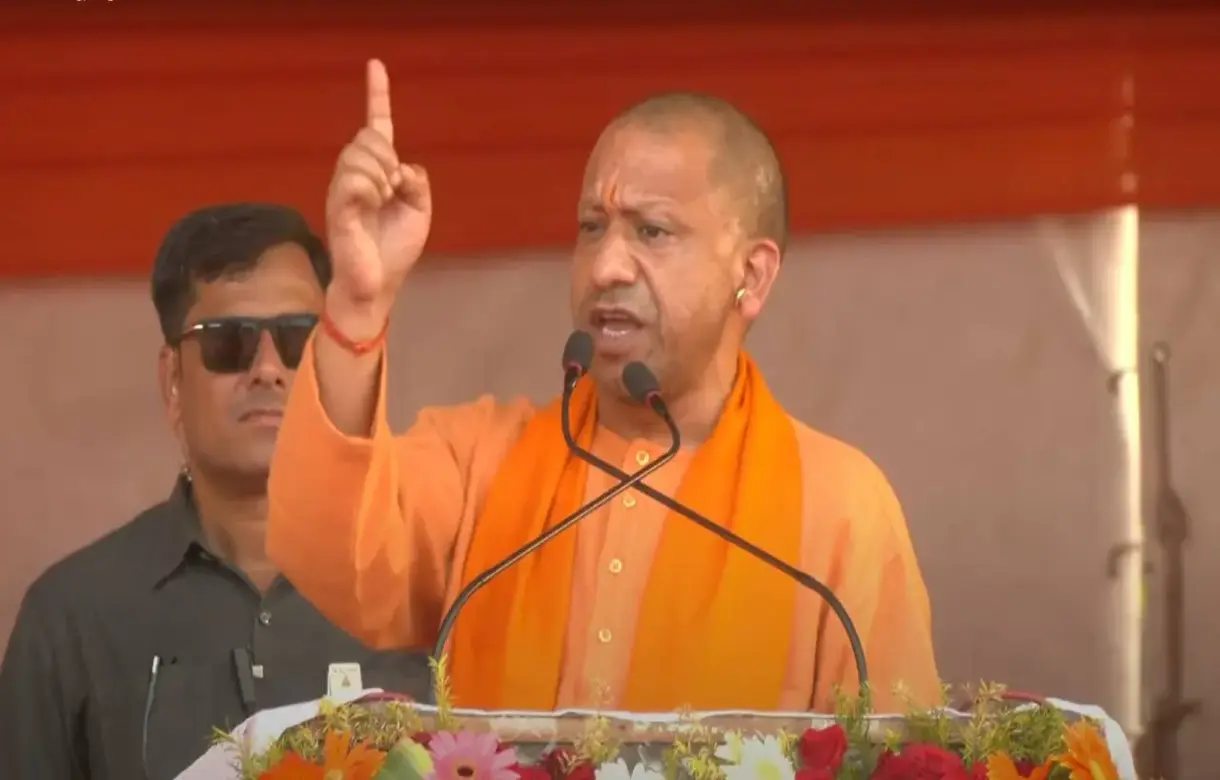
Uttar Pradesh Chief Minister Yogi Adityanath transferred over Rs. 148 crore to the bank accounts of more than 4.60 lakh students under the state’s scholarship and fee reimbursement programme.
Published

on

Yogi Adityanath

Uttar Pradesh Chief Minister Yogi Adityanath transferred more than Rs. 148 crore in scholarship and fee reimbursement funds to over 4.60 lakh students on Saturday, according to the report.

The funds were transferred to students through their bank accounts as part of the state’s scholarship and fee reimbursement programme.

The initiative covers students from different social and economic categories and is aimed at ensuring that financial difficulties do not prevent them from continuing their education.

Yogi Adityanath’s message to students

During the programme, the Uttar Pradesh Chief Minister said that no student should have to discontinue education because of a lack of funds.

He stressed the government’s commitment to providing students with equal opportunities to pursue their education and move forward in life.

The scholarship and fee reimbursement support is intended to provide financial assistance to eligible students while helping them continue their studies.

Scholarship support for UP students

The latest transfer covers more than 4.60 lakh students and involves over Rs. 148 crore in financial assistance. The programme includes scholarship and fee reimbursement support for eligible students.

Other reports on the October 3 distribution said the amount covered students belonging to the Other Backward Classes, Scheduled Castes, general category and minority communities.

The Uttar Pradesh government has also highlighted the use of automation in the scholarship distribution process, saying it has improved transparency and helped ensure timely payments to students.

Continue Reading

India News

Tariffs, export controls increasingly used for strategic purposes, says PM’s Principal Secretary

PM’s Principal Secretary P K Mishra said tariffs, export controls and other restrictions are increasingly being used for strategic purposes amid growing global economic uncertainty.
Published

on

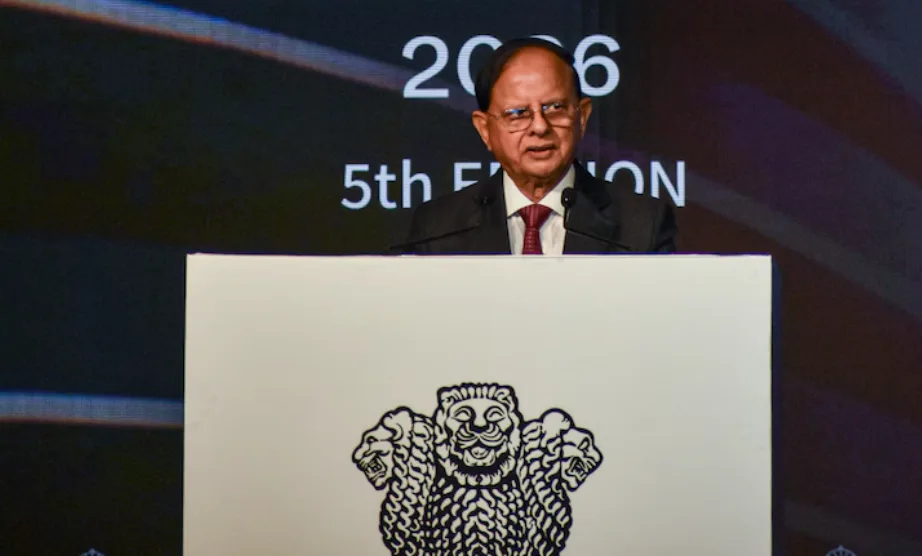
PM’s Principal Secretary P K Mishra has said tariffs, export controls and other restrictions are increasingly being deployed for strategic purposes as countries deal with greater economic uncertainty and disruptions to global supply chains.

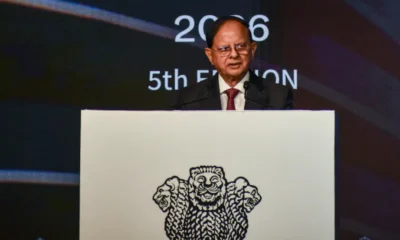
Speaking at the Kautilya Economic Conclave in New Delhi on Saturday, Mr Mishra highlighted the changing nature of economic risks and the need for countries to build resilience without withdrawing from the global economy.

He said the distinction between conventional risks and uncertainty has become increasingly important for economic decision-making. While risks can generally be assessed in terms of probability, uncertainty makes it more difficult to determine the likelihood of different outcomes.

Tariffs and restrictions becoming strategic tools

Mr Mishra said economic disruptions are no longer limited to traditional market risks. Wars, interruptions to shipping routes and geographical choke points can affect food, energy and supply chains across countries.

Referring to such developments, he said tariffs can sometimes become instruments of weaponisation, while other restrictions are increasingly being used for strategic purposes.

He also said export restrictions, sanctions and tariffs can serve purposes beyond conventional commercial objectives, bringing geopolitical considerations more prominently into economic policymaking.

The comments came against the backdrop of discussions on economic resilience at the fifth Kautilya Economic Conclave, whose theme focuses on dealing with global shocks while preserving growth and openness.

India focuses on economic resilience

Mr Mishra said India’s economic strength is supported by its macroeconomic fundamentals and that the country has maintained a high level of growth despite global uncertainty.

He argued that resilience does not require choosing between complete self-sufficiency and globalisation. Instead, countries need to build domestic capabilities in strategically vulnerable areas, diversify sources of supply where concentration creates risks and remain open where global integration supports productivity and competitiveness.

India’s electronics sector, along with pharmaceuticals and semiconductors, provides examples of areas where domestic capabilities can help reduce vulnerability while remaining connected to global markets, he said.

Geography becomes an economic factor

Mr Mishra also pointed to the impact of disruptions around major shipping routes. He said geographical choke points can become sources of vulnerability, particularly for a country such as India that is a major energy importer.

He said India’s response has included maintaining stocks, increasing domestic production where possible and diversifying procurement and supply routes.

The broader issue, according to Mr Mishra, is how economies can preserve the gains of globalisation while becoming less vulnerable to shocks and excessive concentration in particular suppliers or geographical regions.

He said building resilience carries an economic cost, meaning governments need to assess where investment in resilience is justified by the potential economic and social impact of a disruption.

Continue Reading

Trending

© Copyright 2022 APNLIVE.com