English हिन्दी
Connect with us

India News

Sports Ministry revokes WFI suspension after 15 months

The Delhi High Court restrained the WFI from conducting selection trials, citing the federation’s lack of government recognition. The court also suggested that the Indian Olympic Association (IOA) consider forming an ad-hoc committee to manage the federation, similar to the arrangement made during the WFI’s earlier suspension by UWW.

Published

on

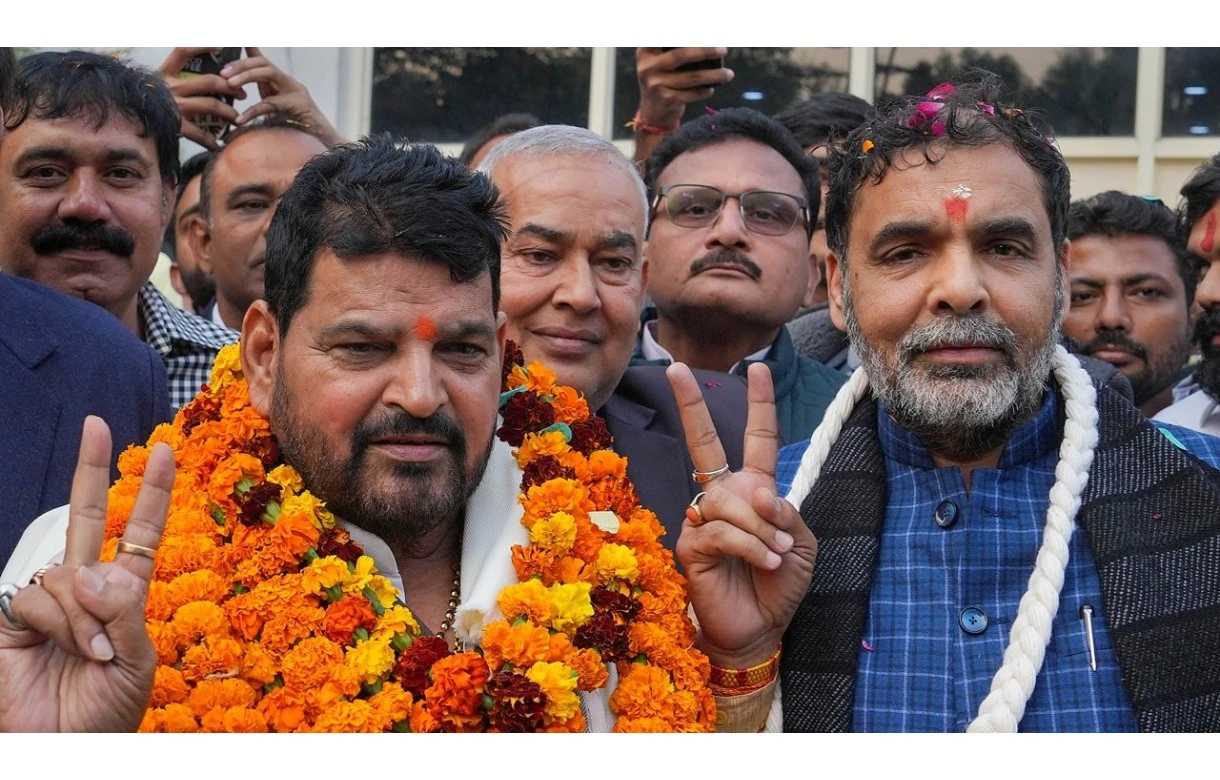
In a significant development, the Union Sports Ministry has revoked the suspension of the Wrestling Federation of India (WFI), ending a 15-month-long tussle and legal battle. The decision paves the way for the smooth functioning of the National Sports Federation and allows Indian wrestlers to participate in international events without further hindrance.

The WFI was derecognized by the Ministry on December 24, 2023, citing “lapses in governance and procedural integrity by the newly elected body.” The Ministry alleged that the federation was being controlled by former office-bearers, disregarding the provisions of the National Sports Code. This led to several sanctions, including the Ministry refusing to recognize events organized by the WFI. However, United World Wrestling (UWW), the international governing body for the sport, continued to recognize the WFI as the sole authority for sending entries to international competitions.

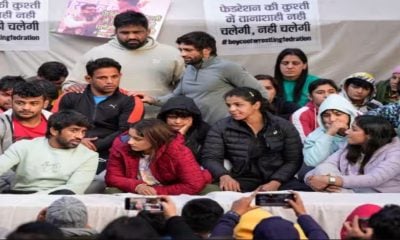
The controversy deepened when wrestlers, who had previously protested against the WFI’s top brass over alleged irregularities and sexual harassment, approached the courts to challenge the activities of the federation, then led by Sanjay Singh, an associate of former WFI president Brij Bhushan Sharan Singh.

The Delhi High Court restrained the WFI from conducting selection trials, citing the federation’s lack of government recognition. The court also suggested that the Indian Olympic Association (IOA) consider forming an ad-hoc committee to manage the federation, similar to the arrangement made during the WFI’s earlier suspension by UWW.
However, the IOA refrained from forming an ad-hoc panel, given UWW’s continued recognition of the WFI. This left Indian wrestlers in a precarious position, as they were unable to compete in two crucial ranking series events. The court later noted that the absence of a competent authority was jeopardizing the selection and participation of wrestlers in international competitions.

Following the court’s observations and a spot verification of the WFI office to ensure it had moved out of Brij Bhushan’s residence, the Sports Ministry decided to lift the suspension. The Ministry has directed the WFI’s executive committee to submit an undertaking within four weeks, ensuring that “any person who is not elected as an office-bearer, as well as suspended or terminated salaried officials of the WFI, must remain completely disassociated from the federation and its affiliate units.”

Additionally, the Ministry emphasized that the WFI must ensure the selection process for all international events is conducted in a “free, fair, and transparent manner.”

The revocation of the suspension marks a crucial step toward resolving the long-standing issues within the WFI and restoring normalcy in Indian wrestling. With the federation now recognized by both the government and UWW, Indian wrestlers can look forward to representing the country on the global stage without further disruptions.

The decision also underscores the importance of adhering to governance standards and procedural integrity in sports administration, as highlighted by the Ministry’s insistence on transparency and accountability in the WFI’s operations.

India News

PM Modi to visit Bengal and Assam, launch Vande Bharat sleeper train and key projects

PM Modi will visit West Bengal and Assam on January 17 and 18 to launch India’s first Vande Bharat sleeper train and inaugurate major infrastructure projects.

Published

on

Prime Minister Narendra Modi will visit West Bengal and Assam on January 17 and 18, where he will flag off India’s first Vande Bharat sleeper train and inaugurate, dedicate and lay the foundation stone for a series of infrastructure and development projects across the two poll-bound states.

Vande Bharat sleeper train to be flagged off from Malda

On Saturday, the prime minister will visit Malda in West Bengal around 12.45 pm and flag off the country’s first Vande Bharat sleeper train connecting Howrah with Guwahati (Kamakhya) from the Malda town railway station.

Later in the day, around 1.45 pm, he will address a public programme in Malda where he will dedicate to the nation and lay the foundation stone of multiple rail and road projects worth more than Rs 3,250 crore.

Development projects in Hooghly district

On January 18, around 3 pm, the prime minister will visit Singur in Hooghly district, where he will inaugurate, lay the foundation stone and flag off various development projects worth around Rs 830 crore.

During the visit, Modi will also virtually flag off four new Amrit Bharat Express trains connecting New Jalpaiguri with Nagercoil and Tiruchirappalli, and Alipurduar with Bengaluru and Mumbai (Panvel). These services are aimed at improving affordable long-distance rail connectivity and strengthening inter-state economic and social linkages.

New train services and highway projects in north Bengal

The prime minister will flag off two new train services with LHB coaches — Radhikapur–SMVT Bengaluru Express and Balurghat–SMVT Bengaluru Express — providing direct connectivity from north Bengal to major IT and employment hubs.

He will also lay the foundation stone for the rehabilitation and four-laning of the Dhupguri–Falakata section of National Highway-31D, a project expected to significantly improve road connectivity and the movement of goods and passengers in the region.

Additionally, Modi will lay the foundation stone of four major railway projects in West Bengal, including a new rail line between Balurghat and Hili, next-generation freight maintenance facilities at New Jalpaiguri, upgradation of the Siliguri loco shed and modernisation of Vande Bharat train maintenance facilities in Jalpaiguri district.

He will also dedicate the electrification of the New Coochbehar–Bamanhat and New Coochbehar–Boxirhat rail sections, enabling cleaner and more energy-efficient train operations.

Cultural programme and Kaziranga corridor in Assam

On January 17, around 6 pm, the prime minister will attend the Bodo cultural programme “Bagurumba Dwhou 2026” at Sarusajai Stadium in Guwahati. More than 10,000 artists from across Assam are expected to perform the traditional Bagurumba dance in a single synchronised presentation.

On January 18, around 11 am, Modi will perform the bhoomi pujan for the Kaziranga elevated corridor project, valued at over Rs 6,950 crore, at Kaliabor in Nagaon district. The 86-km project includes a 35-km elevated wildlife corridor passing through Kaziranga National Park, along with bypasses and highway widening works aimed at improving connectivity while protecting biodiversity.

During the Assam programme, the prime minister will also flag off two new Amrit Bharat Express trains — Guwahati (Kamakhya)–Rohtak and Dibrugarh–Lucknow (Gomti Nagar) — strengthening rail connectivity between the northeast and northern India.

Continue Reading

India News

NDA’s track record strikes chord as PM Modi hails Maharashtra civic polls win

Prime Minister Narendra Modi hailed Maharashtra voters after the BJP-led NDA registered a historic victory in the BMC elections, ending decades of Shiv Sena dominance.

Published

on

modi on maharashtra election

Prime Minister Narendra Modi on Friday thanked the people of Maharashtra after the BJP-led National Democratic Alliance registered a landmark victory in the Brihanmumbai Municipal Corporation elections, marking the first time the party has emerged on top in the country’s richest civic body.

In a post on X, the prime minister said the people of the state had endorsed the NDA’s agenda of governance and development. He said the results of municipal corporation elections across Maharashtra showed that the alliance’s bond with voters had further strengthened.

According to PM Modi, the NDA’s track record and vision for development had “struck a chord” with the electorate. He described the verdict as a mandate to accelerate progress while celebrating Maharashtra’s cultural legacy.

BJP-Shiv Sena alliance dominates BMC

As counting continued, trends showed the BJP leading in 90 of the 227 wards in Mumbai, while the Eknath Shinde-led Shiv Sena was ahead in 28 wards. The Ajit Pawar-led NCP faction, which contested separately, was leading in only three wards.

On the opposition side, the Shiv Sena (UBT) and Maharashtra Navnirman Sena were ahead in 57 and nine wards respectively. The Congress, which contested in alliance with the Vanchit Bahujan Aghadi, was leading in 15 wards, while others were ahead in eight.

The outcome effectively ends the Shiv Sena (UBT)’s decades-long control over the Brihanmumbai Municipal Corporation, which had been the party’s main power centre since its formation.

In the seat distribution, the BJP contested 137 wards and the Shinde-led Shiv Sena 90. The Ajit Pawar faction of the NCP fielded candidates in 94 wards. On the opposition side, Shiv Sena (UBT) contested 163 seats, the MNS 52, the Congress 143, and the Vanchit Bahujan Aghadi 46.

Urban verdict weakens Pawar influence

The results in Pune and Pimpri-Chinchwad also sent a strong political message, indicating that the Pawar brand no longer guarantees success in key urban centres. Despite tactical coordination between the two NCP factions led by Sharad Pawar and Ajit Pawar, voters did not consolidate behind them.

In the Pune Municipal Corporation, the BJP emerged with a clear upper hand, either winning or leading in a significant number of wards. The NCP factions failed to convert their traditional influence into broader citywide support.

Thackeray retains Marathi Manoos connect but loses power base

Uddhav Thackeray appears to have retained a section of the Marathi Manoos vote in Mumbai, even as the Shinde-led Shiv Sena made inroads. While the Shiv Sena (UBT) managed a respectable showing in its traditional strongholds, the loss of control over the BMC is seen as a major setback.

Control of the civic body had long been central to the party’s political identity and a key factor in its alliances.

Devendra Fadnavis emerges as key strategist

Much of the credit for the BJP’s sweeping civic success is being attributed to Devendra Fadnavis. Under his leadership, the Mahayuti alliance has carried forward its assembly election momentum into municipal politics.

The results are being seen as reinforcing Fadnavis’s political standing, demonstrating that even combined opposition forces could not halt the BJP’s rise. The verdict has also challenged the long-held claim of the Thackeray family over Marathi votes in Mumbai.

Continue Reading

India News

BJP-led Mahayuti surges ahead in BMC polls as Thackerays lose Mumbai stronghold

The BJP-led alliance has taken a strong lead in the BMC elections, signalling a major political shift in Mumbai as counting continues across Maharashtra.

Published

on

shinde and fadnavis

The BJP-led alliance is heading towards a decisive victory in the Brihanmumbai Municipal Corporation (BMC) elections, dealing a major blow to the Thackeray cousins’ long-standing control over Mumbai’s civic administration. Early trends from the ongoing vote count show the ruling alliance opening a clear lead in the country’s richest municipal body.

With results still being tallied, the BJP-led bloc is ahead in 115 wards of the BMC. Of these, the BJP is leading in 86 wards, while Chief Minister Eknath Shinde’s Shiv Sena has an edge in 29 wards.

In contrast, the Thackeray cousins appear to be struggling to retain their grip on the civic body they once dominated for decades. Together, they are leading in 77 wards, with Uddhav Thackeray’s Shiv Sena (UBT) ahead in 71 wards and Raj Thackeray’s Maharashtra Navnirman Sena (MNS) leading in six.

High-stakes election after nine-year gap

The BMC elections were held after a nine-year gap, following a four-year delay, making the contest one of the most closely watched civic polls in Maharashtra. Over 1,700 candidates were in the fray for 227 seats in Mumbai alone. The BMC’s annual budget exceeds Rs 74,400 crore, underscoring the political and financial significance of the results.

In the 2017 elections, the undivided Shiv Sena, which then included Eknath Shinde, had retained control of the BMC, continuing its decades-long dominance.

BJP ahead across Maharashtra civic bodies

The BJP’s strong showing is not limited to Mumbai. Across 29 municipal corporations in Maharashtra, early trends indicate that the party is leading overall. Combined figures show the BJP ahead in 909 wards, while its ally, the Shinde-led Shiv Sena, is leading in 237 wards.

In the party-wise standings, the Congress is placed third with leads in 179 seats, largely from Bhiwandi-Nizampur, Nagpur and Kolhapur. The Shiv Sena (UBT) follows with 118 seats, closely trailed by Ajit Pawar’s NCP, which is leading in 112 wards.

Pune also tilts towards BJP

Pune has emerged as another key battleground, especially as rival factions of the Nationalist Congress Party, led by Ajit Pawar and Sharad Pawar, joined hands for the civic polls. Despite the alliance, the BJP is leading in 52 seats in Pune, while the combined NCP factions are ahead in seven seats.

Large-scale polling across the state

Polling for 2,869 seats across 893 wards in the 29 civic bodies was held on Thursday. Around 3.48 crore voters were eligible to cast their ballots, deciding the political fate of 15,931 candidates, including those contesting in Mumbai.

Besides Mumbai and Pune, counting is underway in several other municipal corporations, including Navi Mumbai, Thane, Kalyan-Dombivli, Nagpur, Nashik, Pimpri-Chinchwad, Vasai-Virar, Mira-Bhayandar, Solapur, Kolhapur and Aurangabad, among others.

Continue Reading

Trending

© Copyright 2022 APNLIVE.com