
Festivals
Diwali 2021: How to perform Lakshmi Ganesha puja at home step-by-step, here’s everything you need to know!
Diwali, which is celebrated every year on the Amavasya of the Karthik month, will be celebrated today on November 4 this year.

By: Kritika Bobal
Diwali is one of the auspicious Hindu festival that is celebrated with full zeal and zest. It is one of the biggest festivals celebrated by Hindus, Sikhs, and Jains around the globe. It is also known as the ‘festival of lights’ because the word ‘Diwali comes from the Sanskrit word Deepavali which means “rows of lighted lamps”. People lighten their houses, shops, offices, and public places with small oil lamps called diyas and fairy lights.
Diwali, which is celebrated every year on the Amavasya of the Karthik month, will be celebrated today on November 4 this year. The core purpose of Diwali is to bring wealth and happiness into the lives of millions of people.
Why do we celebrate Lakshmi Puja on Diwali?
Diwali is a festival dedicated to the Goddess Lakshmi. The festival of lights signifies the victory of good over evil, and light over darkness. In Indian tradition, it is said that Goddess Mahalakshmi visits every family during Diwali, bringing pots of prosperity, wealth, amongst many other blessings. Performing Lakshmi Ganesha puja on Diwali will help gain Goddess Mahalakshmi’s blessings and welcome success, happiness, prosperity, and abundance into the family.
Before we move on to how to celebrate Lakshmi Puja, it is extremely important to clean the house. Broom is considered a symbol of Goddess Lakshmi and this is the reason, it is worshipped on this day with offerings of haldi and kumkum. We must clean the house and purify with Gangajal which is considered the most important holy water in Indian tradition.
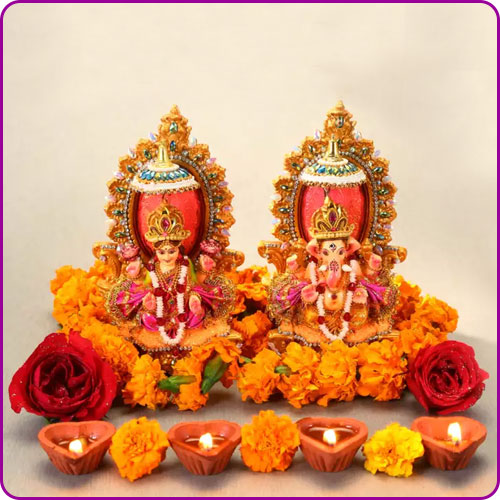
What all important items do you need to perform Lakshmi Ganesha Puja on Diwali?
The first thing you need is Goddess Lakshmi and Ganeshji’s idol. Make sure that the idol of Lakshmiji is in sitting posture with open palm mudra and coins flowing from the palm.
1 ghee diya lamp and 1 mustard lamp for Lakshmiji.
A handful of kamal gatta (lotus seed rosary), white supari, green coriander seeds, lahi, battasa, majishta, green unshelled moong dal, and puffed rice/poha.
1 copper or silver Kalash, mango leaves, unshelled coconut, glass with water and dipped mango leaf, roli thread, a garland of cotton beads, lotus flowers.
Seasonal fruits like banana, especially wood apple or sitaphal, loose flowers- rose petals, marigold, etc, sweets such as laddoo, pedha or some other (if you can, then petha is best for Lakshmiji).
Akshat- white rice mixed turmeric and red kumkum, panchamrit, and silver coins.
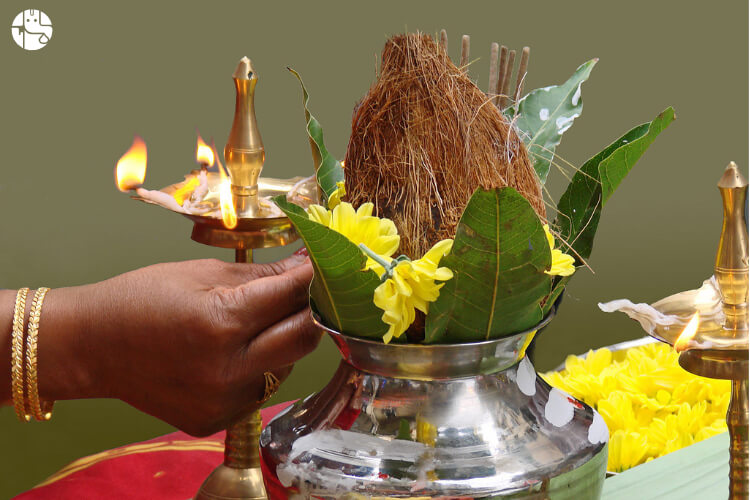
Following are the steps in which the puja can be performed:
Step 1: Before you start with the procedure of puja, sprinkle Gangajal all over the house and on all the members of the family as a mark of the purification.
Step 2: Set up a chauki (raised wooden platform) on which you’ll be doing the pooja. Then, put both white and red cloth over the platform and sprinkle it with grains. The white cloth represents Ganeshji and Navagraha Poojan, whereas the red cloth represents Lakshmiji.
Step 3: Fill three-fourth of a Kalash with water, then add coins, betel nuts, raisins, cloves, dry fruits, and cardamom. Now, on the top of the Kalash, place a full coconut, unshelled, with a Swastik made of kumkum and a vibrant roli thread wound around it. Put mango leaves under the coconut as well. Decorate the Kalash with kumkum and flowers and place it on the puja altar.
Step 4: Pure water, panchamrit, sandal water, and rose water should be used to bathe the idols. Then they are to be decorated with turmeric powder, sandal paste, and kumkum. Following that, garlands and flowers are placed around the idols.
Step 5: The Lakshmi puja begins with an offering to Ganesha, followed by an offering to Goddess Lakshmi. Offerings such as badasha, laddoos, betel leaves and nuts, dry fruits, coconut, sweets (made in the home’s kitchen), and some coins. Lamps and incense sticks are lit and flowers are offered while chanting the mantra.
Step 6: The story of the goddess Lakshmi, also known as Lakshmi’s Panchali, is recited by one of the family members and the rest of the family listens attentively. Flowers and sweets are presented to the Goddess’ idol at the end of the story.
Step 7: The puja is completed by singing the aarti song and waving the camphor lamp in front of the idol. Then the prayers for prosperity, success, and wealth are offered to the goddess, and sweets are consumed as Prasad.
Festivals
Good Friday 2026: History, significance and why it is observed by Christians
Good Friday marks the crucifixion of Jesus Christ and is observed with prayer, fasting, and reflection by Christians worldwide.


Festivals
Eid Mubarak 2026 wishes and greetings highlight joy and togetherness
Eid ul-Fitr 2026 is marked by prayers, celebrations and the exchange of heartfelt wishes that reflect joy, gratitude and togetherness.

Festivals
Eid 2026 in India may fall on March 20 or 21, moon sighting on March 19 to decide
Eid al-Fitr 2026 in India is expected on March 20 or 21, depending on the crescent moon sighting on March 19.

Magnitude 7 earthquake strikes Russia’s Kamchatka Peninsula

Mallikarjun Kharge’s ‘Your Friends’ jab at Rahul Gandhi over congress exits

Delhi deploys 25,000 personnel, installs CCTV cameras ahead of CJP march

Abhijeet Dipke detained ahead of CJP’s national flag march in Delhi

Mallikarjun Kharge seeks all-party meeting with PM Modi on delimitation

Centre sends 3 letters to Punjab government after anti-drug activist’s killing
Mallikarjun Kharge seeks all-party meeting with PM Modi on delimitation
Abhijeet Dipke detained ahead of CJP’s national flag march in Delhi
Magnitude 7 earthquake strikes Russia’s Kamchatka Peninsula
Delhi deploys 25,000 personnel, installs CCTV cameras ahead of CJP march

Afghan Men Try To Hang With The Jet Engine Of The Aircraft in Kabul- Afghanistan News – Kabul News
Trending Top 10 News: 10000 Crore Fine on Flipkart, Apple to Launch Unique Feature, Hdfc Bank Job Ad

Trending Top 10 News: Nokia 6310, Apple sales, Bachpan ka Pyar Video Kid, Dainik Bhaskar IT Raid

Trending Top 10 News: Canada bans Indian flights, Rain in Delhi NCR, AIMIM Twitter hacked, Raj Kundra case

Trending Top 10 News: Shein India, Apple New Service, Pocket Oxygen, Oppo Launched New Phone
-
 Latest world news18 hours ago
Magnitude 7 earthquake strikes Russia’s Kamchatka Peninsula
-
 India News18 hours ago
Mallikarjun Kharge’s ‘Your Friends’ jab at Rahul Gandhi over congress exits
-
 India News18 hours ago
Delhi deploys 25,000 personnel, installs CCTV cameras ahead of CJP march
-
 India News9 hours ago
Abhijeet Dipke detained ahead of CJP’s national flag march in Delhi
-
 India News8 hours ago
Mallikarjun Kharge seeks all-party meeting with PM Modi on delimitation
-
 India News7 hours ago
Centre sends 3 letters to Punjab government after anti-drug activist’s killing
