English हिन्दी
Connect with us

India News

IPL 2026 Qualifier 1: Rajat Patidar, Virat Kohli shatter playoff records as RCB crush GT to reach final

Defending champions Royal Challengers Bengaluru advanced to their second consecutive IPL final after a historic 92-run demolition of Gujarat Titans in Qualifier 1, powered by Rajat Patidar’s breathtaking 93*

Published

on

Defending champions Royal Challengers Bengaluru (RCB) created history in the Indian Premier League (IPL) 2026 Qualifier 1 against Gujarat Titans (GT), sealing their spot in a second consecutive final with a clinical 92-run victory on Tuesday.

Riding on captain Rajat Patidar’s blistering, unbeaten 93 off just 33 balls, Bengaluru piled up a colossal 254 for 5 in their 20 overs after being asked to bat first at the scenic Dharamsala stadium. The monumental total surpassed the previous playoff benchmark of 233 for 3, set by GT against Mumbai Indians in 2023, making it the highest-ever score in IPL playoff history. In response, a ruthless RCB bowling assault dismantled the Gujarat Titans batting line-up, bowling them out for 162 in 19.3 overs.

Patidar blitzkrieg anchors historic RCB innings

After GT skipper Shubman Gill won the toss and opted to field, RCB’s top order asserted early dominance by racing to 76 for 1 within the powerplay. Venkatesh Iyer provided a quickfire 19 off seven balls, while Devdutt Padikkal struck 30 off 19 deliveries to set a brisk tempo.

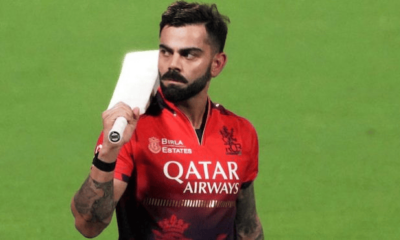
The foundation allowed Virat Kohli to maintain the middle-order momentum with a fluent 43 off 25 balls. With this knock, Kohli carved out another historic milestone, becoming the first player in IPL history to accumulate over 600 runs in four consecutive seasons. Jason Holder briefly checked RCB’s charge by removing both Kohli and Padikkal in the 10th over to leave them at 99 for 3.

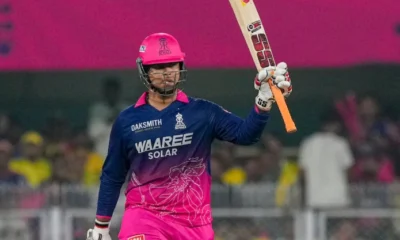
However, skipper Rajat Patidar took complete control from there on. Surviving two dropped catches early on, Patidar launched a brutal counter-attack, smashing five fours and nine towering sixes at an astonishing strike rate of 281.81. He combined forces with Krunal Pandya, who played a crucial anchoring role with 43 off 28 balls, putting together a blistering 90-run partnership. Patidar turned particularly merciless in the death overs, hammering a massive over from Kulwant Khejroliya as RCB finished their death overs on an absolute high.

Gujarat Titans collapse under scoreboard pressure

Faced with a steep mountain to climb, the Gujarat Titans chase imploded right from the start, losing five wickets inside the powerplay against a lethal pace battery. Openers Sai Sudharsan and skipper Shubman Gill were dismissed in the third and fourth overs respectively.

Sudharsan, the tournament’s leading run-scorer, suffered a bizarre and unfortunate dismissal when his bat slipped during a cut shot, knocking back his own stumps to be out hit-wicket off Jacob Duffy. Gill followed shortly after, cleaned up by an excellent delivery from Bhuvneshwar Kumar.

Jos Buttler offered a brief, aggressive resistance by hitting four boundaries and two sixes in a quick 29, but Australian pacer Josh Hazlewood exacted quick revenge by clean-bowling him in the fifth over. From a precarious position, the Titans slipped further as Jacob Duffy tore through the middle order, dismissing Washington Sundar and Rashid Khan.

Rahul Tewatia was the lone warrior for the Titans, waging a solitary battle to smash a fighting 68. His aggressive hitting brought up the team’s hundred in the 13th over and dragged the side past the 150-mark. However, the target proved far too distant. Krunal Pandya claimed the final wicket in the final over, dismissing GT’s tailender Mohammed Siraj—who was caught by Tim David—to bundle out GT for 162, securing the second-largest victory margin in IPL playoff history for RCB.

While RCB marches straight into the grand finale with ultimate momentum, Gujarat Titans remain alive in the tournament. They will get another opportunity to reach the final when they play the winner of the Eliminator clash between Sunrisers Hyderabad and Rajasthan Royals in Qualifier 2.

India News

Delhi records coolest day of June as rain brings relief from heat

Heavy rain and cloudy conditions helped Delhi record its coolest day of June, with the India Meteorological Department forecasting further relief from heat in the coming days.

Published

on

delhi-weather

Delhi experienced a significant break from the intense summer heat after rainfall and cloudy skies pushed temperatures down, making it the coolest day of June so far.

The change in weather brought much-needed relief to residents who had been dealing with high temperatures and humid conditions over the past several weeks. Rainfall was reported in several parts of the national capital and adjoining NCR regions, leading to a noticeable drop in daytime temperatures. Similar weather conditions have recently helped keep temperatures below normal across the city.

According to the India Meteorological Department (IMD), the combination of rain-bearing systems and cloud cover contributed to the cooler conditions. The weather department has indicated that pleasant weather is likely to continue, with chances of additional rainfall and thunderstorms over the next few days.

The rainfall not only lowered temperatures but also improved outdoor conditions after a prolonged spell of heat. Earlier this month, Delhi had experienced episodes of extreme weather, including heatwave conditions and dust storms, making the recent spell of rain a welcome change for residents.

IMD’s latest forecast suggests that while temperatures may gradually rise later in the week, intermittent rain and thunderstorms could continue to provide temporary relief from the summer heat.

Weather officials have advised people to stay updated on local forecasts as changing weather conditions could bring brief spells of rain, gusty winds and thunderstorms across Delhi-NCR.

Continue Reading

India News

Uddhav Sena MPs unreachable as Delhi meetings fuel fresh split speculation

Fresh uncertainty surrounds Shiv Sena (UBT) after several MPs reportedly became unreachable, with attention now focused on crucial meetings in Delhi.

Published

on

Fresh political uncertainty has gripped the Shiv Sena (UBT) after several of its Lok Sabha MPs reportedly became unreachable, prompting senior leaders to make personal efforts to contact them amid growing speculation of a possible rebellion within the party.

Party chief Uddhav Thackeray and other senior leaders are understood to be reaching out to MPs as concerns grow over potential defections. The developments come ahead of a parliamentary committee meeting in Delhi, where several MPs from the Uddhav Thackeray camp are expected to gather.

Reports suggest that some MPs from the Shiv Sena (UBT) faction could hold discussions in the national capital alongside leaders from the rival Shiv Sena led by Eknath Shinde. Sources have indicated that a group of MPs may explore forming a separate faction in Parliament before potentially aligning with the Shinde-led camp, although no official announcement has been made.

Names being discussed in political circles include MPs such as Sanjay Dina Patil, Sanjay Deshmukh, Nagesh Patil Ashtikar, Omraje Nimbalkar, Bhausaheb Wakchaure and Sanjay Jadhav. However, at least one MP, Sanjay Dina Patil, has publicly rejected reports linking him to any rebel group.

Meanwhile, senior Uddhav camp leaders including Arvind Sawant and Anil Desai are expected to remain actively engaged in efforts to maintain party unity. Rajya Sabha MP Sanjay Raut has also been in Delhi amid the unfolding developments.

The latest episode has revived memories of previous political upheavals in Maharashtra and intensified speculation over whether the Shiv Sena (UBT) could face another significant organisational challenge in the coming days. As meetings continue in Delhi, political observers will be closely watching for any formal announcements from either camp.

Continue Reading

India News

Telegram CEO Pavel Durov criticises India restriction, says leak networks shifted to other apps

Telegram founder Pavel Durov has responded to India’s temporary restriction on the platform ahead of the NEET-UG 2026 re-examination, arguing that the move affected ordinary users without stopping alleged leak networks.

Published

on

Telegram founder and CEO Pavel Durov has criticised India’s decision to temporarily restrict access to the messaging platform, arguing that the move failed to curb alleged exam leak operations and instead affected millions of legitimate users.

The restriction was imposed ahead of the NEET-UG 2026 re-examination as authorities sought to prevent the spread of leaked exam-related material and disrupt networks allegedly involved in malpractice.

In a public response, Durov said the action had inconvenienced a large number of users across India while those responsible for sharing leaked content had simply migrated to alternative platforms.

According to Durov, restricting access to Telegram did not eliminate the problem authorities were trying to address. He claimed that groups involved in distributing exam-related leaks quickly shifted their activities elsewhere, raising questions about the effectiveness of platform-specific restrictions.

The temporary curbs were announced by the government in the lead-up to the NEET-UG re-test scheduled for June 21. Officials said the move was aimed at safeguarding the integrity of the examination process following concerns about the circulation of leaked material online.

The restriction is currently expected to remain in place until June 22.

Durov also stressed that millions of Indian users rely on Telegram for communication, education, business activities and community engagement. He argued that measures targeting an entire platform can have wider consequences for users who have no connection to alleged wrongdoing.

The government’s action came amid broader efforts to prevent cheating and malpractice in competitive examinations. Authorities have been closely monitoring digital platforms and messaging services after reports that exam-related content was being circulated through online channels.

The debate has sparked discussions about how governments and technology platforms should balance examination security with access to digital communication services. While officials maintain that strong measures are necessary to protect the fairness of high-stakes examinations, critics argue that restrictions on entire platforms may not effectively stop determined offenders.

For now, Telegram remains at the centre of the discussion as authorities continue efforts to ensure a fair and secure conduct of the NEET-UG 2026 re-examination.

Continue Reading

Trending

© Copyright 2022 APNLIVE.com