English हिन्दी
Connect with us

Latest Politics News

A Raja writes to Manmohan: Truth about 2G out in open, you can support me now

Published

on

A Raja writes to Manmohan: Truth about 2G out in open, you can support me now

Former Prime Minister replies saying: I am very happy you stand vindicated, but says little else

Weeks after he was acquitted of all charges by a special CBI court in the infamous 2G spectrum scam case, former Union telecom minister A Raja has written to Dr Manmohan Singh in what could be seen as his way of forgiving the former Prime Minister for having dropped him from the Union Cabinet in 2010 in the midst of a deafening political uproar.

In the letter written on December 26, days after he along with DMK MP M Kanimozhi and 17 others were acquitted by the special CBI court of judge OP Saini, Raja tells Dr Singh: “A decade ago, on this very day, I wrote a letter to you on the subject of issuance of new UAS licenses and allocation of 2G spectrum. Neither of us could have imagined the twists and turns in our political and personal lives over the next 10 years.”

The letter Raja is talking about is a reference to his communication with the then Prime Minister on the issue of spectrum allocation by his ministry and his efforts at increasing India’s tele-density while reducing tariffs charged to the consumer.

Raja adds in the letters: “A few powerful individuals launched a propaganda machine, magnified a thousand times by a complicit and pliable media, and were able to mislead even the Parliament and the apex judiciary. It cost you the UPA government, and it took seven years of my life, including 15 months in jail.”

The former telecom minister then goes on to say: “You will recall that I assured you several times that I had done nothing wrong but rather acted in national interest (a point mentioned in his letter of December 26, 2007) and that I would prove this. I also understand the complications that prevented you from openly supporting me.”

Given the uproar created by the then BJP-led Opposition over the alleged Rs 1.76 lakh crore 2G scam, Dr Singh had been forced to distance himself from the decisions taken by Raja over spectrum allocation. He had gone to the extent of telling the media that he had trusted Raja to do the right thing and that as Prime Minister he could not be expected to go into every detail of what his minister was doing. Later, Dr Singh had even indicated that Raja was not his choice for a cabinet colleague but the “coalition dharma” had forced him to accept the DMK’s proposal of inducting Raja as telecom minister in the UPA-I government.

It is in this backdrop that Raja’s comments in this recent letter to Dr Singh appear as if he was now hoping to not just put the past behind him but also hopeful of the former Prime Minister finally coming out in his support openly. “Today, I stand vindicated. I hope you will acknowledge that I remained loyal and faithful to you – unlike some senior Cabinet colleagues – and ensured that you did not suffer personal embarrassment in the trial proceedings. Now that the truth about 2G is out in the open, perhaps you too could come forward in my support, which you could not earlier,” Raja concludes.

Dr Singh who has spoken little about the 2G verdict and limited his reaction to a cryptic: “the judgement speaks for itself” and that the “massive propaganda” over the scam now stands exposed, has replied to Raja in his characteristically mild-mannered way.

In a brief response he sent to Raja on January 2, Dr Singh said: “I am very happy that you stand vindicated in the 2G case. You and your family have suffered greatly in this process but all your friends are greatly relieved that truth has prevailed.”

It remains to be seen, however, whether Dr Manmohan Singh would in days to come be more vocal in his defence of Raja’s actions as telecom minister.

India News

Congress to challenge Meenakshi Natarajan’s Rajya Sabha nomination rejection in Madhya Pradesh High Court

Congress leader Meenakshi Natarajan has announced that the party will challenge the rejection of her Rajya Sabha nomination in the Madhya Pradesh High Court, alleging the decision was legally flawed and that the Election Commission failed to follow a consistent approach.

Published

on

The Congress is preparing to challenge the rejection of senior leader Meenakshi Natarajan’s Rajya Sabha nomination before the Madhya Pradesh High Court, shifting the dispute from the political arena to the legal forum.

Weeks after her nomination was rejected ahead of the Rajya Sabha elections, the former Member of Parliament asserted that the decision was not the result of any lapse by Congress leaders, legal experts or those involved in preparing the nomination papers. Instead, she claimed the rejection was based on an incorrect legal interpretation.

Congress to file election petition

Natarajan said the party would file an election petition within the prescribed time and contest the entire process before the High Court. She also alleged that a deliberate narrative was created to portray the rejection as a consequence of negligence within the Congress, thereby diverting attention from the Election Commission’s role.

According to her, the Returning Officer rejected her nomination citing non-disclosure of information related to a pending case. However, she argued that Form-26, which candidates are required to submit along with their nomination papers, does not contain any specific provision requiring disclosure of such information.

Natarajan said she has contested multiple elections in the past and maintained that experienced legal experts within the Congress have handled nomination papers for years, making such an oversight highly unlikely.

Questions raised over Election Commission’s approach

The Congress leader also questioned the Election Commission’s handling of the matter, alleging that it failed to apply uniform standards in similar cases.

She referred to the case of Rajya Sabha candidate Parimal Nathwani in Jharkhand, claiming he was given 24 hours to rectify issues in his nomination papers, whereas she was not provided a similar opportunity. According to Natarajan, the differing treatment raises concerns about consistency in the poll body’s decision-making process.

Congress sources said the party’s legal cell is preparing the election petition under the guidance of senior lawyers. The dispute had earlier reached the Election Commission and subsequently the Supreme Court, but the party will now pursue the legal remedy available after the election process through the High Court.

The Congress has also alleged that the Election Commission did not act impartially during the proceedings. Party leaders claimed senior Congress representatives and lawyers reached the poll body on time to present their arguments, but the proceedings were delayed. They further alleged that the Election Commission had the authority to overturn the Returning Officer’s decision but chose not to intervene.

BJP rejects Congress allegations

The Bharatiya Janata Party dismissed the Congress’ allegations, attributing the controversy to internal issues within the opposition party.

BJP state spokesperson Ajay Yadav said the rejection of Natarajan’s nomination was the result of internal infighting in the Congress. He also claimed that the senior leader had been sidelined within her party and suggested that the Congress should introspect instead of blaming the Election Commission.

Natarajan, however, rejected claims that the Congress was responsible for any lapse leading to the rejection of her nomination.

Continue Reading

Latest Politics News

Punjab Congress faction games hold up who will lead party as poll approaches

The Congress leadership is expected to finalize the new Punjab Congress chief soon as factions oppose Amarinder Singh Raja Warring continuance as chief.

Published

on

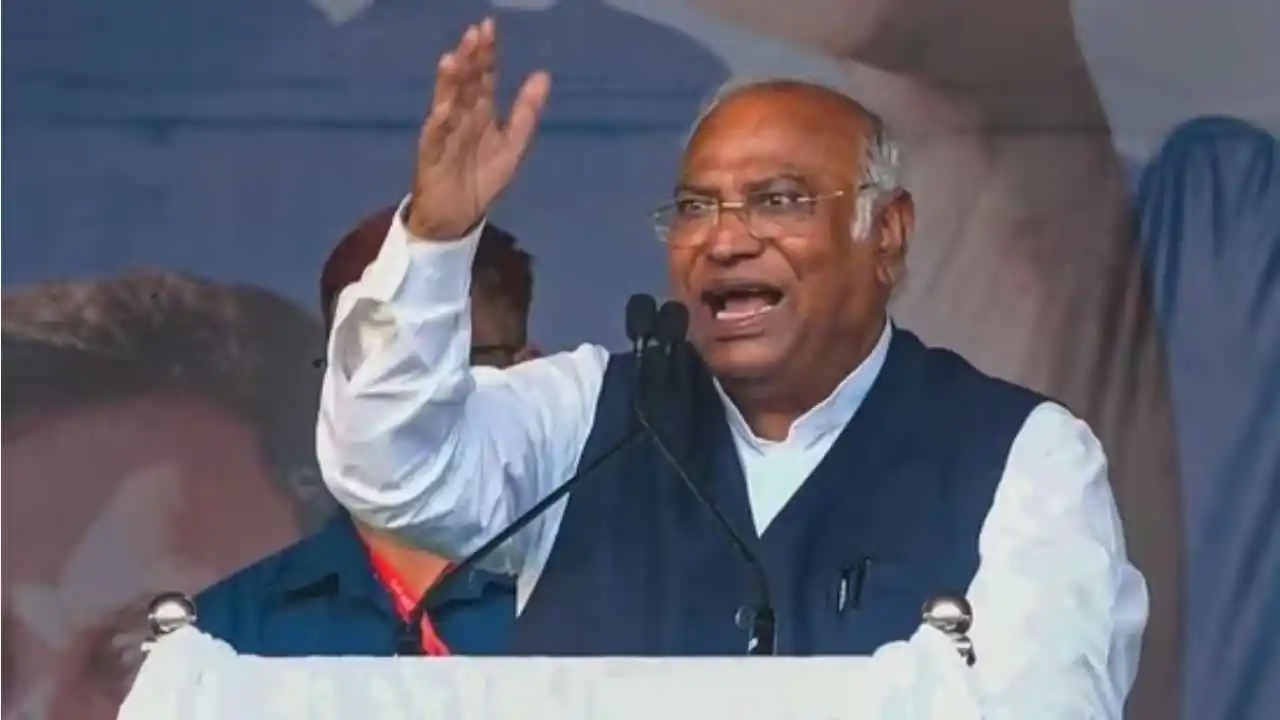
mallikarjun-kharge

The Congress leadership is likely to decide the name of a new Punjab Pradesh Congress Comittee (PPCC) president in light of the growing factional differences emerging within the party state unit.

The decision by party president Mallikarjun Kharge on choosing the head of the state unit is likely to be finalized after he takes note of other senior leaders’ opinions on the matter, as differences over the continuation of Amarinder Singh Raja Warring as PPCC president has led to former Chief Minister Charanjit Singh Channi pitching his hat in the ring.

The leadership crisis has reflected the diverging interests of opposing factions in the Punjab Congress. Channi has the backing of several party leaders including Bharat Bhushan Ashu, Gurpreet Singh Kangar, Darshan Singh Brar, and Nazar Singh Manshahia, among other supporters of Channi, while another faction is supporting incumbent chief Warring.

The Congress needs to stem the crisis soon since the state is headed for elections next year as the term of the Bhagwant Mann-led Aam Aadmi Party government winds down. Many in the party have said that having a widely accepted state leader can strengthen the organizational structure.

The delay in decision-making has caused speculation with some senior leaders meeting BJP heavyweights in Delhi. Though these leaders have dismissed any rumours of switching sides, the strain among the factions is telling on party unity. But given the way several Rajya Sabha MPs of the Aam Aadmi Party switched to the BJP, nothing can be ruled out as election fever picks up.

Continue Reading

India News

Congress MP Manish Tewari says terror must end before India-Pakistan dialogue resumes

Congress MP Manish Tewari has questioned calls to restart India-Pakistan dialogue, arguing that meaningful talks cannot resume until Pakistan takes verifiable action against terrorism.

Published

on

Congress MP says decades of peace initiatives have repeatedly been followed by terror attacks and calls for verifiable action against terrorism before any engagement

Congress MP Manish Tewari has questioned renewed calls to resume dialogue between India and Pakistan, saying any discussion with Islamabad must first address the issue of cross-border terrorism. Responding to an appeal by 117 eminent personalities from both countries seeking the restoration of diplomatic engagement, Tewari asked whether such talks could be meaningful without concrete action against terror infrastructure.

Speaking on Friday, the Congress leader said successive Indian governments had consistently attempted to improve relations with Pakistan, but those efforts were repeatedly undermined by terrorist attacks.

According to Tewari, governments led by P.V. Narasimha Rao, H.D. Deve Gowda, I.K. Gujral, Atal Bihari Vajpayee, Manmohan Singh and Prime Minister Narendra Modi all pursued dialogue with Pakistan through formal negotiations or backchannel diplomacy. However, he claimed that each attempt was followed by acts of terrorism.

Calls for proof of dismantling terror infrastructure

Tewari said the key issue was whether Pakistan had provided any verifiable assurance that it had dismantled its terror infrastructure.

Referring to former Pakistan President Pervez Musharraf, he said a public commitment had been made after the Parliament attack to act against terrorism, but the assurance was later withdrawn. He added that similar commitments made during the tenures of former Prime Ministers Manmohan Singh and Narendra Modi also failed to produce lasting results.

Questioning the appeal for renewed engagement, Tewari said those advocating talks should clarify what specific issues they intended to discuss while the threat of terrorism remained unresolved.

References Pahalgam terror attack and Indus Waters Treaty

The Congress MP also referred to the Pahalgam terror attack in April 2025, saying it further reinforced India’s concerns regarding terrorism.

He noted that India’s position became even more firm following the attack, pointing to the suspension of the Indus Waters Treaty as part of the government’s response.

Commenting on the timing of the letter seeking renewed dialogue, Tewari said India had consistently maintained that terrorism and bilateral talks could not proceed simultaneously. He also reiterated the government’s position that it would not differentiate between terrorists and those responsible for directing such attacks.

Peace remains desirable, but security comes first

While acknowledging that millions of people across South Asia aspire for lasting peace, Tewari argued that meaningful dialogue was not possible as long as terrorism remained a continuing threat.

He said India must first receive credible assurances from Pakistan, beginning with an end to the export of terrorism, before considering any resumption of diplomatic engagement.

Continue Reading

Trending

© Copyright 2022 APNLIVE.com