English हिन्दी
Connect with us

India News

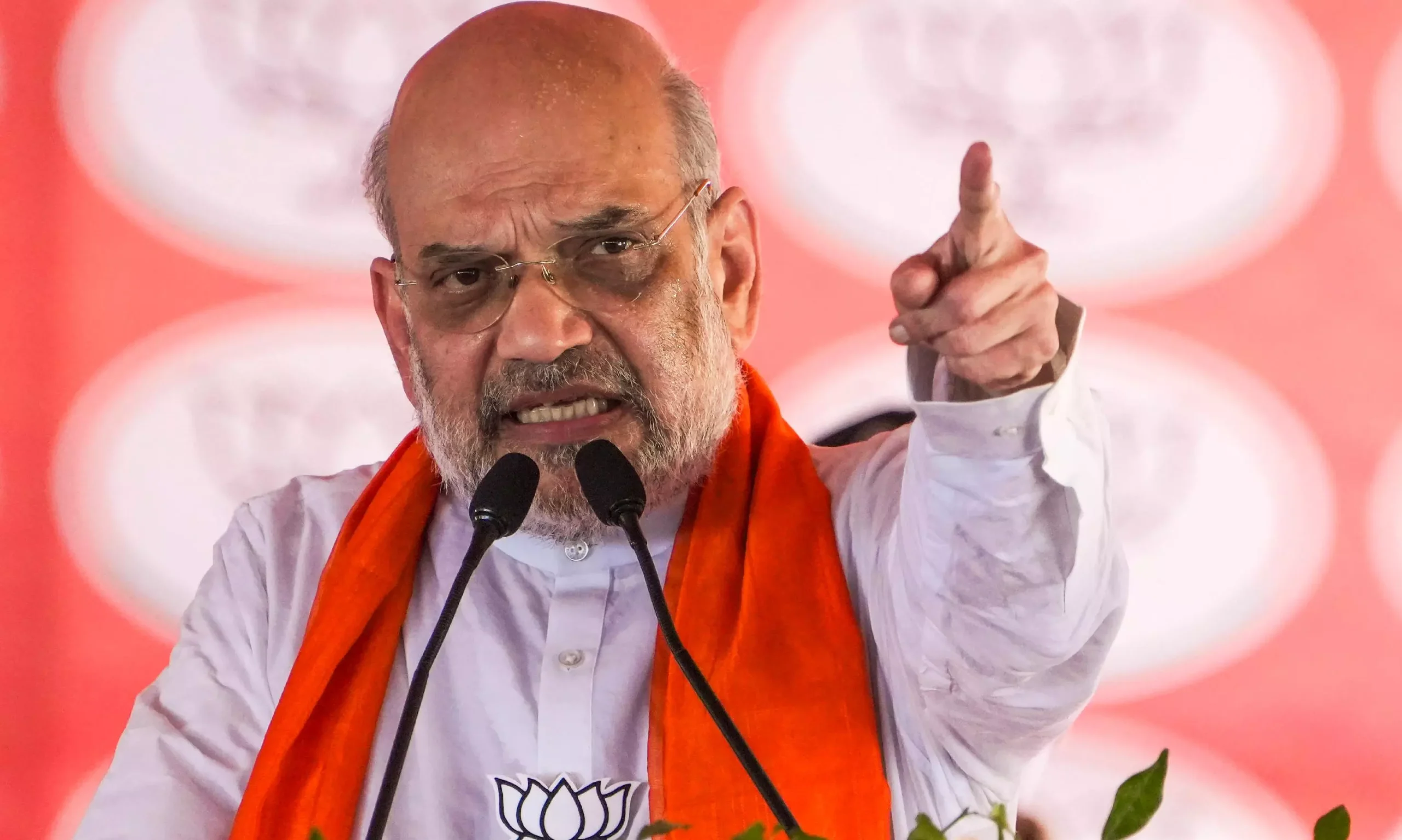
Amit Shah says Centre will amend NDPS Act to tighten crackdown on drug syndicates

Amit Shah said the Centre is relooking the NDPS Act to plug loopholes exploited by narco syndicates and strengthen anti-drug enforcement across India.

Published

on

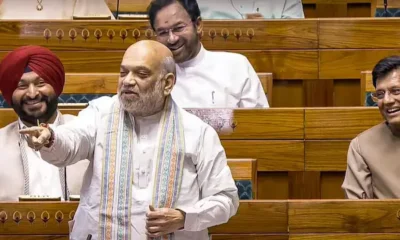
Union Home Minister Amit Shah on Friday said the Centre is preparing amendments to the Narcotic Drugs and Psychotropic Substances (NDPS) Act to close loopholes allegedly exploited by drug trafficking networks and strengthen India’s anti-narcotics framework.

Addressing the 10th apex-level meeting of the Narco-Coordination Centre (NCORD) in New Delhi, Shah said the government is re-examining the existing law and invited states to submit suggestions for the proposed changes. The amendments are being worked on by the Ministry of Finance to make the legislation more effective in tackling organised drug syndicates.

Centre seeks stronger legal framework against narcotics

Shah stressed the need for a tougher approach towards drug traffickers and peddlers, while advocating a compassionate stance towards victims of addiction. He outlined a three-pronged strategy against drug trafficking — “detect, disrupt and destroy” — and urged all stakeholders to intensify efforts against the narcotics menace.

The Home Minister also asked state governments to share suggestions on strengthening the NDPS Act. Directors General of Police have been asked to forward recommendations to the Ministry of Home Affairs, while Chief Secretaries can submit their inputs to the Department of Revenue under the Ministry of Finance.

Seizures of synthetic drugs rise over past decade

Highlighting the government’s anti-drug campaign, Shah said that between 2004 and 2014, around 26 lakh kilograms of synthetic drugs were seized across the country. In comparison, agencies confiscated approximately 1.18 crore kilograms of synthetic drugs between 2014 and 2026.

He further said the estimated value of drugs seized during 2014-2026 stood at around Rs 1.84 lakh crore, significantly higher than the nearly Rs 40,000 crore worth of narcotics seized during the previous decade. According to Shah, these figures reflect the expanded scale and effectiveness of anti-drug enforcement efforts.

The minister also called for real-time information sharing among states through digital platforms developed by the Narcotics Control Bureau and urged authorities to ensure NCORD meetings deliver measurable outcomes. He unveiled the “Vision Document on Drug Control (2026-2029)”, which aims to provide a roadmap for reducing drug demand, curbing supply and minimising harm caused by substance abuse.

India News

Atiq Ahmed’s son Aban Ahmed killed in Jhansi crash, survivor says SUV was speeding

Aban Ahmed, the youngest son of Atiq Ahmed, and his friend were killed after their SUV crashed into a road divider in Jhansi. Police have launched an investigation into the accident.

Published

on

Gangster Atiq Ahmed

Aban Ahmed, the youngest son of slain gangster-turned-politician Atiq Ahmed, was killed along with his friend in a road accident in Uttar Pradesh’s Jhansi district on Thursday after the SUV they were travelling in crashed into a divider.

Police said the second victim has been identified as 25-year-old Sonu, son of Raja. Three other occupants of the vehicle sustained injuries and were later shifted to Prayagraj for further treatment at the request of their families.

SUV crashed while travelling to Jhansi

According to police, 20-year-old Aban Ahmed, a resident of Prayagraj, was travelling to Jhansi to meet his two brothers, who are lodged in separate jails in the district. The accident occurred around 10.30 am on the Kanpur-Jhansi Road in the Poonch area.

Superintendent of Police (Rural) Arvind Kumar said the vehicle involved was a Hyundai Creta bearing registration number UP 70 FW 2432.

The injured have been identified as Azam (28), Mohammad Javed (30), and Mohammad Umar (24), all residents of Prayagraj.

Survivor says vehicle was moving at high speed

One of the injured passengers, Mohammad Umar, said the SUV was travelling at a high speed before the driver lost control.

“The car was travelling at a high speed, and the driver lost control,” Umar told reporters while receiving treatment.

Senior Superintendent of Police BBGTS Murthy said the preliminary investigation also indicates that the SUV was speeding. He added that one of the injured passengers informed police that the vehicle became uncontrollable before hitting the road divider.

Police examining CCTV footage

Police have launched an investigation into the accident and are reviewing CCTV footage from cameras installed along the national highway.

Officials are also examining whether the driver lost control after an animal suddenly came in front of the vehicle. However, police said no conclusion has been reached and the investigation is continuing.

Bodies taken to Prayagraj

After a post-mortem examination conducted by a panel of three doctors at Jhansi Medical College, the bodies of Aban Ahmed and Sonu were taken to Prayagraj late Thursday night for the last rites.

Circle Officer (City) Ramveer Singh said the injured were shifted by ambulance around 9.30 pm for further treatment in Prayagraj, while the bodies were transported shortly before midnight.

Speaking to reporters in Jhansi, Aban’s twin brother Ahjam appealed to authorities to allow their jailed brothers to attend the funeral.

Aban Ahmed was Atiq Ahmed’s youngest son

Aban Ahmed was the youngest of Atiq Ahmed’s five sons and the twin brother of Ahjam. His brothers Umar and Ali are currently lodged in separate jails in Uttar Pradesh.

Another brother, Asad Ahmed, who was wanted in the Umesh Pal murder case, was killed in a police encounter near Jhansi in April 2023.

Atiq Ahmed and his brother Ashraf were shot dead on April 15, 2023, while being escorted by police for a medical examination in Prayagraj. His wife, Shaista Parveen, remains absconding in connection with the Umesh Pal murder case, according to police.

Continue Reading

India News

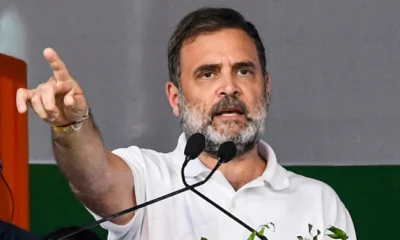
Rahul Gandhi backs Ranchi student protesters, says every government must hear students

Rahul Gandhi has backed students protesting in Ranchi over alleged recruitment exam irregularities, urging every government to listen to students and reform the education system.

Published

on

Rahul-Gandhi

The Congress on Thursday extended its support to students protesting in Ranchi against alleged irregularities in recruitment examinations, with Leader of Opposition in the Lok Sabha Rahul Gandhi saying that every government should listen to students’ concerns and work towards reforming the education system.

The party, which is part of the Jharkhand Mukti Morcha (JMM)-led government in the state, also said it would continue working to ensure students receive justice.

Rahul Gandhi calls for education reforms

During an interactive ‘Ask Me Anything’ session on Instagram, Rahul Gandhi was asked to support the ongoing student protest in Jharkhand.

Responding to the request, Gandhi said the student movements taking place across the country reflect growing dissatisfaction with the education system. He described the current system as unaffordable and oppressive, adding that meaningful reforms are needed.

He further said that every government—whether at the Centre, in Jharkhand, or a Congress-led state—must listen to students and take steps to improve the education system.

Congress says it stands with students

Congress president Mallikarjun Kharge said the party would support students irrespective of which party is in power. He said Congress leaders would raise the matter with the Jharkhand government and seek answers on the concerns raised by students.

Earlier in the day, AICC Jharkhand in-charge K. Raju and state Congress leaders met Chief Minister Hemant Soren and submitted a memorandum highlighting the students’ demands.

Raju later said the delegation appreciated the chief minister’s decision to constitute a ministerial committee to consult with the protesting students and recommend practical solutions.

He also reiterated that the Jharkhand Congress, along with the Indian Youth Congress (IYC) and the National Students’ Union of India (NSUI), stands firmly with the agitating students.

Protest enters 13th day

The protest over alleged irregularities in Jharkhand Public Service Commission (JPSC) and Jharkhand Staff Selection Commission (JSSC) recruitment examinations entered its 13th day on Thursday.

Six protesters continued their hunger strike, while students and job aspirants formed an 11-member delegation to hold discussions with the government.

The agitation began on July 25 under the banner of the JPSC-JSSC Reforms Manch at Jaipal Singh Munda Stadium in Ranchi and has emerged as one of the state’s largest student-led movements in recent years.

The protesters are demanding cancellation of the 14th Jharkhand Public Service Commission Civil Services Examination and an independent investigation into the alleged irregularities by either the Central Bureau of Investigation (CBI) or a panel of retired high court judges from outside Jharkhand.

Hemant Soren assures action

A day before the proposed talks, Chief Minister Hemant Soren said his government’s doors were open for discussions with the students.

In a post on X, Soren said the concerns raised by the students were being taken seriously and that investigative agencies were working continuously to identify those responsible for the alleged irregularities.

He said the government’s objective was not only to investigate the matter but also to provide a long-term solution to students’ concerns. Soren assured that every demand and suggestion would be carefully examined before announcing concrete measures.

Continue Reading

India News

Chhattisgarh High Court denies bail to ex-IAS officer in CGPSC paper leak case

The Chhattisgarh High Court has denied bail to retired IAS officer Jeevan Kishore Dhruv in the alleged CGPSC paper leak case, saying competitive exam paper leaks have a devastating impact on the careers of lakhs of aspirants.

Published

on

paper Leak

The Chhattisgarh High Court has rejected the bail plea of retired IAS officer Jeevan Kishore Dhruv, who was arrested by the Central Bureau of Investigation (CBI) in connection with the alleged Chhattisgarh Public Service Commission (CGPSC) recruitment scam.

The court observed that leaking question papers of competitive examinations is “more heinous than murder” because it destroys the careers of lakhs of young aspirants and damages the integrity of the public recruitment process.

High Court cites seriousness of allegations

Justice Bibhu Datta Guru, while rejecting Dhruv’s bail application, noted that the alleged offence had a far-reaching impact on society and could not be treated as an ordinary crime.

The court observed that people involved in leaking competitive examination question papers jeopardise the future of candidates who spend years preparing for government recruitment examinations.

According to the order, the prosecution has, at the prima facie stage, collected material indicating that Dhruv, while serving as Secretary of the CGPSC during the 2020-2022 recruitment process, allegedly retained confidential question papers of the 2021 Main Examination and supplied them to his son.

The High Court also noted that the investigation pointed to the applicant’s alleged involvement through witness statements, documentary evidence and recoveries made during searches.

Considering the gravity of the allegations and their impact on the credibility of the recruitment process, the court said it was not inclined to grant bail.

Defence argues false implication

During the hearing, Dhruv’s counsel argued that the retired IAS officer had been falsely implicated only because he served as the CGPSC Secretary and was not named in the original FIR.

The defence submitted that no incriminating electronic devices or documents, apart from a mobile phone, were recovered from him. It also contended there was no evidence proving that he leaked confidential question papers or shared them with his children.

The counsel further argued that after learning both his sons were candidates in the examination, Dhruv informed the competent CGPSC authorities and requested to be relieved of all confidential work related to the recruitment process. According to the defence, official records showed he was subsequently assigned no confidential examination duties.

The defence also maintained that allegations of favouritism were weakened by the fact that one of Dhruv’s sons failed to qualify, while the other secured a rank below the top position.

CBI opposes bail

Opposing the plea, the CBI argued that the case involved large-scale irregularities that undermined public confidence in the recruitment system.

The agency alleged that Dhruv, along with the then CGPSC chairman, controller of examinations and other accused persons, entered into a criminal conspiracy to leak confidential question papers of the 2021 Main Examination, giving his son an unfair advantage.

According to the CBI, copies of questions and answers related to General Studies Paper VII and the Question-cum-Answer Booklet of the Essay paper were recovered during searches conducted at Dhruv’s residence.

The investigating agency also argued that the retired IAS officer could not claim parity with a co-accused who had received bail from the Supreme Court, as Dhruv was a senior public servant responsible for maintaining the secrecy and integrity of the examination process.

Several others also arrested

Apart from Jeevan Kishore Dhruv, those arrested in the alleged recruitment scam include former CGPSC chairman Taman Singh Sonwani, his nephews Nitesh Sonwani and Sahil Sonwani, former Deputy Controller of Examinations Lalit Ganvir, industrialist Shravan Kumar Goyal, his son Shashank Goyal, and daughter-in-law Bhumika Katiyar.

Continue Reading

Trending

© Copyright 2022 APNLIVE.com