English हिन्दी
Connect with us

India News

Polling begins for high-stake assembly elections in Assam, Kerala, and Puducherry

Polling is underway across Assam, Kerala and Puducherry as voters participate in key assembly elections with major political stakes.


Published

on

Voting

Polling commenced on Thursday for the Assembly elections in Assam, Kerala and Puducherry, marking a significant phase in the 2026 election cycle. Voters across the three regions are casting their ballots amid tight security and closely watched political contests.

In Assam, the election assumes importance as it is the first since the delimitation exercise carried out in 2023. The ruling party is seeking to return to power, while the opposition is attempting to make electoral gains after an intense campaign.

Focus on Assam and delimitation impact

Assam remains a key battleground in this round of elections. The recent delimitation exercise has altered constituency boundaries, making this election particularly significant for all major political parties.

The campaign in the state saw sharp exchanges between the ruling party and the opposition, with both sides raising a range of governance and development issues.

Three-way contest in Kerala

In Kerala, voting is being held for the 140-member Assembly. The state is witnessing a competitive contest primarily between the ruling Left Democratic Front (LDF), the Congress-led United Democratic Front (UDF), and the Bharatiya Janata Party (BJP).

The LDF has campaigned on its governance record, while the UDF has targeted the government on various issues. The BJP is also aiming to expand its presence in the state.

Puducherry and alliances

In the 30-member Puducherry Assembly, the electoral contest features alliances led by the All India NR Congress (AINRC) along with its partners, and the Congress-DMK alliance.

The Union Territory is witnessing a multi-cornered contest, with key alliances looking to secure a majority.

Results schedule

Counting of votes for all three regions will take place on May 4. The results will be announced alongside outcomes from other states going to polls in this election cycle.

India News

Delhi records warmest May night in 14 years as heatwave triggers orange alert

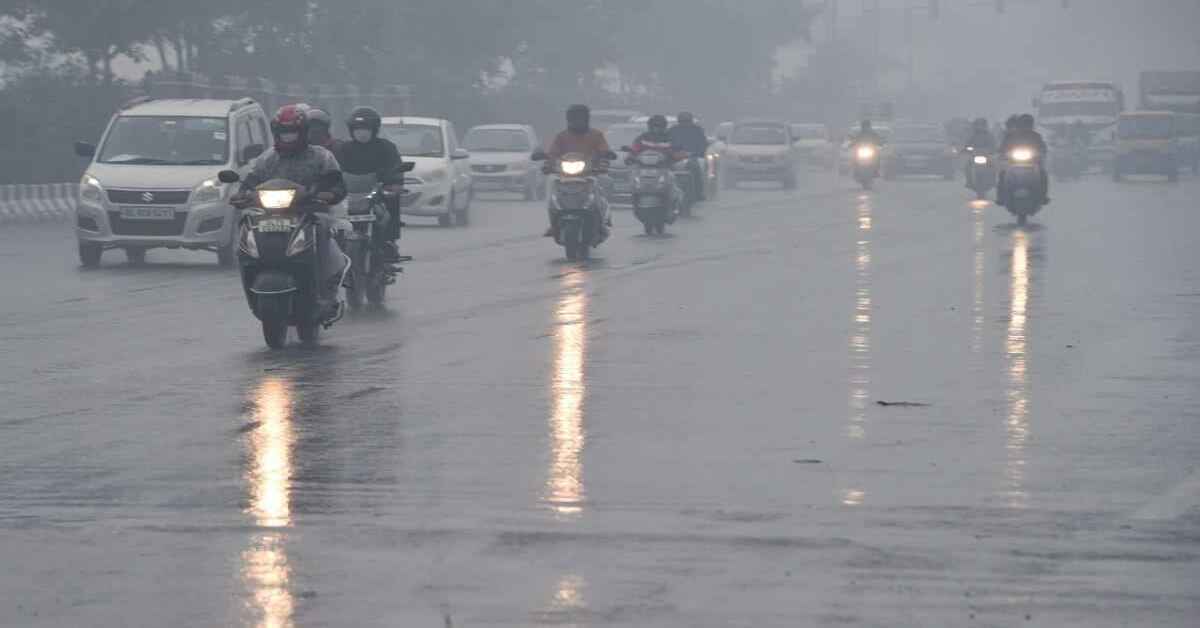
The national capital recorded its highest May minimum temperature in nearly 14 years at 31.9 degrees Celsius, prompting weather officials to sound an orange alert for impending severe heatwave conditions.

Published

on

Delhi heatwave

In a clear indicator of worsening summer conditions, the national capital logged its warmest night in the month of May in nearly 14 years. According to the India Meteorological Department (IMD), the city’s minimum temperature settled at an unusually high 31.9 degrees Celsius on Thursday morning.

The last time Delhi witnessed a higher minimum temperature during this month was on May 26, 2012, when the night temperature stood at 32.5 degrees Celsius.

Weather monitoring stations across the national capital region, including the Safdarjung base station and Lodi Road, officially registered “warm night” conditions. Meteorological standards define a warm night when the maximum daytime temperature remains at or above 40 degrees Celsius, and the minimum night temperature departs between 4.5 and 6.4 degrees Celsius above the seasonal normal.

Data provided by the weather office revealed that the Safdarjung station recorded 31.9 degrees Celsius, which is 5.2 notches higher than normal for this time of the year. Other stations followed a similar trajectory: the Ridge station recorded 30.6 degrees Celsius (4.4 notches above normal), Palam noted 30.5 degrees Celsius (3.4 notches above normal), and Lodi Road reached 29.6 degrees Celsius (4.6 notches above normal). Ayanagar remained relatively lower at 27.4 degrees Celsius, merely 0.7 notch above the baseline.

Orange alert issued amid rising daytime temperatures

The ongoing lack of nighttime cooling arrives alongside severe daytime heat. The weather department has placed the city under an “orange alert,” indicating that residents and authorities must remain prepared for extreme conditions. Daytime temperatures are projected to peak around 46 degrees Celsius, with persistent heatwaves forecast throughout the region.

Parallelly, data from the Central Pollution Control Board (CPCB) indicated that Delhi’s air quality was in the “moderate” category on Thursday morning, with an Air Quality Index (AQI) reading of 153. Under current guidelines, an AQI ranging between 101 and 200 signifies moderate conditions, whereas readings from zero to 50 are considered good.

With dry, hot winds expected to continue across the plains, relief remains unlikely for residents over the coming days.

Continue Reading

India News

PM Modi urges shift to alternative energy and fuel austerity amid Middle East crisis

In response to severe energy and supply chain strains caused by the ongoing war in West Asia, Prime Minister Narendra Modi has ordered an intensive push toward alternative energy sources while urging the public to cut down on fuel consumption.

Published

on

As the escalating conflict in West Asia continues to disrupt international supply chains and impact global markets, Prime Minister Narendra Modi has urged senior ministers and citizens to aggressively explore alternative energy sources and adopt conservation practices. Chaired by the Prime Minister, a high-level meeting of the Cabinet Committee on Security (CCS) evaluated the short, medium, and long-term economic and strategic implications of the ongoing Middle East war involving the US, Israel, and Iran.

The government’s primary focus remains on safeguarding citizens from the economic shockwaves of the conflict, which has heavily strained global petroleum, power, and fertiliser sectors. Media reports indicate that the blockade of critical trade lifelines like the Strait of Hormuz has sent oil marketing companies into severe daily revenue losses to keep domestic prices regulated, prompting a nationwide call for energy self-reliance and behavioral transformation.

High-Level review targeting energy security and supply stabilization

During the top-tier strategy session, the Prime Minister reviewed the immediate and prolonged steps required to guarantee uninterrupted supplies of essential commodities. Senior cabinet members—including the ministers of finance, external affairs, petroleum, and defense—assessed India’s overall preparedness.

“Chaired a meeting of the CCS to review the mitigating measures in the wake of the ongoing conflict in West Asia,” the Prime Minister stated in a digital update. He added that discussions heavily emphasized diversifying import sources for key industrial segments, boosting domestic distribution logistics, and establishing a robust shield against international market volatility.

The continuous monitoring of geopolitical developments is aimed at protecting both public consumption interests and large-scale industrial requirements.

A call for public fuel conservation and alternative energy

Addressing the wider public, the Prime Minister described the current global context as a challenging period that demands unified national resilience. He appealed to the citizens of the country to voluntarily cut back on petrol and diesel consumption, highlighting fuel austerity as a national responsibility to conserve precious foreign exchange reserves.

Suggested measures echo the structural adaptations utilized during the pandemic, including encouraging carpooling, optimizing the use of public urban metro systems, and transitioning back to remote work, virtual meetings, and online conferences where applicable.

Simultaneously, the administration is pressing forward with structural energy sector upgrades. Efforts are being channeled into accelerating non-fossil fuel power generation, advancing battery energy storage systems, and scaling up strategic petroleum reserves to ensure that India remains insulated from future external maritime and geopolitical chokepoints.

Continue Reading

India News

Punjab espionage ring exposed as Pathankot man arrested for transmitting army movements to Pakistan

A major espionage module has been uncovered in Punjab’s Pathankot. Police arrested Baljit Singh for installing an internet-linked CCTV camera on National.

Published

on

In a significant development for national security, the police in Punjab’s Pathankot have dismantled a suspected cross-border spying network. A local resident has been taken into custody for allegedly sharing highly sensitive details regarding the movements of the Indian Army and various paramilitary units with handlers based in Pakistan.

The suspect, identified as Baljit Singh (also known as Bittu), belongs to Chakk Dhariwal village. According to senior police officials, Singh had strategically set up an internet-linked closed-circuit television (CCTV) camera at a shop situated near a bridge on the crucial Pathankot-Jammu stretch of National Highway-44. This setup allowed him to monitor and track the logistical movements of defense and paramilitary forces along the corridor.

Surveillance feed routed internationally

Senior Superintendent of Police, Daljinder Singh Dhillon, confirmed that the live digital surveillance feed from this highway camera was being routed electronically to operatives located in Pakistan as well as other international destinations.

During his interrogation, the accused admitted to installing the internet-enabled camera at a roadside shop near Sujanpur earlier this year in January. He further disclosed that he was receiving instructions from an unidentified handler operating out of Dubai, who had initially transferred a sum of Rs 40,000 to him for executing the task. Following his arrest, security personnel recovered the CCTV unit along with the accompanying Wi-Fi internet router used to transmit the data.

Multiple suspects booked as investigation widens

The breakthrough came after intelligence inputs pointed toward highly suspicious activities along the crucial highway stretch. Acting on the information, the Sujanpur police registered a formal case involving four individuals. Alongside Baljit Singh, the case names Vikramjit Singh (alias Vikka), Balwinder Singh (alias Vicky), and Taranpreet Singh (alias Tannu). Media reported that law enforcement considers the accused to be actively involved in anti-national and illicit networks.

A comprehensive dossier detailing the security breach has been forwarded to high-ranking federal and state authorities. Law enforcement teams are currently conducting extensive raids across the region to apprehend the remaining co-conspirators who are on the run. Meanwhile, an in-depth investigation is underway to fully trace the financial trails and chart out the wider cross-border connections underlying this spy module.

Continue Reading

Trending

© Copyright 2022 APNLIVE.com