
India News
Ayodhya temple bhoomi pujan: Mega, multi-layered security cover in place as terror, COVID threats loom
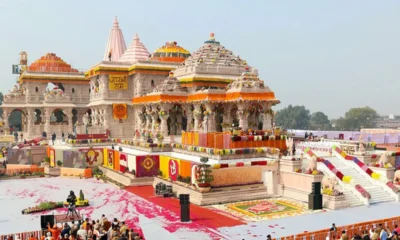
Officials overseeing security arrangements at the Ram Janambahoomi here have the unenviable task of securing a very large number of VVIPs, including Prime Minister Narenda Modi, who reach tomorrow for the ‘bhoomi pujan’ of the Ram Temple.


Ayodhya: Officials overseeing security arrangements at the Ram Janambahoomi here have the unenviable task of securing a very large number of VVIPs, including Prime Minister Narenda Modi, who reach tomorrow for the ‘bhoomi pujan‘ of the Ram Temple. They have not only to secure VVIPs, but allow the Special Protection Group (SPG) to arrange the layered security arrangement that is protocol for the PM.
There are two more things – the COVID pandemic situation, in which social distancing norms would be very critical, apart from sanitisation of the entire area, plus a general security drill, considering the enhanced threat perception of possible terrorist attacks, to protect the public.
At the back of the minds of officials would be the July 5, 2005 terror attack in the area, targeting the proposed Ram temple area, in which two local residents, including a tour guide were killed. The four attackers, caught, were sentenced for life in 2019.

How has the administration gone about it?
Multiple agencies have been assigned to provide security cover. There is a contingent of 3,500 local policemen, supplemented by 40 companies of the Provincial Armed Constabulary (PAC) and 10 companies of the Central Reserve Police Force (CRPF). These have all been requisitioned from other districts, as per reports from APN correspondents in the area.
The district borders of the temple town would be completely sealed as of this evening.
The direct handling of these arrangements (not including the SPG drill) is the responsibility of the Additional Director General of Police (ADG), law and order. He will be assisted by two DIGs and eight superintendents of police (SP).
This apart, the traffic department has decided to divert all non essential traffic and this will be effective for the next 2-3 days. Amid this, provision has been kept for COVID patients, with a special green corridor for ambulances in case of any medical emergency.
One has to understand that Section 144 would be in place in the area till August 15, Independence Day.
The Sarayu river alongside, would also be sanitised. Police patrol boats would complement the huge security drill on the banks.
Read Also: RED LETTER DAY IN THE HISTORY OF AYODHYA
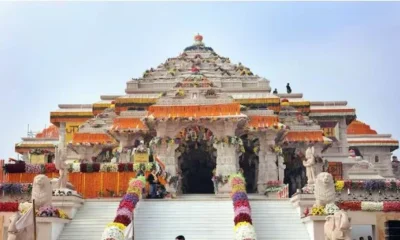
The Shri Ram Janmabhoomi complex (this is where the temple is planned to be built) has already been taken over by the SPG. The SPG has also gone through inches of the entire route that the PM would be taking.






India News
Delhi Police offers 11-person limit for CJP’s Connaught Place protest
Delhi Police has offered to facilitate a group of 11 people at Central Park in Connaught Place for the Cockroach Janata Party’s October 16 protest, while warning that violations of prohibitory orders could invite legal action.


India News
Actor Imran Khan asked to leave India after CJP protest
Actor Imran Khan has been asked to leave India by October 28, days after participating in a protest called by the Cockroach Janta Party (CJP) in Mumbai.

India News
Election Commission orders voter roll revision in 17 states, UTs
The Election Commission has ordered a Special Summary Revision of electoral rolls in 17 states and Union Territories. Draft rolls are scheduled for November 12, with final rolls due on January 4, 2027.


Dhruv Rathee gets fresh summons in 2018 BJP IT cell video case

Nobody can browbeat judiciary, Chief Justice warns over Rahul Gandhi’s march

India-US trade deal first phase finalised, drafting underway

Election Commission orders voter roll revision in 17 states, UTs

Actor Imran Khan asked to leave India after CJP protest

Delhi Police offers 11-person limit for CJP’s Connaught Place protest
Actor Imran Khan asked to leave India after CJP protest
Election Commission orders voter roll revision in 17 states, UTs
India-US trade deal first phase finalised, drafting underway
Nobody can browbeat judiciary, Chief Justice warns over Rahul Gandhi’s march

Afghan Men Try To Hang With The Jet Engine Of The Aircraft in Kabul- Afghanistan News – Kabul News
Trending Top 10 News: 10000 Crore Fine on Flipkart, Apple to Launch Unique Feature, Hdfc Bank Job Ad

Trending Top 10 News: Nokia 6310, Apple sales, Bachpan ka Pyar Video Kid, Dainik Bhaskar IT Raid

Trending Top 10 News: Canada bans Indian flights, Rain in Delhi NCR, AIMIM Twitter hacked, Raj Kundra case

Trending Top 10 News: Shein India, Apple New Service, Pocket Oxygen, Oppo Launched New Phone
-
 India News19 hours ago
Dhruv Rathee gets fresh summons in 2018 BJP IT cell video case
-
 India News16 hours ago
Nobody can browbeat judiciary, Chief Justice warns over Rahul Gandhi’s march
-
 India News11 hours ago
India-US trade deal first phase finalised, drafting underway
-
 India News9 hours ago
Election Commission orders voter roll revision in 17 states, UTs
-
 India News9 hours ago
Actor Imran Khan asked to leave India after CJP protest
-
 India News7 hours ago
Delhi Police offers 11-person limit for CJP’s Connaught Place protest
