English हिन्दी
Connect with us

India News

Karnataka Cabinet clears public property bill amid RSS registration row

Karnataka Cabinet approves a Bill to regulate the use of government premises and public property amid a political row over RSS registration.

Published

on

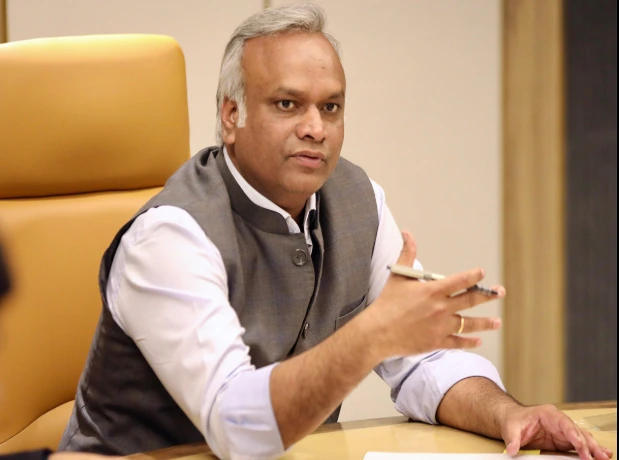
Priyank Kharge

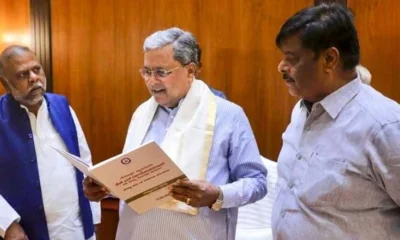
The Karnataka Cabinet has approved a proposed law to regulate the use of government premises and public property in the state, amid an ongoing political debate over the registration and use of public spaces by the Rashtriya Swayamsevak Sangh (RSS).

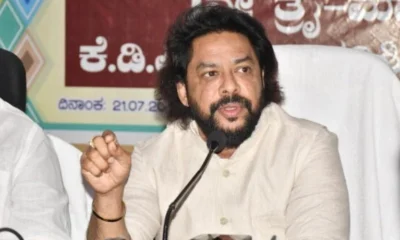
The Karnataka Regulation of Use of Government Premises and Public Property Bill, 2026 was cleared by the Cabinet, Home Minister Priyank Kharge said after the meeting.

According to the government, the proposed legislation aims to establish a legal framework governing the use of government lands, buildings, playgrounds, parks, roads and other public assets by private individuals, organisations, associations and societies.

Kharge said the objective was to prevent unauthorised use and misuse of public property while ensuring that such assets are protected for public benefit.

What the Karnataka public property bill proposes

The proposed legislation is expected to lay down procedures for obtaining permission to use government property for events, meetings and other activities.

It also proposes provisions for penalties in cases involving misuse of government premises or damage to public property, according to officials.

The government is expected to introduce the Bill in the Karnataka legislature, where it will be taken up for discussion and passage.

Priyank Kharge denies Bill targets RSS

The proposed legislation comes against the backdrop of a row involving the RSS and its use of public property in Karnataka.

Kharge, however, rejected speculation that the Bill had been framed specifically against the RSS or any other organisation. He said the government did not have a particular institution, association, organisation, society, club, union, syndicate or NGO in mind.

The issue has been part of a wider political debate since 2025, with Kharge opposing the use of government premises and public property by the RSS and calling for the organisation to register formally.

In June, Kharge also wrote to RSS chief Mohan Bhagwat seeking clarity on the organisation’s legal status, financial transparency and constitutional accountability.

The development is likely to keep the debate over the use of public property and the legal status of organisations in Karnataka in focus as the proposed legislation moves to the state legislature.

India News

IIT Bombay Professor Suryanarayana Doolla sent on leave amid student suicide row

IIT Bombay professor Suryanarayana Doolla has been sent on leave amid the ongoing student protests following Sahil Wakode’s death.

Published

on

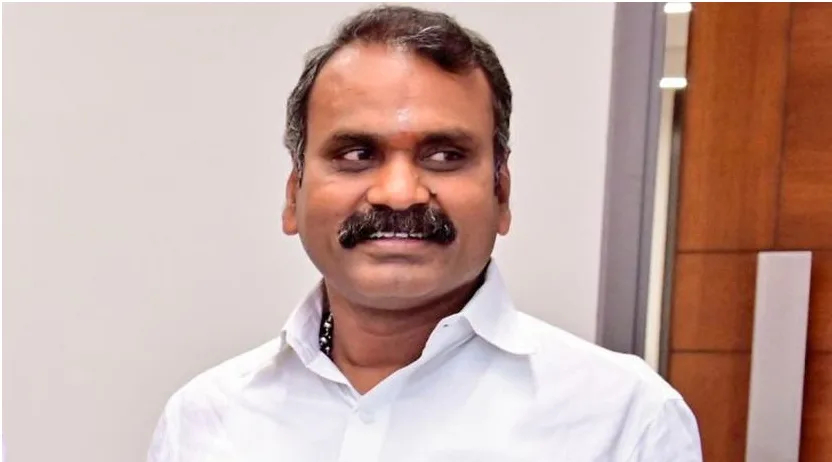
IIT Bombay professor Suryanarayana Doolla has been sent on leave amid the ongoing controversy following the death of 20-year-old student Sahil Wakode, with protests on the campus seeking action against the professor.

Doolla, a faculty member in IIT Bombay’s Department of Energy Science and Engineering, had been involved in the examination incident concerning Wakode. The student was allegedly found using a mobile phone during a mid-semester examination and had uploaded the question paper to an AI platform to seek answers, according to the institute.

Why Suryanarayana Doolla is at the centre of the controversy

Doolla was the course instructor and examination invigilator during the examination and was involved in reporting the alleged examination malpractice to the institute’s authorities.

IIT Bombay has said Wakode was subsequently counselled by the instructor and the Head of Department and was assured that the examination incident would not adversely affect his academic career. The institute has also maintained that no disciplinary action had been initiated against the student before his death.

Wakode’s family, however, alleged harassment and caste-based discrimination. Mumbai Police registered a case based on the family’s complaint, with Doolla among those named. The allegations remain subject to investigation.

Student protests at IIT Bombay

Following Wakode’s death, students began protesting on the IIT Bombay campus and demanded action against Doolla.

IIT Bombay Director Professor Shireesh Kedare met the protesting students on September 20 and signed an 18-point charter of demands. The demands included action against Doolla.

Doolla was subsequently removed from the post of Dean Students Welfare amid the protests. The latest action comes as the controversy surrounding Wakode’s death and the allegations against the professor continue to be investigated.

Faculty members back Doolla

While students have demanded action against Doolla, IIT Bombay’s Faculty Forum has backed the professor, saying he was performing his duties as an invigilator and had followed the institute’s prescribed procedure after detecting the alleged examination malpractice.

The controversy involves the examination incident, allegations made by Wakode’s family and the police investigation into his death. The allegations against Doolla have not been established as facts and remain part of the ongoing investigation.

Continue Reading

India News

Amit Shah sets 2029 deadline to make India drug-free

Union Home Minister Amit Shah has set December 31, 2029 as the deadline for India’s fight against drugs, urging states to focus on dismantling trafficking networks rather than only recording seizures.

Published

on

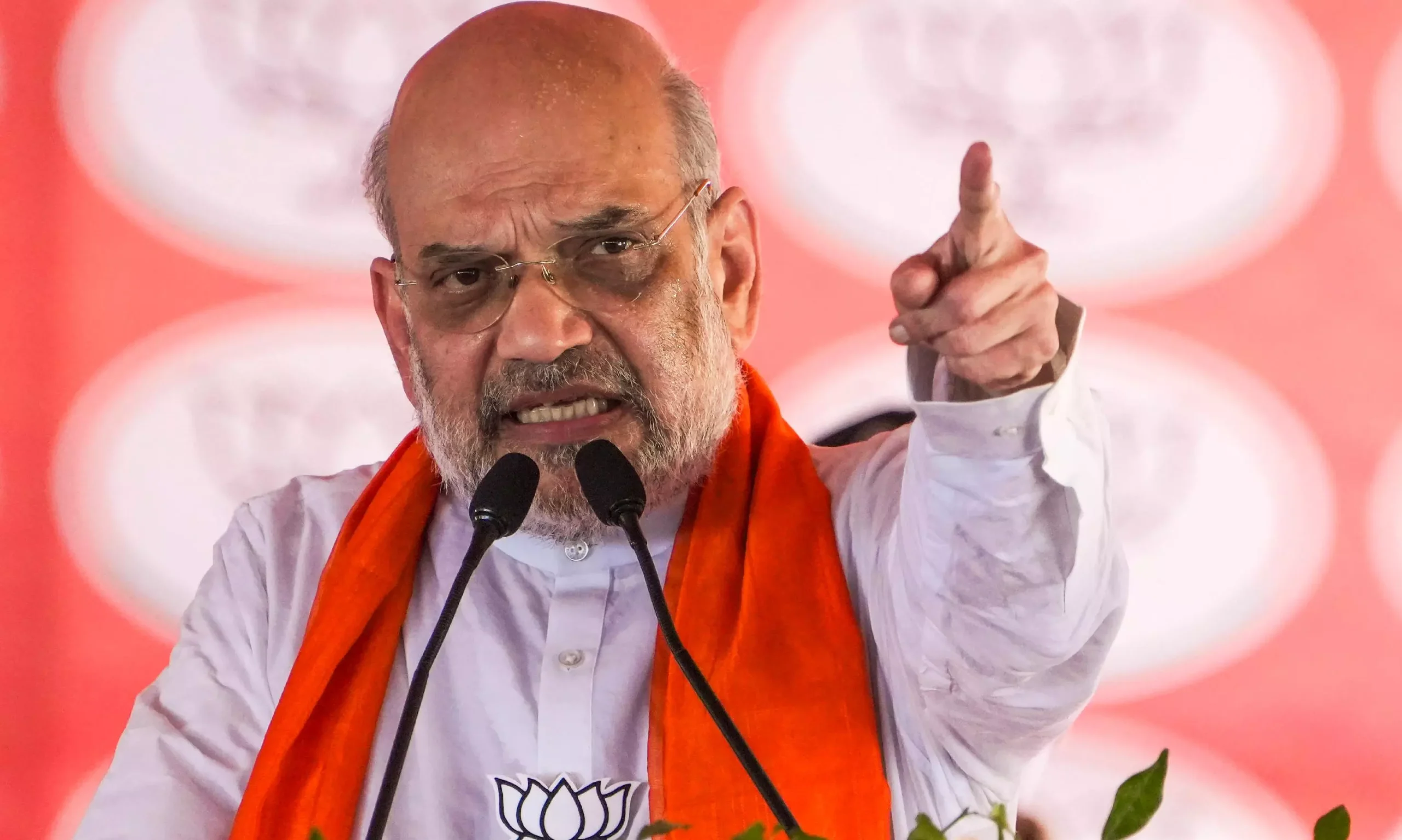
Union Home Minister Amit Shah has set December 31, 2029 as the deadline for India’s campaign against drugs, calling on states and Union Territories to move beyond recording seizures and focus on dismantling the networks behind narcotics trafficking.

Speaking at the third National Conference of Anti-Narcotics Task Force Heads in New Delhi on Tuesday, Mr Shah said India would not allow drugs to enter or leave the country.

“Neither will we allow a single gram of drugs to enter India, nor will we allow a single gram of drugs to go out,” he said.

The conference brought together police chiefs from 36 states and Union Territories as the government outlined its roadmap for tackling the country’s drug problem.

Amit Shah asks states to focus on drug networks

Mr Shah said drug seizures alone should not be treated as the measure of success. He called for a shift from meetings to missions, reports to results and seizures to dismantling the networks responsible for drug trafficking.

Districts have been identified as the frontline units in the strategy. They are to be assessed based on whether they are involved in drug production or entry, serve as transit corridors or primarily face drug consumption.

The response would then be tailored according to the nature of the threat in each district.

The Home Minister also stressed the need to follow the money generated by narcotics trafficking, including through investigations into bank accounts and shell transactions that help sustain drug networks.

Synthetic drugs, darknet and crypto payments in focus

The government is also preparing for emerging methods used by drug traffickers, with synthetic drugs, darknet marketplaces, cryptocurrency payments and dead-drop deliveries identified as areas requiring greater attention.

Mr Shah urged states to develop specialised teams capable of investigating these newer forms of narcotics trafficking.

The government also wants foreign nationals involved in drug supply chains to face deportation and blacklisting, while those operating supply networks into India from abroad are to be pursued for extradition.

2026-2029 drug control roadmap

The government’s Vision Document 2026-2029 is based on four pillars: enforcement and intelligence, control of precursor chemicals and synthetic drugs, demand and harm reduction, and capacity building.

According to the report, the document contains more than 100 individual targets.

The Nashamukt Mitra programme is another part of the campaign. Nearly 47,000 volunteers have registered so far, with a target of reaching one lakh volunteers. The programme plans to take awareness activities to around 10 lakh schools and colleges.

The government has also launched new television advertisements against drug use, redesigned the Narcotics Control Bureau website and laid the foundation stones for NCB zonal complexes in Lucknow and Dehradun.

Mr Shah linked the anti-drug campaign to Prime Minister Narendra Modi’s vision of a developed India by 2047, arguing that protecting the country’s young population from narcotics is essential to that goal.

Continue Reading

India News

J&K Assembly uproar over Maharaja Hari Singh, Sheikh Abdullah holidays

A holiday row over Maharaja Hari Singh and Sheikh Mohammad Abdullah triggered an uproar in the Jammu and Kashmir Assembly, with BJP and NC members raising competing slogans.

Published

on

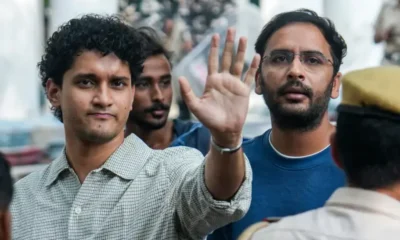
The Jammu and Kashmir Assembly witnessed a heated exchange on Tuesday over public holidays associated with Maharaja Hari Singh and Sheikh Mohammad Abdullah, with members of the ruling National Conference (NC) and BJP raising slogans in support of the respective leaders.

The issue was raised a day before the September 23 public holiday marking Maharaja Hari Singh’s birth anniversary.

NC legislator Abdul Majid Larmi demanded that the holiday for Maharaja Hari Singh’s birth anniversary be withdrawn if the public holiday for Sheikh Mohammad Abdullah’s birth anniversary was not restored.

The demand led to an uproar in the House, with BJP members raising slogans in support of Maharaja Hari Singh and accusing the NC of insulting his legacy. NC legislators responded with slogans supporting Sheikh Abdullah.

What happened over the holiday issue

The Centre withdrew the public holiday marking Sheikh Abdullah’s birth anniversary after the abrogation of Article 370 in 2019. His birth anniversary is observed on December 5.

The government also discontinued the public holiday on July 13, which was observed as Martyrs’ Day in the erstwhile state of Jammu and Kashmir.

In contrast, September 23, Maharaja Hari Singh’s birth anniversary, is now observed as a public holiday in Jammu and Kashmir.

PDP members also joined the discussion and demanded the restoration of the July 13 public holiday.

Speaker says he has no power over holidays

As slogan-shouting continued in the Assembly, Speaker Abdul Rahim Rather attempted to calm the members.

The Speaker said that the authority to declare or withdraw public holidays did not fall within his jurisdiction.

Why July 13 was observed as Martyrs’ Day

July 13 was traditionally observed as a public holiday in Jammu and Kashmir. Official functions were held at the Martyrs’ Graveyard to commemorate the 22 people killed during the 1931 uprising against the Dogra monarchy under British rule.

Following the abrogation of Article 370 and the bifurcation of the erstwhile state into two Union Territories in 2019, July 13 was removed from the list of public holidays. Official commemorations and ceremonial police tributes were also discontinued.

The 1931 killings and the unrest that followed led to the appointment of two commissions to examine grievances of the Muslim community in Kashmir and eventually contributed to limited political reforms.

The first Assembly elections in Jammu and Kashmir were held in 1934, although the Maharaja retained extensive powers over key matters at the time.

Continue Reading

Trending

© Copyright 2022 APNLIVE.com