English हिन्दी
Connect with us

Latest Politics News

Madras High Court rejects demand for CBI probe into Jayalalithaa’s death, says petition not worth a hearing

According to the report issued by the hospital, Jayalalithaa died at 11:30 pm on December 5, 2016 due to cardiac failure.

Published

on

Madras High Court rejects demand for CBI probe into Jayalalithaa's death, says petition not worth a hearing

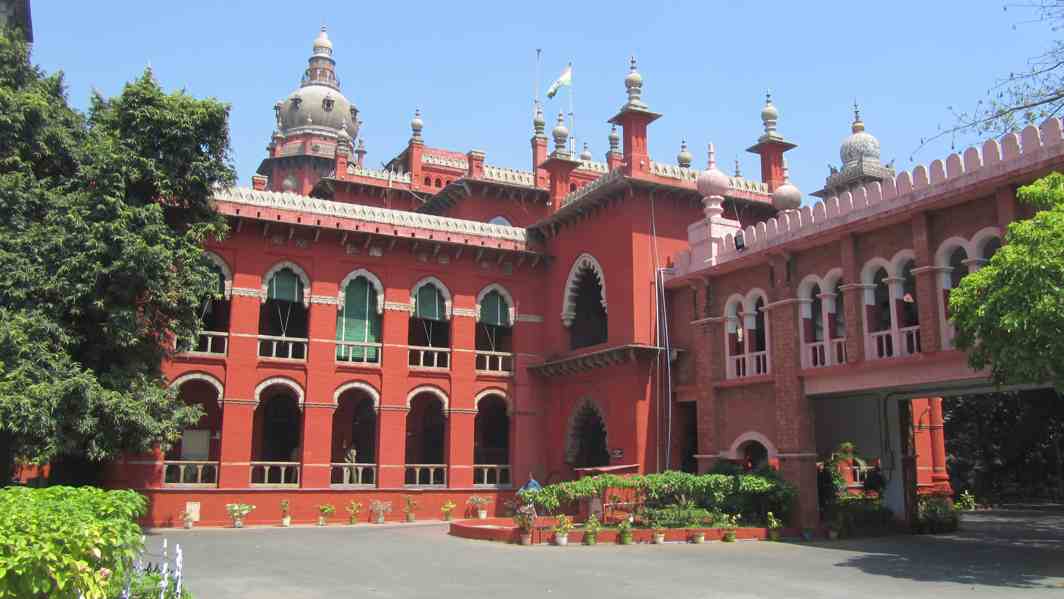
The Madras High Court on Thursday dismissed a public interest litigation (PIL) which demanded for a CBI inquiry into Jayalalithaa’s death. The High Court held that the petition seeking a CBI inquiry into Jayalalithaa’s death at the Corporate Hospital (2016) is not worth a hearing.

A bench of Acting Chief Justice T. Raja and Justice D. Krishna Kumar dismissed the plea seeking directions to the CBI and other concerned agencies. During the hearing, spiritual and social activist R.K. Gopalji was also present there, on whose behalf this PIL was filed.

According to the petitioner, the Justice Arumugasamy Commission of Inquiry submitted its report to the Tamil Nadu government on August 23 this year, which revealed the truth about the unfortunate demise of the former chief minister.

Suddenly questions were being raised about her death. The bench said that the petition is not worth a court hearing as the petitioner did not make any contact with the CBI and other agencies before filing the PIL.

What was said in the investigation report?

According to the report issued by the hospital, Jayalalithaa died at 11:30 pm on December 5, 2016. Nurses, technicians and some other hospital staff were responsible of taking care of the former CM, as told by the inquiry committee. The report further reads that she had cardiac failure before 3.50 pm on December 4, 2016 which led to no electric activity in her heart. Hence, the blood circulation also stopped. Reports further claimed that Jayalalithaa suffered a cardiac failure before 3.50, while she was given CPR at 4.20, by then she had passed away.

Who were questioned by the inquiry committee?

The committee headed by Justice A Arumughasamy had mentioned the statements of many people in its report. On the basis of this, Sasikala, who was a close associate of Jayalalithaa, was first questioned. Apart from her, Jayalalithaa’s personal doctor KS Shivakumar (a relative of Sasikala), the then Health Secretary J.K. Radhakrishnan and the then health minister C Vijayabaskar, the doctor who treated Jayalalithaa at the hospital were also called for questioning.

The role of Dr. YVC Reddy, Dr. Babu Abraham, Apollo Hospital Chairman Prathap Reddy, former Chief Secretary Ram Mohan Rao, former CM Panneerselvam was also put under suspicion. The inquiry committee had recommended to investigate the role of all these people.


 

India News

BJP and Shiv Sena reach broad seat-sharing deal ahead of BMC elections

BJP and Shiv Sena are close to finalising seat-sharing for 200 wards ahead of the BMC elections, while opposition parties intensify alliance talks across Maharashtra.

Published

on

BJP Shivsena

The BJP and Shiv Sena have almost sealed their seat-sharing arrangement for the upcoming Brihanmumbai Municipal Corporation (BMC) elections, with an understanding reached on 200 of the total 227 wards in Mumbai, according to sources. The civic body polls are scheduled to be held on January 15.

The agreement was discussed during a late-night meeting of the Mahayuti alliance, which includes the BJP, Shiv Sena and the Ajit Pawar-led NCP. The meeting took place at Maharashtra Chief Minister Eknath Shinde’s residence in Thane and focused on strategy for several key municipal corporations, including Thane, Kalyan-Dombivli and Navi Mumbai.

Sources said similar meetings are lined up for Mumbai and other civic bodies such as Chhatrapati Sambhaji Nagar, Panvel and Mira-Bhayandar, as alliance partners work to finalise ward-level arrangements and campaign planning.

Congress explores new alliances in Mumbai

In Mumbai, Congress leaders are scheduled to meet Prakash Ambedkar’s Vanchit Bahujan Aghadi as the party looks to rebuild its alliance structure after parting ways with the Shiv Sena (Uddhav Balasaheb Thackeray faction). The distancing followed Sena (UBT)’s decision to join hands with the Maharashtra Navnirman Sena led by Raj Thackeray.

Sena (UBT) MP Sanjay Raut has confirmed that the party will contest the BMC elections in alliance with the MNS and the NCP led by Sharad Pawar. The inclusion of the NCP (Sharad Pawar faction) comes after Sharad Pawar rejected a proposal from the Ajit Pawar-led faction that offered limited seat allocation.

Despite the split, sources indicated that discussions may continue, with meetings expected between Sharad Pawar’s daughter Supriya Sule and her cousin Ajit Pawar to determine future political moves.

Local body strategies take shape across Maharashtra

Meanwhile, MNS chief Raj Thackeray is set to hold a meeting with party leaders at his Shivtirth residence to finalise the party’s election strategy, including campaign issues and candidate selection.

In Chhatrapati Sambhaji Nagar, Shiv Sena MLA and minister Sanjay Shirsat will meet BJP leaders, including state ministers Chandrakant Bawankule and Atul Save, to discuss preparations for the civic polls.

Seat-sharing talks are also underway in Mira-Bhayandar, where Shiv Sena leader Pratap Sarnaik and BJP MLA Narendra Mehta are expected to hold discussions. The Ajit Pawar-led NCP, however, is planning to contest the elections independently in the region.

Panvel is set to witness a major opposition meeting involving Sena (UBT), Congress, MNS, NCP (SP), Samajwadi Party and the VBA. The gathering, led by the Peasants and Workers Party, will focus on finalising seat-sharing arrangements and joint election strategies.

Continue Reading

India News

Cried over Gaza, not a word on Bangladesh: Yogi Adityanath attacks opposition in UP Assembly

Yogi Adityanath criticised the opposition in the UP Assembly, accusing them of selective outrage over Gaza while remaining silent on violence against Hindus in Bangladesh.

Published

on

Yogi Adityanath

Uttar Pradesh Chief Minister Yogi Adityanath on Wednesday launched a sharp attack on the Opposition during proceedings in the State Assembly, accusing rival parties of indulging in selective outrage and appeasement politics while remaining silent on incidents involving Hindus in neighbouring countries, particularly Bangladesh.

Referring to recent incidents across the border, the Chief Minister said the Opposition raises its voice on international issues selectively but avoids speaking out when minorities, especially Hindus, are targeted in nearby nations.

“You shed tears over developments in Gaza, but not a single word comes out when a Dalit youth is killed in Bangladesh,” Adityanath said in the Assembly, alleging that such silence exposes the Opposition’s political priorities.

The Chief Minister further claimed that incidents of violence against Hindus would not have occurred had Pakistan and Bangladesh not been created, reiterating that issues are often viewed through the prism of vote bank politics. He said candle marches are organised for global events, but killings of Hindus in Pakistan or Bangladesh do not evoke similar responses.

Adityanath also called for a condemnation resolution in the Assembly, stating that it should ideally come from the Leader of the Opposition. He said such a resolution should clearly condemn the killing and convey a warning to the Bangladesh government.

Allegations over illegal immigration

Targeting the Opposition on the issue of illegal immigration, the Chief Minister alleged that they support Bangladeshi nationals and Rohingyas. He claimed that when authorities take action to expel illegal immigrants, Opposition leaders come out in their defence, alleging that many of them have been facilitated with voter registrations and Aadhaar cards.

Meanwhile, tensions between India and Bangladesh have been visible following recent developments. India summoned the Bangladesh High Commissioner for the second time in a week amid concerns arising from incidents in the neighbouring country.

The summons came in the backdrop of protests in Bangladesh following the killing of student leader Sharif Osman Hadi and the lynching of Dipu Chandra Das in separate incidents. Dipu Das, a 27-year-old youth from Mymensingh district, was beaten to death by a mob over alleged blasphemy on December 18, and his body was later set on fire, triggering widespread outrage.

The Interim Government of Bangladesh condemned the incident. Education Adviser C R Abrar visited the bereaved family on behalf of the government, expressed condolences, and assured them of financial and welfare assistance. The Office of the Chief Adviser also reiterated its resolve to protect all citizens and ensure justice in the case.

The killing has once again raised concerns at the international level over the safety and security of minorities in Bangladesh, with minority groups demanding strict action against those responsible.

Continue Reading

India News

Jammu and Kashmir High Court rejects Mehbooba Mufti’s plea on undertrial prisoners, calls it politically motivated

The Jammu and Kashmir High Court has rejected Mehbooba Mufti’s PIL on undertrial prisoners, stating it was politically motivated and lacked factual basis.

Published

on

Mehbooba mufti

The Jammu and Kashmir High Court has dismissed a Public Interest Litigation (PIL) filed by People’s Democratic Party (PDP) president Mehbooba Mufti seeking the transfer of undertrial prisoners lodged in jails outside the Union Territory back to prisons within Jammu and Kashmir. The court termed the petition politically motivated, vague and unsupported by facts, observing that it was an attempt to derive political mileage rather than address a genuine public cause.

A bench headed by Chief Justice Arun Palli and Justice Rajnesh Oswal made it clear that public interest litigation cannot be used as a tool to advance political agendas or convert courts into platforms for electoral positioning.

Court says PIL cannot become a political platform

In its observations, the High Court said the plea appeared aimed at projecting the petitioner as a champion of justice for a specific section, rather than raising substantiated legal concerns. The bench underlined that while political parties are free to engage with voters through democratic means, the judiciary must remain insulated from political campaigns.

The court reiterated that PIL jurisdiction is meant to safeguard public interest and not to be misused for electoral gain or political leverage. It cautioned against attempts to draw the judiciary into political narratives.

Undertrials have legal remedies, says court

In the 15-page order passed on Tuesday, the High Court noted that the undertrial prisoners mentioned in the petition are already facing trial before competent courts. According to the bench, adequate judicial remedies are available to such undertrials to raise grievances related to their detention or place of incarceration.

The court further observed that the failure of the concerned undertrials to approach courts on their own indicated that they may not be genuinely aggrieved by their confinement in prisons outside the Union Territory.

No locus standi, petition dismissed

Dismissing the plea, the High Court held that Mehbooba Mufti was a third-party stranger to the cause and therefore lacked the locus standi to invoke the court’s jurisdiction in this matter. The petition was described as misconceived and was rejected accordingly.

Continue Reading

Trending

© Copyright 2022 APNLIVE.com