
Latest Politics News
Nitish Kumar-led JD(U) joins NDA, warns Sharad Yadav of action if he joins RJD rally

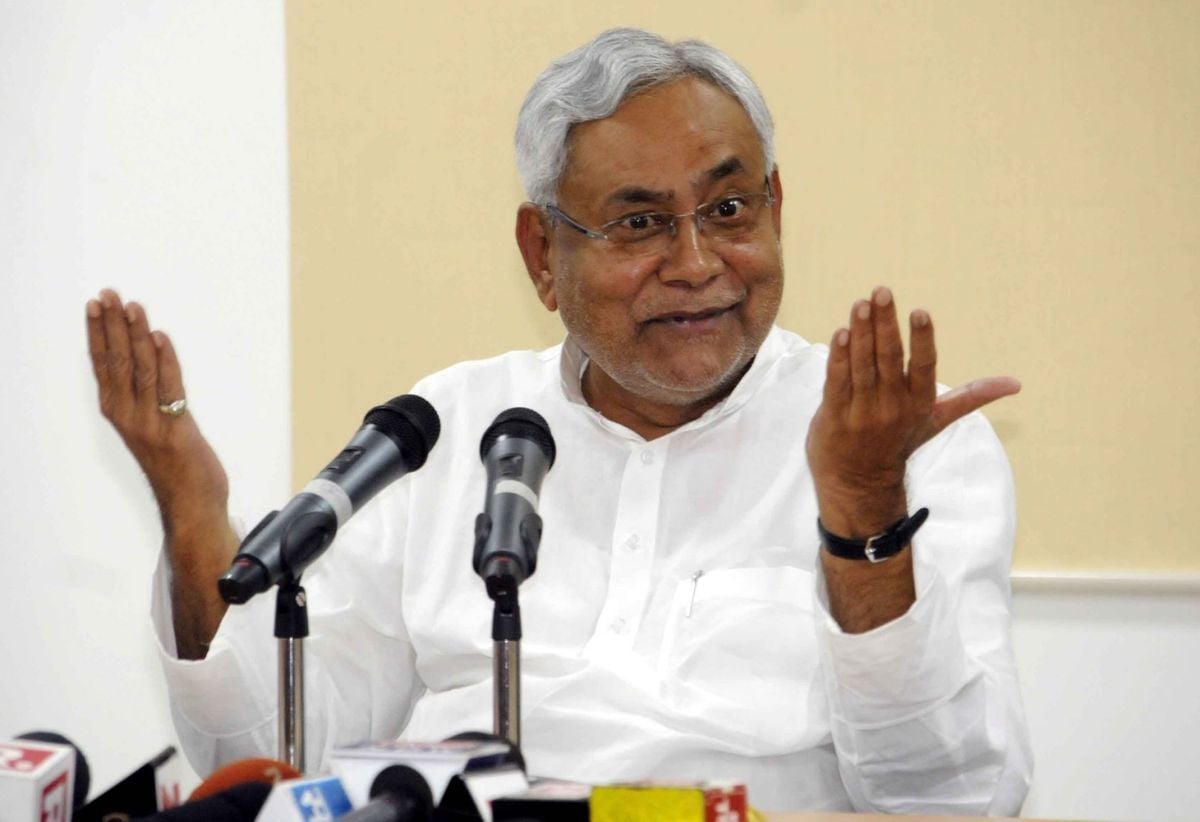
[vc_row][vc_column][vc_column_text]Nitish Kumar-led JD(U) formally joined BJP’s NDA with a resolution to this effect adopted by the party’s national council today at the chief minister’s residence in Patna.
At the same time, the rebel JD(U) leader Sharad Yadav, who is opposed to Nitish Kumar’s decision to form an alliance government with the BJP, held a parallel function to show his strength in the state capital. The split is all but formalised, and they plan to approach the Election Commission to claim the JD(U) symbol, arrow.
Some JD(U) MPs loyal to Nitish Kumar are likely to be inducted in Union Council of Ministers, with at least one of them getting cabinet rank. A reshuffling of the portfolios in the union cabinet is in order due to the resignations of Manohar Parrikar (who became Goa CM) and Venkaiah Naidu (who became the Vice President) and the death of Anil Madhav Dave, the Environment and Forests Minister.
Bihar Chief Minister Nitish Kumar is also likely to get a key role in the NDA – such as the co-convener of the BJP-led alliance. JDU has two MPs in the Lok Sabha and seven out of its nine Rajya Sabha MPs are with Nitish Kumar.
The move comes weeks after Kumar broke ties with the Grand Alliance parties, Congress and Rashtriya Janata Dal (RJD), in the state and re-formed the government with the support of the BJP. The Grand Alliance or ‘Mahagathbandhan’ had been formed ahead of the Bihar Assembly elections in 2015 to counter the BJP.
Sharad Yadav, estranged from Nitish Kumar over his alliance with the BJP, skipped the meeting where he had been invited to voice his views about the alliance. He reached Patna, but to attend a meeting convened by about two dozen JD (U) leaders who were suspended because they were seen with him during his tour of three districts.
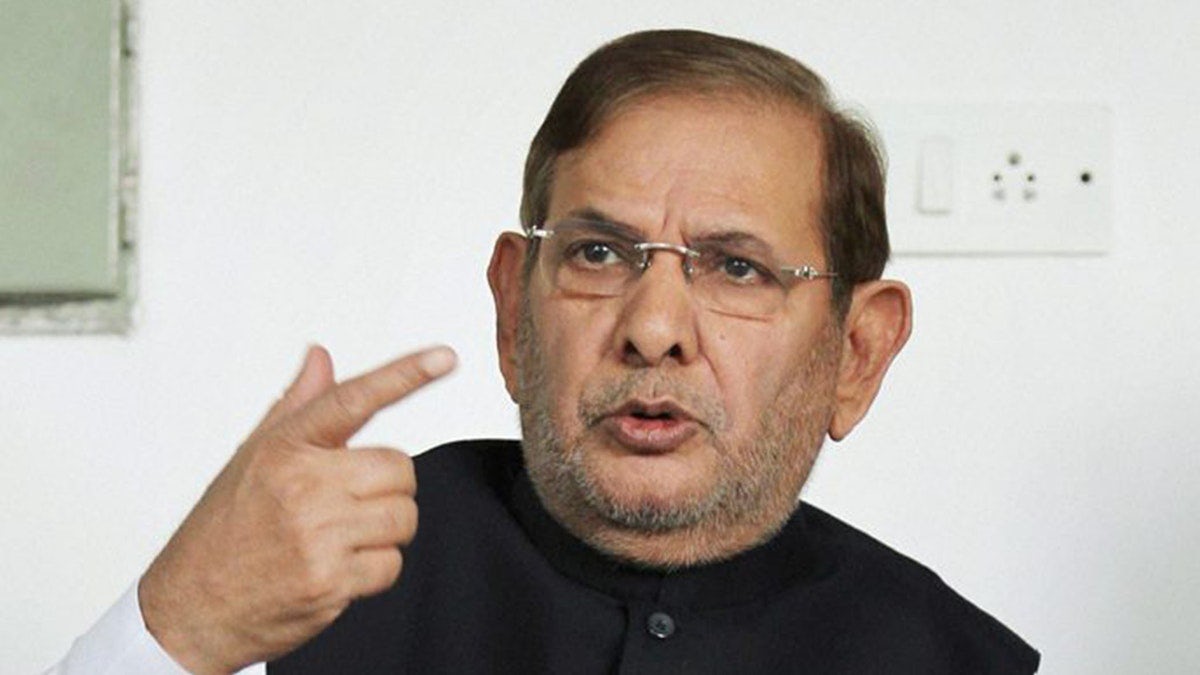
Sharad Yadav put on notice
Yadav, who had co-founded the JD (U), was removed as leader of the party in the Rajya Sabha for speaking against the alliance with the BJP. He hasn’t been suspended by Nitish Kumar’s party so far, but the JD(U) led by Bihar chief minister Nitish Kumar on Saturday virtually put him Yadav on notice, hinting at action against him if he attends RJD chief Lalu Prasad’s rally on August 27.
JD(U) general secretary KC Tyagi was reported as saying that the party has not acted against Yadav for his “anti-party activities” because of his seniority and long association with the party. “If he attends RJD chief Lalu Prasad’s rally here on August 27, he will cross the Lakshman Rekha,” he said, and hinted at action against him.
Tyagi said that Yadav has left the party “on his own” and is “no longer with us, emotionally or physically”.
He accused Yadav of indulging in anti-party activities by holding separate meetings with his own supporters and RJD members. He claimed Yadav had always taken a stand against Nitish, “whether it is on demonetisation, surgical strikes and women’s reservation. He always took a different stand and went to the extremes”.
Tyagi maintained there was no split as the entire JD(U) was with party president and Bihar chief minister Nitish Kumar. He said heads of 16 state committees were with Nitish Kumar, contrary to claims made by the rival group.
He said in Bihar all 71 party MLAs, 30 MLCs and two Lok Sabha MPs and most of the Rajya Sabha MPs were with Nitish Kumar-led JD(U), except Sharad Yadav and Ali Anwar.
Sharad Yadav faction’s ‘Jan Adalat’ meeting
The rival, Sharad Yadav camp, held a ‘Jan Adalat’ meeting in Patna after Yadav landed in the city to be received with slogans in support of his faction and against Kumar. Yadav claims his faction of the party is the genuine unit.
As the rival groups held their meetings in Patna, a poster war in Patna city between the two JD(U) factions took an ugly turn when about a dozen bikers broke security cordons and managed to reach Rajendra Chowk just outside the chief minister’s residence where a meeting of the JD-U national executive committee was underway.
The workers backing Sharad Yadav waved JD(U) flags and shouted slogans against Nitish Kumar. The bikers clashed with JD(U) workers, who alleged that these were actually RJD workers disguised as Sharad Yadav’s supporters.
At the ‘Jan Adalat’ meeting of his camp, Sharad Yadav said, “There is unemployment in the country today. Youths are having no work. PM promised in 2014 that 2 crore people would get jobs but till date nothing has happened. In democracy, what one says and promises is important. Farmers are committing suicide in thousands. In the name of love jihad, people are being killed today.”
“Since the split of the Mahagathbandhan, I have been touring the entire country, which is in a difficult situation today. The flood situation in Bihar is also very bad. In the last 70 years, the situation in the country has not changed… In Una, Dalits were beaten for skinning cows. This is the state of affairs in the country.”
JD(U) MP Ali Anwar said, “Our target and agenda is not any person (Nitish and PM Modi), but the country is seeing farmers, who predominantly feed the population, commit suicide… I appeal to the Muslims. There is fear among Muslims today. Dalits are insecure. There is massive turmoil in the country’s universities today. Nitish is looking like a dwarf today who once attained a high stature when he became the chief minister of the Mahagathbandhan in 2015.”
The rebel JD(U) programme follows a mega meeting of anti-BJP parties held recently in the national capital, which they said, was to save the “composite culture” of the country.
The party’s former national general secretary Arun Kumar Srivastava, who was expelled after the JD(U) legislator in Gujarat voted against the NDA candidate in the recent vice-presidential polls, said in Delhi that the rebels could approach the Election Commission to claim the party’s name and symbol in case of a split.
Srivastava also claimed that all the state party units, except those in Bihar and Jharkhand, were supporting Sharad Yadav and those opposed to Nitish Kumar. “We have received support letters from presidents of 14 state units who are opposed to the JD(U) alliance with BJP. They expressed their willingness to attend the Patna convention but may not be able to do so since it is being held at short notice,” he said.
He accused Nitish Kumar of not honouring the “democratic norms” in removing party leaders without seeking explanation. “I was not served any notice or asked for any explanation. The same happened with Sharad Yadav and Ali Anwar and 21 other leaders who were removed in Bihar,” he claimed.
“We will soon knock on the door of the Election Commission to stake claim over the party symbol ‘arrow’ and inform (people) that the real party is with him (Sharad), not with Bihar Chief Minister Nitish Kumar,” Srivastav said.
“The real JD-U belongs to Sharad Yadav and party units in different states across India are with him,” Srivastav said. “It is Sharad Yadav who formed the JD-U, not Nitish Kumar,” said Srivastav.[/vc_column_text][/vc_column][/vc_row]




India News
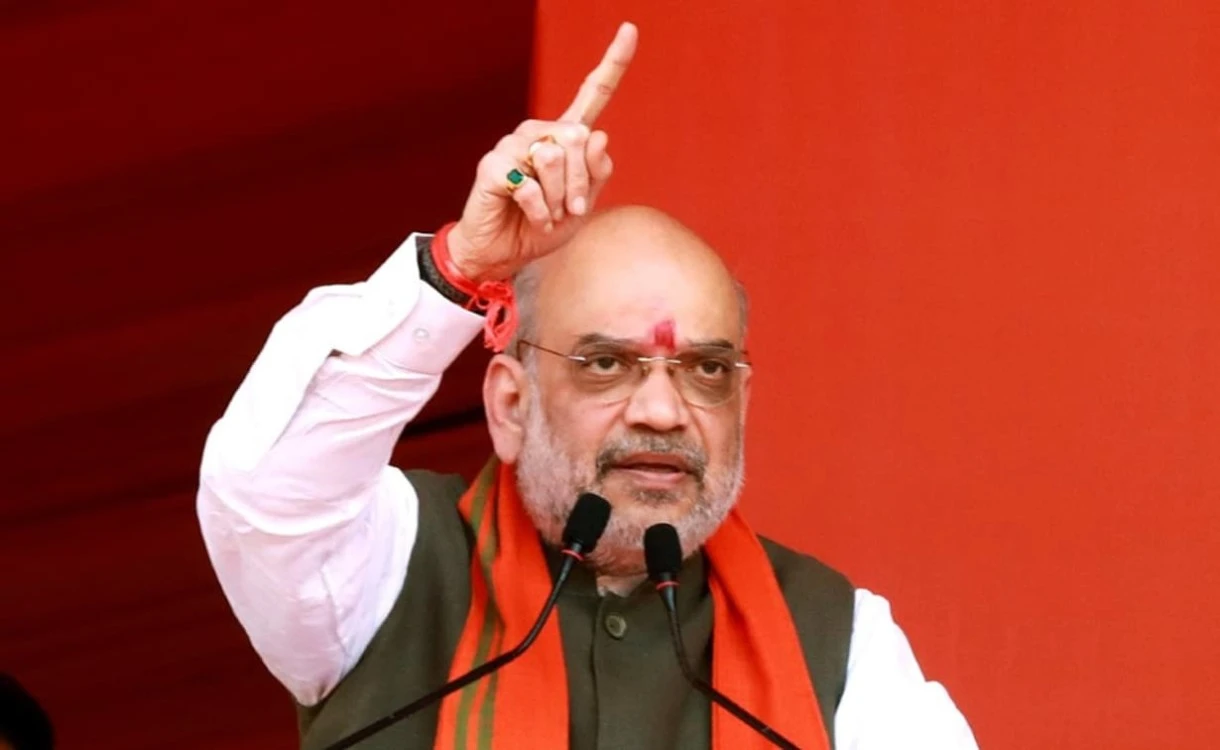
Amit Shah says Naxalism is over, vows to end Punjab drug trade by 2029
Amit Shah said the Centre would work to eliminate Punjab’s drug trade by December 31, 2029. He also called for CBI investigations into two additional cases involving people whose deaths were linked to the fight against drugs.

India News
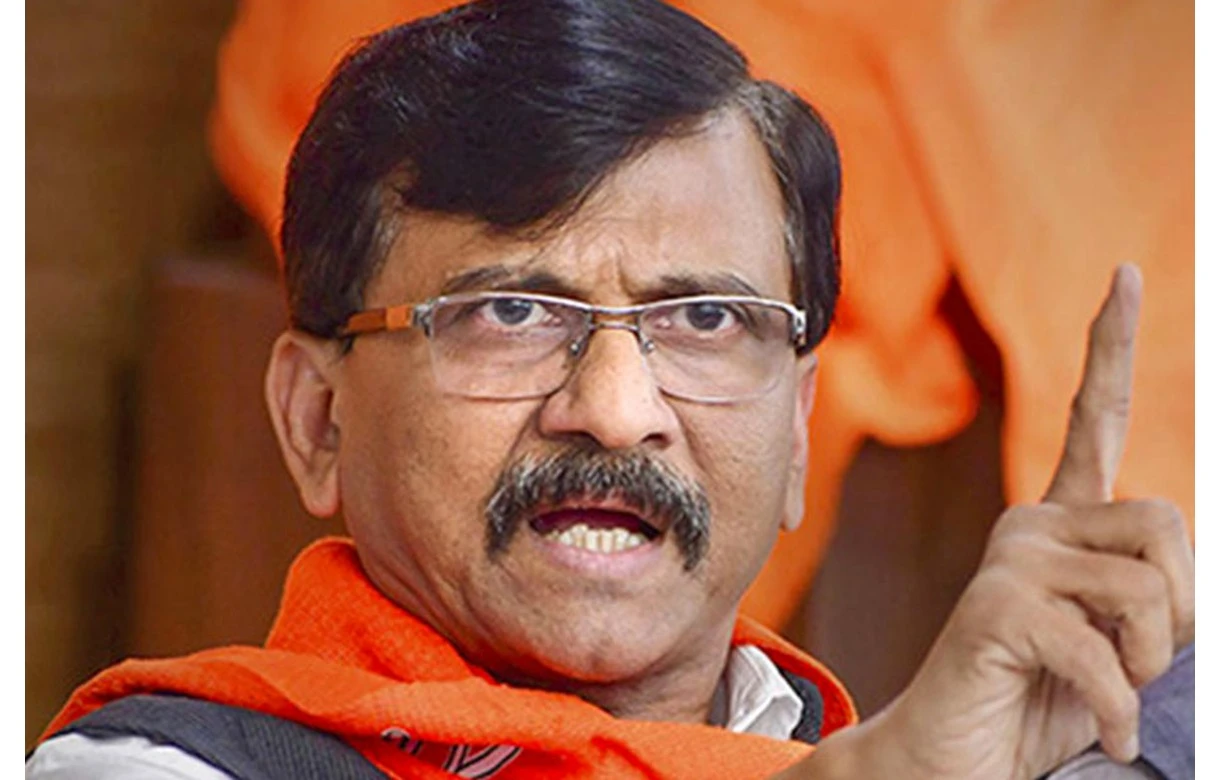
Sanjay Raut clarifies Albania Remark after BJP accuses him of threatening SC
Shiv Sena (UBT) MP Sanjay Raut faced criticism from BJP leaders over his post referring to the reported burning of Albania’s Supreme Court. Raut later said he has faith in India’s Supreme Court and urged the institution to take note of the situation.
India News
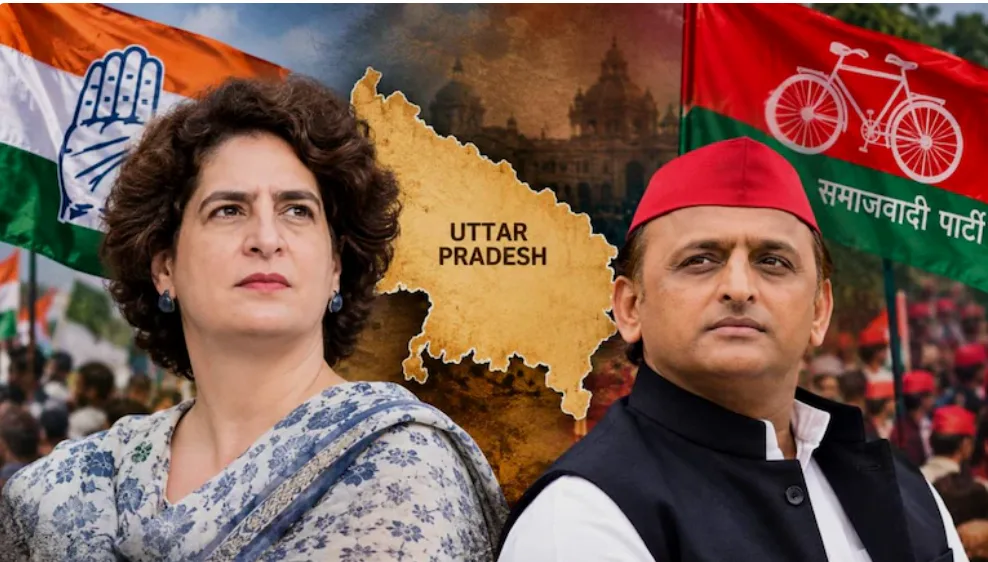
Priyanka Gandhi leads congress push for 125 seats in UP alliance talks
Priyanka Gandhi has led a three-hour meeting with Uttar Pradesh Congress leaders to discuss seat allocation ahead of alliance talks with Akhilesh Yadav’s Samajwadi Party. Congress is eyeing around 125 seats, while the SP is reportedly considering offering 60–65.

Amit Shah says Naxalism is over, vows to end Punjab drug trade by 2029

Abhijeet Dipke thanks Delhi organisers for cockroach effigy publicity

Marco Rubio says India and US share extraordinary alignment on key issues

PM Modi to visit Varanasi, Kedarnath on October 24-25

CJP leaders Saurav Das, Ashutosh Ranka to be released after 7 days in jail
PM Modi to visit Varanasi, Kedarnath on October 24-25
CJP leaders Saurav Das, Ashutosh Ranka to be released after 7 days in jail

Tiger Shroff firing case: 3 accused sent to police custody till October 31
Amit Shah says Naxalism is over, vows to end Punjab drug trade by 2029
Abhijeet Dipke thanks Delhi organisers for cockroach effigy publicity

Afghan Men Try To Hang With The Jet Engine Of The Aircraft in Kabul- Afghanistan News – Kabul News
Trending Top 10 News: 10000 Crore Fine on Flipkart, Apple to Launch Unique Feature, Hdfc Bank Job Ad

Trending Top 10 News: Nokia 6310, Apple sales, Bachpan ka Pyar Video Kid, Dainik Bhaskar IT Raid

Trending Top 10 News: Canada bans Indian flights, Rain in Delhi NCR, AIMIM Twitter hacked, Raj Kundra case

Trending Top 10 News: Shein India, Apple New Service, Pocket Oxygen, Oppo Launched New Phone
-
 India News23 hours ago
Amit Shah says Naxalism is over, vows to end Punjab drug trade by 2029
-
 India News23 hours ago
Abhijeet Dipke thanks Delhi organisers for cockroach effigy publicity
-
 Latest world news23 hours ago
Marco Rubio says India and US share extraordinary alignment on key issues
-
 India News12 hours ago
PM Modi to visit Varanasi, Kedarnath on October 24-25
-
 India News13 hours ago
CJP leaders Saurav Das, Ashutosh Ranka to be released after 7 days in jail
-
 India News13 hours ago
Tiger Shroff firing case: 3 accused sent to police custody till October 31
