English हिन्दी
Connect with us

Latest Politics News

No data: The Centre’s go-to option on sticky, painful issues

No data on deaths due to the lack of oxygen, no data on migrant deaths, and no data on migrants and no data on doctors who died fighting Covid when it spread like wildfire in a country with lax precautions. Here are some claims of the Central government.

Published

on

Covid-19 patient

By Deeksha Sharma

The Central government is known for claiming its doing the best for all its citizens, from providing oxygen cylinders when the country was gasping for breath in the second wave of Covid-19, to now providing refuge to Afghans when they are in need of help as the Taliban establishes control over Afghanistan. But in the midst of all this surfeit of welfare, the Central government deports an Afghan woman MP from New Delhi to Istanbul. We are, of course, familiar with other instances when “no data” made the news. No data on deaths due to the lack of oxygen, no data on migrant deaths, and no data on migrants and no data on doctors who died fighting Covid when it spread like wildfire in a country with lax precautions. Here are some claims of the Central government.

Particular Afghan national was denied entry because of confusion, had no data of missing passports: MEA


On August 20, an Afghan MP, Rangina Kargar, who flew from Istanbul to Delhi, was deported because the government got confused and they had no data on the numbers of passports that went missing when the security situation deteriorated in Afghanistan. According to Ministry of External Affairs spokesperson Arindam Bagchi, a group of people raided an outsourcing agency where Afghan passports and Indian passports were kept.

Bagchi said because of the security situation, the confusion came about and because of that, a particular Afghan national, a woman Muslim MP of the deposed Ashraf Ghani regime, was deported from Indira Gandhi International Airport to Istanbul.

No deaths due to lack of oxygen specifically reported by states/UTs: Ministry of Health and Family Welfare

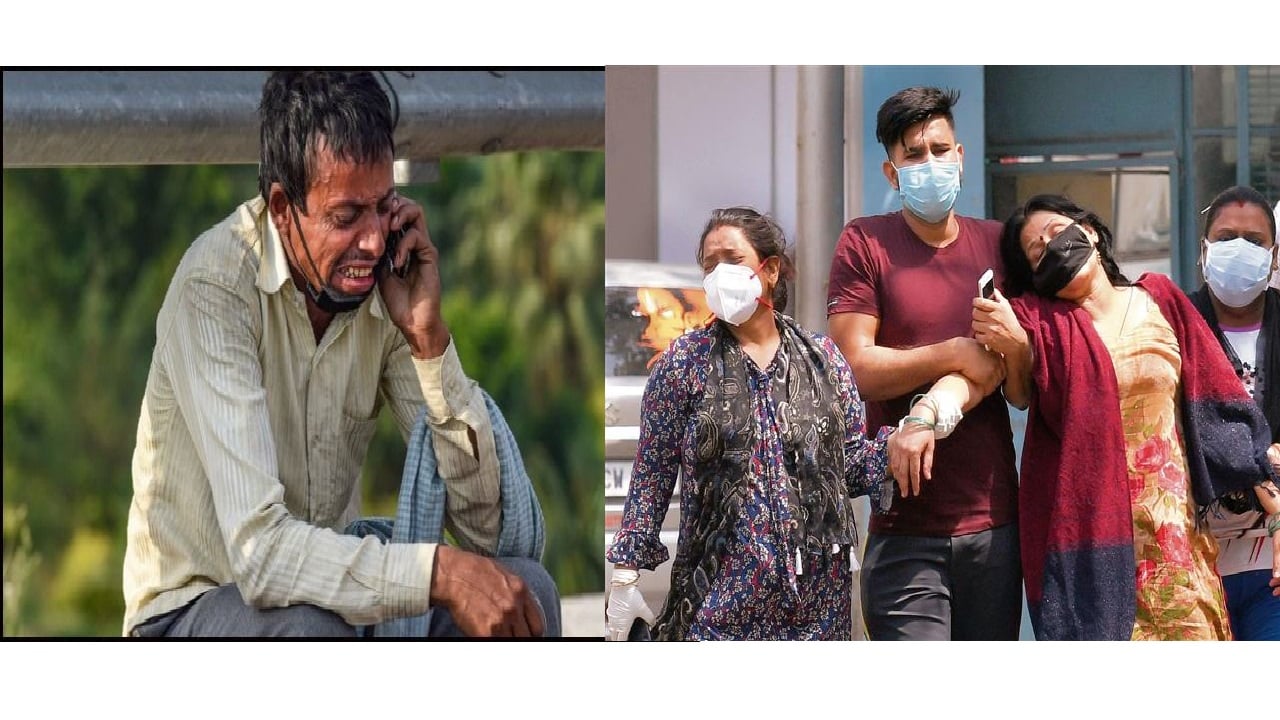
In April, the second wave of coronavirus was at its peak in India and due to that several families lost their loved ones because oxygen ran out and many people were gasping for breath. In a wannabe-superpower, deaths caused by oxygen shortage got massive news and news TV coverage. But, but, but… In the Rajya Sabha, the Central government was asked whether it is a fact that a large number of coronavirus patients died on roads and hospitals due to an acute shortage of oxygen in the second wave. The Ministry of Health and Family Welfare responded that health is a state subject and no death was reported by states and UTs due to lack of oxygen.


No deaths reported due to manual scavenging in the last five years: Ministry for Social Justice and Empowerment


It is such a common feature for a country still battling the killer defects of casteism that no one notices the people who die while cleaning sewage lines and sewer lines. The Ministry for Social Justice and Empowerment replied to a question from Congress MPs Mallikarjun Kharge and L Hanumanthaiah in the Rajya Sabha that there were no deaths reported due to manual scavenging in the last five years. Notably, it has also been 28 years since manual scavenging was banned in India.

Ramon Magsaysay award winner and Safai Karmachari Andolan national convener Bezwada Wilson is right to be furious when he says, “Lies& blatant lies! Govt statement in parliament of no death due to manual scavenging in last 5 years is shameful as well as disrespectful to every person who died cleaning our shit! Its simply a cover-up of its own failure to stop deaths in sewers, septic tanks.”

No data on the number of migrant workers who died because no such data is maintained: Ministry for Labour and Employment

Read Also: US fires drones at Kabul Airport, destroys Islamic State car bomb: Reports

Lok Sabha MPs K. Navaskani, Suresh Narayan Dhanorkar and Adoor Prakash asked the Central government that if the government provided any compensation to the families of migrants who lost their lives walking to their villages in the summer of 2020 as affluent India hid in their homes to escape the Covid-19 virus and the government declared a hasty nationwide lockdown. Unsurprisingly, the Union Ministry for Labour and Employment said no such data is mentioned and the question of compensation does not make sense here since there is no data. But reports by independent experts and some media houses say 200-250 migrant workers died on their way to their hometowns.

Continue Reading

India News

Harish Rawat quits Congress posts after ED raid on aide

Former Uttarakhand chief minister Harish Rawat resigned from two Congress posts after the ED searched his aide Chandan Singh Jeena’s premises in a money laundering probe.

Published

on

Harish Rawat

Former Uttarakhand chief minister Harish Rawat has resigned from two organisational positions in the Congress after the Enforcement Directorate (ED) conducted searches at the premises of his personal assistant, Chandan Singh Jeena.

Rawat announced his decision on Friday, saying he did not want the controversy surrounding his close associate to weaken the Congress’s campaign against corruption. He stepped down as a member of the Uttarakhand Pradesh Congress Committee executive and as a permanent invitee to the Congress Working Committee.

The ED searches were linked to a money laundering investigation concerning alleged irregularities in the 2016 Gram Panchayat Vikas Adhikari examination conducted by the Uttarakhand Subordinate Service Selection Commission (UKSSSC).

What ED recovered from Rawat’s aide

The ED carried out searches at multiple locations in Dehradun, including premises connected with former UKSSSC officials, a private computer agency involved in processing OMR sheets and alleged middlemen.

According to the agency, its search of Jeena’s residence resulted in the seizure of Rs 32 lakh in unaccounted cash, gold coins and chains weighing around 200.5 grams, and 12 luxury watches.

The gold comprised 13 coins and seven chains. The watches included brands such as Rolex, Rado, Piaget, Movado, Tissot and Casio Edifice, according to the ED.

The agency also said bank accounts belonging to Jeena and his family members containing Rs 52.16 lakh were frozen. His mobile phone was seized for forensic examination.

The ED alleged that Jeena had made substantial cash expenditures for which no legitimate source of income could be established. It also said unaccounted cash, jewellery and other valuables were recovered from some former UKSSSC officials and associated individuals.

What is the UKSSSC exam case?

The ED’s money laundering investigation stems from four FIRs registered by the Uttarakhand Police and Vigilance Bureau over alleged irregularities in the 2016 Gram Panchayat Vikas Adhikari examination.

According to the agency, OMR answer sheets were allegedly removed from secure custody and taken to the residence of the commission’s then secretary. Roll numbers of under-filled answer sheets were recorded and passed to personnel of a private computer agency.

The ED has alleged that answer bubbles were subsequently filled or altered fraudulently before the sheets were resealed, with illegal payments allegedly routed through middlemen.

Jeena is currently serving as Rawat’s personal assistant. He had earlier served as Rawat’s officer on special duty when Rawat was Uttarakhand chief minister between 2014 and 2017.

What Harish Rawat said

Reacting to the allegations, Rawat said he found it difficult to believe that Jeena had been involved in wrongdoing. He acknowledged Jeena’s association with him and said the truth behind the allegations would emerge with time.

Rawat said that if evidence showed Jeena had tampered with OMR sheets in the recruitment examination, he would be ashamed of such conduct, while adding that he did not believe the allegation.

Explaining his resignation, Rawat said Uttarakhand politics was entering an election phase and that attempts were being made to create a narrative against him.

He said Congress and its workers were fighting corruption and that he did not want any action associated with him to weaken the party’s campaign. Since he did not hold a government position from which he could resign, he chose to step down from his organisational responsibilities in the party.

Continue Reading

India News

Shashi Tharoor lists BRICS benefits after P Chidambaram questions gains

Shashi Tharoor highlighted BRICS’ diplomatic value and role for the Global South after P Chidambaram questioned the tangible benefits India has gained from recent summits.

Published

on

Shashi Tharoor

Congress MP Shashi Tharoor has highlighted the diplomatic and global significance of BRICS after senior party leader P Chidambaram questioned the tangible benefits India has received from recent meetings of the grouping.

Speaking ahead of the BRICS summit in Delhi, Tharoor described BRICS as an important platform for the Global South and said hosting the summit was a matter of prestige for India. He also acknowledged challenges within the grouping, including differences among member countries and India’s trade imbalance with BRICS nations.

What Shashi Tharoor said about BRICS benefits

Tharoor said BRICS provides an important platform for the Global South. He pointed out that the grouping has 11 countries representing a majority of the world’s population and 41% of global GDP.

According to Tharoor, the size and diversity of the grouping make it significant on the global stage. He said the platform should therefore be taken seriously by other countries.

He also highlighted the importance of India hosting the BRICS summit. Tharoor said the presence of several heads of state and government, along with observers attending at the presidential and prime ministerial level, was a matter of prestige for India.

He linked the summit to India’s diplomatic convening power, saying that its value extends beyond immediate outcomes.

Tharoor flags challenges for BRICS

While listing the benefits, Tharoor also acknowledged that BRICS faces several challenges.

One of the key issues, according to him, is the difficulty of reaching a common position on major international developments. He pointed to differences over the Iran war and the Russia-Ukraine conflict.

Tharoor noted that when BRICS foreign ministers met in New Delhi in May, the countries were unable to agree on a joint statement. India, as the chair, instead issued a chair’s declaration.

He said the ability of the grouping to reach consensus would remain an important challenge for diplomats.

India faces trade imbalance with BRICS countries

Tharoor also raised concerns about the economic side of BRICS.

He said trade among BRICS countries has been growing but argued that the trend has been disadvantageous for India. According to him, India’s exports to BRICS countries have declined while imports from those countries have increased.

This trade imbalance was presented as one of the practical concerns that India needs to consider while assessing its engagement with the grouping.

What P Chidambaram said about BRICS

Tharoor’s comments came a day after former Union minister and Congress leader P Chidambaram questioned the tangible benefits India has received from recent BRICS summits.

Chidambaram said he did not think the last two or three BRICS meetings had produced significant tangible benefits or results for India.

He also pointed out that India participates in several multilateral groupings, including BRICS, the Shanghai Cooperation Organisation, the G20 and the Quad, and questioned what concrete benefits the country had received from them.

The BJP criticised Chidambaram’s remarks and described him as part of the “naraaz phupha” group that, according to the party, could not accept India’s progress.

Why are BRICS benefits being debated?

The latest exchange highlights two sides of the BRICS debate.

Chidambaram has questioned whether the grouping has delivered enough concrete outcomes for India, while Tharoor has emphasised its diplomatic importance, its representation of the Global South and India’s ability to bring major countries together.

At the same time, Tharoor has acknowledged challenges related to consensus and India’s trade position within the grouping.

Continue Reading

India News

TTV Dhinakaran attacks Vijay over jaw gesture controversy

TTV Dhinakaran has criticised Vijay over the jaw gesture controversy, calling him a “villain in real life” while Vijay maintains that the gesture was accidental.

Published

on

TTV Dhinakaran has strongly criticised Tamil Nadu Chief Minister and TVK chief Vijay over the controversy surrounding a jaw gesture made by Vijay in the state Assembly. Dhinakaran said Vijay may be a hero in films but described him as a “villain in real life”.

The remarks came amid a political row over Vijay’s gesture, which was interpreted by the DMK as a reference to MK Stalin’s jaw injury. Vijay has denied that the gesture was intentional and described his body language as an “accidental expression”.

Dhinakaran criticised Vijay’s conduct and said his words and body language indicated that he was not the person many people might have perceived him to be through his film career.

The AMMK chief said, “Vijay is a hero only in films. In real life, he is a big villain.”

He also accused Vijay of being self-centred and alleged that he could sacrifice others for his own interests. These were Dhinakaran’s political comments and allegations against the TVK chief.

The controversy began after Vijay made a gesture during proceedings in the Tamil Nadu Assembly that was interpreted as a reference to MK Stalin’s jaw injury.

Vijay later clarified that his body language was accidental and said the gesture was not intentional. However, the clarification did not end the controversy, with opposition from DMK leaders and other political figures continuing.

MK Stalin responded to the controversy by recalling his experience during the Emergency.

Stalin said he was arrested in 1976 after the DMK government led by M Karunanidhi was dismissed during the Emergency. He recalled alleged custodial violence and said his jawbone was broken during an assault in prison.

Stalin also rejected Vijay’s explanation and referred to the gesture pointing towards his jaw. He asked Vijay to learn about the history of Tamil Nadu and the DMK.

The controversy has also drawn criticism from leaders associated with Vijay’s political allies.

VCK chief Thirumavalavan and CPM state chief Shanmugam reportedly described the gesture as “body-shaming” and “irresponsible”.

Continue Reading

Trending

© Copyright 2022 APNLIVE.com