English हिन्दी
Connect with us

Latest Politics News

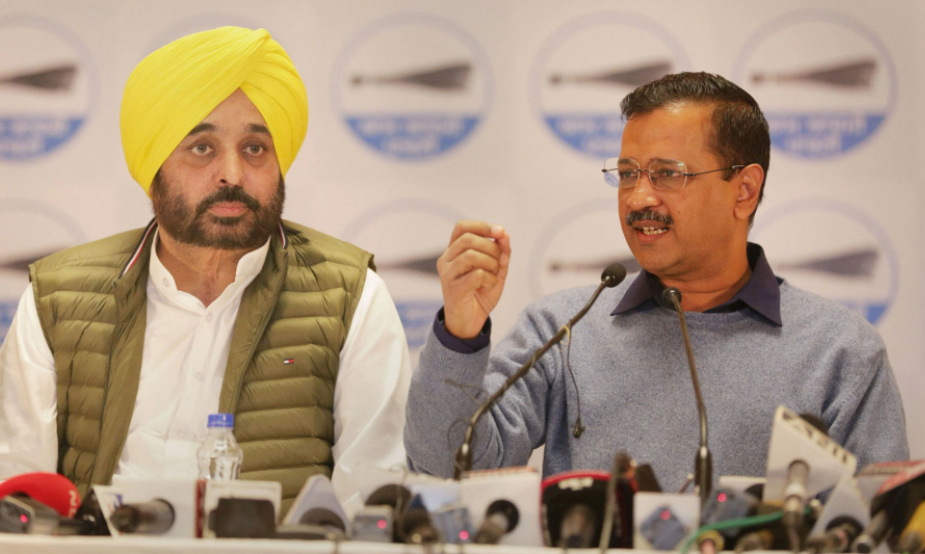
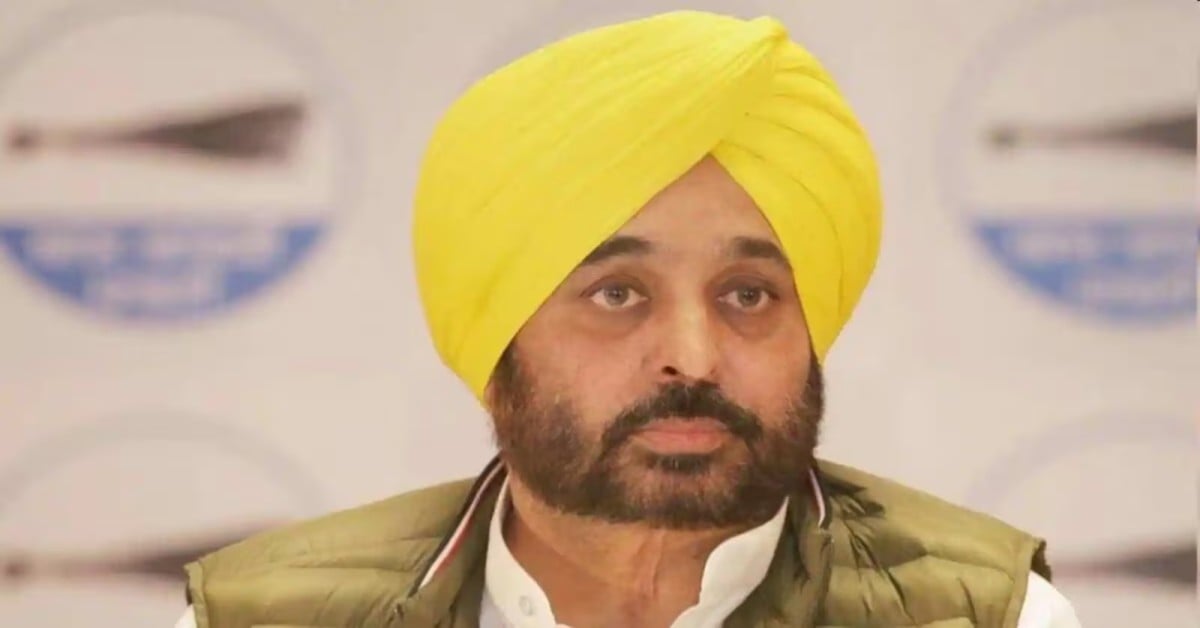
Punjab: Bhagwant Mann govt completes 14 months, here’s what it got right

A former stage artist with only 10 years in active politics, Bhagwant Mann’s elevation to rule the state came as a surprise to many.

Published

on

Punjab: Bhagwant Mann govt completes 14 months, here's what it got right

The Bhagwant Mann-led Aam Aadmi Party government in Punjab has completed 14 months in office. AAP came to power breaking the state’s five-decades’ tradition alternating between the Congress and the Akalis, becoming the first non-Congress, non-Akali party to form a government in Punjab.

In the 2022 Punjab Assembly elections, AAP won 92 seats of the total 117 seats in the state. The victory was AAP’s first-ever government formation outside Delhi.

The landslide sent out a message that Delhi Chief Minister Arvind Kejriwal’s popularity was increasing across the country, which was a point of concern for the national parties.

A former stage artist with only 10 years in active politics, Bhagwant Mann’s elevation to rule the state came as a surprise to many.

After Mann was declared AAP’s chief ministerial candidate, a large group of experts said Kejriwal had made a huge mistake in handling the responsibilities to Mann, who had no background in running an administration.

Political experts used to say, Mann is being handed with a state that has 23 districts, 237 towns, and 12581 villages. But the Punjab CM has come away looking the victor against these doubts of experts. Punjab faces many challenges, the biggest being sharing the border with Pakistan, a channel that is used to smuggle drugs, illegal arms and exports, a big threat for the state and for the country.

As Mann completes 14 months as Chief Minister, he seems to have had a clear thought to change all these narratives that were in the air linked to his name.

Let’s take a look on how Mann and his government has thrived so far

Tough on corruption

CM Mann has made a space for himself among the people and is often tagged as a man who is tough when it comes to acting against corruption.

Clean governance and taking a clear stand against corruption is what his government is known for, especially after the sacking of then Health Minister Vijay Singla, when corruption charges were levelled against him. And it was not just one man shown the door for corruption, another Punjab Minister Fauja Singh Sarari was also forced to resign over graft.

Mann has won wide-spread popularity for his government’s zero-tolerance policy against corruption. From political leaders to senior government officials, no one is spared in his regime even at the assistant inspector general of the police level, people have been sent to jail.

Agriculture

The recent passed budget of the government increased an outlay for crop diversification in the state, which was seen a major step taken in favour of the agriculture sector.

CM Mann also promised to include Moong dal under the Minimum Support Price (MSP) scheme benefiting farmers growing the pulse.

Free Electricity

In just four months after coming to power, the government also fulfilled the manifesto promise of 300 units of free electricity.

Some of the other major decisions that have helped the Punjab governement get a pat on its back was introducing one MLA, one pension scheme, scrapping of load enhancement fee on tubewells, launching Aam Aadmi Clinics (a replica of the Mohalla clinics in Delhi) and such.

Mann re-introduced the old pension scheme scrapped in 2004, under which a retiree is entitled for 50-percent of his last drawn salary, a step that wooed the working government staff and the retired staff across Punjab.

The Mann government has also been decisive on clearing possession of illegally encroached government lands. Reports said the Punjab government has till now freed some 10,000 acres of encroached land.

On Friday, Mann announced another drive against illegal occupation on government encroached lands starting from June 1.

The Mann government is often charged by the opposition for leaving the administrative control of the state in Delhi (read Kejriwal) instead of keeping it in Punjab.

The Bhagwant Mann government’s good performance is crucial for the Aam Aadmi Party to expand its national footprint in the 2024 Lok Sabha Polls. It wants to do well in Punjab for Lok Sabha and the Haryana Assembly elections next year, which the AAP has been eyeing for long and expects a Punjab-like outcome as they are neighbouring states.

India News

Rahul Gandhi, Kharge question caste census method, seek OBC list

Rahul Gandhi and Mallikarjun Kharge have questioned the proposed caste census method and demanded a separate OBC drop-down list.

Published

on

Rahul Gandhi Mallikarjun Kharge

Congress president Mallikarjun Kharge and Leader of the Opposition in the Lok Sabha Rahul Gandhi have written a joint letter to Prime Minister Narendra Modi, raising concerns over the proposed method for recording caste information in the 2027 Census.

The Congress leaders have particularly objected to the absence of a separate OBC column in the caste-related questionnaire. They argued that the current system may not accurately reflect the size of India’s Other Backward Classes (OBC) population.

Sharing the letter on social media, Mr Kharge said that conducting a caste census was not enough and that it also needed to be carried out correctly.

The two leaders described the proposed method of recording caste information as “misleading” and outlined what they said were its potential shortcomings.

Rahul Gandhi, Kharge raise concerns over caste names

According to the letter, under the proposed approach, the caste name provided by an individual would be recorded as given.

Rahul Gandhi and Mallikarjun Kharge argued that the same caste can be known by different names, sub-castes and linguistic variations across different parts of India. They said this could result in members of the same caste being recorded under different names.

The Congress leaders contended that this could fragment a single caste across a very large number of entries and make the resulting data difficult to use effectively.

They have therefore demanded that the government withdraw the existing caste census questionnaire and prepare a new one after consultations with political parties, experts and the public.

Congress seeks OBC drop-down list

Rahul Gandhi and Mallikarjun Kharge have suggested creating a drop-down list of castes to address the issue.

They said such a list could be prepared using existing government lists, including those for Socially and Educationally Backward Classes, along with data from the Anthropological Survey of India.

The Congress leaders also attached caste lists used in surveys conducted in Telangana and Bihar, saying the same methodology had been used in those exercises.

Their key demand is for a separate drop-down list for the OBC category in the caste-related questionnaire.

What is the caste question in the 2027 Census?

The Centre released a list of 40 questions for the 2027 Census around two weeks ago.

The tenth question relates to caste. According to the information cited by the Congress leaders, a drop-down list has been provided for Scheduled Castes and Scheduled Tribes, while an open-ended format has been adopted for other caste responses.

The Congress has demanded that a similar drop-down list be introduced for the OBC category.

Jairam Ramesh alleges Centre is delaying caste census

Congress General Secretary Jairam Ramesh, while releasing the letter at a press conference, alleged that the Centre did not have a genuine intention to conduct a caste census.

He described the current process as a “deception” and accused the government of deliberately attempting to put the caste census on the back burner. These are allegations made by the Congress and are presented as such.

The issue comes amid continued demands from the Congress for an accurate caste census.

A few days ago, Rahul Gandhi, while addressing an event organised by the Congress party’s OBC department, said that if the OBC community took to the streets like “Gen Z students”, the government would be forced to yield.

Continue Reading

India News

Rahul Gandhi’s T-shirt style gets a colourful twist for Gen Z outreach

Rahul Gandhi has adopted colourful shirts during his nationwide “Chhatron Ki Goonj” programme as the Congress steps up its outreach to Gen Z.

Published

on

Congress leader Rahul Gandhi has added a new twist to his public image as he steps up outreach to Gen Z through the nationwide “Chhatron Ki Goonj” programme.

The Leader of the Opposition in the Lok Sabha, who became known for wearing T-shirts during the 2022 Bharat Jodo Yatra, has recently been seen in brightly coloured shirts at several student-focused events.

The change marks a departure from the white T-shirts that became closely associated with his appearance during the Bharat Jodo Yatra, when he walked from Kanyakumari to Kashmir.

From white T-shirts to colourful shirts

Rahul Gandhi wore white T-shirts during the Bharat Jodo Yatra, including during its winter leg. He subsequently continued to appear in T-shirts at party programmes and political events.

The style also became a subject of political criticism, with the BJP repeatedly targeting Gandhi over his choice of attire and describing him as “non-serious”.

Gandhi, however, continued with the T-shirt look and it was also adopted by some Congress leaders who had traditionally appeared in kurta-pyjamas.

His latest appearances have brought a more colourful wardrobe into focus.

Rahul Gandhi’s colourful appearances

Gandhi wore a blue shirt at the first “Chhatron Ki Goonj” event in Kota, where he addressed the issue of paper leaks.

In Dehradun, he was seen wearing a shirt instead of his usual T-shirt. At an event in Allahabad, he wore a pink shirt while interacting with students, drawing discussion on social media.

He later appeared in a yellow shirt at an event in Pune.

The Pune programme focused specifically on female students and working women, with Gandhi addressing issues related to women’s safety, freedom and rights.

Congress steps up Gen Z outreach

The “Chhatron Ki Goonj” programme is part of Rahul Gandhi’s outreach to young people, with paper leaks and issues affecting students among the subjects being highlighted.

The Congress is also seeking to engage young women through programmes and interactions focused on issues concerning them.

Youth and women remain important voter groups in elections, and the Congress is increasingly focusing its outreach on Gen Z as it seeks to strengthen its connection with younger voters.

Gandhi’s colourful shirts have consequently become an additional talking point during his latest student and youth engagements.

Continue Reading

India News

MK Stalin announces major DMK organisational Changes in Tamil Nadu

MK Stalin has announced a major DMK organisational overhaul, introducing age and term limits and expanding party districts from 77 to 110.

Published

on

DMK chief MK Stalin has announced a major overhaul of the party’s organisational structure, months after the party lost the Tamil Nadu assembly election.

Acknowledging the defeat, Stalin said the party must openly recognise its mistakes. He also pointed to the functioning of party office-bearers as one of the factors behind the electoral loss.

“Although there are several reasons for our defeat, the functioning of our party office-bearers is also one of them,” Stalin said, stressing that the party must acknowledge its shortcomings and ensure better performance at every level.

Stalin also described the DMK as a “specialist” in making comebacks and said the party would return stronger.

Age and term limits for party posts

Among the major changes announced by Stalin are age and tenure limits for party positions.

Stalin said the changes would involve a significant restructuring of the DMK’s administrative system, with priority being given to new faces. He said the measures were intended to make the party sustainable for the next 100 years and help restore the trust of young people and women.

Under the new rules, branch secretaries must be aged 45 or below and can hold the position for a maximum of two terms.

District secretaries, meanwhile, must be below 70 years of age and can serve for a maximum of three terms.

DMK to increase party districts from 77 to 110

The DMK executive committee has approved increasing the number of party districts from 77 to 110.

The expansion will be implemented as part of the party’s 16th organisational elections. Revenue districts will generally be reorganised so that each party district covers two assembly constituencies.

Where only one constituency remains after the reorganisation, it will be attached to another suitable party district within the same revenue district as a third constituency.

Stalin has been authorised to determine and announce the constituencies that will form the 110 party districts.

New branch structure planned in urban areas

The DMK will also introduce a new branch-level structure in urban areas, along with the post of branch secretary.

The new system will initially be implemented in Chennai, Coimbatore, Madurai, Tiruchirappalli and Salem. It may subsequently be extended to other corporations.

Once the new party districts are announced, district executive committees will have to meet and establish the union, city, area, town, ward and branch-level units within 15 days.

The organisational changes come as the DMK seeks to restructure its party machinery and prepare for its political comeback following its assembly election defeat.

Continue Reading

Trending

© Copyright 2022 APNLIVE.com