English हिन्दी
Connect with us

India News

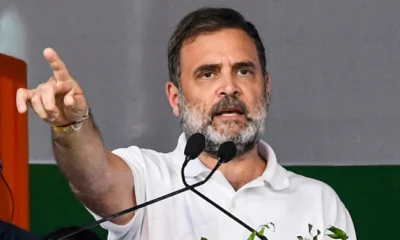
Rahul Gandhi faces expulsion demand in Lok Sabha over trade deal remarks

BJP MP Nishikant Dubey has moved a notice seeking Rahul Gandhi’s expulsion from the Lok Sabha. Here is how the disqualification and expulsion process works.

Published

on

Rahul Gandhi

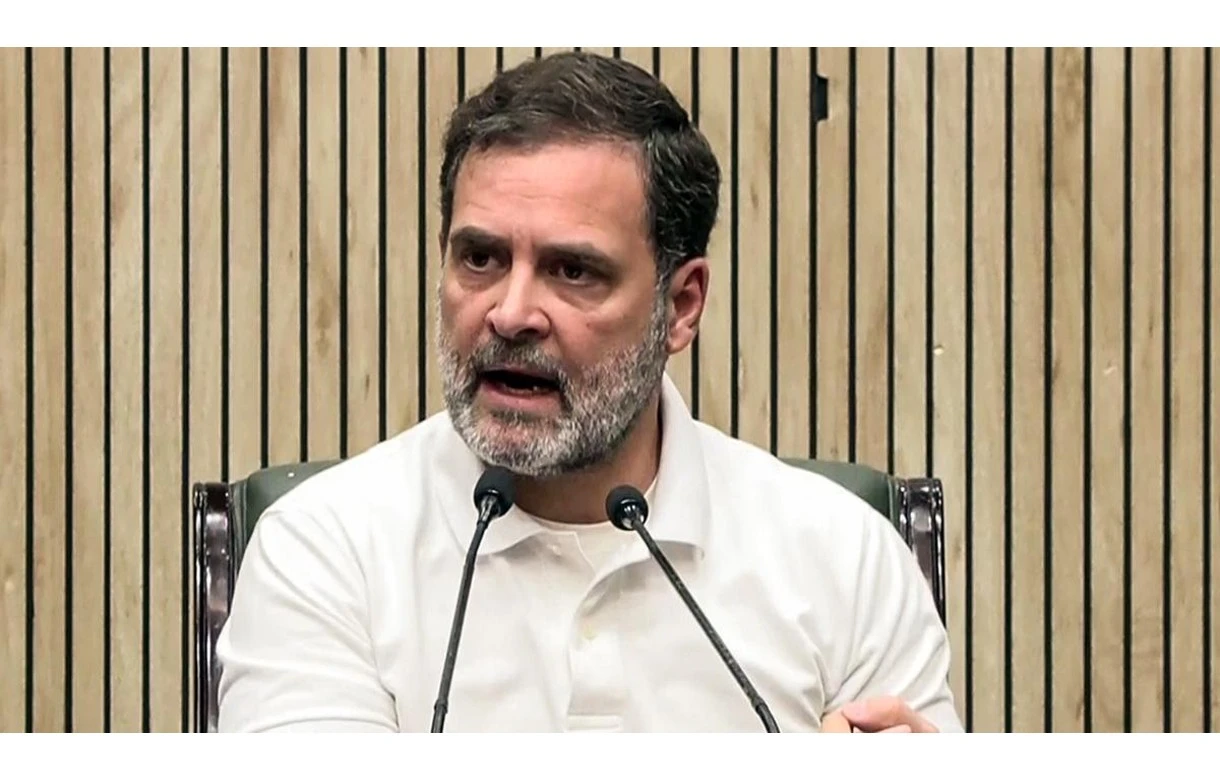
Nishikant Dubey, a Member of Parliament from the Bharatiya Janata Party, has sought the expulsion of Congress leader Rahul Gandhi from the Lok Sabha. Dubey has submitted a notice calling for a substantive motion against Gandhi over his remarks concerning the India–US trade deal.

The BJP MP has demanded cancellation of Gandhi’s Lok Sabha membership and has also called for a lifetime ban on him from contesting elections. The development has raised questions about the procedure for removing a sitting Member of Parliament from the House.

How can a Lok Sabha MP be expelled

The process for expelling a Member of Parliament involves several procedural steps within the House:

Submission of complaint
The process begins when a member or political party files a formal complaint against a sitting MP.

Reference to committee
The Lok Sabha Speaker may refer the matter to the Committee of Privileges for examination. The committee is tasked with conducting a detailed inquiry into the allegations.

Investigation and findings
The committee can examine evidence, call witnesses, and allow the concerned MP to present a defence. After completing its review, it submits a report outlining its findings and recommendations.

Consideration by the House
The committee’s report is tabled in the Lok Sabha. If it recommends expulsion, a motion is moved in the House to adopt the recommendation.

Voting on expulsion
For the motion to pass, it must secure a majority of members present and voting. If approved, the MP stands expelled from the House.

Rahul Gandhi’s disqualification in 2023

In 2023, a court in Surat sentenced Rahul Gandhi to two years in prison in a criminal defamation case related to a remark about the “Modi surname”. Under Section 8(3) of the Representation of the People Act, 1951, any MP convicted and sentenced to two years or more faces automatic disqualification from Parliament.

Following the conviction, Gandhi was disqualified as a Member of Parliament. However, he later challenged the verdict in the Supreme Court of India, which stayed his conviction. After the stay order, his Lok Sabha membership was restored and he resumed his role as an MP.

India News

Raghav Chadha joins BJP, claims two-thirds of AAP Rajya Sabha MPs merging with ruling party

Raghav Chadha joins BJP and claims two-thirds of AAP’s Rajya Sabha MPs are merging, marking a major political shift.

Published

on

A major political development unfolded on Friday as Raghav Chadha announced his decision to join the Bharatiya Janata Party, claiming that a significant section of the Aam Aadmi Party’s Rajya Sabha members will also merge with the ruling party.

Addressing a press conference, Chadha said that nearly two-thirds of AAP’s Members of Parliament in the Rajya Sabha have decided to move to the BJP. He added that the decision has been formally communicated to the Chairman of the Upper House.

According to available information, AAP currently has around 10 MPs in the Rajya Sabha, which means roughly 6 to 7 members could be part of this shift.

Chadha described the move as a political and ideological decision, alleging that AAP had moved away from its original principles of clean and honest governance. He stated that he had been associated with the party for over a decade but now felt compelled to take a different path.

Several other MPs, including leaders like Sandeep Pathak and Ashok Mittal, were also present during the announcement and are expected to be part of the transition.

Political reactions and implications

The development is being seen as a major setback for AAP and its leadership under Arvind Kejriwal. The party has accused Chadha of betraying its mandate, while also criticising the BJP over the development.

On the other hand, the move could strengthen the BJP’s position in the Rajya Sabha, potentially aiding its legislative agenda in the Upper House.

Importantly, the merger may not attract disqualification under the anti-defection law, as Indian constitutional provisions allow such a shift if two-thirds of a party’s legislators agree to merge with another party.

This marks one of the most significant political realignments involving AAP in recent years and could have wider implications for opposition politics at the national level.

Continue Reading

India News

Mamata Banerjee says she will take over Delhi after Bengal win, sharpens attack on BJP

Mamata Banerjee says her party will move towards Delhi after winning Bengal, signalling national ambitions.

Published

on

Mamata Banerjee

West Bengal Chief Minister Mamata Banerjee has made a strong political statement during the ongoing West Bengal assembly elections 2026, saying her party will aim for a larger role at the national level after securing victory in the state.

Addressing a rally, Banerjee said that once her party wins the Bengal elections, it will move forward to “take over Delhi,” indicating a broader political strategy beyond the state. The remark comes at a time when campaigning has intensified across constituencies.

Her statement is being seen as part of a wider push by the Trinamool Congress to position itself as a key force against the Bharatiya Janata Party at the national level.

Banerjee has repeatedly expressed confidence that her party will return to power in West Bengal, aiming for another consecutive term.

Political context

The West Bengal elections have witnessed aggressive campaigning from both the ruling Trinamool Congress and the BJP. Leaders from both sides have exchanged sharp remarks, highlighting the high-stakes nature of the contest.

Banerjee’s latest comment adds to her earlier calls for opposition unity and signals her intent to expand political influence beyond the state. Similar remarks in recent weeks have indicated that her party sees the Bengal result as a stepping stone toward a larger national role.

At the same time, BJP leaders have projected confidence about their performance in the elections, further intensifying the political contest.

High-stakes election

The 2026 West Bengal assembly elections are crucial for both parties, with the Trinamool Congress seeking to retain power and the BJP aiming to make significant inroads in the state.

Banerjee’s “Delhi” remark underscores the broader national implications of the election, as regional parties increasingly position themselves in the national political landscape.

Continue Reading

India News

Pawan Khera denied anticipatory bail by Gauhati High Court in Assam case

The Gauhati High Court has denied anticipatory bail to Congress leader Pawan Khera in a case filed by Assam CM’s wife over alleged remarks.

Published

on

Congress leader Pawan Khera

The Gauhati High Court has rejected the anticipatory bail plea filed by Congress leader Pawan Khera in connection with a criminal case registered in Assam.

The case stems from a complaint filed by Riniki Bhuyan Sarma, wife of Assam Chief Minister Himanta Biswa Sarma, following remarks made by Khera earlier this month.

A single-judge bench heard arguments from both sides earlier this week and reserved its order before delivering the verdict on Friday. With the rejection of anticipatory bail, Khera no longer has protection from arrest in the case.

Background of the case

The FIR against Pawan Khera was lodged after he made allegations during a press conference on April 5, claiming that the Chief Minister’s wife possessed multiple passports and undisclosed overseas assets.

Following these statements, legal proceedings were initiated in Assam, invoking multiple charges including defamation, cheating, and forgery.

Arguments in court

During the hearing, Khera’s legal team argued that the case was politically motivated and that arrest was not necessary, asserting that he was not a flight risk.

On the other hand, the Assam government opposed the plea, stating that the case involved serious offences beyond simple defamation and required custodial investigation.

Supreme Court’s earlier stance

Before approaching the Gauhati High Court, Khera had sought protection from arrest from the Supreme Court. However, the apex court declined to extend relief and directed him to approach the appropriate court in Assam.

What happens next

With the High Court denying anticipatory bail, the legal proceedings against Khera are set to continue, and he may now face arrest depending on the course of the investigation.

The case has also triggered political reactions, adding to tensions between the Congress and the Assam government.

Continue Reading

Trending

© Copyright 2022 APNLIVE.com