English हिन्दी
Connect with us

India News

Rahul Gandhi says massive voter fraud in Haryana Assembly elections, claims 25 lakh fake votes cast

Rahul Gandhi has alleged that 25 lakh fake votes were cast in the Haryana Assembly elections, accusing the Election Commission of facilitating manipulation.

Published

on

Rahul Gandhi

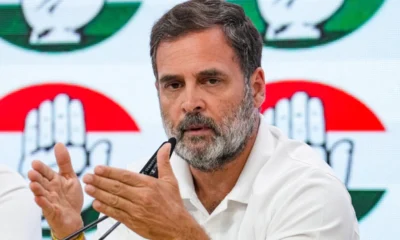
Leader of the Opposition Rahul Gandhi has alleged large-scale voter fraud during last year’s Haryana Assembly elections, claiming that as many as 25 lakh votes were stolen. He said the number represents about 12.5% of the total 2 crore voters in the state, calling it “one in every eight voters” being fake.

Gandhi stated that several Congress candidates raised concerns after the election results, saying something appeared “off”. Despite all exit polls predicting a Congress win, the final results gave victory to the BJP.

He also showed a video of Chief Minister Nayab Singh Saini allegedly saying before the results that “arrangements” had been made for the BJP to win. “What were these arrangements?” Gandhi asked, questioning how the leader could be certain of victory even before counting began.

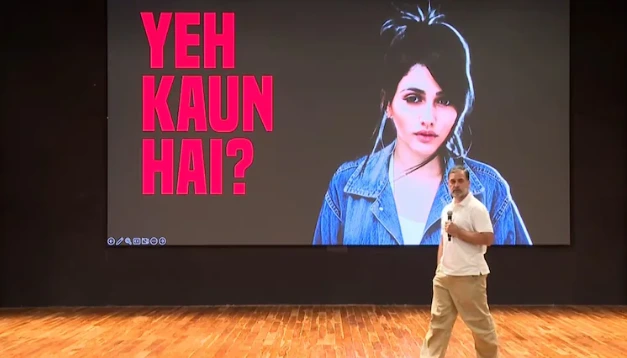
“Brazilian model voted as Seema and Sweety,” alleges Gandhi

Citing alleged irregularities in the voter list, Gandhi displayed 22 entries featuring the same stock photograph of a Brazilian model, Matheus Ferrero, who appeared multiple times under different names such as Seema, Sweety, and Saraswati. “She votes in 10 different booths in Haryana and has multiple names. This means this is a centralised operation,” he said.

He further claimed there were 100 voter IDs with the same woman’s photo in a single constituency and another image that appeared 223 times across two polling booths. Gandhi alleged that such duplication enabled outsiders to vote multiple times.

“This is the reason the Election Commission destroys CCTV footage of booths,” he said, accusing the poll body of failing to prevent electoral fraud.

Congress lost by narrow margins, says Gandhi

Rahul Gandhi said the Congress lost eight constituencies by extremely slim margins, including one by just 32 votes, with the total margin across these seats amounting to 22,779 votes. “This shows how close the election was and how manipulation changed the result,” he said.

The Congress leader alleged that 3.5 lakh names were deleted from Haryana’s voter list before the election. He demanded accountability from the Election Commission, saying it had the capability to remove duplicate entries instantly but chose not to.

Election Commission sources respond

Sources in the Election Commission refuted the claims and questioned why Congress polling agents did not raise objections on voting day. They added that the Special Intensive Revision (SIR) exercise was meant to identify duplicate or invalid entries.

“Polling agents are supposed to object if a voter’s identity is doubtful. If Pawan Khera’s name appears in two states’ voter lists, does that mean he votes twice?” an official source asked.

India News

Four militants killed as rival Naga groups clash in Manipur village

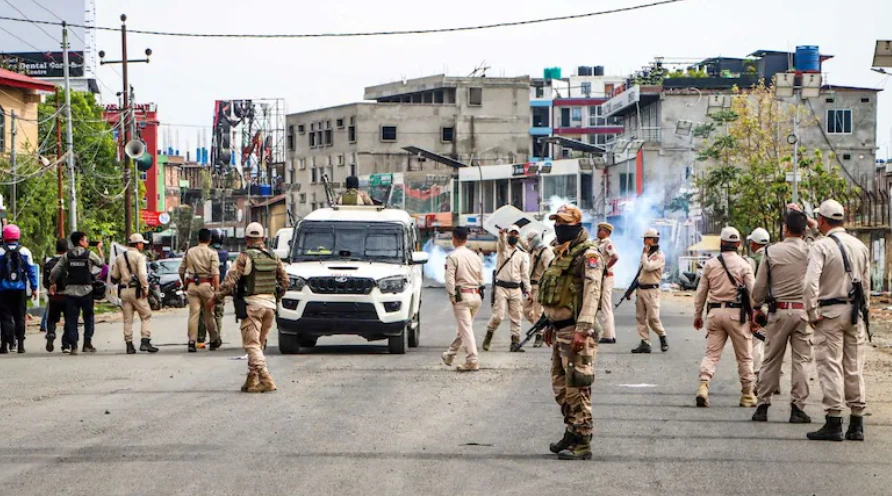
Four militants were killed in a gunfight between suspected rival Naga groups at Taodaijang village in Manipur’s Noney district on Wednesday.

Published

on

Manipur violence

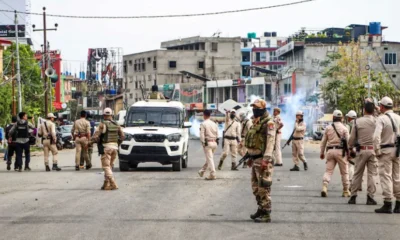
At least four militants were killed in a gunfight between suspected rival Naga militant groups in Manipur’s Noney district on Wednesday, November 4.

The exchange of fire took place at Taodaijang village in the Khoupum area of the Naga-majority district. According to officials, the cadres involved were suspected to belong to rival Naga militant outfits, including the Zeliangrong United Front-Jenchui (ZUF-J) and the Zeliangrong United Front-Kamson (ZUF-K).

Initial reports indicated that the gunfight continued for several hours, leaving three cadres of ZUF-J and one cadre of ZUF-K dead.

The bodies of the deceased militants were subsequently recovered by local residents.

Residents appeal to armed groups to stop firing

Following the gunfight, local residents, including women, reached the spot in an attempt to prevent further violence between the rival groups.

They also used a public address system to appeal to the armed cadres to stop firing and prevent the situation from escalating further.

Further details about the circumstances surrounding the clash were awaited.

Manipur government reviews security situation

In a separate development, Manipur Chief Minister Yumnam Khemchand Singh directed senior security officials to identify active armed groups suspected of involvement in recent incidents of violence in the state.

The directive excluded groups engaged in peace talks with the state government.

The Chief Minister issued the instructions during a review meeting on the state’s law and order situation on Tuesday night.

He also asked security agencies, including the Army and central paramilitary forces, to submit a detailed report on the involvement of the suspected groups.

The Chief Minister said the state Cabinet could consider declaring such groups unlawful if their involvement in violence against innocent civilians was established.

He also emphasised that necessary action would be initiated against groups continuing to perpetrate violence against civilians.

Continue Reading

India News

Agnipath scheme gets 2-year extension for Agniveers, tenure may rise to 6 years

The Centre has introduced a two-year extension for the remaining 75% of Agniveers under the Agnipath scheme, creating another opportunity for them to seek enrolment in the regular armed forces.

Published

on

The Centre has introduced a significant change to the Agnipath recruitment scheme, offering a two-year extension to Agniveers who were earlier expected to leave the armed forces after completing their initial four-year service.

Chief of Defence Staff (CDS) General NS Raja Subramani announced the decision on Wednesday following a Union Cabinet meeting. Under the revised arrangement, the 75% of Agniveers who were not initially selected for absorption into the regular armed forces will be offered an additional two-year engagement period.

The development creates another opportunity for these personnel to continue serving in the armed forces beyond their original four-year tenure.

What changes under the revised Agnipath scheme?

Under the original Agnipath framework, Agniveers were recruited for a four-year service period, including training. At the end of this tenure, up to 25% of each batch could be selected for permanent enrolment into the regular armed forces, while the remaining 75% were expected to return to civilian life.

The revised arrangement introduces an additional two-year engagement for the latter group. This means their potential service period could increase from four to six years.

The extension also creates another opportunity for Agniveers to seek enrolment into the regular armed forces after completing the additional two years.

What happens after the additional two years?

According to General NS Raja Subramani, Agniveers completing the extended engagement period and willing to continue serving will be considered for enrolment in the regular armed forces.

Their selection will be based on objective criteria.

This creates an additional pathway for those who are not absorbed into the regular forces after their initial four-year tenure. However, the revised arrangement does not mean that every Agniveer will automatically receive permanent enrolment.

Why has the decision been taken now?

The announcement comes as the first batch of Agniveers recruited under the scheme approaches the completion of its initial four-year service period.

The Agnipath scheme was introduced on June 14, 2022, to recruit personnel into the Indian Army, Navy and Air Force for a fixed four-year engagement.

General Raja Subramani said the scheme had been undergoing periodic reviews, with the performance of Agniveers being continuously evaluated. He also indicated that feedback on their performance had been very positive.

The latest Cabinet decision creates an additional route for retaining personnel beyond the initial engagement period.

What was the original Agnipath arrangement?

Under the original framework, the armed forces could retain up to 25% of Agniveers in the regular cadre after their four-year service period, subject to selection.

The remaining 75% were to complete their engagement and transition to civilian life.

With the latest revision, this group will receive an additional two-year engagement opportunity before being considered for enrolment into the regular armed forces under the prescribed selection criteria.

The change therefore modifies the earlier arrangement by providing an additional opportunity for Agniveers to continue their military careers.

Continue Reading

India News

Hardeep Singh Puri set to win Rajya Sabha bypoll unopposed

Union Minister Hardeep Singh Puri is set to be elected unopposed to the Rajya Sabha from Madhya Pradesh after the returning officer rejected the nomination papers of two independent candidates.

Published

on

Hardeep Puri

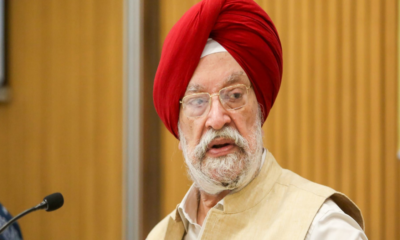
Union Petroleum Minister Hardeep Singh Puri is set to enter the Rajya Sabha unopposed from Madhya Pradesh after the nomination papers of two independent candidates were rejected during scrutiny on Tuesday.

The two candidates whose nominations were rejected were Kante Sayanna and Rajkumar Lohani, the latter being backed by the Congress. Their rejection leaves Puri as the only candidate in the contest for the vacant Rajya Sabha seat.

According to an official, the result will be announced on November 5, which is also the last date for withdrawal of nominations.

The Returning Officer, Umesh Sharma, examined the nomination papers on the last day of scrutiny and rejected the two independent candidates’ applications.

Objections raised against Hardeep Puri’s nomination

The nomination papers submitted by Puri also faced objections from the two independent candidates and Congress leader Hemant Katare.

They questioned the validity and completeness of Puri’s affidavit filed in Form 26, raising concerns over whether the mandatory details had been properly furnished.

However, after examining the objections, Returning Officer Umesh Sharma concluded that Puri had not violated any requirements under the Representation of the People Act.

Sharma stated in his order that no defect had been found in Puri’s nomination papers that could justify their rejection.

Following the decision, Katare and Congress MLA Atif Aqeel announced that they would approach the court against the order.

Calling the decision an attack on Indian democracy, the Congress leaders said in a statement that Puri’s nomination should have been rejected despite what they described as significant errors.

Why the Madhya Pradesh Rajya Sabha seat fell vacant

The by-election was necessitated by the resignation of Union Minister L Murugan, which left a Rajya Sabha seat vacant in Madhya Pradesh.

With the nomination papers of both independent candidates rejected and Puri’s nomination cleared, the Union minister is set to be elected unopposed.

The final announcement is expected on November 5, the last day for withdrawal of nominations.

Continue Reading

Trending

© Copyright 2022 APNLIVE.com