[vc_row][vc_column][vc_column_text]Amid a host of instances of top politicians including Prime Minister Narendra Modi regularly pushing the limits, if not violating, the Model Code of Conduct in election campaign, as many as 66 former civil servants have written to President Ram Nath Kovind complaining about the Election Commission of India (ECI) playing partisan in favour of the BJP and paying no heed to these transgressions.
The civil servants express concern that the ECI was today suffering from “a crisis of credibility” and thereby “endangering the integrity of the electoral process”.
The letter comes at a time when Opposition parties, the Congress in particular, have accused the poll panel of being blatantly partisan and favouring the BJP and its allies.
Signatories to the letter include former foreign secretary Shivshankar Menon and former Planning Commission secretary NC Saxena, as well as former lieutenant Governor of Delhi Najeeb Jung, who was accused of acting like an agent of Narendra Modi government.
Bemoaning the ‘weak-kneed’ responses of the Election Commission in the run up to the 2019 Lok Sabha elections, the letter points to various violations of the model code of conduct and illustrates how the EC took little action, if any, on most of the complaints that have been filed with it.
The letter says: “We write to express our deep anguish that the Election Commission of India (ECI), which has had a long and honourable record of holding free and fair elections despite the enormous challenges of scale and complexity, is suffering from a crisis of credibility today. The ECI’s independence, fairness, impartiality and efficiency are perceived to be compromised today, thereby endangering the integrity of the electoral process which is the very foundation of Indian democracy.”
The civil servants add: “We are distressed to note the misuse, abuse and blatant disregard of the Model Code of Conduct (MCC) by the ruling party at the Centre, and the ECI’s pusillanimity in coming down with a heavy hand on these violations.”
In the letter, which has also been sent to the Chief Election Commissioner and other Elections Commissioners, the Concerned Group of Citizens ask the EC to “conduct itself in a manner where its independence, fairness, impartiality and efficiency are not questioned and to firmly exercise the extensive mandate given to it under Article 324 of the Constitution of India to ensure that the Indian voter is able to exercise her/his franchise without fear or favour”.
The letter lists a host of “glaring instances” wherein the signatories believe that the EC has acted in a partisan manner. Among these is EC’s decision to reject allegations of violation of the MCC by Prime Minister Narendra Modi when, on March 27, he addressed the nation on the success of Mission Shakti.
“The Prime Minister made a public announcement on 27 March 2019 about the successful launch of India’s first anti-satellite weapon (ASAT)… While the timing of the exercise is questionable, even more questionable is the fact that the announcement of the launch was made with much fanfare by the Prime Minister when propriety demanded that it should have been left to the officials of the Defence Research and Development Organisation (DRDO) at a time when the MCC was operative. The country was facing no immediate security threat that required the Prime Minister, who is an election candidate himself, to make a public announcement.
“On the purely technical ground that the announcement was not made on the public broadcasting service, the ECI held that there had been no violation of the MCC. We feel, however, that parading the achievements of a government in this manner after the announcement of elections is tantamount to a serious breach of propriety and amounts to giving unfair publicity to the party presently in government and that the ECI’s decision does not stand up to the standards of impartiality expected of it,” the letter said.
The bureaucrats give several examples of violations where the EC has not taken the proper steps – from Yogi Adityanath’s ‘Modiji ke sena’ speech, to NaMo TV, a channel dedicated to all things Prime Minister Narendra Modi. It also brings up the prime minister’s speech after India conducted an anti-satellite test as well as a TV show, Modi: A Common Man’s Journey, about Modi that has five episodes out.
It also asks why the EC has so far only sought a report about the prime minister’s divisive speech at Wardha, where he had said: “The Congress insulted Hindus. People have decided to punish it in the election. Leaders of that party are now scared of contesting from constituencies dominated by the majority population. That is why they are forced to take refuge in places where the majority is a minority.”
The retired civil servants have also questioned why the EC has not objected to the release of biopic on Modi that stars Bollywood actor Vivek Oberoi and is slated to hit screens on April 11, the date of polling for the first phase of the seven-phase Lok Sabha polls, or to the broadcast of a web series on the Prime Minister.
The signatories have termed this as a “backdoor effort to garner free publicity for a political person (and his party)” and demanded that “the entire expenses on the production, distribution and publicity of the biopic should be debited to the election expenses of Shri Narendra Modi.”
The controversial launch of NaMo TV, a channel that broadcasts only speeches of Modi and his public appearances has also been slammed in the letter.
Stating that they are “deeply concerned about the weak-kneed conduct of the ECI, which has reduced the credibility of this constitutional body to an all-time low”, the signatories have appealed to the EC, through President Kovind, that the poll panel “conduct itself in a manner where its independence, fairness, impartiality and efficiency are not questioned.”
The retired civil servants also bring up the EC’s “obdurate conduct and its reluctance to undertake a proper VVPAT audit”.
The signatories of the letter included Salahuddin Ahmad, S.P. Ambrose, N. Bala Baskar, Vappala Balachandran, Gopalan Balagopal, Chandrashekhar Balakrishnan, Pradip Bhattacharya, Meeran C Borwankar, Ravi Budhiraja, Sundar Burra, R. Chandramohan, Som Chaturvedi, Anna Dani, Vibha Puri Das, P.R. Dasgupta, Nareshwar Dayal, Nitin Desai Keshav Desiraju, M.G. Devasahayam, Sushil Dubey, Arif Ghauri, Gourisankar Ghosh, Tuktuk Ghosh, S.K. Guha, Meena Gupta, Sajjad Hassan, Siraj Hussain, Jagdish Joshi, Najeeb Jung, Rahul Khullar, Ajai Kumar, Arun Kumar, Brijesh Kumar, Sudhir Kumar, Subodh Lal, P.M.S. Malik, Harsh Mander, Lalit Mathur, Aditi Mehta, Shivshankar Menon, Sonalini Mirchandani, Sunil Mitra, Deb Mukharji, Nagalsamy, Sobha Nambisan, P.G.J. Nampoothiri, Amitabha Pande, Niranjan Pant, Alok Perti, V.P. Raja, K. Rajivan, Julio Ribeiro, Manabendra N. Roy, Deepak Sanan, N.C. Saxena Ardhendu Sen, Abhijit Sengupta, Aftab Seth, Navrekha Sharma, Pravesh Sharma, Raju Sharma, Rashmi Shukla Sharma, Jawhar Sircar, P.S.S. Thomas, Hindal Tyabji and Ramani Venkatesan.
Text of the letter:
Respected Rashtrapatiji,
We are a group of former civil servants of the All India and Central Services who have come together to use our pooled experience of decades of service to the Constitution of India to protect and further the values enshrined in it. As a group, we have no affiliations with any political party. Many in our group have, over the past six decades, been involved with the conduct and supervision of elections in India.
We write to express our deep anguish that the Election Commission of India (ECI), which has had a long and honourable record of holding free and fair elections despite the enormous challenges of scale and complexity, is suffering from a crisis of credibility today. The ECI’s independence, fairness, impartiality and efficiency are perceived to be compromised today, thereby endangering the integrity of the electoral process which is the very foundation of Indian democracy. We are distressed to note the misuse, abuse and blatant disregard of the Model Code of Conduct (MCC) by the ruling party at the Centre, and the ECI’s pusillanimity in coming down with a heavy hand on these violations. We would like to bring to your attention a number of glaring instances:
1) The Prime Minister made a public announcement on 27 March 2019 about the successful launch of India’s first anti-satellite weapon (ASAT), which made India the fourth nation in the world with anti-satellite missile capabilities. While the timing of the exercise is questionable, even more questionable is the fact that the announcement of the launch was made with much fanfare by the Prime Minister when propriety demanded that it should have been left to the officials of the Defence Research and Development Organisation (DRDO) at a time when the MCC was operative. The country was facing no immediate security threat that required the Prime Minister, who is an election candidate himself, to make a public announcement. On the purely technical ground that the announcement was not made on the public broadcasting service, the ECI held that there had been no violation of the MCC. We feel, however, that parading the achievements of a government in this manner after the announcement of elections is tantamount to a serious breach of propriety and amounts to giving unfair publicity to the party presently in government and that the ECI’s decision does not stand up to the standards of impartiality expected of it.
2) Our group addressed a letter to the Chief Election Commissioner (which was also made public) on 26 March 2019, requesting the ECI to issue directions to withhold the release of all biopics and documentaries on any political personages through any media mechanism until the conclusion of the electoral process. While the ECI is still to respond to our letter, we understand from media reports that a biopic on the present Prime Minister is slated for release on 11 April 2019, on the day of commencement of the polling process. This, in our opinion, represents a backdoor effort to garner free publicity for a political person (and his party). In the event that this biopic is released even while the election process is ongoing, we contend that the entire expenses on the production, distribution and publicity of the biopic should be debited to the election expenses of Shri Narendra Modi.
3) The same principle should also be applied to the 10-part web series “Modi: A Common Man’s Journey” the first five episodes of which are out on the streaming platform Eros Now, with the ECI again doing nothing but going through the motions of calling for details.
4) The ECI has been acting with the same lethargy in respect of the NaMo TV channel launched on 31 March 2019, which, without any formal approval of the Ministry of Information and Broadcasting, is propagating the image and views of Shri Narendra Modi. The DTH service provider Tata Sky initially called it a “Hindi news service channel” and later back-tracked and called it a “special service” not requiring any licence. The brazen violation of democratic norms may be seen from the fact that the channel has been added to all subscribers’ accounts “as a launch offer” with “no option to delete the individual channel.”
5) While the ECI has passed orders transferring three top police officers and the Chief Secretary in Andhra Pradesh and four top police officers in West Bengal, we find it curious that no such steps have been taken in Tamil Nadu, where the present Director General of Police (DGP) is reportedly under investigation by the Central Bureau of Investigation in the Gutkha scam case and there have been repeated appeals by the Opposition parties in Tamil Nadu seeking his removal from that post. He is also on extension beyond the normal date of his superannuation and, as per ECI norms, such officers should not be assigned election duties. Even more significantly, the same officer had been ordered by the ECI to be transferred during the 2016 Tamil Nadu Assembly elections. It is unfortunate that different yardsticks have been applied in the cases of the former Commissioner of Police, Kolkata and the DGP, Tamil Nadu.
6) The Governor of Rajasthan, Shri Kalyan Singh, has made certain statements that virtually amount to canvassing for a specific political party. The ECI has also apparently apprised your office that the MCC has been violated in the instant case. Since this amounts to a grave misdemeanour, which impacts the sanctity of the Constitution of India, we request you to either remove Shri Kalyan Singh from the post of Governor or direct him to submit his resignation forthwith.
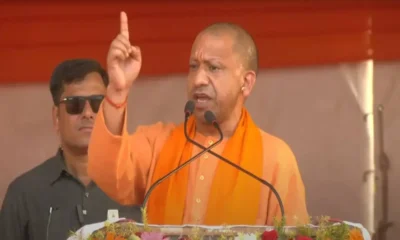
7) The Chief Minister of Uttar Pradesh, Yogi Adityanath, had, at a recent public election meeting, referred to the armed forces as the army of Shri Narendra Modi. A similar statement has been made at another election meeting by Shri Mukhtar Abbas Naqvi, a senior BJP functionary. Such irresponsible statements by a very high constitutional functionary and a political party official not only constitute an insult to your position as the Supreme Commander of the Defence Forces of India, but also amount to a deliberate attempt to mislead the general public, apart from damaging the tradition of the armed forces as apolitical formations. Strongest action is required from the ECI to nip such cavalier statements in the bud, but the ECI has contented itself in the present case with a mild reprimand to the UP CM. We certainly hope and pray that such mild responses do not embolden others to violate the MCC and weaken the institutions that support our democracy.
8) We also note with consternation the departure from all civilised norms in the speeches being delivered by political personages, both those holding high constitutional positions and others. In particular, we would like to draw attention to a speech by Shri Narendra Modi at Wardha, Maharashtra on 1 April 2019 where, to quote the news channel News18.com, he allegedly said “The Congress insulted Hindus. People have decided to punish it in the election. Leaders of that party are now scared of contesting from constituencies dominated by the majority population. That is why they are forced to take refuge in places where the majority is a minority.” He has made a similar statement at an election rally in Nanded, Maharashtra on 6 April 2019. Such divisive speeches, with clear innuendoes, constitute a violation of one of the first requirements stipulated in the MCC: “No party or candidate shall indulge in any activity which may aggravate existing differences or create mutual hatred or cause tension between different castes and communities, religious or linguistic.”
It is incumbent on the ECI to keep a close watch on all such activities and make it clear to all political parties, candidates and their workers that any such efforts to exploit communal or other divisions in society will attract the strongest action. We understand from media reports that the ECI has sought a report from the Chief Electoral Officer, Maharashtra. We hope that appropriate strict action will be taken to discourage all such incendiary speeches.
9) In our open letter dated 24 February 2019, our group detailed our proposal to the ECI for the proper implementation of VVPAT-based audits of EVMs in the forthcoming elections. The ECI made an astonishing submission before the Supreme Court that if manual counting of VVPAT slips of 50% of EVMs is done (as prayed for in a joint PIL by 21 Opposition Parties), the election results would be delayed by six days when everyone is aware that, even in the days of paper ballots, the counting used to get over within 8 to 15 hours and the results were declared either the same day or the next day. The ECI had constituted an Experts Committee to make recommendations on VVPAT-based audit. This was a simple matter which required only two or three sittings of the Expert Committee and could have been finalised in less than a month. The first meeting of the Expert Committee was held on 4 October 2018. The next meeting of the Expert Committee was mysteriously delayed by five months and it was held without inviting the members who expressed dissenting views in the first meeting! The ECI’s obdurate conduct and its reluctance to undertake a proper VVPAT audit when its present sample size fails to detect a ‘defective EVM’ (i.e. a malfunctioning or manipulated EVM) 99% of the time raise serious questions about its motives for doing so.
Hon’ble Rashtrapatiji, we are deeply concerned about the weak-kneed conduct of the ECI, which has reduced the credibility of this constitutional body to an all-time low. Any erosion in the people’s confidence in the fairness of the ECI has very grave consequences for the future of our democracy and we hope that the gravity of the situation will be appreciated by the ECI.
We appeal through you, Hon’ble Rashtrapatiji, to the ECI to conduct itself in a manner where its independence, fairness, impartiality and efficiency are not questioned and to firmly exercise the extensive mandate given to it under Article 324 of the Constitution of India to ensure that the Indian voter is able to exercise her/his franchise without fear or favour.
Yours faithfully,
(Signatories)
[/vc_column_text][/vc_column][/vc_row]