English हिन्दी
Connect with us

Latest Politics News

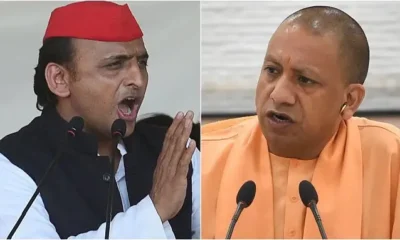
Akhilesh Yadav calls UP budget second last of BJP govt; slams CM Yogi for not having roadmap for state

“The government only talks about the amount it has paid so far but never discloses the outstanding dues. It also never tells farmers how much the price of sugarcane has increased,” he said.

Published

on

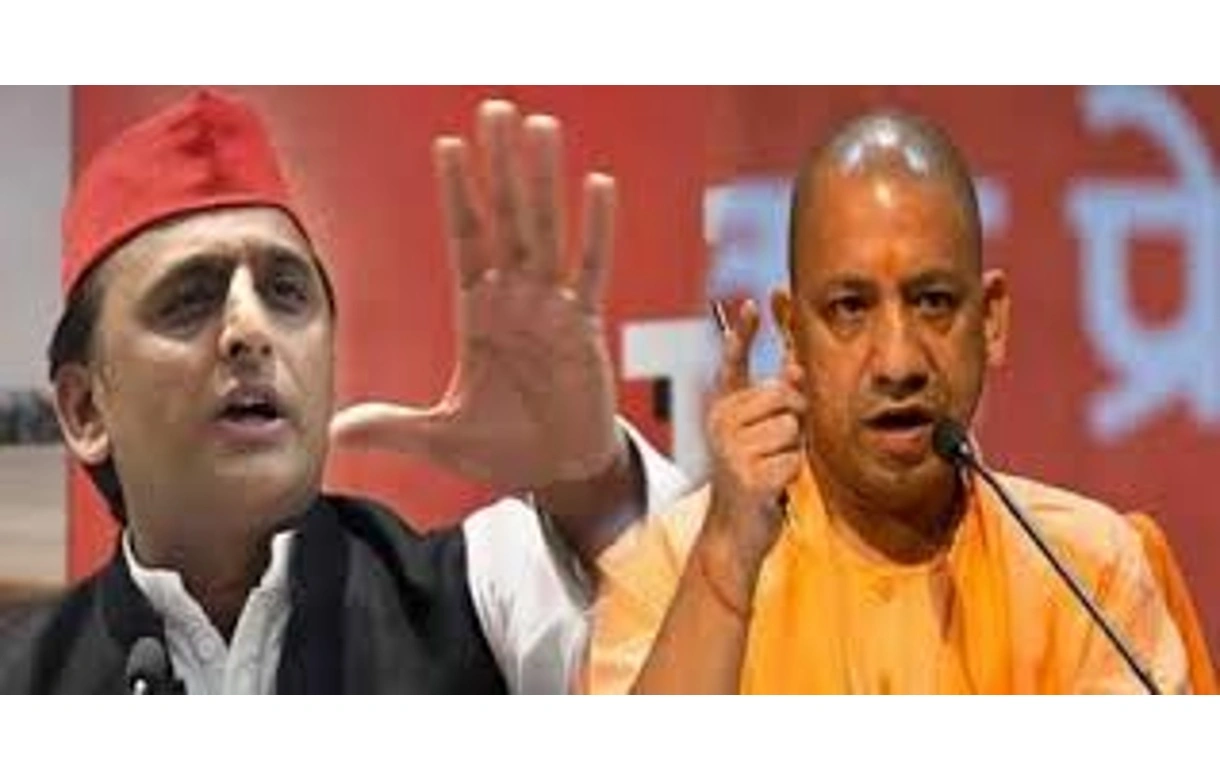
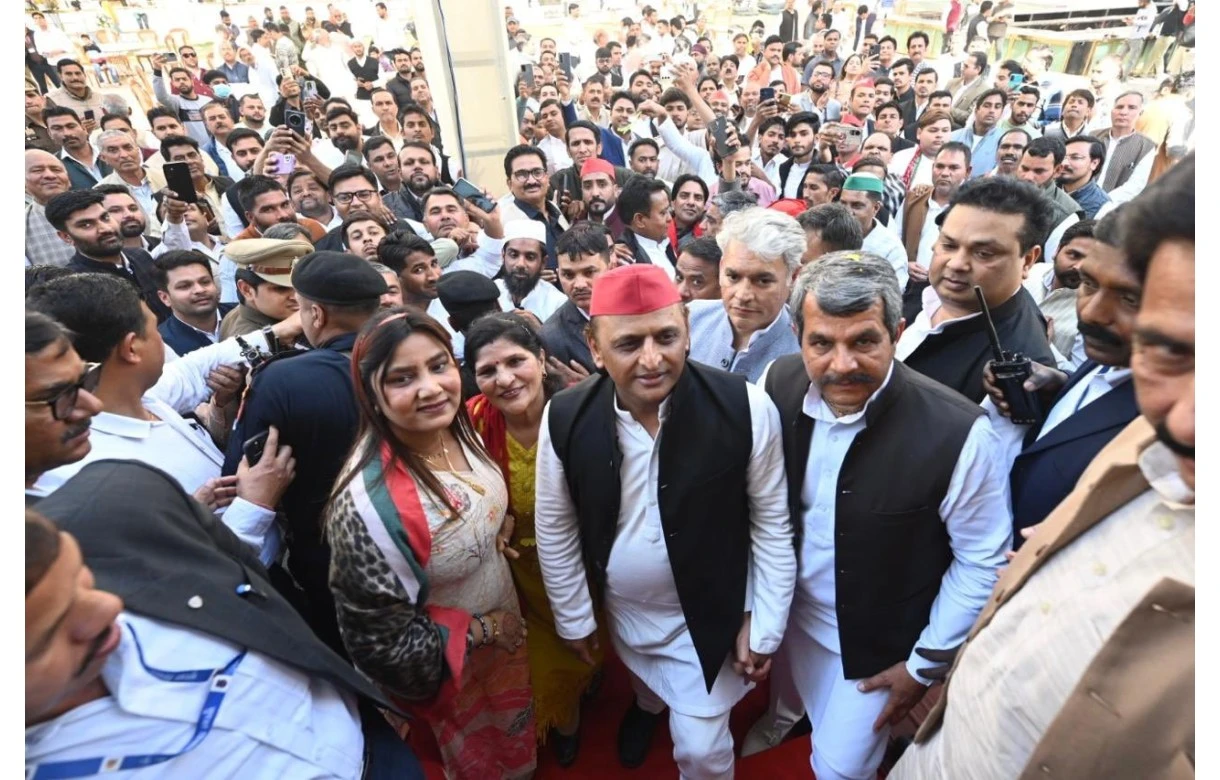
Samajwadi Party (SP) chief Akhilesh Yadav on Thursday launched a scathing attack on the Yogi Adityanath-led Uttar Pradesh government, dismissing its recently presented budget as the “second last budget” of the BJP in the state. Yadav criticized the budget for lacking vision and failing to address the needs of the people, claiming it was nothing more than an “empty drum” full of noise but devoid of substance.

“This is the ninth budget of this government, and it is their second last. After this, there will be one final budget, and then the people will get a chance to choose a new government,” Yadav said, expressing confidence in the BJP’s impending defeat in the next elections.

The former Chief Minister of Uttar Pradesh accused the BJP of presenting budgets without a clear roadmap for the state’s development. “The government has presented budgets without any vision on how to take the state forward. There is no clarity on how the needs of the common people will be addressed,” he stated.

Yadav also mocked the BJP’s repeated claims of presenting the “biggest budget,” pointing out that every new budget is naturally larger than the previous one. “Every time they present a budget, they say it’s the biggest one. This statement can be made by any government because every budget is bound to be bigger than the last,” he remarked.

Describing the budget as hollow, Yadav said, “This is not a budget; it’s an empty drum that makes a lot of noise but has nothing inside. The people feel like no real budget has been presented, just sermons, while they keep wondering when the actual budget will come.”

Yadav alleged that the budget had left various sections of society disillusioned. “Farmers’ hopes have dried up, women are even more worried about managing household expenses, the unemployed see nothing but darkness ahead, and traders are feeling the deepening impact of the economic slowdown,” he said.

He also took a dig at BJP ministers and MLAs, suggesting that despite their applause in the Assembly, they would soon face public anger over issues like inflation and unemployment. “Even BJP ministers and MLAs who were thumping desks in the Assembly are now anxious because they will have to face the anger of people in their constituencies,” he added.

Yadav highlighted the BJP’s failure to deliver on its election promises, particularly those related to farmers. “The BJP manifesto promised free electricity for farmers’ irrigation needs over the next five years. Nine budgets have passed, but has this promise been fulfilled? They also pledged to set up a Rs 25,000 crore agro-infrastructure mission in the name of Sardar Vallabhbhai Patel, but what happened to that?” he questioned.

He further criticized the government for not establishing a Rs 1,000 crore Bhama Shah Price Stabilization Fund for crops like potatoes, tomatoes, and onions, as promised. Yadav also accused the BJP of failing to ensure Minimum Support Price (MSP) for farmers and destroying mandis that were built to ensure fair prices for agricultural produce.

“They promised to provide MSP to farmers, but where is it? We had built mandis to ensure fair prices for farmers, and this government has destroyed them. Not a single new mandi has been built under BJP rule,” he claimed.

Yadav also pointed out the BJP’s unfulfilled promise to sugarcane farmers, who were assured that their dues would be paid within 14 days, with interest in case of delay. “The government only talks about the amount it has paid so far but never discloses the outstanding dues. It also never tells farmers how much the price of sugarcane has increased,” he said.

In a lighter vein, Yadav took a swipe at Chief Minister Yogi Adityanath’s use of Urdu words in his Assembly speech, despite the BJP’s opposition to the language. “Some people even oppose Urdu in Urdu itself,” he quipped, listing words like ‘badnaam,’ ‘bakhsha,’ ‘gunehgar,’ ‘haseen,’ and ‘duniya’ used by the CM.

Yadav concluded by asserting that the BJP’s budget had left people disillusioned and that the countdown for a new government had begun. “After nine budgets, the government still has no answers for the unemployed, struggling farmers, or common citizens. The countdown for a new government has begun,” he said, signalling the SP’s readiness to challenge the BJP in the upcoming elections.

India News

MDMK ends nine-year alliance with DMK, keeps options open on joining Vijay-led front

MDMK has formally severed ties with the DMK after nine years, while refraining from immediately joining Chief Minister Joseph Vijay’s alliance.

Published

on

The Marumalarchi Dravida Munnetra Kazhagam (MDMK), led by Vaiko, has formally ended its nine-year association with the Dravida Munnetra Kazhagam (DMK), marking a significant shift in Tamil Nadu’s political landscape. The decision was taken during the party’s general council meeting held on Friday.

MDMK cites attempts to weaken party

In resolutions adopted at the meeting, the MDMK alleged that efforts had been made to weaken the party within the DMK-led alliance, making it difficult to continue the association. The party also claimed there were attempts aimed at facilitating an AIADMK return to power, allegations that were rejected by the DMK.

Although political observers have speculated about the MDMK moving closer to Chief Minister Joseph Vijay’s Tamilaga Vettri Kazhagam (TVK), the party did not formally announce any alliance with the ruling front. Instead, it said decisions regarding future political alignments would be taken at an appropriate time.

Warm remarks for Vijay government fuel speculation

The MDMK’s resolutions welcomed the state government’s functioning under Chief Minister Joseph Vijay and urged it to remain committed to key promises, including ensuring corruption-free governance and safeguarding Tamil Nadu’s interests on issues such as the Mekedatu dam project. These remarks have intensified speculation about a possible future understanding between the two sides.

The development comes amid broader political realignments in Tamil Nadu following the 2026 Assembly elections, with several parties reassessing their alliances in the changed political scenario.

Continue Reading

India News

Fadnavis, Uddhav Thackeray share Mumbai-Nagpur flight amid Maharashtra political developments

Devendra Fadnavis and Uddhav Thackeray shared a Mumbai-Nagpur flight, drawing attention amid ongoing political developments in Maharashtra.

Published

on

Uddhav Thackeray

Maharashtra Chief Minister Devendra Fadnavis and Shiv Sena (UBT) chief Uddhav Thackeray were seen travelling on the same commercial flight from Mumbai to Nagpur, triggering fresh political discussions in the state.

The two leaders, who have remained political rivals in recent years, reportedly exchanged greetings and briefly interacted during the journey. Reacting to the unexpected encounter, Fadnavis remarked that the meeting of the leaders had become the “biggest news of the day”.

Thackeray was accompanied by his son and MLA Aaditya Thackeray, Rajya Sabha MP Sanjay Raut and other senior leaders of the Shiv Sena (UBT). The flight came at a time when Maharashtra politics has witnessed significant developments, including recent defections from the Thackeray-led party.

The shared journey quickly sparked speculation in political circles. However, leaders from the ruling alliance played down the development, describing it as a routine interaction between political opponents rather than an indication of any new political understanding.

While the brief interaction generated considerable attention, no political discussions or meetings beyond customary greetings were officially reported.

Continue Reading

India News

Amit Shah says Centre will amend NDPS Act to tighten crackdown on drug syndicates

Amit Shah said the Centre is relooking the NDPS Act to plug loopholes exploited by narco syndicates and strengthen anti-drug enforcement across India.

Published

on

Union Home Minister Amit Shah on Friday said the Centre is preparing amendments to the Narcotic Drugs and Psychotropic Substances (NDPS) Act to close loopholes allegedly exploited by drug trafficking networks and strengthen India’s anti-narcotics framework.

Addressing the 10th apex-level meeting of the Narco-Coordination Centre (NCORD) in New Delhi, Shah said the government is re-examining the existing law and invited states to submit suggestions for the proposed changes. The amendments are being worked on by the Ministry of Finance to make the legislation more effective in tackling organised drug syndicates.

Centre seeks stronger legal framework against narcotics

Shah stressed the need for a tougher approach towards drug traffickers and peddlers, while advocating a compassionate stance towards victims of addiction. He outlined a three-pronged strategy against drug trafficking — “detect, disrupt and destroy” — and urged all stakeholders to intensify efforts against the narcotics menace.

The Home Minister also asked state governments to share suggestions on strengthening the NDPS Act. Directors General of Police have been asked to forward recommendations to the Ministry of Home Affairs, while Chief Secretaries can submit their inputs to the Department of Revenue under the Ministry of Finance.

Seizures of synthetic drugs rise over past decade

Highlighting the government’s anti-drug campaign, Shah said that between 2004 and 2014, around 26 lakh kilograms of synthetic drugs were seized across the country. In comparison, agencies confiscated approximately 1.18 crore kilograms of synthetic drugs between 2014 and 2026.

He further said the estimated value of drugs seized during 2014-2026 stood at around Rs 1.84 lakh crore, significantly higher than the nearly Rs 40,000 crore worth of narcotics seized during the previous decade. According to Shah, these figures reflect the expanded scale and effectiveness of anti-drug enforcement efforts.

The minister also called for real-time information sharing among states through digital platforms developed by the Narcotics Control Bureau and urged authorities to ensure NCORD meetings deliver measurable outcomes. He unveiled the “Vision Document on Drug Control (2026-2029)”, which aims to provide a roadmap for reducing drug demand, curbing supply and minimising harm caused by substance abuse.

Continue Reading

Trending

© Copyright 2022 APNLIVE.com