English हिन्दी
Connect with us

India News

Rahul Gandhi joins DMK’s protest against draft UGC regulations; Akhilesh Yadav slams Centre, says he doesn’t support NEP

Gandhi specifically highlighted the Tamil people’s unique history, language, and struggles, stating that the RSS’s efforts to impose its ideology were an insult not only to Tamil Nadu but to all states.

Published

on

Congress leader Rahul Gandhi and Samajwadi Party chief Akhilesh Yadav on Thursday launched a scathing attack on the Centre over the draft University Grants Commission (UGC) regulations, accusing the BJP-led government of pushing the Rashtriya Swayamsevak Sangh’s (RSS) agenda to impose “one history, one tradition, one language” on the country.

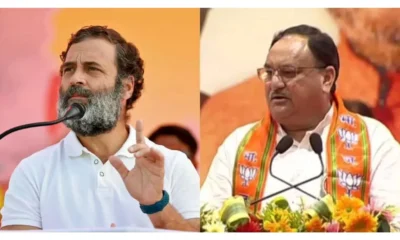
Speaking at a protest organised by the DMK in New Delhi against the draft UGC regulations, Rahul Gandhi, the Leader of the Opposition in the Lok Sabha, alleged that the RSS aims to eradicate the diverse histories, cultures, and traditions of India.

“The RSS’s starting point is the eradication of all other histories, cultures, and traditions. It attacks the Constitution because it wants to impose its idea of ‘one history, one tradition, one language’ on the country,” Gandhi said.

He criticized the draft regulations as an attempt to undermine the education systems of various states, calling it an insult to India’s federal structure. “Each state has its own traditions, history, and language. That is why the Constitution refers to India as a ‘Union of States.’ We must respect all languages, cultures, traditions, and histories to truly understand the essence of India,” he asserted.

Gandhi specifically highlighted the Tamil people’s unique history, language, and struggles, stating that the RSS’s efforts to impose its ideology were an insult not only to Tamil Nadu but to all states.

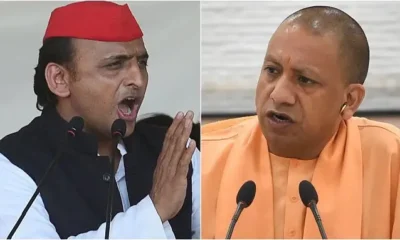
Yadav, the former Uttar Pradesh Chief Minister, also lashed out at the BJP-RSS, accusing them of centralising power and undermining state governments. “They want to make politicians servants of industrialists. We can never support the New Education Policy (NEP). I stand with the students and oppose the BJP’s agenda,” Yadav said.

The Congress has vehemently opposed the draft UGC regulations, labelling them “draconian and anti-Constitution.” The party has demanded their immediate withdrawal, arguing that the justification for the regulations—compliance with the NEP, 2020—does not hold up to scrutiny.

Congress general secretary Jairam Ramesh reiterated the party’s stance, emphasizing the importance of federalism and the quality of higher education. “The constitutional principle of federalism is sacrosanct. The NEP, 2020, does not override this principle, and the draft regulations must be rolled back immediately,” Ramesh said.

The opposition’s concerns were echoed at a State Higher Education Ministers’ Conclave hosted by the Karnataka government in Bengaluru on Wednesday. Ministers and representatives from Karnataka, Telangana, Kerala, Tamil Nadu, Himachal Pradesh, and Jharkhand—all opposition-ruled states—adopted a 15-point resolution condemning the UGC’s draft regulations.

The conclave discussed the implications of the draft regulations, which pertain to the appointment and promotion of teachers and academic staff in universities and colleges, as well as the grading of higher education institutions based on NEP implementation. Participants unanimously called for the withdrawal of the regulations, citing their potential to undermine state autonomy and the diversity of India’s education system.

The draft UGC regulations have sparked widespread criticism from opposition parties, educationists, and state governments, who view them as an attempt to centralize control over higher education and impose a homogenized vision of India’s cultural and educational landscape.

As the debate intensifies, the Centre faces mounting pressure to address these concerns and uphold the principles of federalism and diversity enshrined in the Constitution.

India News

Give all tickets to Muslim women, Amit Shah says, attacking Akhilesh Yadav on sub-quota demand

A sharp exchange between Amit Shah and Akhilesh Yadav in Parliament over sub-quota for Muslim women highlights key divisions on women’s reservation implementation.

Published

on

A heated exchange broke out in Parliament during discussions on the women’s reservation framework, with Union Home Minister Amit Shah and Samajwadi Party chief Akhilesh Yadav locking horns over the demand for a sub-quota for Muslim women.

The debate unfolded as the government pushed forward key legislative measures to implement 33% reservation for women in the Lok Sabha and state assemblies.

Akhilesh Yadav argued that the proposed reservation must ensure representation for women from marginalised communities, including Other Backward Classes (OBCs) and Muslim women. He said that without such provisions, large sections could remain excluded from political participation.

He also questioned the timing of the bill, alleging that the Centre was avoiding a caste census. According to him, a census would lead to renewed demands for caste-based reservations, which the government is reluctant to address.

Government rejects religion-based quota

Responding to the demand, Amit Shah made it clear that reservation based on religion is not permitted under the Constitution.

He stated that any proposal to provide quota to Muslims on religious grounds would be unconstitutional, firmly rejecting the idea of a separate sub-quota for Muslim women within the broader reservation framework.

The government has maintained that the existing framework already includes provisions for Scheduled Castes (SC) and Scheduled Tribes (ST) women within the overall reservation structure.

Wider political divide over implementation

The issue of sub-categorisation within the women’s quota has emerged as a major flashpoint, even as most opposition parties broadly support the idea of women’s reservation.

Samajwadi Party leaders reiterated that their support for the bill depends on inclusion of OBC and minority women, while the government continues to defend its constitutional position.

The debate is part of a broader discussion during the special Parliament session, where multiple bills linked to delimitation and implementation of the women’s quota are being taken up.

Continue Reading

India News

No state will lose a seat, Centre assures as delimitation debate takes centre stage in Parliament

Parliament’s special session begins with key focus on implementing women’s reservation and delimitation, setting the stage for major electoral changes.

Published

on

Parliament

A special session of Parliament commenced on Thursday, with the Centre set to take up crucial legislation related to women’s reservation and delimitation of constituencies. The session, scheduled over three days, is expected to witness intense debate as the government pushes forward its legislative agenda.

At the centre of discussions is the proposal to operationalise the women’s reservation law, which seeks to allocate 33 percent of seats in the Lok Sabha and state assemblies to women. The law, passed earlier, requires enabling provisions before it can be implemented.

The rollout of the reservation is closely tied to the delimitation exercise — a process that redraws parliamentary constituencies based on updated population data. The implementation is expected only after the next census and delimitation process are completed.

The government is aiming to put in place the framework so that the reservation can be enforced in future elections, likely around 2029.

Delimitation and numbers at play

Delimitation is a key aspect of the proposed changes, as it will determine how seats are redistributed and which constituencies are reserved. The exercise is expected to reflect population shifts and may also involve an increase in the total number of Lok Sabha seats.

This linkage has made the issue politically sensitive, with several opposition parties backing women’s reservation in principle but raising concerns over how and when delimitation will be carried out.

Political reactions and expected debate

The session is likely to see sharp exchanges between the government and opposition. While there is broad agreement on increasing women’s representation, disagreements remain over the timing, process, and potential political implications of the delimitation exercise.

Some leaders have argued that delimitation could significantly alter the balance of representation among states, making it a contentious issue beyond the women’s quota itself.

The government, however, has framed the move as a step toward strengthening women’s participation in governance and ensuring more inclusive policymaking.

Continue Reading

India News

Delimitation and women’s quota bills set to be tabled in Parliament today, key numbers explained

The Centre will table key bills on women’s reservation and delimitation, proposing a major expansion of Lok Sabha and changes in seat allocation based on updated census data.

Published

on

Lok Sabha

The Centre is set to introduce a set of crucial bills in Parliament aimed at implementing women’s reservation and redrawing electoral constituencies, marking a major shift in India’s political framework.

According to details accessed from official drafts, three separate legislations are expected to be tabled during the ongoing session. These include a constitutional amendment to operationalise 33% reservation for women, a delimitation bill to redraw constituencies, and changes to laws governing Union Territories.

The move is seen as a coordinated effort to align women’s reservation with a fresh delimitation exercise based on updated population data.

How the numbers may change

One of the most significant proposals is the expansion of the Lok Sabha. The draft legislation suggests increasing the maximum strength of the House to around 815 members, with up to 35 seats allocated to Union Territories.

Currently, the Lok Sabha has 543 elected members. The increase is aimed at ensuring proportional representation after decades of population changes across states.

The proposed delimitation exercise would rely on the latest available census figures, likely the 2011 Census, replacing the long-standing reliance on 1971 data.

Women’s reservation linked to delimitation

The proposed framework makes it clear that the 33% reservation for women in Parliament and state assemblies will only be implemented after the delimitation process is completed.

The reservation is expected to apply across general, Scheduled Caste, and Scheduled Tribe seats, with constituencies being rotated periodically to ensure broader representation.

The reform is likely to come into effect ahead of the 2029 general elections, depending on the completion of the delimitation exercise.

Why delimitation is central to the plan

Delimitation has remained frozen for decades, leading to imbalances in representation due to population growth, migration, and urbanisation.

The new bill proposes setting up a Delimitation Commission, which would be tasked with redrawing constituency boundaries and reallocating seats based on updated population data.

This process is expected to significantly alter the political map of the country and could trigger debates over regional representation.

Continue Reading

Trending

© Copyright 2022 APNLIVE.com