English हिन्दी
Connect with us

India News

Maha Kumbh Mela 2025: Prayagraj set to host the world’s largest spiritual convergence

Published

on

Maha Kumbh Mela 2025 Prayagraj spiritual gathering

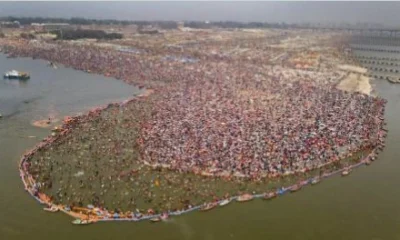
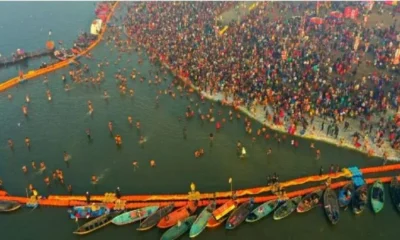
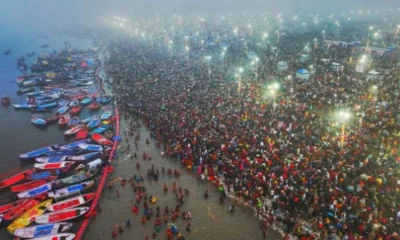
The much-anticipated Maha Kumbh Mela of 2025 will take place in Prayagraj from January 13 to February 26, drawing millions of devotees to the confluence of the Triveni Sangam, where the Ganges, Yamuna, and the mythical Sarasvati rivers meet. With an expected crowd of 40 to 45 crore pilgrims from across India and around the world, this sacred event promises to be the largest gathering of the Sanatan faith.

A sacred gathering rooted in mythology

The Maha Kumbh Mela is a monumental religious pilgrimage celebrated every 12 years, rotating across four revered locations in India: Haridwar, Ujjain, Nashik, and Prayagraj. This grand festival is steeped in Hindu mythology, symbolizing the quest for salvation through a holy dip in the sacred waters, believed to be imbued with drops of nectar from the cosmic churning of the ocean.

At Prayagraj, the Kumbh Mela holds particular significance as it is centered at the Triveni Sangam, a location where devotees believe their sins are washed away through ritual bathing. This year’s Kumbh Mela will officially begin on January 13, with the Paush Purnima Snan (bath), and conclude on February 26, with Maha Shivratri.

The Akharas: centers of spiritual power

A defining feature of the Kumbh Mela are the Akharas—monastic orders that form a crucial part of the event. In total, 13 recognized Akharas participate, each following distinct spiritual practices rooted in Hindu traditions. These Akharas include:

  1. Juna Akhara
  2. Niranjani Akhara
  3. Mahanirvani Akhara
  4. Atal Akhara
  5. Ahwan Akhara
  6. Nirmohi Akhara
  7. Anand Akhara
  8. Panchagni Akhara
  9. Nagpanthi Gorakhnath Akhara
  10. Vaishnav Akhara
  11. Udasin Panchayati Bada Akhara
  12. Udasin Naya Akhara
  13. Nirmal Panchayati Akhara

The Akharas are divided into several categories based on the deities they revere, including Shaiva (followers of Lord Shiva), Vaishnav (devotees of Lord Vishnu), and Udasin (followers of Guru Nanak). The Akharas are led by spiritual authorities such as the Acharya Mahamandaleshwar, the highest-ranking position in an Akhara, and other prominent figures including Mahamandaleshwar and Shrimahant, responsible for administrative duties.

The role of Naga Sadhus

Among the most striking figures at the Kumbh Mela are the Naga Sadhus—ascetics who renounce all worldly possessions, including clothing, in their pursuit of spiritual enlightenment. These ascetics dedicate their lives to self-realization and are often seen leading processions and performing rituals during the Mela.

Key bathing dates: A spiritual journey

The Maha Kumbh Mela includes six major bathing days, each carrying deep spiritual significance. Pilgrims gather on these days to cleanse themselves of sins and seek blessings for a better life:

  • January 13, 2025: Paush Purnima
  • January 14, 2025: Makar Sankranti (Royal Bath)
  • January 29, 2025: Mauni Amavasya (Royal Bath)
  • February 3, 2025: Basant Panchami (Royal Bath)
  • February 12, 2025: Maghi Purnima
  • February 26, 2025: Mahashivratri

Each of these dates marks a unique occasion for spiritual renewal, drawing millions of people to the banks of the Triveni Sangam.

The spiritual significance of Peshwai and Nagar Pravesh

The Kumbh Mela is also marked by the grand processions of the Akharas, known as Peshwai and Nagar Pravesh. The Peshwai sees Akharas move from their permanent ashrams to their temporary camps at the Kumbh Mela site, a display of tradition and power, featuring elephants, camels, horses, and other symbolic elements. The Nagar Pravesh marks the arrival of saints and ascetics in the city, an event that adds to the grandeur and spiritual atmosphere of the festival.

Hatha Yoga: The path of devotion

During the Kumbh Mela, some ascetics practice Hatha Yoga, an intense form of spiritual discipline. This involves extreme physical postures such as standing on one leg for hours or keeping an arm raised for years, as acts of devotion and penance.

Kalpavas: A spiritual commitment

Another unique practice at the Kumbh Mela is Kalpavas, a spiritual observance where devotees spend the sacred months of Paush and Magh on the banks of the Triveni Sangam. Living in temporary shelters, the practitioners renounce worldly pleasures and engage in meditation, prayer, and rituals, seeking to purify their souls and achieve spiritual liberation.

As the Maha Kumbh Mela 2025 approaches, Prayagraj will become a global epicenter for spiritual devotion, drawing people from all walks of life to partake in its rituals and blessings. The event will not only be a celebration of faith but also a profound reminder of the collective power of devotion, self-realization, and spiritual unity.

India News

PM Modi assures no discrimination in women’s quota, delimitation debate intensifies in Parliament

PM Narendra Modi has assured that women’s reservation will be implemented without discrimination, amid a heated debate over delimitation in Parliament.

Published

on

PM modi

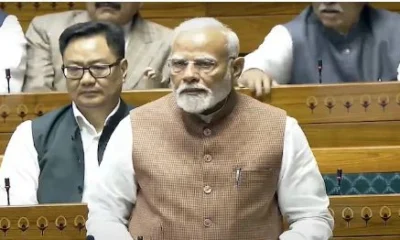
Prime Minister Narendra Modi has assured that there will be no discrimination in the implementation of women’s reservation, as Parliament witnessed a sharp debate over the proposed linkage between the quota and delimitation exercise.

During the ongoing special session, the government reiterated its commitment to ensuring fair representation while addressing concerns raised by opposition parties regarding the timing and structure of the legislation.

The proposed framework aims to reserve 33 percent of seats for women in the Lok Sabha and state assemblies. However, its implementation is tied to a fresh delimitation exercise, which is expected after the next census.

Opposition questions timing and intent

Opposition leaders have raised concerns that linking the women’s quota to delimitation could delay its implementation. They argue that the process of redrawing constituencies may push the actual rollout further into the future.

The issue has triggered a broader political confrontation, with multiple parties questioning whether the move could alter representation across states.

Some critics have also alleged that the delimitation exercise could disproportionately benefit certain regions based on population, a charge the government has rejected.

Government reiterates commitment to fair implementation

Responding to these concerns, the Centre has maintained that the reforms are necessary to ensure accurate and updated representation based on population data.

Leaders from the ruling side have repeatedly emphasized that the process will be carried out transparently and without bias. The assurance that there will be “no discrimination” is aimed at addressing fears among states and opposition parties.

The debate marks a key moment in Parliament, with both sides engaging in intense exchanges over one of the most significant electoral reforms in recent years.

Continue Reading

India News

Give all tickets to Muslim women, Amit Shah says, attacking Akhilesh Yadav on sub-quota demand

A sharp exchange between Amit Shah and Akhilesh Yadav in Parliament over sub-quota for Muslim women highlights key divisions on women’s reservation implementation.

Published

on

A heated exchange broke out in Parliament during discussions on the women’s reservation framework, with Union Home Minister Amit Shah and Samajwadi Party chief Akhilesh Yadav locking horns over the demand for a sub-quota for Muslim women.

The debate unfolded as the government pushed forward key legislative measures to implement 33% reservation for women in the Lok Sabha and state assemblies.

Akhilesh Yadav argued that the proposed reservation must ensure representation for women from marginalised communities, including Other Backward Classes (OBCs) and Muslim women. He said that without such provisions, large sections could remain excluded from political participation.

He also questioned the timing of the bill, alleging that the Centre was avoiding a caste census. According to him, a census would lead to renewed demands for caste-based reservations, which the government is reluctant to address.

Government rejects religion-based quota

Responding to the demand, Amit Shah made it clear that reservation based on religion is not permitted under the Constitution.

He stated that any proposal to provide quota to Muslims on religious grounds would be unconstitutional, firmly rejecting the idea of a separate sub-quota for Muslim women within the broader reservation framework.

The government has maintained that the existing framework already includes provisions for Scheduled Castes (SC) and Scheduled Tribes (ST) women within the overall reservation structure.

Wider political divide over implementation

The issue of sub-categorisation within the women’s quota has emerged as a major flashpoint, even as most opposition parties broadly support the idea of women’s reservation.

Samajwadi Party leaders reiterated that their support for the bill depends on inclusion of OBC and minority women, while the government continues to defend its constitutional position.

The debate is part of a broader discussion during the special Parliament session, where multiple bills linked to delimitation and implementation of the women’s quota are being taken up.

Continue Reading

India News

No state will lose a seat, Centre assures as delimitation debate takes centre stage in Parliament

Parliament’s special session begins with key focus on implementing women’s reservation and delimitation, setting the stage for major electoral changes.

Published

on

Parliament

A special session of Parliament commenced on Thursday, with the Centre set to take up crucial legislation related to women’s reservation and delimitation of constituencies. The session, scheduled over three days, is expected to witness intense debate as the government pushes forward its legislative agenda.

At the centre of discussions is the proposal to operationalise the women’s reservation law, which seeks to allocate 33 percent of seats in the Lok Sabha and state assemblies to women. The law, passed earlier, requires enabling provisions before it can be implemented.

The rollout of the reservation is closely tied to the delimitation exercise — a process that redraws parliamentary constituencies based on updated population data. The implementation is expected only after the next census and delimitation process are completed.

The government is aiming to put in place the framework so that the reservation can be enforced in future elections, likely around 2029.

Delimitation and numbers at play

Delimitation is a key aspect of the proposed changes, as it will determine how seats are redistributed and which constituencies are reserved. The exercise is expected to reflect population shifts and may also involve an increase in the total number of Lok Sabha seats.

This linkage has made the issue politically sensitive, with several opposition parties backing women’s reservation in principle but raising concerns over how and when delimitation will be carried out.

Political reactions and expected debate

The session is likely to see sharp exchanges between the government and opposition. While there is broad agreement on increasing women’s representation, disagreements remain over the timing, process, and potential political implications of the delimitation exercise.

Some leaders have argued that delimitation could significantly alter the balance of representation among states, making it a contentious issue beyond the women’s quota itself.

The government, however, has framed the move as a step toward strengthening women’s participation in governance and ensuring more inclusive policymaking.

Continue Reading

Trending

© Copyright 2022 APNLIVE.com