English हिन्दी
Connect with us

Latest Science News

Chandrayaan 3 leaves earth’s orbit, ISRO sends it on its way to moon

ISRO mentioned that as the spacecraft arrives at the moon, the Lunar-Orbit Insertion (LOI) is planned for August 5, 2023.

Published

on

Chandrayaan 3

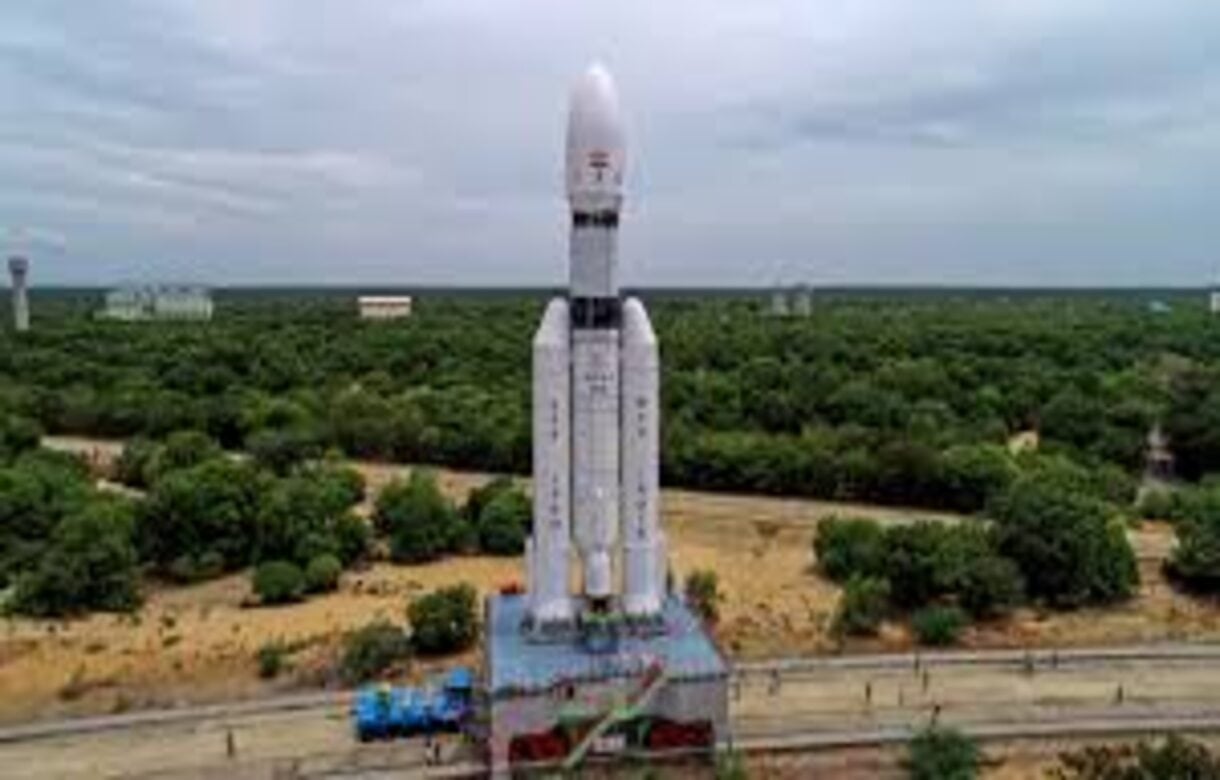
The Indian Space Research Organisation (ISRO) injected the Chandrayaan-3 spacecraft into the translunar orbit on Tuesday. ISRO noted that Chandrayaan-3 has completed its orbits around the earth and is heading towards the moon. It added that a successful perigee-firing was performed at ISRO Telemetry, Tracking and Command Network (ISTRAC). It further affirmed that ISRO has injected into the translunar orbit. 

The space organisation also noted that the next stop is the moon. It mentioned that as the spacecraft arrives at the moon, the Lunar-Orbit Insertion (LOI) is planned for August 5, 2023. Speaking to PTI, an ISRO official said that the spacecraft Chandrayaan 3 escaped from orbiting the earth and is now slowly following a path that would take it to the vicinity of the moon. 
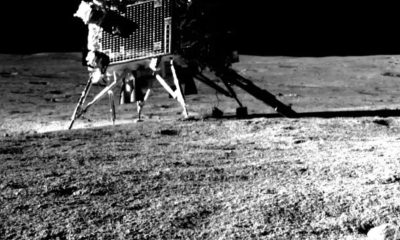
According to reports, the spacecraft Chandrayaan 3 began its 3.8 lakh-km long journey towards the moon on Tuesday after leaving the earth’s orbit following the TLI maneuver, that is placed on ‘lunar transfer trajectory’. Indian Space Research Organisation (ISRO) reportedly mentioned that it would attempt soft landing of the lander on the lunar surface on August 23.

Reports claim that earlier, the spacecraft’s orbit was progressively increased five times after the Chandrayaan-3 mission to moon was launched on July 14. On the day of Chandrayaan 3 launch, Prime Minister Narendra Modi tweeted that 14th July 2023 will always be etched in golden letters as far as India’s space is concerned. He added that Chandrayaan-3, India’s third lunar mission, will embark on its journey and it will carry hopes and dreams of the nation. Union Home Minister, Amit Shah also tweeted that India embarked its historic space journey today with the successful launch of Chandrayaan-3. He also congratulated the ISRO scientists stating that their tireless pursuit propelled India on the path of scripting a remarkable space odyssey for generations to cherish. 

As per reports, the spacecraft carries scientific instruments designed to study multiple aspects of the lunar surface, along with the thermophysical properties of the lunar regolith, lunar seismicity, the lunar plasma environment, and the element composition in the vicinity of the landing site of the moon.

India News

PM Modi hails ISRO after successful GSLV-F17 launch, calls it proud moment

PM Modi congratulated ISRO after GSLV-F17 successfully launched EOS-05, calling the achievement a proud moment for India.

Published

on

Prime Minister Narendra Modi on Friday congratulated the Indian Space Research Organisation (ISRO) after the successful launch of the GSLV-F17 rocket carrying the EOS-05 Earth observation satellite, describing the achievement as a proud moment for the nation.

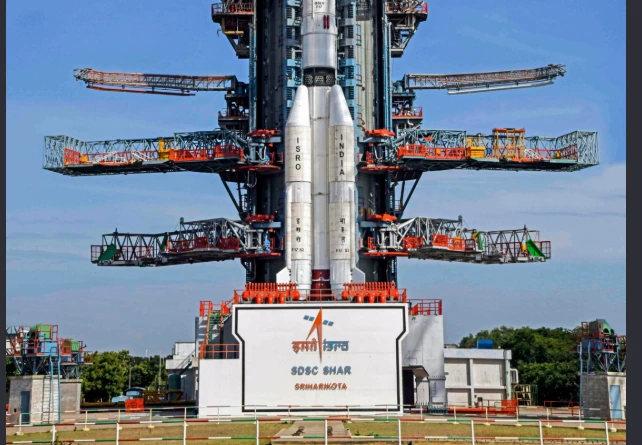
The GSLV-F17 lifted off at 2:55 a.m. IST from the Satish Dhawan Space Centre in Sriharikota, Andhra Pradesh. The EOS-05 satellite was subsequently placed into its designated sub-geosynchronous transfer orbit.

PM Modi praises ISRO’s growing capabilities

In a post on X, PM Modi said the successful mission reflected the excellence, innovation and expanding capabilities of India’s space sector.

He also highlighted the growing partnership between ISRO and Indian industry, saying it was strengthening India’s space programme and expanding capabilities across the wider space ecosystem.

The prime minister described the successful launch of GSLV-F17 carrying EOS-05 as another outstanding achievement by ISRO and a matter of national pride.

EOS-05 strengthens earth observation capabilities

According to the report, EOS-05 is India’s first-ever imaging satellite from geosynchronous orbit. The satellite is designed to provide continuous observation of the country from an altitude of nearly 36,000 km above Earth.

The mission is expected to strengthen India’s earth observation capabilities and support advanced imaging and observation applications.

ISRO Chairman Dr V Narayanan expressed satisfaction with the mission, saying the satellite was precisely injected into its intended orbit.

Mission Director Thomas Kurian described the launch as a significant milestone for the GSLV programme. He said it was the 19th flight of the GSLV and noted that EOS-05 is the heaviest satellite the launch vehicle has placed into a geosynchronous transfer orbit or sub-GTO orbit.

GSLV-F17 launch vehicle details

The GSLV-F17 stands 51.7 metres tall and has an approximate liftoff mass of 420.5 tonnes.

Science and Technology Minister Jitendra Singh also congratulated the ISRO team following the successful mission. He described EOS-05 as a state-of-the-art Earth observation satellite capable of advanced imaging across visible, infrared, multispectral and hyperspectral bands.

Continue Reading

Latest Science News

Indian-origin astronaut Anil Menon begins first mission to International Space Station

Indian-origin NASA astronaut Anil Menon has launched aboard Soyuz MS-29 on his first mission to the International Space Station, where he is expected to spend around eight months conducting research.
Published

on

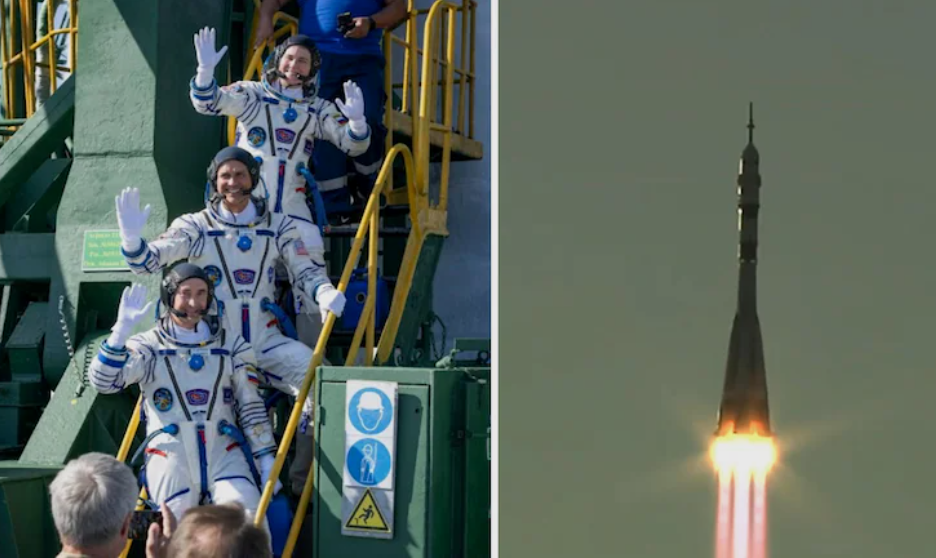
Indian-origin NASA astronaut Anil Menon has embarked on his first journey into space after successfully launching aboard Russia’s Soyuz MS-29 spacecraft to the International Space Station (ISS).

The mission lifted off from the historic Baikonur Cosmodrome in Kazakhstan at 8:17 PM on Tuesday. Menon was accompanied by Russian cosmonauts Pyotr Dubrov and Anna Kikina as the three-member crew began their expedition to the orbiting laboratory.

Crew to spend about eight months aboard ISS

The Soyuz MS-29 spacecraft is expected to dock with the International Space Station a little over three hours after launch. Once aboard the ISS, the crew will carry out a range of scientific research and technology demonstration projects during their mission.

The expedition is scheduled to last approximately eight months, with the crew expected to return to Earth in 2027 after completing their planned activities in orbit.

Menon’s maiden spaceflight marks a significant milestone in his astronaut career as he joins the International Space Station crew for long-duration research and operational work.

Continue Reading

Latest Science News

Astronaut Shubhanshu Shukla to meet PM Modi after return from historic space mission

Astronaut Shubhanshu Shukla, who recently returned from the ISS as part of the Axiom-4 mission, will meet PM Modi this evening. Parliament will also hold a special discussion on his historic journey.

Published

on

Subhanshu shukla

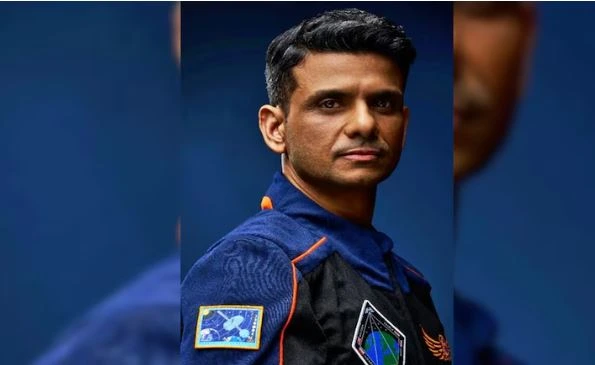
Indian astronaut Group Captain Shubhanshu Shukla, the first Indian to visit the International Space Station (ISS), will meet Prime Minister Narendra Modi this evening at his official residence in New Delhi.

PM Modi to host meeting with astronaut

According to officials, the meeting at 7 Lok Kalyan Marg is expected to take place between 5 pm and 5:30 pm. Shukla, who arrived in India on Sunday, will also be part of the National Space Day celebrations scheduled for August 23.

Warm welcome in India

The astronaut was greeted at the airport by his family, Science and Technology Minister Jitendra Singh, Delhi Chief Minister Rekha Gupta, and hundreds of citizens waving the national flag. Shukla had been in the United States for a year, preparing for the Axiom-4 mission, which launched from Florida on June 25 and docked at the ISS the next day. He served as the mission’s pilot.

Emotional note from Shukla

Before his return, Shukla shared an emotional post on Instagram, expressing mixed feelings of leaving his space colleagues while being eager to meet his loved ones and people of India. He also quoted a song from the film Swades, which he had chosen as his anthem on the launch day.

Parliament session on India’s space journey

In honour of Shukla’s mission, the Lok Sabha is holding a special session today to discuss “India’s first astronaut aboard the ISS – critical role of space programme for Viksit Bharat by 2047.” Union minister Kiren Rijiju said the discussion would highlight the importance of India’s space achievements and future goals.

Continue Reading

Trending

© Copyright 2022 APNLIVE.com