English हिन्दी
Connect with us

Latest Science News

SpaDeX Mission: A key milestone in India’s path to the Bharatiya Antriksh Station

Published

on

ISRO SpaDeX mission demonstrating satellite docking for India’s space station

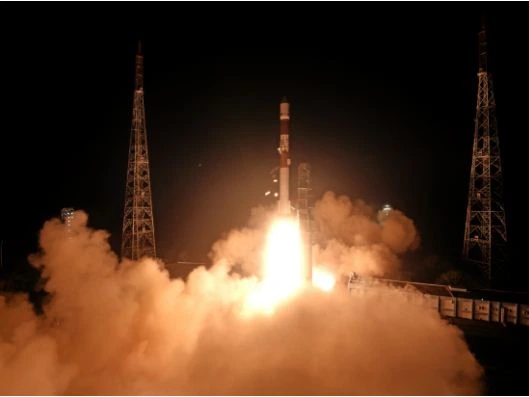
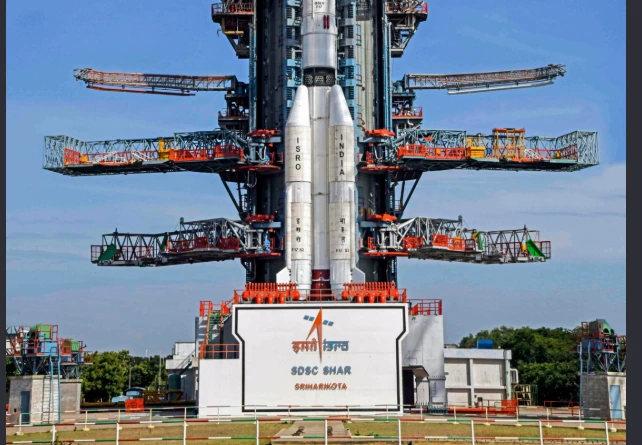
In a historic step towards establishing its own space station, the Indian Space Research Organisation (ISRO) launched the Space Docking Experiment (SpaDeX) from Sriharikota on December 30, 2024. This groundbreaking mission aims to demonstrate India’s capability to dock two satellites in orbit, a feat achieved so far only by the United States, Russia, and China.

The SpaDeX mission, executed aboard the reliable PSLV-C60 rocket, successfully deployed two spacecraft, SDX01 and SDX02, into a low-Earth orbit approximately 475 kilometers above Earth. Over the following days, these satellites, designated as the “Chaser” and the “Target,” will perform precise maneuvers for docking, undocking, and interlocking, with real-time control by ISRO scientists in Bengaluru.

A leap towards Bharatiya Antriksh Station

SpaDeX is integral to India’s ambitious space station project, the Bharatiya Antriksh Station, slated for completion by 2035. The mission marks a significant step in developing technologies for rendezvous and docking, essential for constructing and operating a space station.

Currently, only two space stations exist—the International Space Station (ISS), a collaboration between NASA, Roscosmos, and ESA, and China’s Tiangong Space Station. With Bharatiya Antriksh Station, India aspires to join this elite league.

Critical objectives of SpaDeX

The primary goals of SpaDeX include:

  1. Demonstrating docking technology to ensure seamless interlocking and pressure checks between spacecraft.
  2. Electric power transfer between docked spacecraft, paving the way for advanced in-space operations.
  3. Composite spacecraft control, enabling remote and automated management from mission control.
  4. Payload experiments post-undocking, ensuring optimal utilization of resources.

These advancements will also enhance the docking capability of India’s Reusable Launch Vehicle (RLV), akin to NASA’s space shuttles, for future missions.

Microgravity experiments with POEM-4

In tandem with SpaDeX, ISRO is conducting microgravity experiments using the PSLV’s fourth stage, termed POEM-4 (PSLV Orbital Experimental Module-4). This platform hosts 24 payloads, including a robotic arm to simulate debris capture—a crucial capability for future space station operations.

The microgravity experiments will benefit academia, startups, and ISRO’s own research centers, providing invaluable insights for extended-duration missions.

Inspiration from “Interstellar”

Docking in space is a complex maneuver, vividly dramatized in the sci-fi film Interstellar. Similar to the movie’s high-stakes scenario, ISRO’s mission involves the Chaser spacecraft approaching and interlocking with the Target while both orbit Earth at high speeds.

Pioneering India’s space future

The SpaDeX mission is not just a technological milestone but a testament to India’s growing prowess in space exploration. If successful, it will cement India’s position as a leader in cutting-edge space technology, bringing the nation closer to realizing its space station dream.

By leveraging such innovations, ISRO continues to push boundaries, inspiring the next generation of scientists and contributing to global advancements in space research.

Continue Reading

Latest Science News

Indian-origin astronaut Anil Menon begins first mission to International Space Station

Indian-origin NASA astronaut Anil Menon has launched aboard Soyuz MS-29 on his first mission to the International Space Station, where he is expected to spend around eight months conducting research.
Published

on

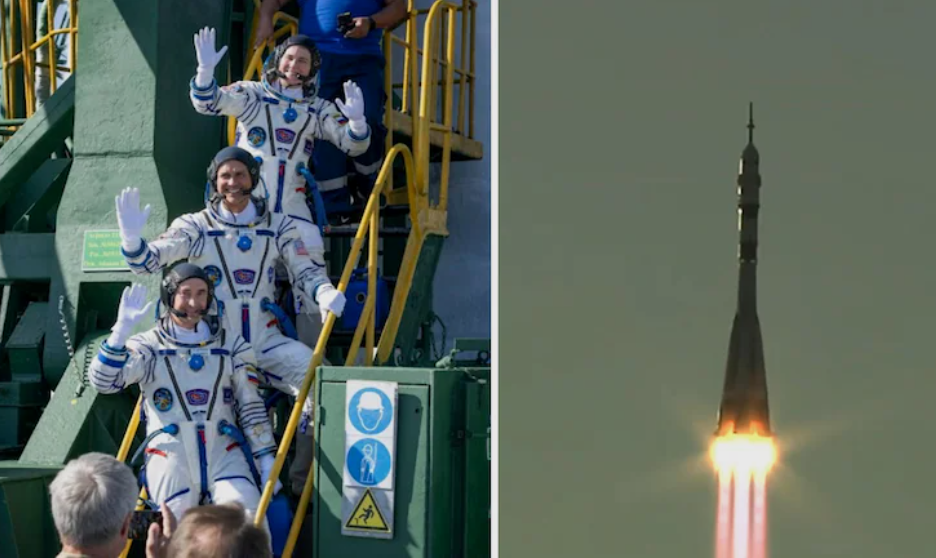
Indian-origin NASA astronaut Anil Menon has embarked on his first journey into space after successfully launching aboard Russia’s Soyuz MS-29 spacecraft to the International Space Station (ISS).

The mission lifted off from the historic Baikonur Cosmodrome in Kazakhstan at 8:17 PM on Tuesday. Menon was accompanied by Russian cosmonauts Pyotr Dubrov and Anna Kikina as the three-member crew began their expedition to the orbiting laboratory.

Crew to spend about eight months aboard ISS

The Soyuz MS-29 spacecraft is expected to dock with the International Space Station a little over three hours after launch. Once aboard the ISS, the crew will carry out a range of scientific research and technology demonstration projects during their mission.

The expedition is scheduled to last approximately eight months, with the crew expected to return to Earth in 2027 after completing their planned activities in orbit.

Menon’s maiden spaceflight marks a significant milestone in his astronaut career as he joins the International Space Station crew for long-duration research and operational work.

Continue Reading

Latest Science News

Astronaut Shubhanshu Shukla to meet PM Modi after return from historic space mission

Astronaut Shubhanshu Shukla, who recently returned from the ISS as part of the Axiom-4 mission, will meet PM Modi this evening. Parliament will also hold a special discussion on his historic journey.
Published

on

Subhanshu shukla

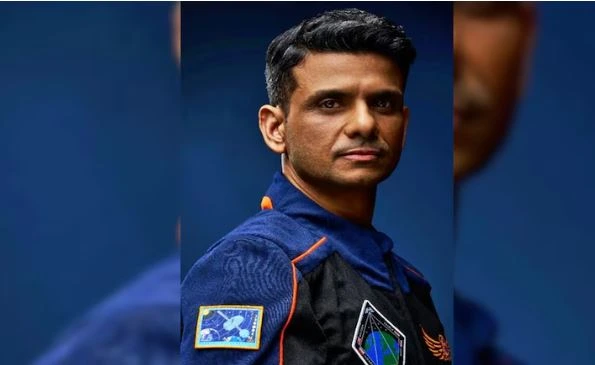
Indian astronaut Group Captain Shubhanshu Shukla, the first Indian to visit the International Space Station (ISS), will meet Prime Minister Narendra Modi this evening at his official residence in New Delhi.

PM Modi to host meeting with astronaut

According to officials, the meeting at 7 Lok Kalyan Marg is expected to take place between 5 pm and 5:30 pm. Shukla, who arrived in India on Sunday, will also be part of the National Space Day celebrations scheduled for August 23.

Warm welcome in India

The astronaut was greeted at the airport by his family, Science and Technology Minister Jitendra Singh, Delhi Chief Minister Rekha Gupta, and hundreds of citizens waving the national flag. Shukla had been in the United States for a year, preparing for the Axiom-4 mission, which launched from Florida on June 25 and docked at the ISS the next day. He served as the mission’s pilot.

Emotional note from Shukla

Before his return, Shukla shared an emotional post on Instagram, expressing mixed feelings of leaving his space colleagues while being eager to meet his loved ones and people of India. He also quoted a song from the film Swades, which he had chosen as his anthem on the launch day.

Parliament session on India’s space journey

In honour of Shukla’s mission, the Lok Sabha is holding a special session today to discuss “India’s first astronaut aboard the ISS – critical role of space programme for Viksit Bharat by 2047.” Union minister Kiren Rijiju said the discussion would highlight the importance of India’s space achievements and future goals.

Continue Reading

India News

Shubhanshu Shukla pens emotional note as he returns to India after space mission

Indian astronaut Shubhanshu Shukla penned an emotional Instagram post as he returned to India after his 18-day ISS mission, marking a milestone in India’s space journey.

Published

on

Indian astronaut Group Captain Shubhanshu Shukla has shared an emotional Instagram post as he heads back home after completing his 18-day mission aboard the International Space Station (ISS).

Astronaut reflects on mixed emotions

In his heartfelt message, written from the aircraft, Shukla expressed the whirlwind of emotions he felt while leaving behind his fellow astronauts, who had been his family during the mission. “As I sit on the plane to come back to India, I have a mix of emotions running through my heart. I feel sad leaving a fantastic group of people behind who were my friends and family for the past year during this mission. I am also excited about meeting all my friends, family and everyone in the country for the first time post mission. I guess this is what life is — everything all at once,” he wrote.

Acknowledges support and inspiration

The astronaut thanked everyone for the love and support he received throughout his journey. He also recalled the words of his commander Peggy Whitson, saying, “Goodbyes are hard, but we need to keep moving in life. As my commander Peggy Whitson fondly says, ‘The only constant in spaceflight is change’. I believe that applies to life as well.”

Shukla ended his note with a line from the song Yun Hi Chala Chal from the film Swades, reflecting his spirit of resilience.

Link to India’s space ambitions

Shukla’s return comes at a crucial time as India advances its space programme. Prime Minister Narendra Modi had earlier mentioned that the astronaut would soon return and that he was tasked with documenting his training and ISS stay. This record will serve as a valuable reference for Gaganyaan, India’s first human spaceflight mission.

Over the past year, Shukla trained extensively at NASA, Axiom, and SpaceX facilities. His flight to the ISS as part of the Axiom 4 mission marked a milestone in India’s preparations for future human space exploration.

The Gaganyaan project aims to send Indian astronauts into orbit aboard an indigenous rocket. The government has also outlined plans for a Bharatiya Antariksh Station by 2035 and a crewed mission to the moon by 2040.

Continue Reading

Trending

© Copyright 2022 APNLIVE.com