English हिन्दी
Connect with us

Top Stories

CBI files fresh case against jailed AAP leader Manish Sisodia in Delhi Feedback Unit case

The FBU was formed in 2015 by the Aam Aadmi Party (AAP) after it lost a battle over the control of the Anti-Corruption Branch (ACB) of the Delhi government.

Published

on

AAP leader Manish Sisodia

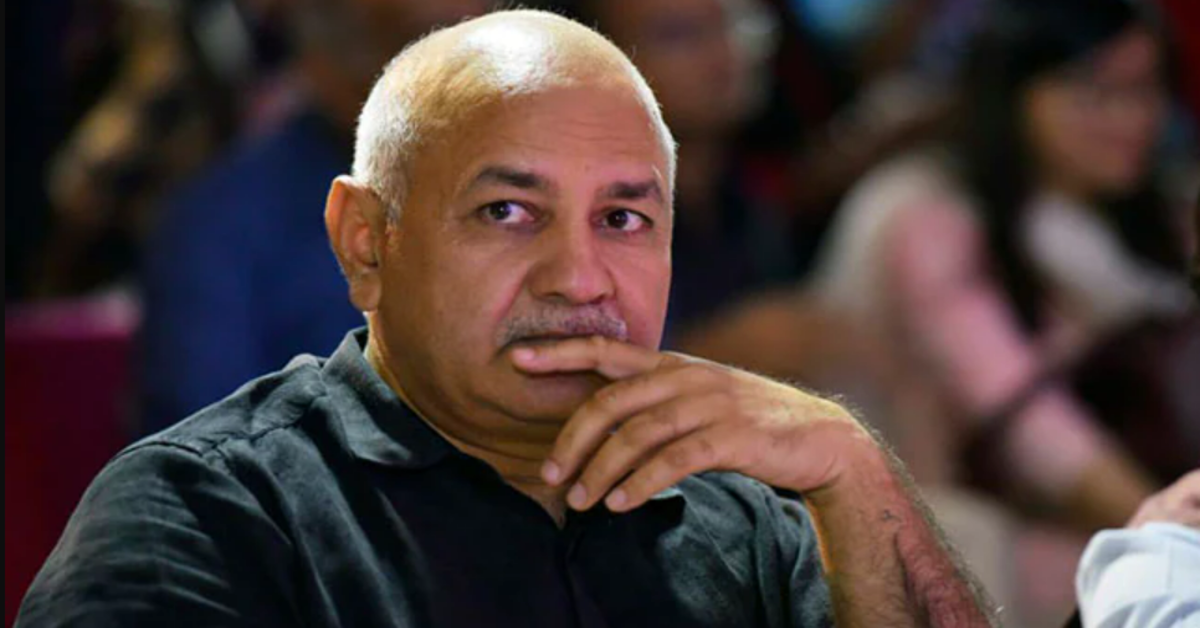
The Central Bureau of Investigation (CBI) has filed a fresh case against former Deputy Chief Minister of Delhi Manish Sisodia over alleged corruption in the Delhi government’s Feedback Unit (FBU).

The CBI alleged that the feedback unit was used to spy on opposition parties and government officials.

The CBI in its report stated the unlawful manner of the creation and working of the Feedback Unit caused a loss of approximately Rs 36 lakh to the exchequer. A provision of Rs 1 crore was kept for Secret Service Expenditure. It was proposed by the Deputy Director of the FBU to provide Rs 25 lakh as a secret service fund to the Feedback Unit during 2016-17.

Apart from Sisodia, the CBI has also registered a case against five other persons including, former Vigilance Secretary Sukesh Kumar Jain, retired CISF DIG Rakesh Kumar Sinha, Deputy Director of Feedback Unit Pradeep Kumar Punj, feedback officer Satish Khetrapal and advisor to the CM Gopal Mohan.

Read Also: Imran Khan arrest: Pakistan Police threatens tougher action against PTI supporters if violence continues

Charges against the accused in the case include dishonest property theft, criminal conspiracy, criminal breach of trust by a public official, forgery with intent to defraud, presenting a fake document as genuine, falsifying accounts, and criminal misconduct by a public official.

The central probe agency in its preliminary report stated that the Feedback Unit, in addition to collecting the mandated information, also collected political intelligence/intelligence qua miscellaneous issues.

The FBU was formed in 2015 by the Aam Aadmi Party (AAP) after it lost a battle over the control of the Anti-Corruption Branch (ACB) of the Delhi government.
Delhi Chief Minister Arvind Kejriwal then formed his own investigation wing under its Vigilance Department, headed by Manish Sisodia. The purpose of the FBU was meant to collect relevant information and actionable feedback regarding the working of the various departments and autonomous bodies, institutions, and entities falling under the jurisdiction of the Delhi government.

Manish Sisodia is currently in jail over alleged irregularities in the Delhi excise policy scam. He is currently under ED custody which will end on March 17.

Pune man kills wife, son by wrapping their faces in plastic bags, later commits suicide

Land for jobs scam case: Tejashwi Yadav moves Delhi High Court challenging CBI summons

India News

Can’t lathicharge a peaceful protest, says Supreme Court

Published

on

By

Supreme Court

The Supreme Court on Monday questioned the Delhi Police action leading to lathicharges during the student protest at Jantar Mantar on July 20.

The bench of Chief Justice of India Justice Surya Kant, Justice Joymalya Bagchi and Justice V. Mohana observed that a peaceful protest can’t be net with a lathicharge. The court made the remarks while hearing petitions against excessive force used by Delhi Police against students protesting irregularities in the NEET-UG 2026 examination and other public examinations.

The court said the right to peaceful and lawful protest is under the protection of the Constitution. The court observed that the presence of a protest can’t be a ground for police action and said that any allegation of police excess has to be independently examined.

The petitions concern the events of July 20, when thousands of students and supporters of the Cockroach Janta Party tried to march from at Jantar Mantar to Parliament as the Monsoon Session opened. The protesters were demanding action on paper leaks, examination system reforms and government accountability.

Police said they had stopped the march because of security concerns and restrictions in central Delhi. There was a clash later and police used tear gas and lathi charge to disperse the crowd. Over a 100 protesters and a similar number of police were injured in the incident.

The petitioners had sought an independent probe into the police action during the hearing. They also demanded the retention of CCTV footage, body-camera recordings and other electronic evidence, as well as compensation for those injured in the crackdown.

The case comes amid a nationwide debate over reforms of examinations and the handling of student protests. The Centre has brought in legislative measures to strengthen anti-paper leak laws, even as student organizations continue to demand greater accountability.

Continue Reading

India News

Bill against paper leaks eclipsed by Opposition push for Amit Shah reply

Published

on

By

Amit Shah

The Monsoon Session of Parliament witnessed Opposition-Government scenes on Monday as Union Minister Dr. Jitendra Singh introduced the Public Examinations (Prevention of Unfair Means) Amendment Bill, 2026 in the Lok Sabha.

The Bill aims to strengthen laws against examination paper leaks and organized cheating following the NEET-UG 2026 controversy.

During the discussions, the Opposition Congress demanded Home Minister Amit Shah’s reply to allegations of police excesses on July 20 during the Cockroach Janta Party (CJP) march to Parliament. Over 100 students were treated for injuries ranging from fractures to pellet wounds. CRPF personnel have confirmed seven rounds of pellets were fired and five rounds were fired at the students.

Congress leader Pawan Khera said such force should not have been used against the students and the Home Minister must reply to the allegations. Following disruptions, the House was adjourned several times.

The legislation seeks to impose stricter penalties for paper leaks, organized examination fraud, and other unfair practices. It also provides for faster investigations, time-bound trials, and the establishment of a STF to investigate major examination-related offenses. According to the government, the amendments are intended to improve transparency, protect the credibility of public examinations, and restore students’ confidence in the system.

The Congress and several Opposition parties demanded a detailed discussion in both the Lok Sabha and the Rajya Sabha, arguing that the government must be held accountable for both the examination irregularities and the police response.

The debate comes days after the resignation of former Union Education Minister Dharmendra Pradhan, following weeks of nationwide protests over paper leaks and examination malpractice. While the Centre has announced reforms and introduced the amendment Bill, Opposition leaders maintain that legislative changes alone are insufficient without fixing responsibility for the controversy and the police action against students.

The government defended its response, stating that it has initiated investigations into examination fraud, introduced stricter legal provisions, and taken steps to strengthen the security of public examinations. Parliamentary Affairs Minister Kiren Rijiju urged MPs to participate in the debate and allow the House to function smoothly instead of disrupting proceedings.

Continue Reading

India News

Parliament Monsoon Session 2026: Bill against paper leaks to be introduced in Lok Sabha today

The Lok Sabha will introduce and consider the Public Examinations (Prevention of Unfair Means) Amendment Bill, 2026, proposing stricter punishment, fast-track courts and stronger safeguards against paper leaks.

Published

on

The Lok Sabha is set to take up the Public Examinations (Prevention of Unfair Means) Amendment Bill, 2026 for consideration and passage on Monday as the Centre moves to tighten laws against paper leaks and examination-related fraud.

Union Minister Dr Jitendra Singh will seek the House’s permission to introduce the Bill before moving it for consideration and passing during the day’s legislative business.

The proceedings of the Lok Sabha are scheduled to begin at 11 am with the Question Hour, during which ministers will respond to listed oral questions.

Bill proposes stricter action against paper leaks

The proposed amendment aims to strengthen transparency and integrity in the public examination system through stricter legal provisions while safeguarding the interests of students.

Among its major provisions are:

  • Imprisonment of up to 10 years for those found guilty.
  • A fine of up to Rs.10 crore.
  • Confiscation of assets of convicted offenders.
  • A mechanism to ensure verdicts in such cases are delivered within three months through fast-track courts.

The proposed changes follow the Union Cabinet’s approval of the legislation and related measures aimed at tackling paper leaks and examination fraud with stricter punishment and expedited trials.

Supreme Court judges amendment Bill also on agenda

Apart from the anti-paper leak legislation, the Lok Sabha is also scheduled to consider the Supreme Court (Number of Judges) Amendment Bill, 2026.

Union Law Minister Arjun Ram Meghwal will move the Bill for consideration. It seeks to further amend the Supreme Court (Number of Judges) Act, 1956.

Ministers to present implementation reports

Several Union ministers are also expected to place statements before the House on the implementation of recommendations made by various Parliamentary Standing Committees.

Among them:

  • Gajendra Singh Shekhawat will present an update on recommendations related to the Ministry of Tourism.
  • Jayant Chaudhary will report on recommendations concerning the Ministry of Skill Development and Entrepreneurship.
  • Pankaj Chaudhary will table a statement on recommendations relating to the Ministry of Finance.
  • Suresh Gopi will present implementation updates on recommendations made by the Standing Committee on Petroleum and Natural Gas.

Continue Reading

Trending

© Copyright 2022 APNLIVE.com