English हिन्दी
Connect with us

Latest world news

Imran Khan arrest: Pakistan Police threatens tougher action against PTI supporters if violence continues

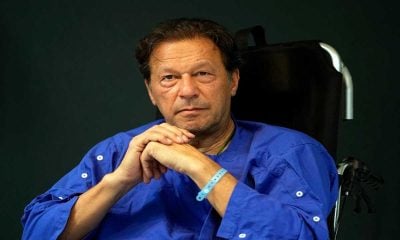
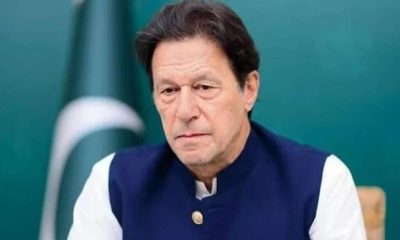
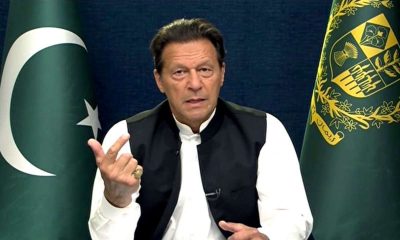
The Pakistan Police has warned of “tougher action” against supporters and party workers of Imran Khan’s Pakistan Tehreek-e-Insaf (PTI) Chief if they do not abstain from violence and continue to bar the cops from arresting the former Prime Minister of the Country.

Published

on

Imran Khan arrest

The Pakistan Police has warned of “tougher action” against supporters and party workers of Imran Khan’s Pakistan Tehreek-e-Insaf (PTI) Chief if they do not abstain from violence and continue to bar the cops from arresting the former Prime Minister of the Country.
A report quoting Punjab province Inspector General of Police Usman Anwar said that the senior police officer has urged the protesters and supporters of Imran Khan to desist violent means or face strict action.

A report by Pakistan-based The News International quoted the IG as saying that vandalizing public property and torching police vehicles falls under the purview of terrorism act which would invite serious consequences for violent protesters who would be identified and nabbed with the help of security camera footage.

He said that violent protesters will be tried under the terrorism act.

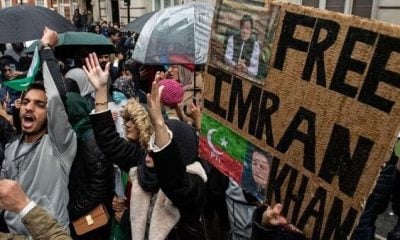
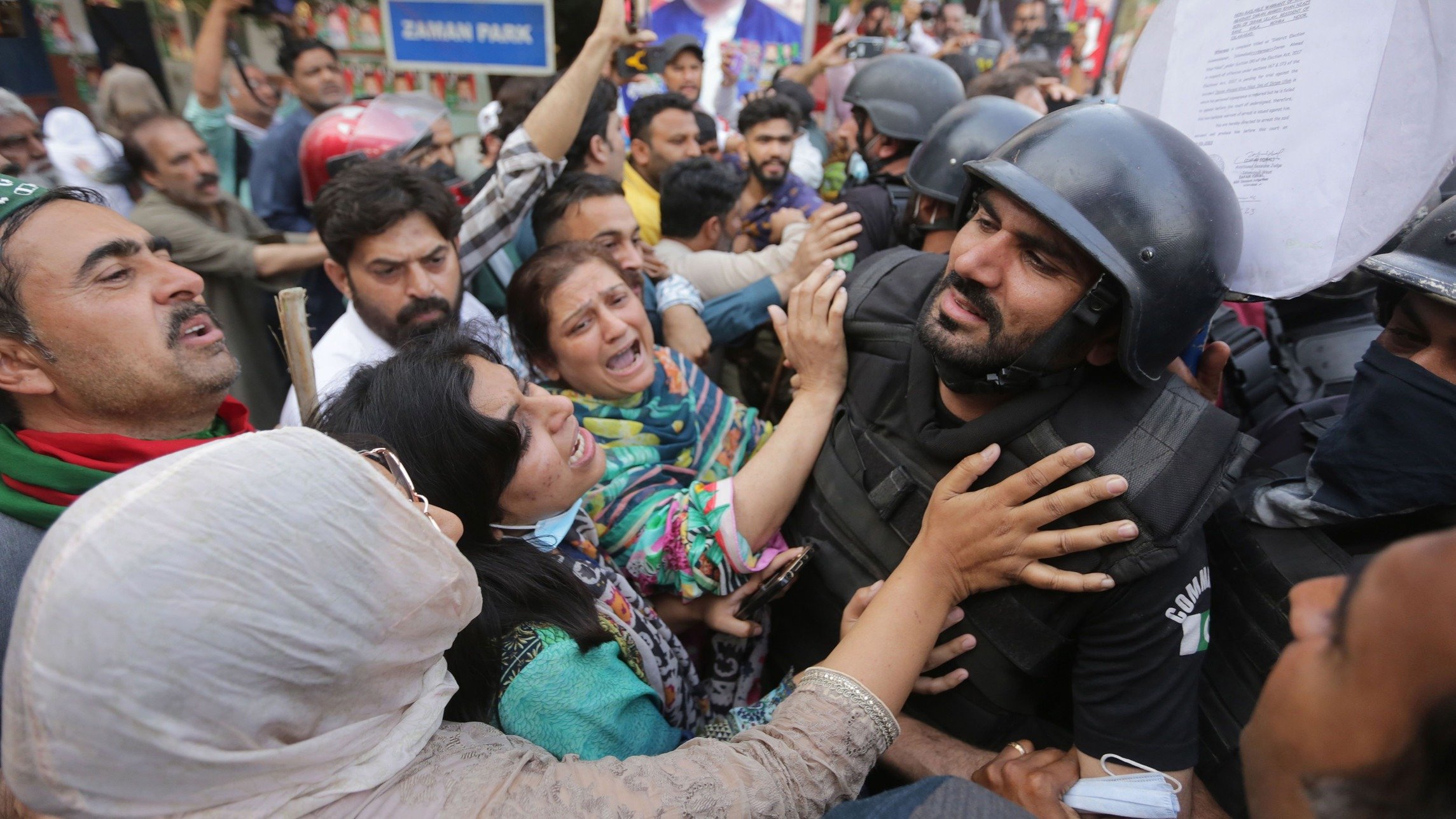
The top cop’s remarks came after police failed to arrest Imran Khan as his supporters and PTI activists fought pitched battles against cops for the past two days, preventing the former PM’s arrest in the Toshakhana case.

On Tuesday, IGP Anwar said Islamabad police under the leadership of DIG Operations ICT Shahzad Bukhari reached Lahore to arrest the PTI chairman for compliance with the non-bailable arrest warrant issued against him by additional sessions judge Zafar Iqbal.

He said the Lahore police were told to accompany the Islamabad police team for compliance with the court orders and as the police reached Khan’s Zaman Park residence, they came under a barrage of stones from violent protesters which left dozens of cops, including DIG operations Islamabad, wounded.

Read Also: CBI files fresh case against jailed AAP leader Manish Sisodia in Delhi Feedback Unit case

The officer further said that more personnel of the Punjab police were tasked to reach Zaman Park and help execute the court orders to arrest Imran, but allegedly came under attack from PTI workers armed with sticks and rocks, causing injuries to the policemen.

Yesterday, a court in Pakistan’s Lahore provided temporary relief to Imran Khan as it issued an order to the police to halt its bid to arrest the former Prime Minister till 10 am today morning.

The court’s order came after tensions prevailed outside Imran Khan’s Lahore residence as his supporters clashed with the Pakistani police, early Wednesday morning, leaving several protesters and some cops wounded.

According to reports, dressed in riot gear, the Pakistani police—who yesterday arrived at the Pakistan-Tehreek-E-Insaf (PTI) chief’s Lahore home to arrest him—fought pitched battles with the cricketer-turned politician’s supporters and his party workers leading to chaos in the Pakistani city.

Reports quoting eyewitnesses said the police baton charged Khan’s supporters and also fired tear gas cannisters, some of which landed inside the house, on the lawns of the former PM. The raucous crowd hurled stones at the cops leading to many of the policemen sustaining injuries.

Videos shared by Khan’s PTI party showed tear gas shells landing on the lawns of Khan’s house. They also alleged that the police resorted to live firing on the crowd.

CBI files fresh case against jailed AAP leader Manish Sisodia in Delhi Feedback Unit case

Pune man kills wife, son by wrapping their faces in plastic bags, later commits suicide

Latest world news

Trump waives Russia-related sanctions, tariffs in relief for India

Donald Trump has waived several Russia-related sanctions, restrictions and duties under a new US law, potentially easing tariff pressure on India and China, two major buyers of Russian energy.

Published

on

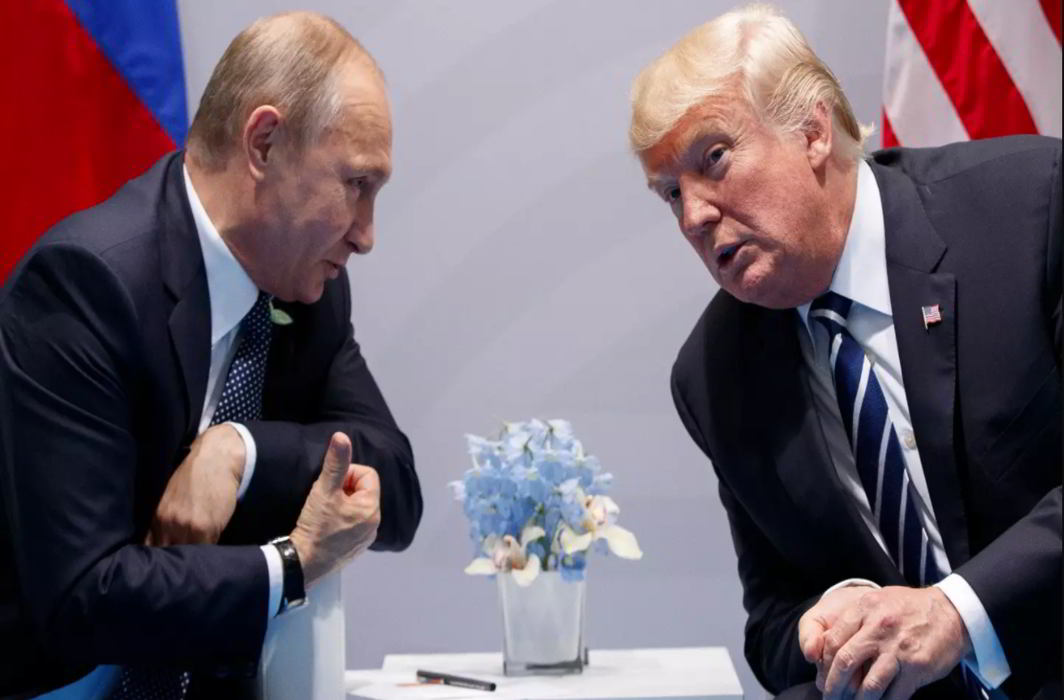
Vladimir Putin and Donald Trump

US President Donald Trump has waived many Russia-related sanctions, restrictions and duties, offering relief to India and China amid the threat of additional tariffs over their purchases of Russian oil and gas.

The waiver came one day before the measures were due to take effect under a bill signed into law by Trump last month. The legislation sought to increase pressure on Russia by enabling additional tariffs on countries buying its oil and gas.

Trump issued an executive order waiving many Russia-related measures, easing the immediate threat of additional tariffs for major buyers of Russian oil and gas, including India and China.

What Trump’s waiver means for India and China

India and China have been among the largest buyers of Russian energy, putting them at risk under the new US legislation.

The law authorised the US president to impose tariffs of up to 100% on goods from major importers of Russian oil and gas. Such penalties were intended to pressure countries to reduce their purchases of Russian energy and limit Moscow’s revenue during the Ukraine war.

The waiver eases the immediate threat posed by those provisions. However, it should not be interpreted as a permanent removal of every possible Russia-related sanction or tariff. The scope of the decision is defined by the measures covered under the executive order.

What is the Lindsey Graham Act?

The Lindsey O. Graham Sanctioning Russia and Iran Act of 2026 was enacted to expand Washington’s ability to penalise Russia and countries supporting its energy trade.

The legislation allows the US president to impose tariffs of up to 100% on goods imported from countries covered by its provisions on Russian oil and gas purchases.  It also provides for sanctions targeting Russian officials, financial institutions and energy interests, alongside measures against entities involved in helping Russia evade existing restrictions.

The legislation is named after the late US Senator Lindsey Graham, who was a prominent advocate of stronger economic pressure on Russia over its invasion of Ukraine.

Importantly, the law gave Trump discretion over the use of its tariff provisions rather than automatically imposing the maximum tariff on every country buying Russian energy. It also included a mechanism allowing the president to waive measures when he certifies that doing so serves US national interests.

Why the decision matters amid the Ukraine war

The US legislation was intended to increase pressure on Russia by targeting both its energy revenues and countries that continued to purchase its oil and gas.

For India, the potential tariffs had added another point of friction in its trade relationship with Washington. New Delhi has maintained that its energy purchasing decisions are guided by national interests and energy security.

China, another major importer of Russian energy, had also faced the prospect of additional trade penalties under the law.

Trump’s decision to waive several measures reduces the immediate tariff threat for affected countries. However, the move does not itself resolve the wider dispute over Russian energy purchases or the continuing war in Ukraine. The administration’s future decisions will determine how the relevant provisions are applied.

Continue Reading

Latest world news

Magnitude 7 earthquake strikes Russia’s Kamchatka Peninsula

A magnitude 7 earthquake struck Russia’s Kamchatka Peninsula region on Friday. The initial report placed the earthquake at a depth of 140 kilometres.
Published

on

earthquake-tremors

A magnitude 7 earthquake struck Russia’s Kamchatka Peninsula region on Friday, October 16, according to the European-Mediterranean Seismological Centre (EMSC).

The initial report placed the earthquake at a depth of 140 kilometres (approximately 87 miles). Details about the impact of the earthquake, including any damage or casualties, were not immediately available in the initial report.

Earthquake strikes seismically active Kamchatka region

Russia’s Kamchatka Peninsula is a seismically active region where earthquakes occur because of tectonic activity.

The latest earthquake was reported by the EMSC, which provided the initial magnitude and depth estimates. Further information about the situation on the ground was not available in the initial report.

What is known so far

  • Location: Kamchatka Peninsula region, Russia
  • Magnitude: 7.0
  • Date: Friday, October 16, 2026
  • Reported depth: 140 kilometres
  • Casualties and damage: Not provided in the initial report

Continue Reading

Latest world news

S Jaishankar says India is a natural option for Russia amid Europe tensions

External Affairs Minister S Jaishankar said India remained a natural option for Russia as Moscow increasingly turned towards Asia amid strained relations with Europe. He highlighted the continuity of India-Russia ties and their significance for the balance of power in Asia.

Published

on

External Affairs Minister S Jaishankar has described India as a natural option for Russia as Moscow increasingly looks towards Asia amid deteriorating relations with Europe. He said India’s longstanding relationship with Russia had remained steady despite significant changes in the international strategic landscape.

Jaishankar made the remarks during a conversation with John Micklethwait, editor-in-chief of the Bloomberg New Economy Forum. He discussed how the Russia-Ukraine war had affected Moscow’s relationship with Europe and contributed to Russia’s growing focus on Asia.

Jaishankar highlights Russia’s shift towards Asia

Jaishankar said Russia’s relationship with Europe had become deeply strained following the Ukraine war. He noted that Russia had historically viewed itself as a European country and placed considerable importance on its relations with Europe and the United States.

However, the conflict had pushed Moscow to look increasingly towards Asia,with much of that shift directed towards China.

The minister said it was in India’s interest, as well as the wider world’s interest, for Russia to maintain multiple relationships in Asia rather than having its options concentrated in one direction.

Against this backdrop, he described India as a natural partner for Russia, pointing to the longstanding nature of the relationship between the two countries.

India-Russia ties remain steady despite global changes

Jaishankar said India and Russia had maintained a consistent relationship over several decades. He emphasised that New Delhi continued to engage with Moscow even as the global order and Russia’s strategic calculations evolved.

According to the minister, India was reassuring Russia that the relationship built over nearly eight decades remained steady despite the changes in Moscow’s relations with Europe and the wider West.

He stressed that India was not passing a value judgment on those changes but was continuing its bilateral engagement with Russia.

Jaishankar said the relationship had benefited both countries and contributed to the balance of power and the broader status quo in Asia. 

Why the relationship matters for Asia

Jaishankar’s remarks highlighted India’s position in Russia’s changing regional outlook. As Moscow increasingly turns towards Asia, India continues to maintain its longstanding ties with Russia while navigating a changing international environment.

The minister’s comments underscored the importance he placed on preserving India-Russia ties and ensuring that Russia maintained multiple relationships in Asia. 

His assessment came against the backdrop of strained Russia-Europe relations following the war in Ukraine, which has reshaped Moscow’s engagement with Western countries and increased its focus on Asian partners.

Continue Reading

Trending

© Copyright 2022 APNLIVE.com