English हिन्दी
Connect with us

Top Stories

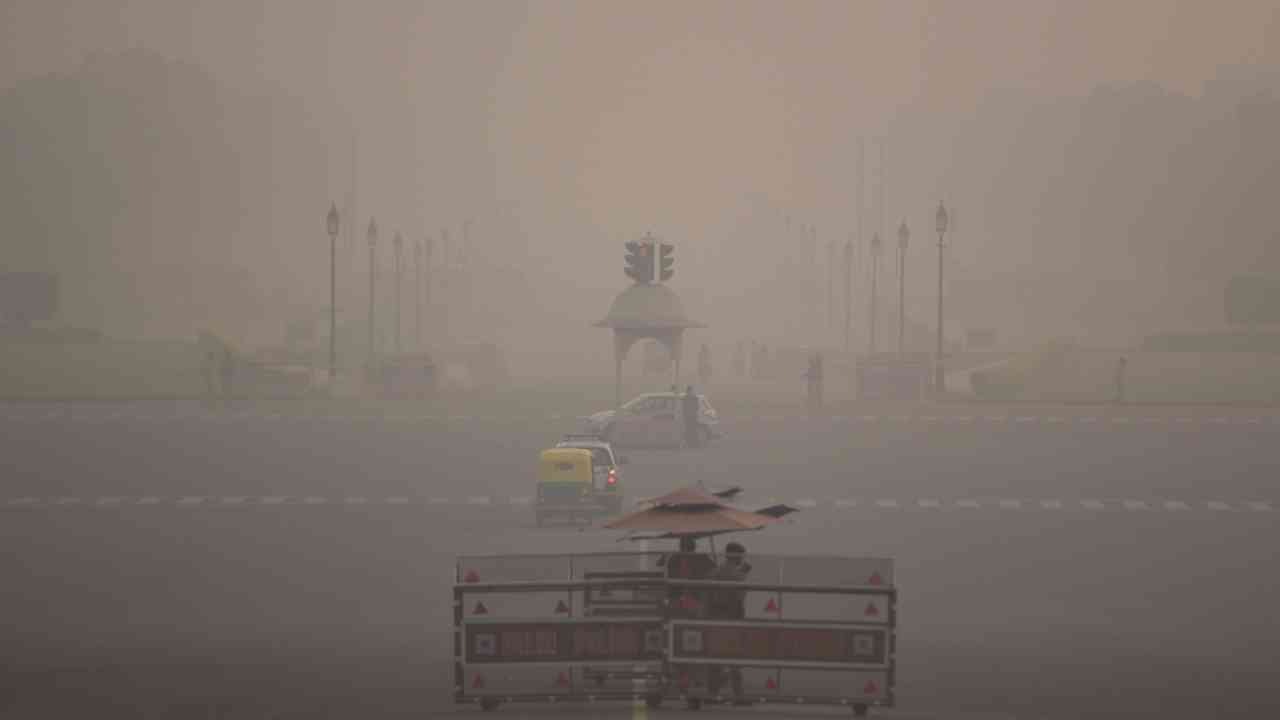
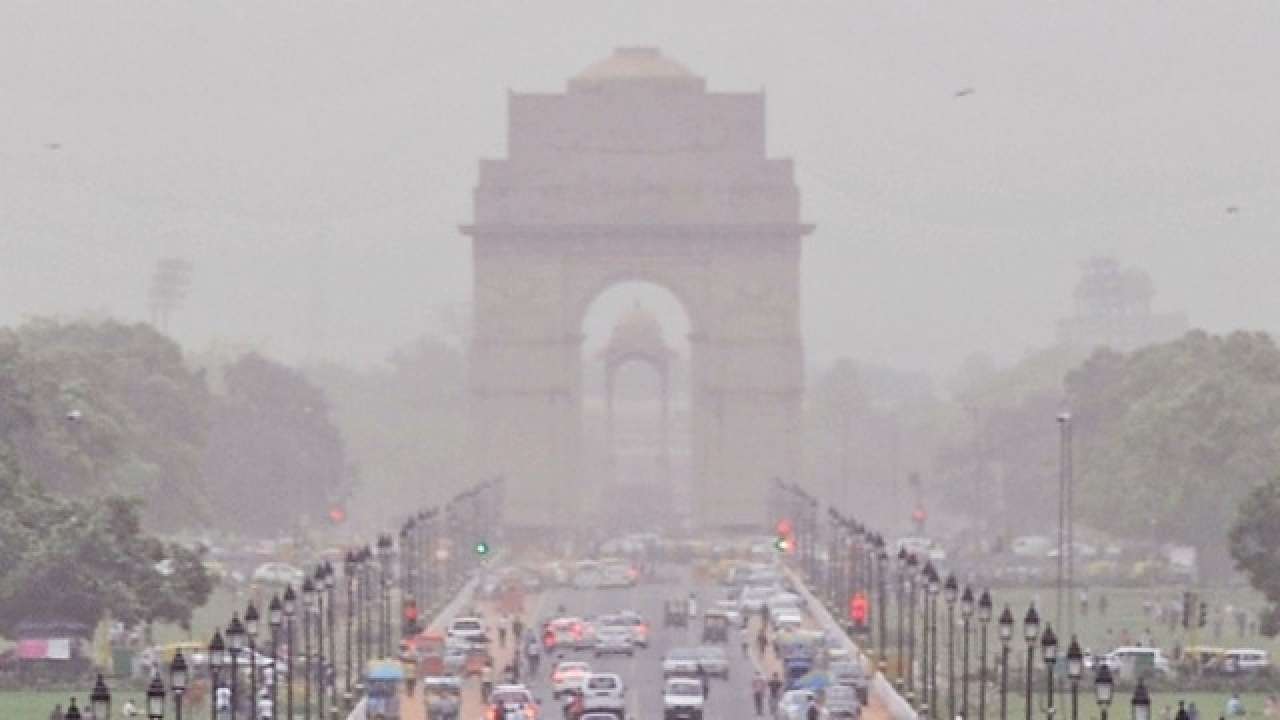
Smog covers Delhi sky ahead of Diwali, experts say situation could get worse in coming days

Published

on

As India is all set for Diwali on Monday, some cities including Delhi already witnessing smoggy skies ahead of the festival. The System of Air Quality and Weather Forecasting and Research (SAFAR) on Saturday reported that the city’s air quality index (AQI) likely to get deteriorated and it will remain in the poor to very poor category.

The SAFAR on Saturday also reported that the city reported 262 AQI in the morning. Some weather experts suggested that after the festival, the city and some parts of the NCR’s air are likely to get worse.

Experts also blamed a combination of events including stubble burning in neighbouring states, the bursting of firecrackers and climatic conditions for the worsening of air quality in Delhi and NCR.

In order to control air pollution, the Delhi government banned the burning of firecrackers. It also asked the people to respect the decision and not burn any crackers which eventually makes the air more pollution directly affects older people and animals.

While slaming the AAP-led Delhi government for banning crackers, Congress MP Manickam Tagore said that crackers are not the only reason for bad air quality in Delhi. He said that the air quality has been in the poor category for a long period of time. He even urged people to enjoy the festival with fireworks.

Meanwhile, the Commission for Air Quality Management (CAQM) earlier said that with the kind of situation and air quality that has been witnessed by Delhi-NCR recently, there is a high chance that the AQI is likely to hit 300 plus in October.

CAQM also released a tweet where it wrote that air quality will move towards Very Poor, the GRAP Sub-Committee decides to invoke Stage II of GRAP in the entire NCR with immediate effect.

Tech

Meta introduces paid premium features globally for Instagram, Facebook, and WhatsApp

Meta has taken its premium “Plus” subscription plans global for Instagram, Facebook, and WhatsApp, introducing user-experience upgrades while laying out an expensive future roadmap for unified AI and creator tiers.

Published

on

In a significant pivot to diversify revenue streams beyond traditional advertising, tech giant Meta has officially initiated the global rollout of monthly paid subscription plans for its flagship social platforms: Instagram, Facebook, and WhatsApp. The expansion builds upon previous localized testing, bringing a suite of premium user features worldwide.

New premium ‘Plus’ tiers launched

According to statements made by Naomi Gleit, Meta’s Head of Product, the consumer subscriptions are branded under a “Plus” suffix for each respective application. Under the new pricing model, Instagram Plus and Facebook Plus are priced at $3.99 per month, while WhatsApp Plus is available for a slightly lower rate of $2.99 per month. Media reports clarify that these tiers operate entirely independently from the existing “Meta Verified” program, which remains a separate service dedicated solely to account verification and identity protection.

The new subscriptions introduce specific, exclusive upgrades designed for personalization and enhanced user data:

  • Instagram Plus: Grants subscribers the ability to view Stories anonymously without appearing on the viewer list, aggregate insights on how many users rewatched a Story, build unlimited custom audience lists, and extend Story availability beyond the standard 24 hours. Additional perks include customizable bio fonts, exclusive profile pins, unique app icons, and animated “Super Heart” reactions.
  • Facebook Plus: Replicates many of the social expression and profile customization features found in the Instagram tier, alongside the stealth viewing and extended duration tools for Facebook Stories.
  • WhatsApp Plus: Focuses primarily on utility and chat customization, enabling subscribers to change application themes, configure premium ringtones, use exclusive sticker packs, and pin up to 20 chats simultaneously.

Future roadmaps and upcoming AI subscriptions

Beyond consumer-focused social add-ons, Meta revealed it is actively piloting advanced monetization frameworks aimed at creators, business clients, and artificial intelligence enthusiasts. Product lead Naomi Gleit indicated that the company plans to eventually consolidate these upcoming tiers under a unified master brand known as “Meta One”.

Media reports highlight that the AI-centric subscription paths will include a “Meta One Plus” tier at $7.99 per month and a high-end “Meta One Premium” tier at $19.99 per month. While functional capabilities remain identical across both options, the Premium plan allocates significantly higher computing resources, allowing power users to process intensive queries requiring deeper inference and complex logic.

For content creators, Meta is structuring a tiered approach consisting of “Meta One Essential” at $14.99 per month—mirroring legacy verification benefits—and “Meta One Advanced” at $49.99 per month. The high-tier Advanced plan will offer prominent feed visibility, elevated search rankings, and automated follow-invitation mechanisms to maximize creator reach.

This systemic move toward multi-tier subscriptions materializes as Meta experiences heightened infrastructure spending, with internal projections expecting capital expenditure to reach between $125 billion and $145 billion this year due to heavy data center and AI research allocations. Following the formal rollout announcement, public market shares for Meta reacted positively, climbing nearly 3%.

Continue Reading

Latest world news

US strikes Iranian drone control and radar sites following drone shootdown

Washington launched targeted military strikes on radar and drone command centers in Iran’s Goruk and Qeshm Island following the downing of an American surveillance drone over international waters.

Published

on

Donald Trump statement

The US military announced it executed targeted “self-defense strikes” against Iranian radar and drone command facilities over the weekend, responding directly to aggressive actions by Tehran.

According to an official statement released on social media platform X by the US Central Command (CENTCOM), the targeted military operations focused on critical infrastructure located in Goruk and Qeshm Island inside Iran.

Response to MQ-1 drone downing

The American military intervention came after Iranian forces shot down a US MQ-1 drone, which Washington maintains was operating over international waters. Media reports indicate that the US deployment of fighter aircraft successfully eliminated Iranian air defenses, a ground control station, and two one-way attack drones involved in the hostile activity. CENTCOM confirmed that no American military personnel sustained injuries during the operation.

The weekend strikes mark another escalation in a series of direct confrontations between the two nations. Just last week, both sides engaged in retaliatory actions after an official from Washington disclosed that the US military hit an active Iranian drone operation operating near the strategic Strait of Hormuz. In retaliation, Tehran targeted an American military airbase.

Broader regional tensions and transit controls

The recent security friction comes amid complex developments in the region. Concurrently, Iranian state media reported that the maritime division of its forces coordinated the passage of 28 commercial vessels, including oil tankers and container ships, through the Strait of Hormuz over a 24-hour window. Iranian authorities claimed that recent instability in the Persian Gulf stems entirely from external military aggression.

The military flare-up also coincides with ongoing and highly fragile diplomatic negotiations over a ceasefire extension and discussions regarding Iran’s nuclear infrastructure, with negotiators trading warnings regarding bilateral trust and strategic rights.

Continue Reading

Latest world news

India a critical anchor to maintain balance of power in regional security, says top US official

Speaking at the Shangri-La Dialogue, top US official Pete Hegseth praised India as a critical anchor holding the line in South Asia, noting its heavy industrial capacity to sustain high-end military operations.

Published

on

In a major statement highlighting the growing strategic alignment between Washington and New Delhi, top US official Pete Hegseth described India as a critical pillar of regional stability. Speaking on the second day of the Shangri-La Dialogue in Singapore, Hegseth noted that New Delhi’s ongoing military modernisation directly serves the shared objective of preserving a balance of power across the Indo-Pacific.

“In South Asia, India is a critical anchor to hold the line,” the top official said while addressing delegates from 44 nations. “A powerful India acting in its own self-interest advances our shared goal of maintaining a balance of power across the region.”

Growing logistics and maritime capabilities

The US administration heavily praised New Delhi’s defence industrial advancements, particularly highlighting its expanding operations in the Indian Ocean region. According to media reports, the official observed that India is modernising its armed forces to carry its share of the security burden in these crucial maritime corridors.

Furthermore, the official emphasized that New Delhi is successfully building out a heavy industrial and logistics capacity capable of sustaining high-end military operations. This expanding domestic infrastructure includes the ability to repair and maintain shared defence platforms, as well as supporting allied naval vessels operating forward in the regional theatre.

Strategic co-production and regional readiness

The partnership between the two nations is translating into tangible operational steps. The official revealed that Washington has firmly committed to pursuing joint production initiatives with New Delhi. Among these initiatives is the co-production of advanced capabilities, including Javelin anti-tank guided munitions, aimed at improving the collective readiness of their forces.

“This kind of industrial muscle isn’t just a long-term goal, it’s an immediate operational imperative,” the official stated, linking New Delhi’s defence manufacturing strength to a broader collective strategy.

Global defense spending and alliance priorities

The address also outlined Washington’s massive domestic military manufacturing mobilisation under President Donald Trump. Following a defence expenditure of USD 1 trillion last year, plans are underway for a historic generational investment of USD 1.5 trillion this year to expand military dominance and weaponry production at scale and speed.

While noting that relations between Washington and Beijing are currently better than they have been in many years, the official maintained that no state can be allowed to impose hegemony or compromise regional security.

Calling upon global partners to match this resolve, the administration indicated it expects allies to hit a defence spending target of 3.5 per cent of their GDP. Moving forward, Washington intends to prioritize and fast-track cooperation with “model allies”—defined as nations that are capable, clear-eyed, and ready to stand up for their national interests.

Continue Reading

Trending

© Copyright 2022 APNLIVE.com