English हिन्दी
Connect with us

Top Stories

76th Independence Day: PM Modi says we need to be self-sufficient in energy sector

On the 76th Independence Day, when addressing the country from the Red Fort’s ramparts, he insisted on energy independence and a country that could fulfil its own energy demands.

Published

on

According to Prime Minister Narendra Modi, India, the third-largest oil-consuming and importing country in the world, has already surpassed its goal of blending 10% ethanol extracted from sugarcane into petrol.

On the 76th Independence Day, when addressing the country from the Red Fort’s ramparts, he insisted on energy independence and a country that could fulfil its own energy demands.

PM Modi also added that everyone should be Aatmanirbhar (self-sufficient) in our energy sector. The key is alternative energy sources, from renewable power to hydrogen and shifting to electric cars from existing petrol and diesel-run vehicles, for a country that is 85 per cent reliant on imports to satisfy its oil needs and 50 per cent dependent on imports to fulfil its gas requirements.

Read Also: Independence Day 2022: Here are 5 powerful PM Modi pledges

We need to advance these programmes for energy independence, from solar energy to Mission Hydrogen to adoption of EVs, he stated.

The government is pushing for the addition of ethanol, produced from sugarcane and other agricultural products, into petrol in an effort to reduce dependency on imported oil.

According to PM Modi, India met its goal of mixing 10% ethanol into petrol earlier than expected.

The goal of delivering petrol blended with 10% ethanol (10% ethanol, 90% gasoline) was accomplished in June, much ahead of the original target date of November 2022. Motivated by the achievement, the government pushed back its goal of 2025 for the introduction of 20% ethanol in petrol.

76th Independence Day: 3 easy tricolour dishes without fire for children

76th Independence Day: Top 5 patriotic films to watch with friends and family

India News

Assam clears Uniform Civil Code bill, becomes third state after Uttarakhand and Gujarat

Assam has officially become the third state in India to pass the Uniform Civil Code bill. The legislation was cleared by the state assembly on Wednesday despite strong objections raised by opposition lawmakers who claimed it impacts minority rights.

Published

on

himanta

The Assam Legislative Assembly on Wednesday passed ‘The Uniform Civil Code, Assam, 2026 Bill’, making it the third state ruled by the Bharatiya Janata Party (BJP) to adopt a uniform legal framework after Uttarakhand and Gujarat.

Opposition flags concerns over rights during house debate

The bill was taken up for final passage in the state assembly on Wednesday, sparking a heated discussion among lawmakers. During the legislative floor debate, opposition MLAs strongly voiced their concerns regarding the proposed law, stating that the legislation will hurt and compromise the fundamental rights of a certain section of society.

Despite objections from the opposition benches, the treasury benches cleared the passage of the bill, cementing Assam’s position as the latest state to move away from diverse personal laws in favor of a uniform code. Media reported that the legislative move follows extensive political discussions in the state surrounding civil regulations. With this enactment, Assam joins Uttarakhand and Gujarat, which have previously passed their respective uniform civil codes.

Continue Reading

India News

Case registered against Mamata Banerjee over controversial 2025 religion remark

A formal police case has been registered against Trinamool Congress supremo Mamata Banerjee in Siliguri, West Bengal. The complaint alleges that her 2025 “Ganda Dharm” remark targeted Hinduism and hurt the religious sentiments of the community.

Published

on

Mamata Banerjee

A formal police complaint has been lodged against Trinamool Congress (TMC) chief Mamata Banerjee in West Bengal’s Siliguri. The legal action stems from an alleged derogatory remark regarding Hinduism made during an Eid congregation in Kolkata in 2025.

The case was registered following a complaint filed by a local lawyer, Rinki Chatterjee, who alleged that the former Chief Minister’s comments deeply hurt the religious sentiments of Hindus globally.

Legal charges and complaint details

The police have invoked multiple sections under the Bharatiya Nyaya Sanhita (BNS) against Banerjee, including Section 351(1) for criminal intimidation, Section 352 for intentional insult with intent to provoke breach of peace, and Section 353 for promoting feelings of enmity, hatred, or ill will between different communities.

According to the complaint, the controversy traces back to an Eid event organized on Kolkata’s iconic Red Road in 2025. While delivering a speech targeting the Bharatiya Janata Party (BJP), Banerjee purportedly referred to the version of Hinduism championed by the political rival as “Ganda Dharm” (filthy religion).

Chatterjee stated in her complaint that labeling Sanatan Dharma in such a manner at a religious gathering was “absolutely unacceptable”. The complainant also pointed to other instances where senior TMC leaders allegedly targeted Hinduism, adding that Banerjee made indirect threats to the Hindu community during the 2026 West Bengal Assembly election campaign to influence voters through intimidation.

Political responses to the FIR

The reported statements had previously drawn sharp criticism from the state BJP leadership last year, including strong objections from current Chief Minister Suvendu Adhikari. However, this FIR represents the first formal legal action taken regarding the speech.

When approached for a response, Atri Sharma, a lawyer and general secretary of the TMC’s Darjeeling unit, declined to comment officially as a party spokesperson. However, he noted that many within the party internal circles found the remarks inappropriate at the time they were spoken. Sharma acknowledged that holding a high public office required restraint and affirmed that every individual holds the moral right to pursue legal remedies.

Continue Reading

India News

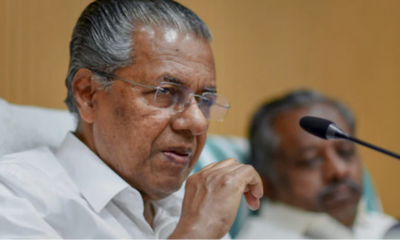
Enforcement Directorate raids former Kerala Chief Minister Pinarayi Vijayan’s residence in money laundering probe

The Enforcement Directorate on Wednesday carried out searches at the Thiruvananthapuram residence of former Kerala Chief Minister Pinarayi Vijayan and 11 other locations in connection with a money-laundering probe registered in 2024.

Published

on

The Enforcement Directorate on Wednesday conducted extensive searches at the Thiruvananthapuram residence of former Kerala Chief Minister Pinarayi Vijayan. The action comes as part of an ongoing money-laundering investigation, with the central probe agency executing simultaneous raids at 12 separate locations across the state under the Prevention of Money Laundering Act (PMLA).

Broad Crackdown in Financial Probe

The central agency’s operations focused significantly on Vijayan’s rented residence in the state capital, alongside eleven other locations, including premises in Kochi, Kozhikode, Kannur, and Bengaluru. This major enforcement action was initiated shortly after the Kerala High Court dismissed a petition on Tuesday, which had been filed by Cochin Minerals And Rutile Ltd (CMRL) seeking to quash the ongoing ED proceedings.

The roots of the financial investigation trace back to a PMLA case registered in 2024. The core allegation involves an estimated illegal payment of ₹1.72 crore made between 2017 and 2019 by a private entity, Cochin Minerals And Rutile Ltd (CMRL), to Exalogic Solutions, an IT firm owned by Vijayan’s daughter, T Veena.

According to investigators, the financial transactions took place despite the IT firm allegedly rendering no services to the private company. Apart from the financial probe agency’s scrutiny, the Serious Fraud Investigation Office (SFIO) is also independently conducting an inquiry into the wider financial transactions of the matter.

Political Developments

The searches also covered locations linked to other political and executive figures associated with the matter, including premises connected to senior CMRL executives. While the ruling party has previously described the investigations as politically motivated, the central agency has intensified its probe following the high court’s refusal to grant interim relief to the private firm. The case has sparked intense political debate, with opposition parties using the findings to allege financial irregularities, while local party leaders maintain that the transactions were part of a legitimate business arrangement.

Continue Reading

Trending

© Copyright 2022 APNLIVE.com