English हिन्दी
Connect with us

Top Stories

Petrol-Diesel Prices on August 4, 2022: Check full list of fuel prices in your city

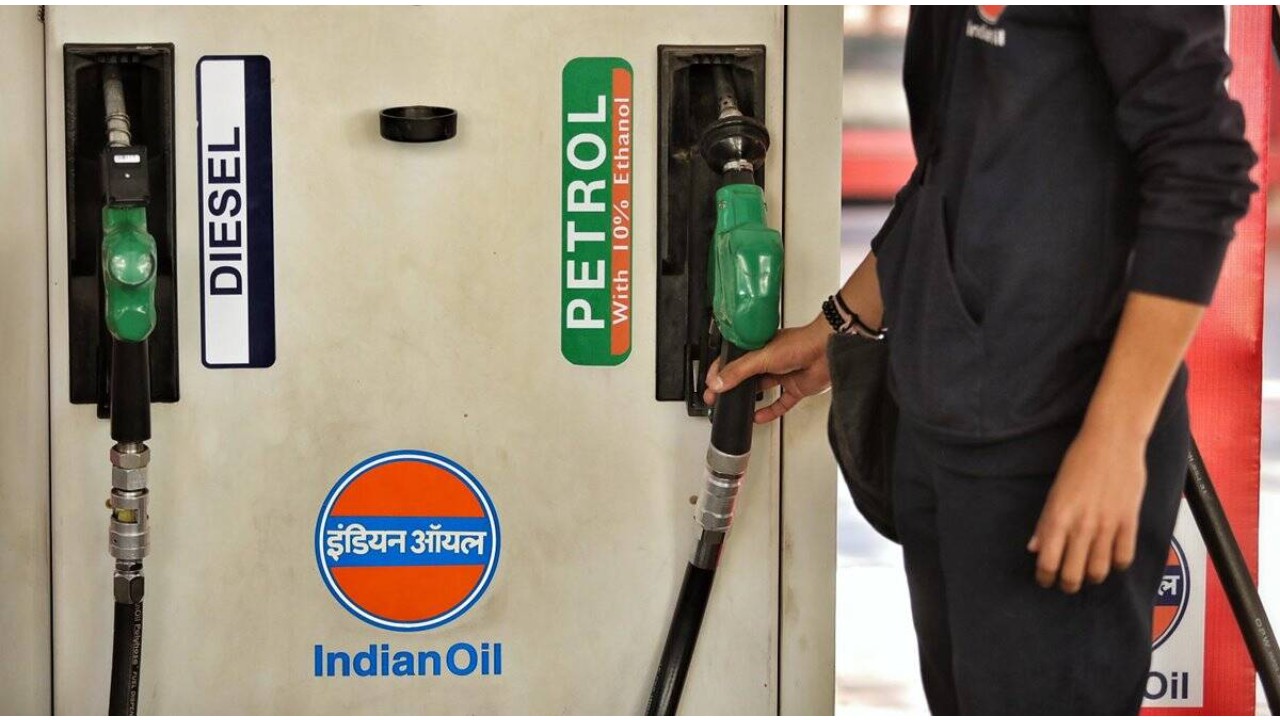
The rising inflation of petrol and diesel has stopped for the last 70 days. Government oil companies have released new rates for petrol and diesel today, August 4, 2022. Check the full list of petrol-diesel prices in different cities.

Published

on

The rising inflation of petrol and diesel has stopped for the last 70 days. Government oil companies have released new rates for petrol and diesel today, August 4, 2022.

The last time, when the government at the Center reduced the excise duty on petrol and diesel was on May 21, 2022. After this, petrol became cheaper by Rs 9.50 and diesel by Rs 7 per litre across the country.

However, after this many state governments also reduced VAT on petrol and diesel, after which the price of petrol and diesel have been reduced in these states.

Read Also: Delhi: Encounter breaks out between Police and criminals in Shahdara, one injured

Petrol-Diesel Price List of Different Cities

Petrol price in Mumbai is Rs 111.35 and Diesel is Rs 97.28 per litre

Petrol price in Delhi is Rs 96.72 and Diesel Price is Rs 89.62 per litre

Petrol price in Chennai is Rs 102.63 and Diesel is Rs 94.24 per litre

Petrol price in Kolkata is Rs 106.03 and Diesel is Rs 92.76 per litre

Petrol price in Noida is Rs 96.57 and Diesel is Rs 89.96 per litre

Petrol price in Lucknow is Rs 96.57 and Diesel is Rs 89.76 per litre

Petrol price in Jaipur is Rs 108.48 and Diesel Rs 93.72 per litre

Petrol price in Thiruvananthapuram is Rs 107.71 and Diesel is Rs 96.52 per litre

Petrol price in Patna is Rs 107.24 and Diesel is Rs 94.04 per litre

Petrol price in Gurugram is Rs 97.18 and Diesel is Rs 90.05 per litre

Petrol price in Bengaluru is Rs 101.94 and Diesel is Rs 87.89 per litre

Petrol price in Bhubaneswar is Rs 103.19 and Diesel is Rs 94.76 per litre

Petrol price in Chandigarh is Rs 96.20 and Diesel is Rs 84.26 per litre

Petrol price in Hyderabad is Rs 109.66 and Diesel is Rs 97.82 per litre

Koi Mil Gaya fame Mithilesh Chaturvedi dies of heart attack in Lucknow

India records more than 19,892 new Covid cases in last 24 hours, experts say country likely to see fourth wave soon

India News

15 Maoists killed in Jharkhand encounter, top leader with Rs 1 crore bounty among dead

Fifteen Maoists, including a top leader carrying a Rs 1 crore bounty, were killed in a gunfight with security forces in Jharkhand’s Saranda forest during an ongoing anti-Maoist operation.

Published

on

Fifteen Maoists, including a senior leader carrying a reward of Rs 1 crore, were killed in an encounter with security forces in Jharkhand’s West Singhbhum district on Thursday, according to police officials.

The exchange of fire took place in the Kumdi area of the Saranda forest under the Kiriburu police station limits, where a large-scale anti-Maoist operation has been underway for several days. Around 1,500 personnel of the Central Reserve Police Force’s CoBRA unit are involved in the operation.

Police said the bodies of 15 Maoists have been recovered so far, including that of Patiram Majhi, also known as Anal Da, who was considered one of the most wanted Maoist leaders in the region. A substantial quantity of arms and ammunition was also seized from the encounter site.

The gunfight began around 6 am on Thursday and was still continuing at the time of the latest official update. While the broader operation in Saranda forest started earlier this week, officials said the exchange of fire broke out after security forces acted on specific intelligence inputs.

Inspector General of Police (Operations) Michael Raj S said the operation was launched following a tip-off regarding the presence of Anal Da along with his armed squad in the forest area. A resident of Pirtand in Giridih district, Anal Da had been active in Maoist activities since 1987 and had been evading arrest for decades.

The CRPF Director General visited Chaibasa, the district headquarters of West Singhbhum, earlier this week to review the security situation amid intensified operations in the region.

Officials said Kolhan and Saranda remain among the last Maoist strongholds in Jharkhand, with security forces having significantly reduced insurgent activity in areas such as Buda Pahad, Chatra, Latehar, Gumla, Lohardaga, Ranchi and Parasnath.

Reacting to the development, the leader of the opposition in the Jharkhand Assembly described the encounter as a major success against Maoist violence and praised the personnel involved in the operation. He reiterated the Centre’s stated resolve to eliminate Maoism from the country by March 2026.

Union Home Minister Amit Shah has repeatedly stated that the government aims to eradicate Maoist violence nationwide by March 31, 2026.

According to official data, more than 11,000 Maoists have been arrested in Jharkhand between 2001 and 2025, while around 250 have been killed and over 350 have surrendered. During this period, security forces have also recovered a large cache of weapons and ammunition.

Continue Reading

Cricket news

Bangladesh refuses to play T20 World Cup in India after ICC rejects venue shift request

Bangladesh have declined to play the ICC T20 World Cup in India after their request for shifting matches was rejected by the ICC, citing political tensions.

Published

on

Bangladesh

Bangladesh have decided not to travel to India for the upcoming ICC T20 World Cup, scheduled to begin on February 7, after their request to shift matches out of the country was rejected by the International Cricket Council (ICC).

The decision was announced on Thursday following a meeting involving Bangladesh national team players and Youth and Sports Adviser Asif Nazrul. The Bangladesh Cricket Board (BCB) had been given a 24-hour deadline by the ICC on Wednesday to confirm its participation in the tournament.

The board clarified that it is keen to take part in the global event but expressed its inability to do so in India amid prevailing political tensions between the two countries. The BCB said it would continue discussions with the ICC in the hope of finding an alternative solution to the impasse.

However, with the tournament drawing closer, Bangladesh’s withdrawal has placed the ICC in a difficult position. As things stand, Scotland are likely to be brought in as a replacement team if Bangladesh’s stance remains unchanged.

The ICC has not yet issued an official statement on Bangladesh’s decision, but preparations for the tournament are continuing as per the original schedule.

Continue Reading

India News

BJP calls Congress anti-Hindu after Rahul Gandhi questions G-RAM-G scheme

The BJP has accused the Congress of being anti-Hindu after Rahul Gandhi said he was unfamiliar with the new G-RAM-G employment guarantee scheme that replaces MNREGA.

Published

on

Rahul-Gandhi

The Bharatiya Janata Party on Wednesday accused the Congress of being “anti-Hindu” after senior leader Rahul Gandhi said he was unfamiliar with the name of the newly introduced G-RAM-G employment guarantee scheme, which has replaced the Mahatma Gandhi National Rural Employment Guarantee Act.

Speaking at a conference held at Delhi’s Jawahar Bhavan, Rahul Gandhi remarked, “I don’t know what G-RAM-G is,” while addressing an event focused on MNREGA, the flagship rural employment programme launched during the Congress-led government. Congress president Mallikarjun Kharge made similar comments at the event.

BJP response and political backlash

The BJP reacted sharply, alleging that Rahul Gandhi’s remarks reflected hostility towards Lord Ram. Party leaders claimed the comments had “exposed the Congress’ anti-Hindu mindset,” a charge that intensified the political confrontation over the new legislation.

Several opposition leaders have argued that one of the core concerns with the G-RAM-G scheme is the replacement of Mahatma Gandhi’s name with that of a religious figure, a move they say politicises a welfare programme that was previously secular in identity.

Congress alleges attempt to weaken employment guarantee

At the conference, Rahul Gandhi said MNREGA had given poor households a legal right to employment, which he claimed Prime Minister Narendra Modi was attempting to dismantle. He also referred to the now-repealed farm laws of 2020, saying sustained public pressure had earlier forced the government to withdraw them.

“If we stand together, the government will be forced to back down and MNREGA will be restarted,” Gandhi said, asserting that the employment guarantee programme could be revived through collective resistance.

Mallikarjun Kharge accused the BJP of trying to erase Mahatma Gandhi’s legacy from public memory and said the Congress would raise the issue again during the upcoming Budget session of Parliament.

States move to support MNREGA

As the political debate continues, at least two opposition-ruled states have taken steps to support MNREGA. Karnataka and Tamil Nadu have both indicated plans to pass Assembly resolutions backing the older scheme.

In Karnataka, proceedings were disrupted after Governor Thawar Chand Gehlot declined to read out portions of a government-prepared speech that criticised the G-RAM-G framework. In Tamil Nadu, Chief Minister MK Stalin said his government would also move a resolution in support of MNREGA.

What the G-RAM-G scheme changes

The new G-RAM-G law introduces several structural changes compared to MNREGA. The guaranteed number of workdays has been increased to 125 from 100, but employment is limited to areas officially notified as rural by the central government.

Under the revised funding structure, states are now required to bear 40 per cent of the scheme’s costs, while the Centre will contribute the remaining amount. Hill states and northeastern states will pay only 10 per cent, and Union Territories will continue to receive full central funding.

The Centre will also adopt a “normative” allocation model, deciding annual fund limits for states based on defined parameters, rather than demand. This gives the Centre greater control over fund releases and the authority to suspend allocations in cases of serious irregularities.

While the government has said the changes will encourage states to take financial ownership without imposing excessive burdens, the opposition has described the scheme as “anti-poor,” warning that it could reduce employment opportunities by straining state finances.

Continue Reading

Trending

© Copyright 2022 APNLIVE.com