English हिन्दी
Connect with us

Top Stories

PM Narendra Modi says New India wants more: craves new paths, new ideas

Published

on

Prime Minister Narendra Modi on Sunday said New India was setting new goals and craving new paths for itself along with new enthusiasm and new ideas in his speech at the inauguration of the new Parliament building.

PM Modi hoped the new building would witness the rise of a self-reliant India. He said the inauguration of the new Parliament building was a historic occasion and such moments have historic significance in a country’s development.

Acknowledging the ongoing celebration of “Azadi ka Amrit Kaal”, the PM thanked the people of India for gifting its democracy a new Parliament, as a symbol of their commitment to democratic values.

The installation of the Sengol in Parliament was a notable highlight, he said. PM Modi said he drew inspiration from the Chola dynasty, where the Sengol is the symbol of justice and good governance. He was grateful for the opportunity to restore the pride associated with the Sengol serving as an inspirational symbol.

Underlining the importance of Parliament in Indian democracy, PM Modi said the Constitution was the compass and the Parliament was its representation.

The Prime Minister said the country began a new adventure after freeing itself from the shackles of slavery. That adventure has had numerous ups and downs and many obstacles stood vanquished and entered the Golden Age of Freedom, the run-up to 100 years of Independence.

The new Parliament building is a perfect illustration of how the old and modern can coexist, PM Modi said while lauding the 60,000 people who built it and in whose honour a digital gallery has been created.

Apart from the Prime Minister, Lok Sabha Speaker Om Birla and Rajya Sabha Deputy Chairperson Harivansh Singh also shared their views during the event emphasizing on the significance of the occasion and their vision for a united and progressive India.

Birla said he had faith that the fresh mood brought about by the new Parliament will inspire fresh thinking. He said the basic tenets of the parliamentary system must be carried through. The historic multiculturalism exemplified by this Parliament can be seen in India, one of the world’s oldest democracies. Indian Parliament is the epicentre of democratic values, he said.

Birla thanked the Prime Minister for helping to create the new Parliament in less than 2.5 years.

In his welcome speech, Rajya Sabha Deputy Chairperson Harivansh Singh noted the new structure offers a significantly larger capacity to accommodate a greater number of members compared to the old Parliament.

He was optimistic that the new Parliament will witness many decisions for India’s golden future.

India News

Congress Dismisses Karnataka Leadership Transition Rumors After Six-Hour Delhi Meet

The Congress party has rejected ongoing rumors regarding a leadership change or a rotating Chief Minister formula in Karnataka, stating that a recent six-hour meeting in Delhi focused strictly on the upcoming Rajya Sabha and MLC elections.

Published

on

The Congress party has strongly downplayed the intense political buzz surrounding a potential leadership transition or a change in the Chief Minister’s post in Karnataka. Following a marathon six-hour meeting with the state’s top leadership in New Delhi, the party explicitly rejected the ongoing speculation, labeling it as having “no reality.”

A brief statement issued to the media after the high-level meeting advised against spreading rumors, clarifying that the discussions were entirely centered on upcoming electoral strategies rather than structural changes within the state government. The party stated that the deliberations solely revolved around the state’s three vacant Rajya Sabha seats and the upcoming Member of Legislative Council (MLC) elections.

Rajya Sabha and MLC Polls Take Center Stage

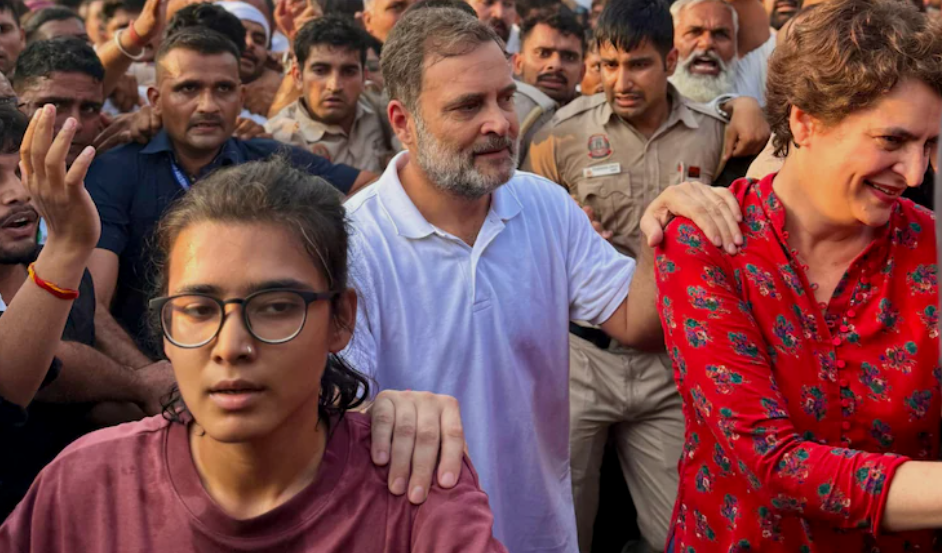
The high-stakes meeting was attended by Congress President Mallikarjun Kharge, senior leader Rahul Gandhi, and party General Secretary KC Venugopal, alongside Karnataka Chief Minister Siddaramaiah and Deputy Chief Minister DK Shivakumar.

Briefing the media post-meeting, KC Venugopal stated that conversations were strictly confined to the Rajya Sabha and MLC elections, emphasizing that there is no truth to any other political speculation. Chief Minister Siddaramaiah also confirmed that the agenda of a potential cabinet expansion or a leadership shift did not come up during the six-hour-long discussion.

Background of the Power Struggle

The question of leadership in Karnataka has remained a recurring theme for over a year. Supporters of Deputy Chief Minister DK Shivakumar have consistently maintained that the central leadership promised a rotating Chief Ministership arrangement when the government was formed after the 2023 assembly elections.

Speculation had intensified recently as the ruling government faced local anti-incumbency pressures alongside renewed political activity from the opposition bench. Some internal reports had even indicated a push from within certain sections of the high command, including Priyanka Gandhi Vadra, for a leadership revamp.

Balancing Caste Equations and Party Structure

The central leadership has navigated the situation cautiously to maintain political stability. Chief Minister Siddaramaiah, 80, commands a powerful “Ahinda” support base—a coalition comprising minority communities, backward classes, and Dalits. This social alliance was crucial in helping the party navigate the traditional Vokkaliga and Lingayat caste dynamics during the 2023 elections.

Although the rotation issue had previously gained significant momentum when the government completed two years in office, the party high command had chosen to maintain the status quo to avoid any adverse electoral impact in neighboring assembly elections, such as in Tamil Nadu. With those elections concluded, supporters of the 64-year-old Deputy Chief Minister had expressed optimism for a transition. Shivakumar currently holds the dual responsibility of being the Deputy Chief Minister as well as the state Congress chief, signaling his critical organizational value to the party. However, for the time being, the party high command has firmly signaled that the current leadership structure will remain unchanged.

Continue Reading

India News

External Affairs Minister S Jaishankar and US Secretary of State Marco Rubio review global strategic partnership amid regional conflicts

n a high-stakes meeting in New Delhi, External Affairs Minister S Jaishankar defined India’s multi-alignment stance on West Asia, while US Secretary of State Marco Rubio declared the two nations as global strategic allies.

Published

on

S Jayshankar Marco Rubio meet

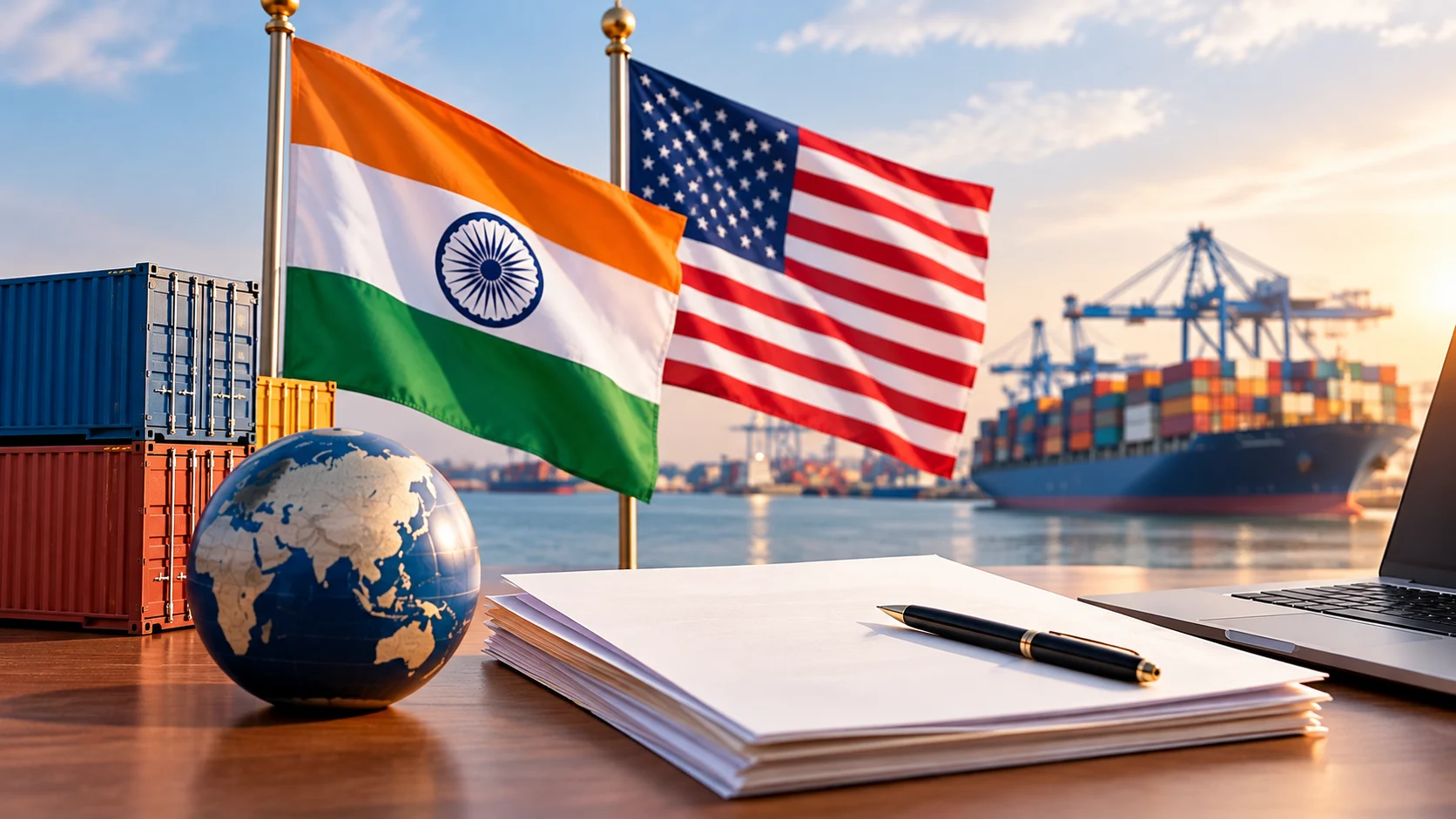
External Affairs Minister S Jaishankar and visiting US Secretary of State Marco Rubio held comprehensive delegation-level talks in New Delhi, emphasizing that the relationship between the two nations remains strong, strategic, and far-reaching. Addressing a joint press conference at Hyderabad House, both leaders rejected suggestions that the bilateral partnership has lost momentum, outlining instead a shared vision for global cooperation.

India outlines ‘multi-alignment’ stance on West Asia conflict

During the high-level discussions, the ongoing conflict in West Asia emerged as a key focal point. Addressing the media, External Affairs Minister S Jaishankar stated that India continues to maintain robust and stable relationships with all key stakeholders in the region, including the United States, Israel, Iran, and Gulf nations.

Jaishankar stressed that India approaches regional conflicts through a distinct policy of “multi-alignment”. He explicitly outlined India’s core operational priorities in West Asia:

  • Ensuring regional peace and stability
  • Safeguarding the welfare of the vast Indian diaspora living and working in the region
  • Maintaining lower energy prices to shield the domestic economy
  • Securing safe and uninterrupted maritime commerce through vital sea lanes

Global strategic allies extending beyond the region

Secretary Rubio strongly backed the depth of the partnership, asserting that the ties between Washington and New Delhi set themselves apart from standard global relationships.

“The US and India aren’t just allies. We are strategic allies and that’s of critical importance,” Rubio stated. “We obviously work with countries all over the world on a variety of issues, but our strategic partnership is what sets this relationship apart because it’s not simply limited to the region, it extends to offer opportunities to cooperate globally in different regions of the world.”

Rubio further revealed that their high-level deliberations, which included a working dinner, covered potential avenues for joint India-US cooperation in the Western Hemisphere and other global theaters.

Clarifications on immigration reforms and visa concerns

The joint press conference also touched upon critical people-to-people and diplomatic friction points. Responding to concerns flagged by media regarding the new US immigration rules—which require certain legal immigrants to leave the US before applying for permanent residency—Rubio reassured the Indian public that the overhaul is a global modernization effort and is not targeted at India.

He acknowledged the profound economic contributions made by Indian professionals and corporations to the American economy. Rubio attributed the policy changes to the broader migration challenges confronting the US, noting that the administration is modernizing the system to regulate how many people enter and when, admitting that the transition period could cause “some bumps”.

When questioned on isolated instances of online racism or prejudice faced by Indians, Rubio took a firm stance alongside Jaishankar. Branding such instances as “dumb” commentary, the top US diplomat remarked, “Every country in the world has stupid people. I’m sure there are stupid people here; there are stupid people in the United States who make dumb comments all the time.” He re-emphasized that the US remains a highly welcoming country whose fabric has been significantly enriched by immigrants from across the world.

Continue Reading

India News

Congress high command steps in to resolve Karnataka leadership impasse with crucial Delhi meeting

The Congress leadership, including Mallikarjun Kharge and Rahul Gandhi, is holding a vital meeting in Delhi with Karnataka Chief Minister Siddaramaiah to find a definitive solution to the state’s prolonged leadership impasse.

Published

on

The top leadership of the Congress party is scheduled to hold a high-level meeting at its headquarters in the national capital today morning to address the long-standing leadership dispute in Karnataka. Senior leaders, including party president Mallikarjun Kharge and MP Rahul Gandhi, will lead the discussions aimed at resolving the continuous friction between Chief Minister Siddaramaiah and Deputy Chief Minister DK Shivakumar.

The ongoing power struggle over the state’s top position has persisted since the party’s electoral victory in 2023. For the current session, only Chief Minister Siddaramaiah has been called to join the discussions in Delhi. When questioned about the agenda by reporters, the Chief Minister stated that he was unaware of the specific subjects to be discussed, noting that political speculation is inevitable.

Background of the internal division

The internal friction intensified significantly in November 2025 when the state government completed its two-and-a-half-year mark in office. Supporters of the Deputy Chief Minister pointed to a purported unacknowledged internal arrangement suggesting a rotational chief ministership split equally across the five-year term. Despite multiple prior interventions by central party leadership to manage the internal friction, a permanent resolution has remained elusive.

While Deputy Chief Minister DK Shivakumar has not been invited to this morning’s initial session, indications suggest that separate individual discussions and a potential joint meeting involving both leaders are planned as part of the broader resolution process. Observers note that several state ministers and legislators have also traveled to the national capital as the party leadership aims to settle the administrative roadmap and finalise leadership plans before the next assembly elections.

Continue Reading

Trending

© Copyright 2022 APNLIVE.com