English हिन्दी
Connect with us

Top Stories

Gujarat High Court suspends life sentence of former BJP MP’s nephew Shiva Solanki in 2010 RTI Activist’s murder

On July 20, 2010, Amit Jethwa was shot dead outside the Gujarat High Court after he tried to reveal illegal mining activities that allegedly involved Dinu Solanki.

Published

on

RTI Activist's murder

The Gujarat High Court on Monday suspended the life sentence of Pratapbhai alias Shiva Solanki, nephew of former BJP MP Dinu Solanki. He was convicted of murdering RTI activist Amit Jethwa outside the Gujarat High Court premises in 2010 in conspiracy with six others including Dinu.

The two-judge bench of Justices S H Vora and Mauna Bhatt released Solanki on bail with the conditions that he continues to stay in Gujarat while his appeal is being heard, surrender his passport, mark his monthly presence at the police station, and appear in court for the hearing.

As per the prima facie, the court stated in its judgement that Shiva Solanki’s conviction by the CBI court is erroneous because there is a violation of all principles settled by the Supreme Court with regard to the circumstantial evidence and requirement for conviction.

Read Also: Jamia Nagar violence case: Delhi Police move HC challenging discharging of Sharjeel Imam, 10 others

In 2019, the CBI court in July 2019 sentenced seven people to life imprisonment and charged them under Sections 302 (murder), 201 (causing disappearance of evidence of offence) and 120B (criminal conspiracy to commit an offence) of the Indian Penal Code (IPC). The court also ordered them to pay a fine of Rs 15 lakh in a case of murder and criminal conspiracy.

On July 20, 2010, Amit Jethwa was shot dead outside the Gujarat High Court after he tried to reveal illegal mining activities that allegedly involved Dinu Solanki. The Criminal Investigation Department (CID) took over the investigation after an FIR was filed against two unidentified assailants and issued a chargesheet.
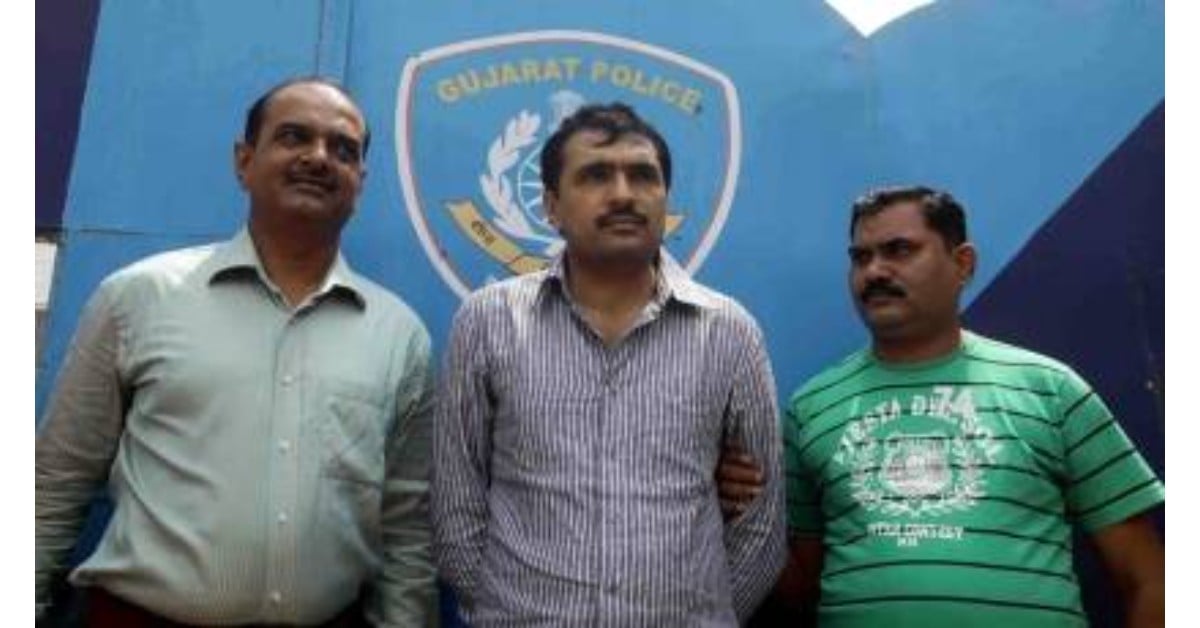
Seven defendants were found guilty and sentenced to life imprisonment on June 7, 2019, by a judge after the High Court handed over the investigation to the Central Bureau of Probe (CBI) the investigation in September 2012.

Indian origin man from Italy arrested for posing as vice-president of India

Video of elderly saree clad women diving into Tamil Nadu river leaves Twitter users amazed | Watch

Latest world news

Khamenei warns US against deceitful actions as Trump announces 25% tariff threat

Ayatollah Ali Khamenei has warned the United States against “deceitful actions” after Donald Trump announced a 25% tariff threat, as protests continue to challenge Iran’s leadership.

Published

on

khamenei

Iran’s Supreme Leader Ayatollah Ali Khamenei has warned the United States to stop what he described as “deceitful actions” and reliance on “traitorous hirelings,” responding to escalating pressure from US President Donald Trump, including a proposed 25 per cent tariff on countries trading with Iran.

In a post on X, Khamenei said the Iranian nation had demonstrated its resolve in the face of external pressure and issued a warning to American politicians. He asserted that Iran remained strong, aware of its adversaries, and firmly present on the political stage.

Protests pose major challenge to Iran’s leadership

Khamenei’s remarks come amid more than two weeks of nationwide demonstrations that began over economic grievances and have since grown into one of the most serious challenges to Iran’s theocratic system since the 1979 Islamic revolution.

Rights groups have claimed that at least 646 people have been killed during the protests, which have spread across several cities. The unrest has intensified international scrutiny of Tehran’s response and further strained relations with Washington.

Trump signals economic and military options

President Trump has repeatedly warned Iran over its handling of the protests, stating that the United States was prepared to act if demonstrators were killed. He has said possible US responses range from low-risk to high-risk options, depending on the ultimate objective.

While Trump has previously criticised “regime change” as a foreign policy goal, citing past US involvement in Iraq, he has continued to apply economic pressure on Tehran. On Monday, he announced a 25 per cent tariff on countries that trade with Iran, marking a significant escalation in sanctions-linked measures.

Trump has also spoken about efforts to restore internet access in Iran after authorities imposed shutdowns during the protests.

Limited communication revealed

Despite the sharp public rhetoric, both governments have acknowledged that some level of communication has taken place. These contacts were reportedly coordinated through Trump’s envoy Steve Witkoff.

Iran and the United States have remained adversaries since the 1979 revolution that overthrew the pro-Western shah. Any major shift in Iran’s political system would have far-reaching consequences for the Middle East, making the current standoff closely watched across the region.

Continue Reading

India News

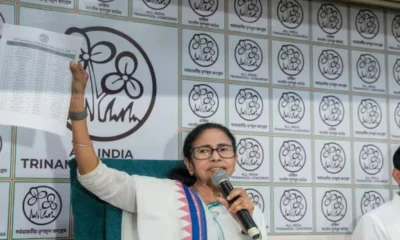
AI errors in voter list digitisation causing hardship during SIR, Mamata writes to EC chief

Mamata Banerjee has written to the chief election commissioner alleging that AI-driven digitisation errors in electoral rolls are causing hardship, harassment and distress to genuine voters during the SIR process in West Bengal.

Published

on

mamta banerjee

West Bengal Chief Minister Mamata Banerjee has once again written to Chief Election Commissioner Gyanesh Kumar, alleging that errors arising from AI-driven digitisation of the 2002 electoral rolls are causing widespread hardship to genuine voters during the ongoing Special Intensive Revision (SIR) exercise in the state.

In her fifth letter since the SIR process began, Banerjee claimed that the use of artificial intelligence tools to digitise older voter lists led to serious inaccuracies in electors’ personal details. According to her, these errors have resulted in large-scale data mismatches, with many genuine voters being wrongly flagged as having “logical discrepancies”.

The chief minister accused the Election Commission of disregarding statutory processes that had been followed over the past two decades. She said voters were now being forced to re-establish their identity despite corrections having been made earlier through quasi-judicial hearings.

Calling the approach arbitrary and illogical, Banerjee alleged that it went against the constitutional spirit by effectively disowning the commission’s own past actions and mechanisms. She further claimed that voters submitting documents during the SIR exercise were not being given proper acknowledgements, terming the procedure “fundamentally flawed”.

Raising concerns over the nature of hearings, Banerjee said the SIR process had become largely mechanical and overly dependent on technical data, lacking sensitivity, human judgment and compassion. She argued that such an approach undermines democratic values and the constitutional framework.

Highlighting the human impact of the exercise, the chief minister claimed that the revision process had already seen 77 deaths, four suicide attempts and 17 cases of hospitalisation. She attributed these incidents to fear, intimidation and excessive workload caused by what she described as an unplanned exercise by the Election Commission.

Banerjee also criticised the treatment of several eminent citizens, alleging that they were subjected to harassment during the process. She further expressed concern over the handling of cases involving women voters, particularly those who had changed their surnames after marriage or shifted to their matrimonial homes.

According to her, women electors were being questioned and summoned to prove their identity, reflecting a lack of social sensitivity and amounting to an insult to women and genuine voters. She questioned whether a constitutional authority should treat half of the electorate in such a manner.

Urging immediate corrective steps, Banerjee called on the Election Commission to address the issues arising from the SIR exercise to end what she described as harassment and agony for both citizens and officials, and to safeguard democratic rights.

Continue Reading

India News

Communist Party of China delegation visits BJP headquarters in Delhi

A delegation from the Communist Party of China, led by Vice Minister Sun Haiyan, visited the BJP headquarters in Delhi and held discussions on inter-party communication.

Published

on

China delegation visits BJP office

A delegation from the Communist Party of China (CPC), led by Sun Haiyan, Vice Minister of the International Department of the CPC Central Committee (IDCPC), visited the Bharatiya Janata Party (BJP) headquarters in Delhi on Monday.

During the visit, the Chinese delegation held discussions with a BJP team headed by party general secretary Arun Singh. The talks focused on ways to advance inter-party communication and engagement between the BJP and the CPC.

Sharing details of the meeting, BJP foreign affairs department in-charge Vijay Chauthaiwale said the interaction involved an in-depth exchange on strengthening party-to-party dialogue. He confirmed the visit in a post on social media, stating that the CPC delegation was received at the BJP head office as part of ongoing inter-party interactions.

The Chinese Ambassador to India, Xu Feihong, was also present during the meeting, accompanying the CPC delegation.

According to Chauthaiwale, the visit was led by Sun Haiyan in her capacity as Vice Minister of the IDCPC, underscoring the importance attached to party-level exchanges between the two sides.

Continue Reading

Trending

© Copyright 2022 APNLIVE.com