English हिन्दी
Connect with us

Trending

Blinkit services hit after delivery partners go on strike in Delhi-NCR, here’s why

The delivery partners are protesting for the past three days against the change in the company’s payout structure


Published

on

Blinkit services hit after delivery partners go on strike in Delhi-NCR, here's why

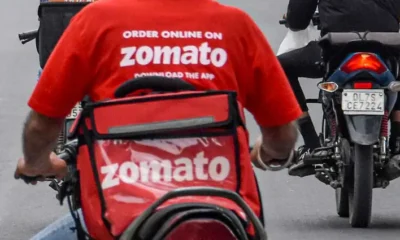
Are you also facing problems in placing orders on Blinkit? This is because the delivery partners of Zomato-owned grocery unit Blinkit are currently on strike which has led to the shut of around 50 of its stores in different parts of Delhi-NCR.

The delivery partners are protesting for the past three days against the change in the company’s payout structure and are demanding the reinstatement of the previous payment system.

According to Blinkit’s revised payment structure, the delivery partners will now receive a minimum of Rs 15 per delivery instead of the earlier payment of Rs 25 per delivery. Around 50 odd workers have stated that the revised payout structure has led to their daily income slash by 40-50 percent.

The workers demand that any change to the pay structure is made after extensive discussion with them and that the current pay structure be promptly revoked.

Read Also: Karnataka elections: Former BJP CM Jagadish Shettar joins Congress

Regular customers are facing a lot of difficulties in placing orders as the Blinkit app is temporarily unavailable in various parts of Delhi-NCR due to the strike. They are not able to place orders on the grocery app for the last few days as a message greeted them saying, Due to excess demand, temporarily unavailable.

Several users raised concerns about the app’s closed services. Replying to one of the users, it tweeted that they are undergoing maintenance. It further said that they understand the hassle this must be causing the customers and their teams are working on fixing this at the earliest, and will be back very soon to serve you again.

However, this is not the first time that the food delivery platform Zomato has made changes to its services. Earlier in January, it decided to shut down its 10-minute food delivery service Zomato Instant, within less than a year after it was launched due to problems in profitability amid tough market conditions.

3-member judicial commission headed by ex-police chief, former judges to probe Atiq Ahmed assassination

Traffic cop dragged on car’s windshield for 18 kms by drugged up driver in Navi Mumbai, video is viral | WATCH

India News

Union Budget 2026: What the middle class gains despite no income tax slab changes

Union Budget 2026 retains income tax slabs but offers indirect relief to the middle class through TCS cuts, simpler tax filing, cheaper medicines and higher job-creating expenditure.

Published

on

Union Budget 2026: what the middle class gains despite no income tax slab changes

Union Budget 2026 may not have delivered direct income tax relief to salaried taxpayers, but the government has introduced several indirect measures aimed at easing financial pressure on middle-class households.

While tax slabs remain unchanged, the Budget outlines steps to simplify compliance, reduce taxes on overseas spending, lower the cost of essential medicines, and support job creation through higher public spending.

Income tax status quo continues

The government has retained the existing income tax framework for individuals. Annual income up to Rs 12 lakh continues to remain tax-free, and with the Rs 75,000 standard deduction, effective tax-free income rises to Rs 12.75 lakh.

No changes have been announced in income tax slabs, signalling policy continuity rather than immediate relief for salaried taxpayers.

Compliance relief and tax rationalisation measures

A key focus of Budget 2026 is reducing compliance burdens and improving the taxpayer experience.

The government has proposed a reduction in Tax Collected at Source (TCS) on overseas tour programme packages to 2%, down from the earlier rates of 5% and 20%. TCS under the Liberalised Remittance Scheme (LRS) for education and medical expenses has also been cut to 2% from 5%, providing relief to families sending money abroad for essential purposes.

To ease return filing pressure, timelines have been staggered. Individual taxpayers filing ITR-1 and ITR-2 can continue to file returns till July 31, while non-audit businesses and trusts will now get time till August 31.

Protection for small investors

The Budget proposes taxing all share buybacks as capital gains instead of dividends, a move aimed at protecting minority retail investors.

In another relief measure, interest awarded by Motor Accident Claims Tribunal (MACT) to individuals will be exempt from income tax, and the applicable TDS will be removed.

A single-window system will also be introduced for submitting Form 15G and Form 15H through depositories for TDS on dividends and interest, simplifying compliance for senior citizens and small savers.

Cheaper medicines and essential products

Healthcare costs may ease slightly as the government has announced duty exemptions on about 17 cancer medicines. Personal imports of medicines for seven rare diseases will also be allowed duty-free.

In addition, customs duty relief has been extended to critical components used in the manufacture of microwave ovens, television equipment, leather goods and footwear, which could help moderate consumer prices.

Job creation through higher spending

The government has raised capital expenditure to over Rs 12 lakh crore, with allocations for railways, tourism, logistics and technology sectors. These investments are expected to support employment generation and long-term economic activity, indirectly benefiting middle-class households.

Continue Reading

Cricket news

India predicted XI for 5th T20I vs New Zealand as Kishan set for return

India are expected to bring back Ishan Kishan and Axar Patel for the 5th T20I vs New Zealand as the hosts aim to end the series on a high.

Published

on

India will look to end their T20I series against New Zealand on a positive note when the two sides meet in the fifth and final match in Thiruvananthapuram on Saturday. Although the hosts have already secured the five-match series by winning the first three games, they suffered a 50-run defeat in the fourth T20I.

New Zealand posted a challenging total of 215 for 7 in the previous match, with Tim Seifert striking an aggressive half-century. Devon Conway and Daryl Mitchell added valuable contributions to push the visitors to a commanding score. In response, Shivam Dube provided resistance with a powerful knock, but India failed to keep up with the required run rate and fell well short.

With this match being India’s final T20I before the upcoming T20 World Cup, the team management is expected to field players who are likely to feature in the global tournament.

Sanju Samson is set for a crucial outing in front of his home crowd. The wicketkeeper-batter has managed just 40 runs across four matches in the series and will be keen to regain form. He is expected to open the batting alongside the in-form Abhishek Sharma.

Ishan Kishan is likely to return to the XI and slot in at No. 3, while captain Suryakumar Yadav is expected to move back to his preferred No. 4 position. Shivam Dube is set to retain his place following his recent performance and is also expected to provide a bowling option if required.

Axar Patel, who missed games earlier due to a finger injury sustained in the opening T20I, is expected to make his comeback. India’s spin attack is likely to feature Varun Chakaravarthy and Kuldeep Yadav as specialist spinners.

In the pace department, Jasprit Bumrah and Arshdeep Singh are expected to lead the attack. All-rounder Hardik Pandya is likely to be rested after featuring in the first four matches of the series.

India predicted XI for 5th T20I vs New Zealand

Abhishek Sharma, Sanju Samson, Ishan Kishan, Suryakumar Yadav (c), Shivam Dube, Rinku Singh, Axar Patel, Varun Chakaravarthy, Kuldeep Yadav, Jasprit Bumrah, Arshdeep Singh

Continue Reading

Entertainment

Why Dhurandhar on Netflix runs shorter than its original theatrical cut

Dhurandhar’s Netflix release sparked confusion over its shorter runtime. The difference is linked to muted dialogue and an updated theatrical cut.

Published

on

Dhurandhar

Dhurandhar has finally made its much-awaited debut on Netflix, just days after the Ranveer Singh-starrer completed a blockbuster theatrical run across India. While the film crossed Rs 1,000 crore domestically and went past Rs 1,300 crore worldwide, its OTT release has triggered confusion and criticism over its shorter runtime.

Several viewers took to social media early Friday, claiming that a “censored” version of Dhurandhar was streaming on Netflix. The runtime displayed on the platform is 3 hours and 25 minutes, nearly nine minutes shorter than the film’s originally reported duration of 3 hours and 34 minutes.

What caused the runtime difference

The confusion stems from changes made after the film’s initial theatrical release. According to the revised censor certificate, Dhurandhar now has an approved runtime of 3 hours 28 minutes and 56 seconds. This updated version replaced the earlier cut in cinemas starting January 1.

The revision followed directions to mute two specific words and one dialogue referring to the Baloch community. These changes were implemented without removing scenes, resulting in a marginally shorter runtime.

What viewers noticed on Netflix

Audiences streaming the film on Netflix observed muted portions during a scene involving Sanjay Dutt’s character, SP Chaudhary Aslam. In the original version, the dialogue included a direct reference to a former Baloch police partner. In the revised cut now available on Netflix, those references are muted, while English subtitles offer a generalised translation without naming the community.

Some viewers also pointed out that the film appears to play slightly faster on the platform, contributing to the perception that content had been trimmed.

Is Netflix streaming a censored cut

Industry insiders have clarified that Netflix is carrying the final theatrical version approved by the authorities. As an OTT distributor, the platform uploads films exactly as provided by the producers. The version streaming online is the same revised cut that has been screening in theatres since January.

Importantly, the film’s intense and graphic depiction of violence remains unchanged in the OTT version.

In short, Dhurandhar on Netflix is not a specially edited or censored cut for streaming. It is the updated theatrical version, adjusted for muted dialogue and presented with a slightly faster frame rate.

Following its OTT release, audiences can now look ahead to the sequel, Dhurandhar: The Revenge, scheduled for release on March 19, 2026.

Continue Reading

Trending

© Copyright 2022 APNLIVE.com