English हिन्दी
Connect with us

Top Stories

Earth Hour 2022: When is lights-off event? Who will participate? Theme and interesting facts about Earth Hour

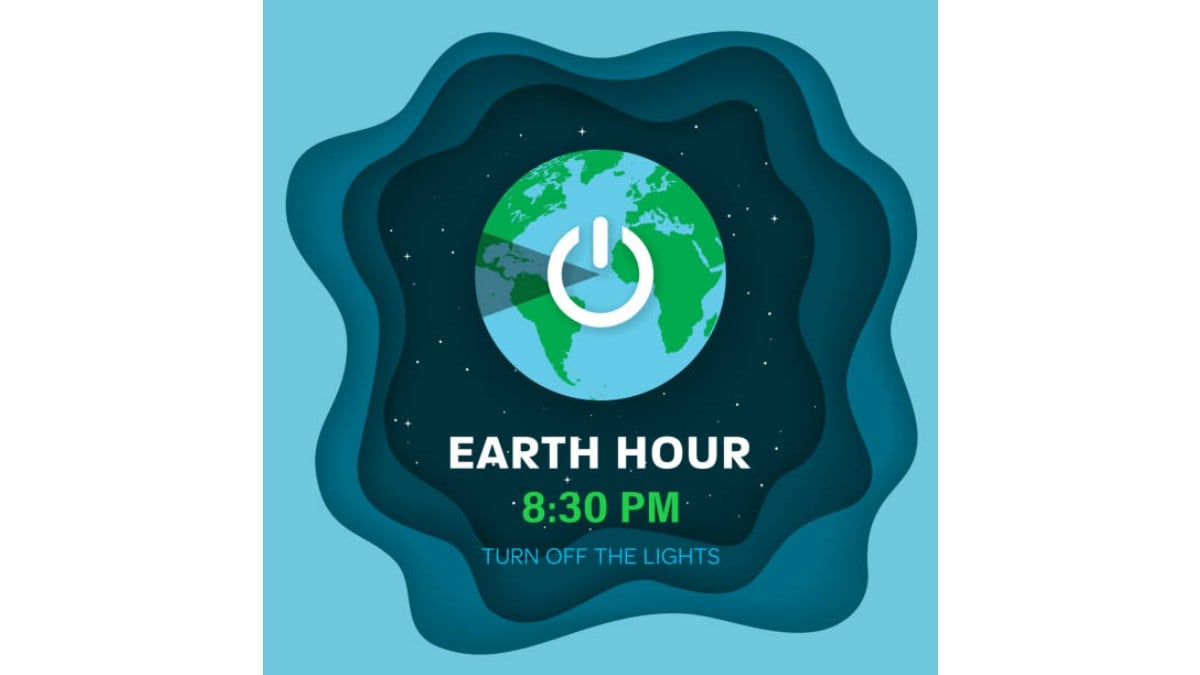
Earth Hour takes place every year on the last Saturday in March and this year it will be held on March 26, 2022, from 8:30 pm to 9:30 pm.

Published

on

Earth Hour 2022: When is lights-off event? Who will participate? Theme and interesting facts about Earth Hour

The World Wide Fund for Nature (WWF) has launched a global movement called Earth Hour. Individuals, communities, and businesses are urged to switch off non-essential electric lights for one hour, from 8:30 pm to 9:30 pm on a certain day at the end of March, as a symbol of care to the planet. It is the world’s largest grassroots movement in the world. In 2007, it started as a lights-off event in Sydney, Australia.

Earth Hour 2022: Date

Earth Hour, which takes place every year on the last Saturday in March, brings together supporters from over 190 nations and territories who are all working to secure a better future for people and the planet. This year Earth Hour will be held on March 26, 2022.

Earth Hour 2022: Theme

Earth Hour is always organized to meet a specific objective.

The theme for Earth Hour 2022 is Shape Our Future. This is a pivotal year for everyone and the entire world. It is up to us to Shape Our Future by raising awareness of the significant challenges that are now affecting our planet.

Who will participate in Earth Hour 2022?

From the Sydney Opera House to the Gateway of India, China’s Beijing Phoenix Center, Germany’s Brandenburg Gate, Italy’s Colosseum, the United States’ Empire State Building, and Brazil’s Christ the Redeemer, a slew of global monuments will participate in the symbolic switch-off, which this year aims to signal a safer, better, and more prosperous environment for all.

Read Also: Centre plans to resume PM Modi’s photos on Covid-19 vaccination certificates

Facts about Earth Hour

Earth Hour was held in a record-breaking 188 countries and territories in 2018, with around 17900 landmarks taking part. During the Earth Hour 2018 campaign, millions of people turned off their lights for an hour, and hashtag EarthHour and hashtag Connect2Earth trended on Twitter in 33 countries.

For the first time in the UK, Earth Hour went totally digital in 2020. During the hour, many people connected online by participating in digital events and live streams, in addition to turning off lights.

For the first time in history, the WWF encouraged an Earth Hour Virtual Spotlight in 2021. The goal was to get as many people as possible to share the Earth Hour film on social media.

In 2014, Spider-Man became the first superhero to become a global ambassador for Earth Hour, bringing the movement much-needed attention and recognition and global impact.

IPL 2022: Jio announces new plans, rewards for cricket streaming

Delhi High Court free pass to goli maaro saalon ko in hate speech case draws Asaduddin Owaisi’s wit

Continue Reading

India News

Chaos mars Lionel Messi’s Kolkata GOAT Tour event as fans protest poor arrangements

Lionel Messi’s brief appearance in Kolkata was overshadowed by chaos as fans alleged mismanagement, prompting an apology and an official enquiry by the state government.

Published

on

Messy event Chaos kolkata

Lionel Messi’s much-anticipated appearance in Kolkata turned chaotic on Saturday after thousands of fans alleged mismanagement at the Yuva Bharati Krirangan, leaving many unable to even see the Argentine football icon despite holding high-priced tickets

Fans express anger over limited access

The Kolkata leg of the G.O.A.T. Tour was billed as a special moment for Indian football fans, with ticket prices ranging between Rs 5,000 and Rs 25,000. However, discontent grew rapidly inside the stadium as several attendees claimed their view of Messi was obstructed by security personnel and invited guests positioned close to him.

As frustration mounted, some fans resorted to throwing chairs and bottles from the stands, forcing organisers to intervene and cut the programme short.

Event cut short amid disorder

Messi reached the venue around 11:15 am and remained there for roughly 20 minutes. He was expected to take a full lap of the stadium, but that plan was abandoned as the situation deteriorated soon after he emerged from the tunnel.

The disorder also meant that prominent personalities, including actor Shah Rukh Khan, former India cricket captain Sourav Ganguly and West Bengal Chief Minister Mamata Banerjee, could not participate in the programme as scheduled.

Organisers whisk Messi away

With fans breaching security and some vandalising canopies set up at the Salt Lake Stadium, the organisers, along with security personnel, escorted Messi out of the venue to prevent further escalation.

Several attendees described the event as poorly organised, with some fans calling it an “absolute disgrace” and blaming mismanagement for spoiling what was meant to be a celebratory occasion.

Mamata Banerjee apologises, orders enquiry

Chief Minister Mamata Banerjee later issued a public apology to Messi and the fans, expressing shock over the mismanagement. She announced the formation of an enquiry committee headed by retired Justice Ashim Kumar Ray, with senior state officials as members.

The committee has been tasked with conducting a detailed probe, fixing responsibility and suggesting steps to ensure such incidents are not repeated in the future.

Continue Reading

India News

Delhi air quality nears severe as smog blankets city, airport issues advisory

Delhi recorded very poor to severe air quality on Saturday, with dense smog affecting visibility and prompting an advisory from the city airport.

Published

on

Delhi pollution

Residents across Delhi and adjoining areas woke up to dense smog on Saturday morning, with air quality levels edging close to the ‘severe’ category in several locations

Data from the Central Pollution Control Board showed the overall Air Quality Index (AQI) at 390 at 8 am, placing it in the ‘very poor’ category. However, multiple monitoring stations in the national capital recorded AQI readings in the ‘severe’ range.

Areas reporting severe air quality included Anand Vihar (435), Ghazipur (435), Jahangirpuri (442), Rohini (436), Chandni Chowk (419), Burari Crossing (415), and RK Puram (404). The high pollution levels were accompanied by a mix of smog and shallow fog, which reduced visibility in several parts of the city during the early hours.

Smog reduces visibility, health risks rise

As per AQI classification, readings between 401 and 500 fall under the ‘severe’ category, indicating serious health risks. Officials note that prolonged exposure at such levels can trigger respiratory problems even among healthy individuals, while those with existing conditions face higher risks.

Dangerous pollution levels have become a recurring concern in Delhi during the winter months. On Friday as well, a thick haze covered the city, with the overall AQI recorded at 386 and visibility remaining poor in several localities.

Delhi airport activates low visibility procedures

Amid the deteriorating air quality, Delhi airport issued an advisory stating that low visibility procedures were in place. In a post on X, the airport confirmed that flight operations were normal at present but advised passengers to stay in touch with their respective airlines for the latest updates.

Despite some marginal improvement over recent weeks, large parts of the capital continue to remain under a blanket of toxic smog. The worsening situation has also intensified political sparring over pollution control measures in the city.

Continue Reading

Latest world news

US lawmakers move resolution to roll back Trump’s 50% tariffs on Indian imports

Three US lawmakers have moved a resolution to end Trump’s emergency declaration that imposed 50% tariffs on Indian goods, calling the move illegal and harmful to trade ties.

Published

on

trump

Three members of the US House of Representatives have introduced a resolution seeking to end former President Donald Trump’s national emergency declaration that led to steep tariffs on imports from India. The lawmakers termed the duties illegal and warned that they have hurt American consumers, workers and long-standing India-US economic ties.

The resolution has been moved by Representatives Deborah Ross, Marc Veasey and Raja Krishnamoorthi. It aims to terminate the emergency powers used to impose import duties that cumulatively raised tariffs on several Indian-origin goods to 50 per cent.

What the resolution seeks to change

According to details shared by media, the proposal specifically seeks to rescind an additional 25 per cent “secondary” tariff imposed on August 27, 2025. This was levied over and above earlier reciprocal tariffs, taking the total duty to 50 per cent under the International Emergency Economic Powers Act.

The House move follows a separate bipartisan effort in the US Senate that targeted similar tariffs imposed on Brazil, signalling growing resistance in Congress to the use of emergency powers for trade actions.

Lawmakers flag impact on US economy and consumers

Congresswoman Deborah Ross highlighted the deep economic links between India and her home state of North Carolina, noting that Indian companies have invested over a billion dollars there, creating thousands of jobs in sectors such as technology and life sciences. She also pointed out that manufacturers from the state export hundreds of millions of dollars’ worth of goods to India each year.

Congressman Marc Veasey said the tariffs amount to a tax on American households already facing high costs, stressing that India remains an important cultural, economic and strategic partner for the United States.

Indian-American Congressman Raja Krishnamoorthi described the duties as counterproductive, saying they disrupt supply chains, harm American workers and push up prices for consumers. He added that rolling back the tariffs would help strengthen economic and security cooperation between the two countries.

Background of the tariff hike

Earlier in August 2025, the Trump administration imposed a 25 per cent tariff on Indian goods, which came into effect from August 1. This was followed days later by another 25 per cent increase, citing India’s continued purchase of Russian oil. The combined duties were justified by the administration as a measure linked to Moscow’s war efforts in Ukraine.

Wider push against unilateral trade actions

The latest resolution is part of a broader push by congressional Democrats to challenge unilateral trade measures and reassert Congress’ constitutional authority over trade policy. In October, the same lawmakers, along with several other members of Congress, had urged the President to reverse the tariff decisions and work towards repairing strained bilateral relations with India.

Continue Reading

Trending

© Copyright 2022 APNLIVE.com