
Latest world news
Afghanistan:18 civilians, 3 policemen killed in terror attacks


Security forces kill 10 Taliban fighters
Despite ceasefire announcements by government and Taliban fighters on the occasion of forthcoming Eid-ul-Fitr festival, Afghanistan has witnessed a spate of deadly attacks on Monday in Kabul, Jalalabad and Ghazni, killing 18 civilians, and three policemen and wounding dozens others. Ten Taliban fighters were also killed in the ensuing fight with security forces.
Tolo News quoted Kabul health officials who have confirmed the killing of at least 12 people and wounding of 31 others in a suicide bombing in Kabul’s Darulaman area, where intelligence headquarter is situated.
The suicide bomber detonated the explosive at about 1pm the gate of the Ministry of Rural Rehabilitation and Development (MRRD). The explosion happened while employees were leaving the ministry’s building for the day.
Read More: Afghan President declare temporary ceasefire against Taliban
Theexplosion was reported from a heavily guarded area of the city, which is also home to numerous high-ranking officials. No group has claimed theresponsibility for the bombing so far.
In Jalalabad, 10 civilians were wounded when armed-men stormed the education department.Three attackers were shot dead by security forces as they tried to enter the building, AttahullahKhogyani, spokesman for Nangarhar provincial governor said on Monday.He said a vehicle filled with explosives was found near the scene of the attack.

In Ghazni province, at least six civilians were killed when a roadside bomb struck a minibus. According to reports 10 Taliban fighters and three policemen were killed in clashes.
Read More: Afghanistan: Taliban announce three-day Eid ceasefire
The fresh attacks took place after an eight day ceasefire was announced by President Ashraf Ghani. Taliban also responded with announcement of three day ceasefire during Eid holidays.
The Taliban have waged a bloody armed rebellion against the present government since they were removed from power in 2001, post 9/11 terror attacks in US.
Last month, eight people were killed and 45 were wounded in a bomb attack on Ramadan night-time cricket tournament.One week before that attack, Daesh (IS) claimed responsibility for a deadly assault on the government finance directorate building.At least eight people were killed and four injured in that attack.
Read More: Afghan govt. offers to recognise Taliban as political group
Daesh has established a stronghold in Nangarhar, of which Jalalabad is capital, where it fights both the Taliban and Afghan government forces.The Taliban have seized control of several districts across the country. Both the groups have carried out attacks in the Afghan capital, Kabul, in recent months, killing hundreds of people.







Latest world news
S Jaishankar says India is a natural option for Russia amid Europe tensions
External Affairs Minister S Jaishankar said India remained a natural option for Russia as Moscow increasingly turned towards Asia amid strained relations with Europe. He highlighted the continuity of India-Russia ties and their significance for the balance of power in Asia.


Latest world news
Putin praises PM Modi, says he has very good ideas on Ukraine war
Russian President Vladimir Putin has praised Prime Minister Narendra Modi for repeatedly raising the need to end the Ukraine war, describing his ideas for a settlement as “very good”.

Latest world news
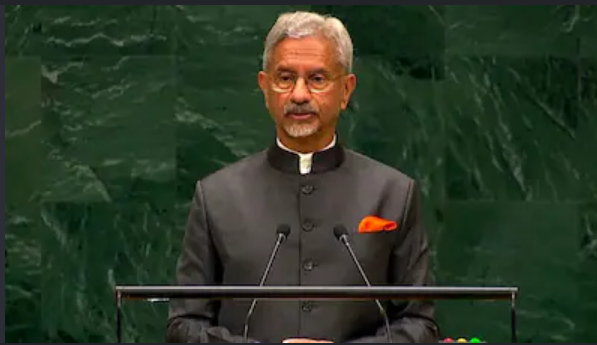
S Jaishankar calls Pakistan a “serial practitioner of terrorism” at UN
S Jaishankar criticised Pakistan at the UN General Assembly, referring to a “serial practitioner of terrorism” and warning against attempts to normalise terrorism.

Supreme Court stays defamation case against Rahul Gandhi over PM Modi remarks

Rahul Gandhi hosts high tea for INDIA bloc after Gyanesh Kumar protests

L Murugan quits Union ministry to strengthen BJP in Tamil Nadu

Amit Shah attacks Rahul Gandhi over Congress poll losses, questions SIR row

BJP focuses on religion as opposition pushes BDM strategy in UP

PM Modi speaks to Mark Carney as India and Canada push to strengthen ties

S Jaishankar says India is a natural option for Russia amid Europe tensions

CJP leaders Saurav Das, Ashutosh Ranka, Ajinkya Shinde sent to 5-day judicial custody
BJP focuses on religion as opposition pushes BDM strategy in UP
L Murugan quits Union ministry to strengthen BJP in Tamil Nadu

Afghan Men Try To Hang With The Jet Engine Of The Aircraft in Kabul- Afghanistan News – Kabul News
Trending Top 10 News: 10000 Crore Fine on Flipkart, Apple to Launch Unique Feature, Hdfc Bank Job Ad

Trending Top 10 News: Nokia 6310, Apple sales, Bachpan ka Pyar Video Kid, Dainik Bhaskar IT Raid

Trending Top 10 News: Canada bans Indian flights, Rain in Delhi NCR, AIMIM Twitter hacked, Raj Kundra case

Trending Top 10 News: Shein India, Apple New Service, Pocket Oxygen, Oppo Launched New Phone
-
 India News23 hours ago
Supreme Court stays defamation case against Rahul Gandhi over PM Modi remarks
-
 India News15 hours ago
Rahul Gandhi hosts high tea for INDIA bloc after Gyanesh Kumar protests
-
 India News14 hours ago
L Murugan quits Union ministry to strengthen BJP in Tamil Nadu
-
 India News14 hours ago
Amit Shah attacks Rahul Gandhi over Congress poll losses, questions SIR row
-
 India News13 hours ago
BJP focuses on religion as opposition pushes BDM strategy in UP
-
 India News2 hours ago
CJP leaders Saurav Das, Ashutosh Ranka, Ajinkya Shinde sent to 5-day judicial custody
-
 Latest world news2 hours ago
S Jaishankar says India is a natural option for Russia amid Europe tensions
-
 India News2 hours ago
PM Modi speaks to Mark Carney as India and Canada push to strengthen ties
