English हिन्दी
Connect with us

India News

India condemns Pakistan airstrikes on Afghanistan, says old practice to blame neighbours for failures

The Taliban in December claimed that 46 people including women and children were killed in the airstrikes carried out by Pakistan.

Published

on

India condemns Pakistan airstrikes on Afghanistan, says old practice to blame neighbours for failures

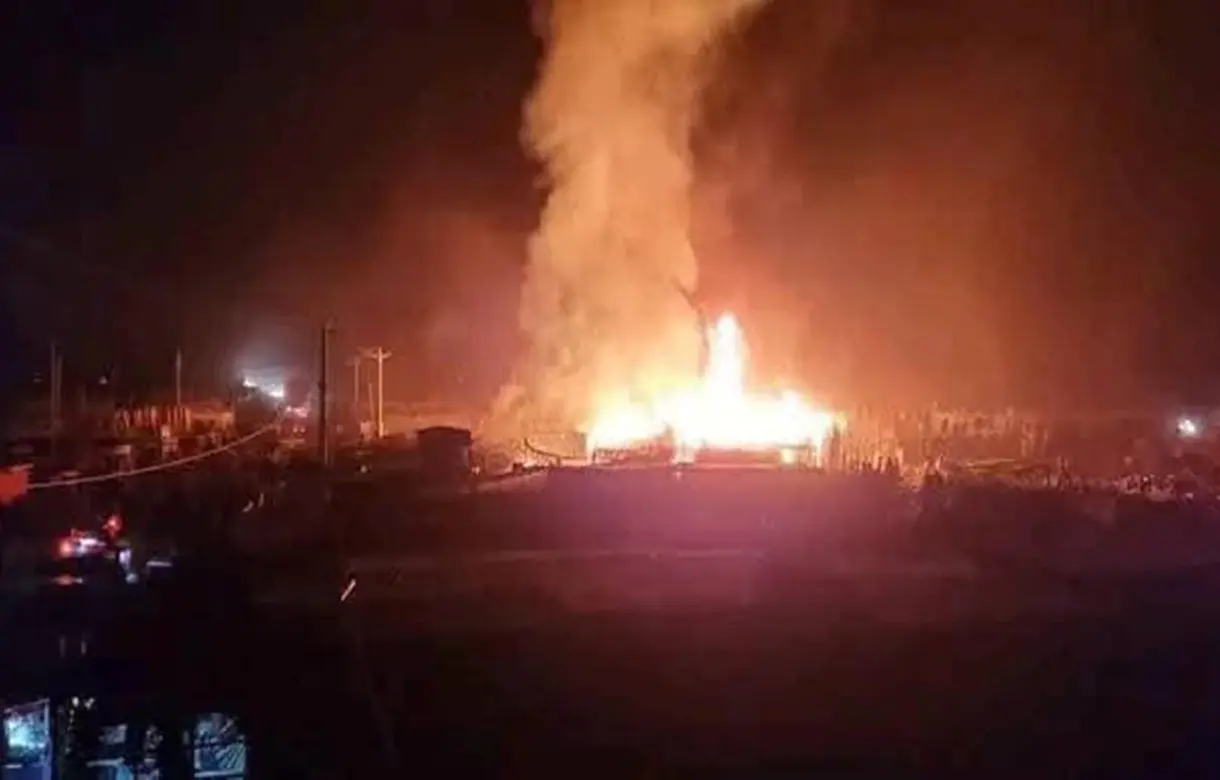
The Ministry of External Affairs on Monday condemned Pakistan’s airstrikes on Afghanistan, describing it an old practice of Islamabad to blame its neighbours for its own internal failures.

The Ministry said that they have noted the media reports on airstrikes on Afghan civilians, including women and children, in which several precious lives have been lost. They also unequivocally condemn any attack on innocent civilians.

In its statement, the External Affairs Ministry said that it is an old practice of Pakistan to blame its neighbours for its own internal failures. It added that they have also noted the response of an Afghan spokesperson in this regard.

The Taliban in December claimed that 46 people including women and children were killed in the airstrikes carried out by Pakistan. The deputy spokesperson for the Afghan government, Hamdullah Fitrat said to the media that those killed in the strikes that targeted four locations in Barmal, a district in the province of Paktika, were refugees, adding that six others were also wounded.

Furthermore, Tehreek-e-Taliban Pakistan spokesperson Mohammad Khurasani claimed in a statement that 50 people, including 27 women and children, died in the strikes. He mentioned that they were unarmed refugees who fled to Afghanistan because of Pakistan’s offensive in the northwest.

The TTP, a separate group but also a close ally of the Afghan Taliban also shared photos, alleging they were of children killed during the Pakistani operation. The strikes followed hours after Mohammad Sadiq, Pakistan’s special representative for Afghanistan, traveled to Kabul to discuss a range of issues.

Meanwhile, Afghanistan’s Foreign Ministry in Kabul summoned the Pakistani envoy and lodged a strong protest over the strikes by Pakistan’s military. Issuing a statement, it said that while a representative of the civilian government of Pakistan was busy in talks with the Afghan officials, the strikes were carried out by Pakistani forces to create mistrust in the relations between the two countries.

The statement added that Kabul will not accept the violation of the country’s territory under any circumstances, and the country is ready to defend its independence and territory and such irresponsible actions will definitely have consequences.

India News

Uttar Pradesh CM directs high vigilance ahead of Bakri Eid, orders strict compliance on sacrifice and prayers

Uttar Pradesh Chief Minister has directed state administrative and police heads to ensure strict vigilance ahead of Bakri Eid. Rules mandate animal sacrifice only at designated spots and prohibit road blockages for public prayers.

Published

on

Yogi Adityanath

In view of the upcoming festival of Bakri Eid, Uttar Pradesh Chief Minister Yogi Adityanath reviewed administrative and security arrangements across the state. In a high-level security meeting, the chief minister directed officials to strengthen vigilance and clearly specified that the ritual sacrifice of animals will not be permitted in public spaces under any circumstances.

The state administration clarified that sacrifices must take place strictly at pre-designated, approved locations, and no new religious practices or traditions are to be encouraged. The chief minister also reiterated the ongoing ban on the sacrifice of prohibited animals across the state.

Guidelines on public prayers and law enforcement

To ensure that public mobility and normal life are not disrupted, the administration has directed that namaz must be offered exclusively at traditional venues. The government statement explicitly noted that permission will not be granted to offer prayers by blocking roads under any circumstances.

To prevent any communal friction or law-and-order issues, police chiefs and district magistrates in sensitive areas have been instructed to act proactively. The chief minister interacted directly with administrative heads of highly monitored districts, including Aligarh, Bijnor, Saharanpur, Rampur, and Sambhal. Law enforcement agencies have been asked to analyze past incidents to identify potential disruptive elements and initiate preventive action. Furthermore, continuous foot patrolling and pre-festival flag marches are to be conducted near religious sites and in sensitive neighborhoods. Regular dialogue will also be maintained with local peace committees at the police station, tehsil, and district levels to foster communal harmony.

Cleanliness, waste management, and slaughterhouse checks

The state directives place heavy emphasis on hygiene and the systemic disposal of waste during the festive period. Every district must implement a well-planned system to manage and dispose of waste following ritual sacrifices.

Media reports highlight that the open sale of meat remains strictly prohibited, and illegal slaughterhouses will not be allowed to operate anywhere in the state. For authorized and licensed slaughterhouses, the administration has mandated that the number of animals kept must strictly align with the officially prescribed capacity. Additionally, round-the-clock power supply, sanitation, and municipal security will be monitored.

Preparations for Ganga Dussehra and community grievance redressal

The review meeting also outlined security and safety measures for the upcoming Ganga Dussehra festival. Districts such as Prayagraj, Varanasi, Ayodhya, Chitrakoot, Hapur, Muzaffarnagar, and Amroha have been instructed to ensure clean ghats, proper barricading, shade provisions, and efficient parking management. Given the prevailing intense heatwave conditions, the comfort and safety of visiting devotees must be treated as a top priority, with ambulances deployed near heavy footfall areas.

In a bid to improve governance, the chief minister also passed several other structural directives during the session. Weekly ‘chaupals’ (community gatherings) are to be organized at the block level to immediately resolve public grievances, including revenue disputes, domestic violence, extortion, and local police complaints. These gatherings will also serve to enroll eligible beneficiaries into pending government welfare schemes.

On the administrative and regulatory front, a crackdown against vehicles running without number plates has been initiated alongside the creation of a specialized task force to eliminate illegal mining. Urgent appointments will also be filled in districts currently lacking a chief medical officer. Concluding the meeting, the administration reviewed the Department of AYUSH, ordering effective steps to deploy the ‘AYUSH Health and Wellness Policy-2026’ to promote the state as a premier global wellness tourism destination.

Continue Reading

India News

No uniform civil code provisions will be imposed on tribals, clarifies Amit Shah

Union Home Minister Amit Shah has assured tribal communities that the proposed Uniform Civil Code will not interfere with their customs, urging them not to be misled by misinformation.

Published

on

Union Home Minister Amit Shah on Sunday declared that the proposed Uniform Civil Code (UCC) will not impact tribal populations in any manner. He called upon the community to stay vigilant against “conspiracies” and misinformation circulating on the subject.

Addressing the Janjati Sanskritik Samagam—a tribal conclave organized by the Janjati Suraksha Manch at the Red Fort grounds to mark the 150th birth anniversary year of Birsa Munda—Shah stated that specific provisions have been implemented in states ruled by the ruling party to exclude tribal communities from the scope of the code.

Clarification on customs and traditions

The Home Minister highlighted that a deliberate narrative has emerged suggesting the proposed legislation would strip tribal societies of their distinct culture, traditions, and customary lifestyles.

He explicitly clarified that the central government has no intention of forcing UCC regulations upon tribal or Vanvasi communities. Shah pointed out that where regional administrations have initiated the code, care has been taken by the leadership to ensure that indigenous populations remain fully outside its jurisdiction. He requested attendees to disseminate this assurance deeply into forest zones and rural villages to erase lingering apprehensions.

Focus on security and community development

Beyond the legislative framework, Shah detailed the progress made toward curbing internal security threats, stating that the nation is steadily advancing toward eradicating Naxalism entirely. He noted that violent disruptions had severely restricted progress in these belts for decades, leading to the loss of thousands of tribal lives. According to the minister, regional stability will now pave the way for accelerated development across remote hills and forests.

The address also covered constitutional rights regarding personal faith. Shah mentioned that the original framework of the Constitution grants every citizen the dignity to practice their traditional beliefs without facing coercion, temptation, or material inducement for religious conversion.

Reflecting on financial allocations, the minister criticized earlier political administrations for keeping tribal welfare funding low. He underscored that the current administration under Prime Minister Narendra Modi significantly elevated the dedicated tribal budget from a previous Rs 28,000 crore to Rs 1.54 lakh crore. Terming the vast gathering a historical movement for cultural preservation, Shah described the societal awakening as a major step toward safeguarding tribal heritage for future generations.

Continue Reading

India News

Petrol crosses Rs 100 mark in Delhi after fresh Rs 2 hike amid global tensions

Petrol and diesel prices have been hiked by Rs 2 per litre in Delhi, pushing petrol past the Rs 100 mark. The revision marks the fourth increase within two weeks, driven by the ongoing Iran-US conflict.

Published

on

Excise duty on petrol

In a significant blow to daily commuters, domestic fuel prices have been raised once again. Petrol and diesel rates were increased by Rs 2 per litre on Monday, marking the fourth such upward revision in the last two weeks. With this latest hike, the price of petrol has officially breached the psychological threshold of Rs 100 per litre in the national capital.

The consecutive revisions come on the back of severe disruptions in global oil supplies triggered by the ongoing military escalation between Iran and the United States. As international crude markets navigate the fallout of the West Asia crisis, domestic oil marketing companies have steadily passed the financial burden onto consumers to cope with surging production costs. Prior to this update, fuel rates had already experienced multiple sharp spikes over the last fortnight, compounding the financial strain on households.

Media reports indicate that while the central government had previously managed to hold steady on retail prices during the early phases of the geopolitical disruption, the sustained pressure on global energy supply routes has left local distributors with little choice but to adjust domestic rates accordingly.

Continue Reading

Trending

© Copyright 2022 APNLIVE.com