English हिन्दी
Connect with us

Latest world news

South African anti-apartheid icon Archbishop Desmond Tutu passes away at 90

According to a statement released on behalf of the Desmond Tutu family, he died peacefully at the Oasis Frail Care Centre in Cape Town.


Published

on

South African anti-apartheid icon Archbishop Desmond Tutu passes away at 90

South African anti-apartheid icon Archbishop Desmond Tutu passed away on Sunday, December 26. He was 90. Reportedly, the Nobel Peace Prize laureate was battling prostate cancer since the late 1990s and was hospitalised in recent years.

According to a statement released on behalf of the Tutu family, he died peacefully at the Oasis Frail Care Centre in Cape Town.

South Africa President Cyril Ramaphosa condoled the death of Tutu and said that the passing of Archbishop Emeritus Desmond Tutu is another chapter of bereavement in the country’s farewell to a generation of outstanding South Africans who have bequeathed them a liberated South Africa.

Who was Archbishop Desmond Tutu?

Born on October 7, 1931, Desmond Mpilo Tutu was an Anglican bishop and theologian from South Africa. He was popular for his contributions to an anti-apartheid campaign. In 1984, he won the Nobel Peace Prize for combatting white minority rule in South Africa. He also coined the term Rainbow Nation for the country when Nelson Mandela was appointed as South Africa’s first black president.

He became the general secretary of the South African Council of Churches from 1978 to 1985 and emerged as the prominent rival of the country’s apartheid system.

All about apartheid system

Apartheid was a system of institutionalised racial segregation that was practised in South Africa from 1948 to 1994. Led by Dutch, this system discriminated against black South Africans in terms of political, economic, and social life.

As per the apartheid system, white citizens in the country were given the highest status in the society, followed by Asians, Coloureds, and black Africans. Moreover, all the black South Africans were forced to move out of cities to townships and live in dire settlement schemes with no access to basic necessities.

The system also prohibited romantic relationships between a black South African and a white South African. In 1950, sexual relations between the two races were also banned by the government.

Continue Reading

Latest world news

UK Foreign Secretary Yvette Cooper visits India to strengthen bilateral partnership

UK Foreign Secretary Yvette Cooper held high-level meetings in New Delhi during her first official visit to India, underscoring efforts to deepen cooperation in trade, security, technology and regional stability.

Published

on

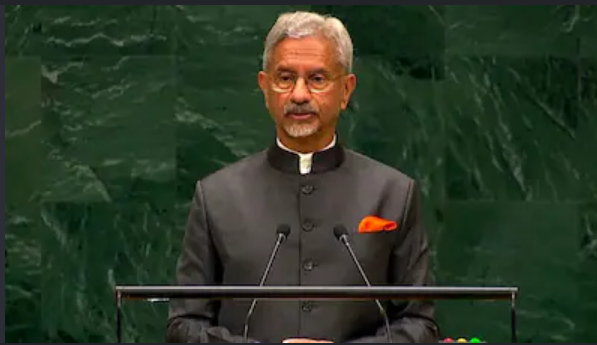
UK Foreign Secretary Yvette Cooper visited New Delhi for her first official trip to India since assuming office, holding key meetings with Prime Minister Narendra Modi and External Affairs Minister S. Jaishankar as both countries seek to deepen cooperation across trade, security and strategic sectors.

The visit comes at a significant time in India-UK relations, with both governments working toward the implementation of their recently concluded trade agreement while also expanding collaboration in areas such as technology, climate action, supply chains and regional security.

Focus on trade and strategic cooperation

During her engagements in New Delhi, Cooper discussed ways to strengthen the comprehensive strategic partnership between the two countries. Conversations also touched on accelerating the implementation of the India-UK trade agreement and enhancing economic cooperation.

Her visit followed recent discussions between Indian Commerce Minister Piyush Goyal and UK Business and Trade Secretary Peter Kyle regarding the rollout of the bilateral trade pact.

New initiatives announced

India and the UK also announced fresh cooperation initiatives during the visit, including the launch of a Critical Minerals Global Supply Chain Observatory aimed at strengthening collaboration on critical minerals and supply-chain resilience.

Officials described the initiative as an important step in expanding cooperation in emerging strategic sectors and supporting resilient global supply chains.

Addressing global challenges

Apart from bilateral issues, discussions covered wider global concerns, including regional stability, economic disruptions arising from international conflicts and maritime security. The visit reflects the growing importance both countries attach to their strategic partnership amid evolving geopolitical challenges.

India and the UK have increasingly broadened cooperation across defence, technology, innovation, clean energy and people-to-people ties, with both sides aiming to further strengthen engagement in the coming years.

Fact-check assessment

The core angle—Yvette Cooper’s first official visit to India, meetings with PM Modi and S. Jaishankar, focus on trade, security, strategic cooperation and the launch of new bilateral initiatives—is supported by multiple current reports and appears factually sound.

Continue Reading

Latest world news

Trump says India-US trade deal likely soon, calls PM Modi a good friend

Donald Trump has expressed confidence that India and the United States will soon finalize a trade agreement, while praising Prime Minister Narendra Modi and highlighting ongoing bilateral negotiations.

Published

on

Donald Trump statement

US President Donald Trump has expressed confidence that the United States and India will reach a trade agreement in the near future, even as discussions continue amid concerns over potential new tariffs. Trump also praised Prime Minister Narendra Modi, describing him as a good friend and highlighting the strong relationship between the two leaders.

Speaking to reporters at the White House, Trump said he expects the two countries to finalize a deal and pointed to his personal rapport with Prime Minister Modi. He said the relationship between Washington and New Delhi remains strong and that ongoing negotiations are moving toward an agreement.

The remarks come shortly after a US trade delegation concluded discussions in India on an interim bilateral trade arrangement. According to Indian officials, the talks were conducted in a cooperative atmosphere, with both sides reaffirming their commitment to a mutually beneficial agreement aimed at strengthening economic ties.

During the interaction, Trump also repeated his criticism of India’s past tariff policies, arguing that India had imposed high duties on American goods for many years. He claimed recent US trade measures were intended to address what he views as an imbalance in the trading relationship.

His comments come days after the US administration proposed additional tariffs on imports from India and several other economies under a separate trade investigation related to forced-labour concerns. The proposal remains under review and has become one of the issues running alongside broader trade negotiations between the two countries.

Despite the tariff dispute, both governments have continued negotiations. Recent statements from officials on both sides suggest that substantial progress has already been made on several aspects of the proposed agreement, with discussions focused on resolving the remaining issues.

The United States is one of India’s largest trading partners, and a bilateral agreement is expected to further expand trade and investment flows between the two countries. Trump’s latest remarks are being seen as a sign that both sides remain committed to finding common ground despite ongoing trade disagreements.

Continue Reading

Latest world news

India considers tax relief to attract foreign investors amid Iran war impact

India is evaluating tax incentives, including a possible capital gains tax exemption on government securities for foreign investors, to support capital inflows amid economic pressures linked to the Iran war.

Published

on

India is considering a set of measures aimed at attracting more foreign investment as the ongoing Iran war continues to create pressure on the country’s economy, according to reports citing government sources. One of the key proposals under discussion is the removal of capital gains tax on investments made by foreign portfolio investors (FPIs) in government securities.

The move comes at a time when geopolitical tensions in West Asia have pushed up global oil prices, weakened investor sentiment and increased pressure on the Indian rupee. India, which imports a significant share of its crude oil requirements, has been among the countries closely monitoring the economic fallout from the conflict.

Government exploring ways to boost capital inflows

Officials are reportedly evaluating tax-related incentives to make Indian debt markets more attractive to overseas investors. The proposed exemption on capital gains from government securities is aimed at encouraging foreign portfolio investment and supporting capital inflows during a period of heightened global uncertainty.

The government is seeking to counter the impact of foreign capital outflows that have intensified amid concerns over the Iran conflict and its implications for energy markets and global economic growth.

Rupee and markets under pressure

Recent weeks have seen increased volatility in financial markets, with foreign investors pulling money out of Indian equities. Analysts have linked part of the pressure on the rupee to rising oil prices and continued overseas investor withdrawals.

Market participants believe that measures aimed at attracting foreign investment into government securities could help improve investor confidence and provide support to the domestic currency.

Broader economic concerns

The Iran war has added to concerns about inflation, economic growth and India’s external sector. Higher energy prices can increase import costs and put pressure on inflation, while sustained foreign capital outflows may affect financial market stability.

While no final decision has been announced, discussions on easing tax rules for foreign investors reflect the government’s efforts to strengthen capital inflows and cushion the economy from external shocks.

Continue Reading

Trending

© Copyright 2022 APNLIVE.com