
Latest world news
Donald Trump survives assassination attempt, bullet pierces his right ear
The dead gunman has been identified as Thomas Matthew Crooks, aged 20, from Bethel Park, Pennsylvania.

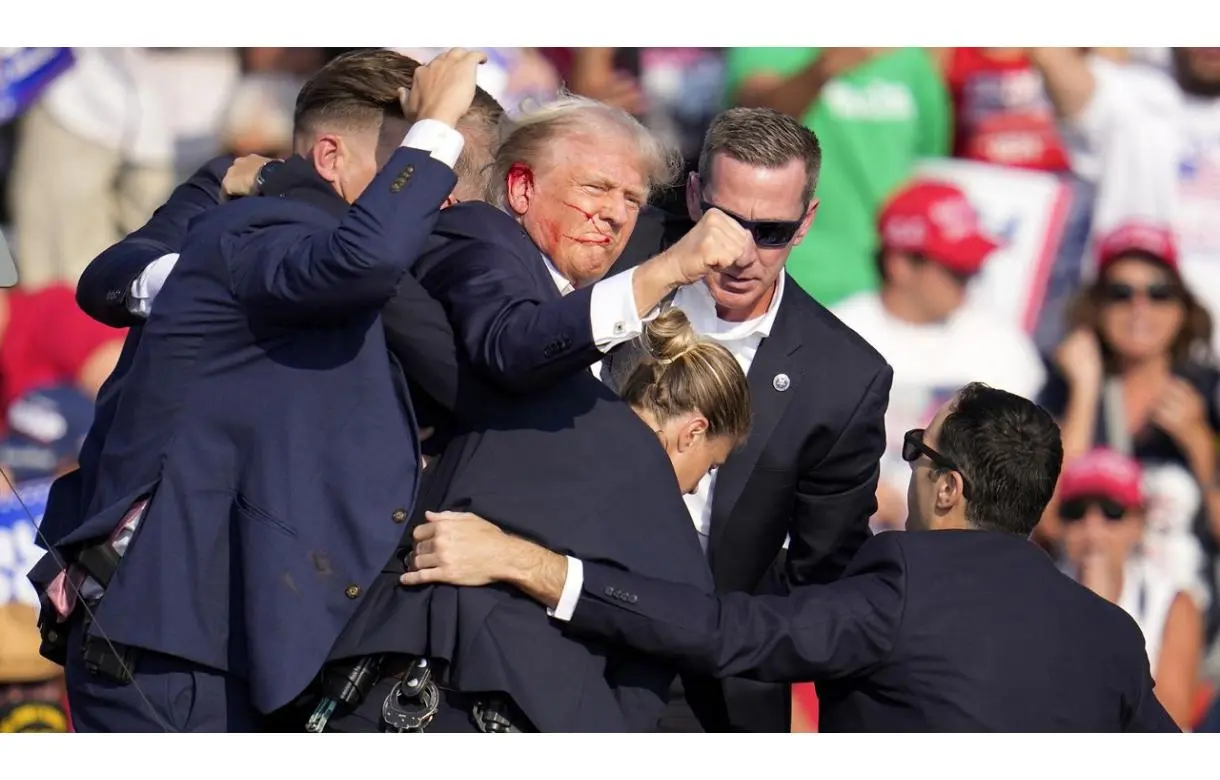
Former US President Donald Trump was immediately rushed offstage to his motorcade, with blood visible on his right ear and streaking across his cheek after gunshots erupted at a rally in Pennsylvania in an apparent assassination attempt on Saturday evening.
According to US Secret Services, the former President was injured in a volley of gunfire at 6.15 pm from an elevated position outside the venue. The gunfire erupted a few minutes after Trump began his speech at a rally of supporters in Butler, a rural town in northwestern Pennsylvania.
The available witnesses and footage suggested around eight shots were fired at Trump. The footage also showed him grimacing and raising a hand to his right ear.
Following the incident, the US Secret Service officers neutralised the suspect at the scene. The agency’s spokesperson Anthony Guglielmi said that one bystander was killed in the shooting and two others were critically injured.
The US Secret Service, which is responsible for shielding current and former presidents, said the suspected shooter had fired multiple shots towards the stage and that the assailant was now dead.
The dead gunman has been identified as Thomas Matthew Crooks, aged 20, from Bethel Park, Pennsylvania.
The former US President Trump, in a post to his Truth Social network, said a bullet pierced the upper part of his right ear. Earlier, his spokesperson informed that he was receiving treatment at a local medical centre.
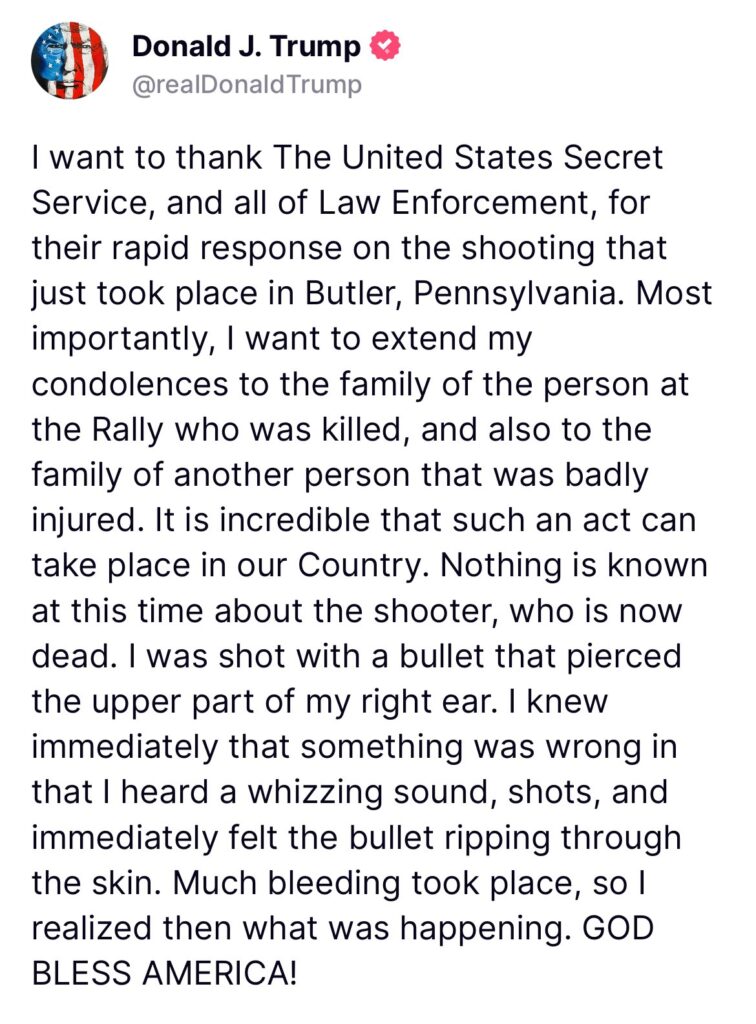
In a post, Trump said he knew immediately that something was wrong in that he claimed that he heard a whizzing sound, and shots, and immediately felt the bullet ripping through the skin. Trump further wrote that much bleeding took place, so he realized then what was happening.
The incident received condemnation from across the US political spectrum, with President Joe Biden, who spoke to Trump late on Saturday, describing the incident as sick and said the reason why the US needs to be united. There’s no place in America for this kind of violence, Biden asserted.
International leaders also have denounced the act of violence, with UK Prime Minister Keir Starmer saying, he was appalled by the shocking scenes. Japan’s Prime Minister Fumio Kishida said he would pray for President Trump’s speedy recovery. There were conflicting reports about the cause of Trump’s injury.
The Prime Minister of India, Narendra Modi, also expressed his concern over the assassination attempt on former US President Trump and said violence has no place in politics and democracies.
PM Modi wished him a speedy recovery. “Our thoughts and prayers are with the family of the deceased, those injured and the American people”, he added.




Latest world news
S Jaishankar says India is a natural option for Russia amid Europe tensions
External Affairs Minister S Jaishankar said India remained a natural option for Russia as Moscow increasingly turned towards Asia amid strained relations with Europe. He highlighted the continuity of India-Russia ties and their significance for the balance of power in Asia.


Latest world news
Putin praises PM Modi, says he has very good ideas on Ukraine war
Russian President Vladimir Putin has praised Prime Minister Narendra Modi for repeatedly raising the need to end the Ukraine war, describing his ideas for a settlement as “very good”.

Latest world news
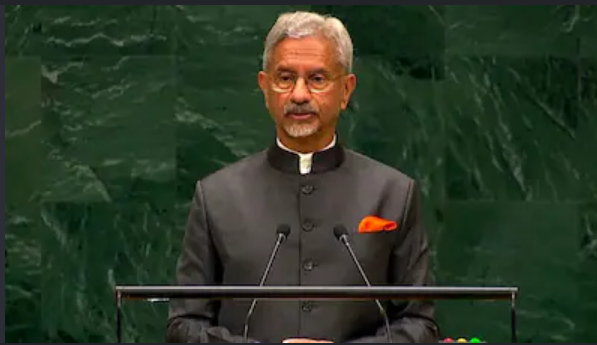
S Jaishankar calls Pakistan a “serial practitioner of terrorism” at UN
S Jaishankar criticised Pakistan at the UN General Assembly, referring to a “serial practitioner of terrorism” and warning against attempts to normalise terrorism.

Dhruv Rathee gets fresh summons in 2018 BJP IT cell video case

Nobody can browbeat judiciary, Chief Justice warns over Rahul Gandhi’s march

India-US trade deal first phase finalised, drafting underway

Election Commission orders voter roll revision in 17 states, UTs

Actor Imran Khan asked to leave India after CJP protest

Delhi Police offers 11-person limit for CJP’s Connaught Place protest
Actor Imran Khan asked to leave India after CJP protest
Election Commission orders voter roll revision in 17 states, UTs
India-US trade deal first phase finalised, drafting underway
Nobody can browbeat judiciary, Chief Justice warns over Rahul Gandhi’s march

Afghan Men Try To Hang With The Jet Engine Of The Aircraft in Kabul- Afghanistan News – Kabul News
Trending Top 10 News: 10000 Crore Fine on Flipkart, Apple to Launch Unique Feature, Hdfc Bank Job Ad

Trending Top 10 News: Nokia 6310, Apple sales, Bachpan ka Pyar Video Kid, Dainik Bhaskar IT Raid

Trending Top 10 News: Canada bans Indian flights, Rain in Delhi NCR, AIMIM Twitter hacked, Raj Kundra case

Trending Top 10 News: Shein India, Apple New Service, Pocket Oxygen, Oppo Launched New Phone
-
 India News13 hours ago
Dhruv Rathee gets fresh summons in 2018 BJP IT cell video case
-
 India News10 hours ago
Nobody can browbeat judiciary, Chief Justice warns over Rahul Gandhi’s march
-
 India News6 hours ago
India-US trade deal first phase finalised, drafting underway
-
 India News3 hours ago
Election Commission orders voter roll revision in 17 states, UTs
-
 India News3 hours ago
Actor Imran Khan asked to leave India after CJP protest
-
 India News2 hours ago
Delhi Police offers 11-person limit for CJP’s Connaught Place protest
