English हिन्दी
Connect with us

Latest world news

G20 leaders issue joint declaration, emphasize on universal health coverage, pandemic preparedness, infectious diseases surveillance

The global leaders committed to improve access to medical countermeasures and provide more supplies and production capacities in developing countries

Published

on

G20 leaders issue joint declaration, emphasize on universal health coverage, pandemic preparedness, infectious diseases surveillance

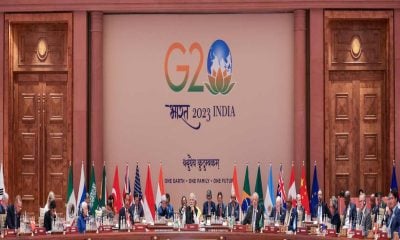
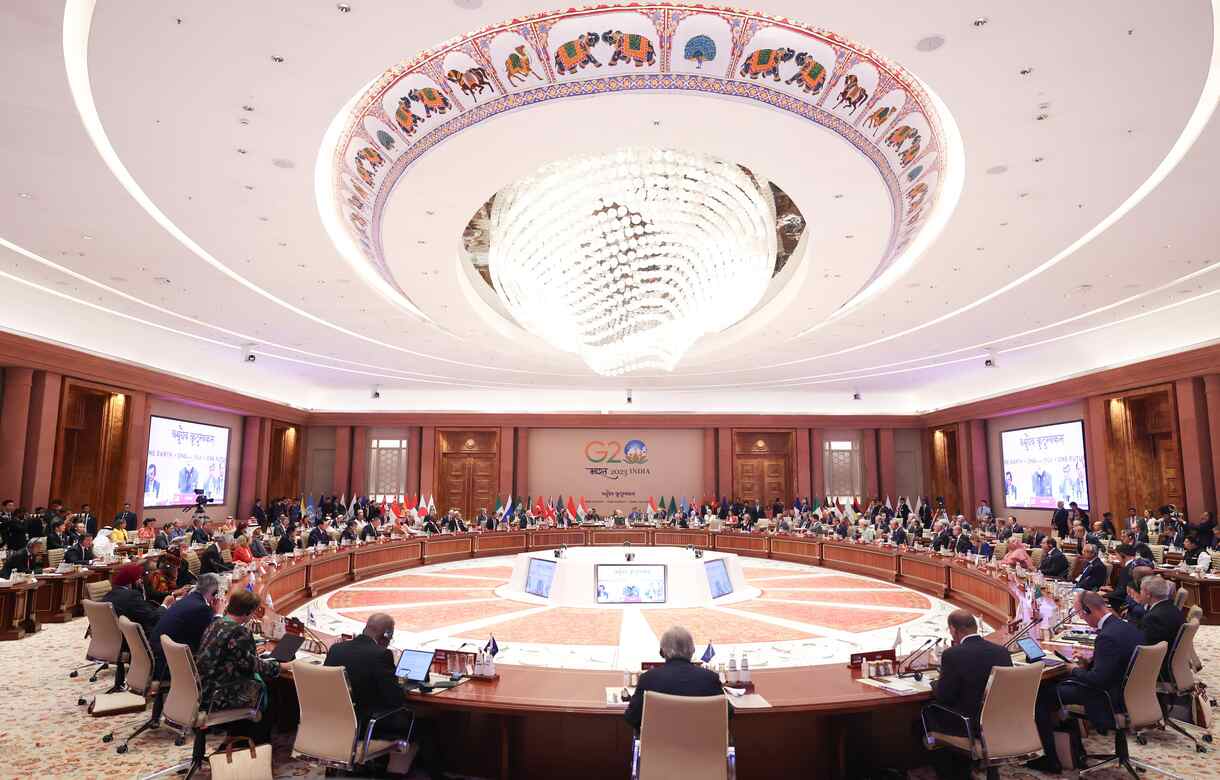
The two day G20 Summit under India’s presidency concluded on Sunday at Bharat Mandapam in New Delhi. During the mega summit, the global leaders resolved to build more resilient, equitable, sustainable and inclusive health systems to achieve universal health coverage, enhance pandemic preparedness and strengthen existing infectious diseases surveillance systems.

Issuing a joint declaration, the G20 leaders emphasized on strengthening primary healthcare, health workforce and essential health services to better than pre-pandemic level, ideally within the coming two-three years. Apart from focusing on epidemics like tuberculosis and AIDs, the G20 leaders also recognised the importance of research on long COVID-19.

The global leaders committed to improve access to medical countermeasures and provide more supplies and production capacities in developing countries to develop better for future health emergencies.
Furthermore, the New Delhi Leaders Declaration also underscored the need to promote One Health based approach driven by the quadripartite One Health Joint Plan of Action (2022-2026) and enhance the resilience of health infrastructure. In addition, it also stressed the need to support development of climate-resilient and low-carbon health systems in collaboration with multilateral development banks (MDBs) and assist the work of WHO-led Alliance for Transformative Action on Climate and Health.

The declaration noted implementing and prioritising tackling antimicrobial resistance (AMR) following the One Health approach. It further called for equitable access to safe, effective, quality-assured, and affordable vaccines, therapeutics, and diagnostics in middle and low income countries. It also upheld the potential role of evidence based traditional and complementary medicine in health.

Stressing on the public health dimension of the world drug problem, global leaders called for strong international counter-narcotics cooperation, free of unnecessary restrictions, involving information sharing, capacity building to prevent production and proliferation of illicit drugs, including synthetic drugs, and precursor chemicals at their origin, in transit and at destination points.

The G20 leaders committed to strengthening the global health architecture for pandemic prevention, preparedness and response through enhanced collaboration between finance and health ministries under the Joint Finance and Health Task Force.

Deliberations on the Framework on Economic Vulnerabilities and Risks (FEVR) and the initial Report for Economic Vulnerabilities and Risks arising from pandemics, created through collaboration between the World Health Organization (WHO), World Bank, IMF, and European Investment Bank (EIB) also took place.

Latest world news

Iranian President Pezeshkian at UN says Iranians have been victims of US terrorism

Iranian President Masoud Pezeshkian said at the UN General Assembly that Iranians had been victims of US terrorism and insisted that Iran had acted in self-defence.

Published

on

Iranian President Masoud Pezeshkian accused the United States of subjecting Iranians to what he described as terrorism while addressing the United Nations General Assembly on Wednesday.

Pezeshkian said Iran had defended itself against attacks and rejected the characterisation of the country as a terrorist actor. His remarks came during a rare wartime appearance at the UN as tensions between Iran and the United States remain high.

Pezeshkian accuses US and Israel of attacks

Speaking at the General Assembly, Pezeshkian said Iranian civilians had been targeted by attacks and described the actions against his country as aggression.

“We have only defended ourselves. We are not terrorists,” he said, according to the report.

Pezeshkian also accused the United States and Israel of attacking Iran, while maintaining that Tehran’s response was an act of self-defence.

The Iranian president displayed photographs of former Supreme Leader Ali Khamenei and more than 150 schoolchildren who, according to his account, were killed during the early days of the conflict.

Iran’s message at the UN

Pezeshkian’s address came against the backdrop of the ongoing conflict between Iran and the United States and heightened tensions in the region.

Iranian officials had indicated ahead of the UN visit that they intended to highlight what Tehran considers attacks against its people and raise concerns over the international response to the conflict.

The Iranian delegation’s visit to New York also comes amid restrictions imposed by the United States on the delegation’s movement and other aspects of its stay, according to reporting ahead of the address.

Pezeshkian says Iran defended itself

Pezeshkian’s central message at the UN was that Iran’s military actions should be viewed as a response to attacks rather than terrorism.

His description of the conflict and the allegations against the United States and Israel represent the Iranian government’s position. They should therefore be attributed to Pezeshkian rather than presented as independently established facts.

Continue Reading

Latest world news

PM Modi’s Canada visit could help wrap trade talks, says Canada PM Mark Carney

Canadian PM Mark Carney said he is looking forward to hosting PM Narendra Modi, with both countries aiming to conclude their ongoing trade negotiations.

Published

on

Canadian Prime Minister Mark Carney has said he is looking forward to hosting Prime Minister Narendra Modi, as India and Canada continue efforts to advance their bilateral relationship and conclude ongoing trade negotiations.

The two countries have been working towards a Comprehensive Economic Partnership Agreement (CEPA), with both sides previously setting a target to conclude the negotiations in 2026.

Carney and Modi have held discussions on strengthening economic ties between India and Canada, including trade and investment. Their engagement has gained momentum following Carney’s visit to India earlier this year.

India-Canada trade talks

India and Canada formally resumed efforts towards a broader trade agreement after a period of strained bilateral ties. The two sides have committed to advancing negotiations on a CEPA covering their economic relationship.

In June, Carney and Modi reviewed progress in bilateral economic cooperation during their meeting on the sidelines of the G7 Summit in France. They expressed satisfaction with the progress in CEPA negotiations and reaffirmed their shared objective of concluding the talks in 2026.

During Carney’s visit to India in March, the two leaders had also agreed to accelerate negotiations on the CEPA and work towards finalising the agreement during 2026.

Modi’s proposed Canada visit

Carney had invited PM Modi to visit Canada in 2026, and the two leaders agreed to remain engaged through diplomatic channels to work towards a mutually convenient date for the visit.

The proposed visit comes as New Delhi and Ottawa seek to build on renewed diplomatic and economic engagement, with trade negotiations remaining a key part of the relationship.

The focus on completing the trade talks comes as both countries look to expand commercial ties and establish a broader economic framework through the proposed CEPA.

Continue Reading

Latest world news

Trump issues fresh Iran warning at UN General Assembly, signals deal after midterms

US President Donald Trump issued a fresh warning to Iran during his UN General Assembly address, saying he faces a choice between a deal and further escalation.

Published

on

US President Donald Trump used his address to the United Nations General Assembly on Tuesday to outline what he described as a major decision over Iran, putting the possibility of a deal against further military escalation.

Speaking at the UN in New York, Trump said he had a “big decision” to make. He questioned whether the United States should pursue an agreement that would allow Iran to rebuild or instead take further action against the Islamic Republic.

Trump later indicated that he believed an agreement with Iran could be reached after the US midterm elections, which are scheduled for November 3.

Trump says deal with Iran remains possible

During his speech, Trump presented two possible paths. He said a deal could allow Iran to rebuild and become a stronger country, while also raising the possibility of destroying the Islamic Republic if an agreement was not reached.

Trump said he believed a deal could eventually be reached, arguing that Iran was waiting to see the outcome of the US midterm elections.

His comments came amid the continuing US-Iran conflict and renewed diplomatic activity surrounding the confrontation. Trump’s UN appearance came as Washington was also engaged in discussions with multiple international leaders over the Iran conflict and other global issues.

Iranian delegation walks out during Trump’s speech

The Iranian delegation reportedly left the General Assembly chamber as Trump began describing the military confrontation with Iran.

According to the report, only one person from the Iranian delegation remained seated as Trump spoke about the conflict and the military strikes of the past six months.

The walkout came as tensions between Washington and Tehran remained high, with both sides facing pressure over the continuation of the conflict.

Trump’s latest warning follows earlier comments

Trump’s UN remarks came days after he said he was approaching a major decision over whether to intensify military action against Iran or pursue another route.

He had also indicated before his UN appearance that he could be open to meeting Iranian President Masoud Pezeshkian during the UN General Assembly in New York.

The possibility of renewed negotiations comes against the backdrop of continuing military and diplomatic tensions between the two countries.

Continue Reading

Trending

© Copyright 2022 APNLIVE.com